
The Corman Park Police Service in Saskatchewan has deployed its DJI Mavic 3 Enterprise drone 37 times since receiving it in April 2025, and one of those deployments involved finding an intoxicated man who had crawled into a dumpster on Highway 41 in -20°C (-4°F) temperatures.
The thermal camera on the aircraft picked him up. Officers got to him before the cold did. That is the kind of call that justifies a rural police drone program in a way no spreadsheet ever could.
The department’s experience after roughly nine months of operational use offers one of the cleaner case studies for what a single-aircraft program can deliver to a rural agency, and it lands at a moment when more North American police departments are weighing exactly this kind of investment.
What 37 Deployments Looks Like
The numbers work out to roughly one deployment per week across the program’s first nine months. That cadence is meaningful for a small rural force serving a municipality that surrounds Saskatoon, where call volume is low but the terrain and distances are punishing.
Const. Mark St. Arnaud framed the operational value directly. “The drone is actually quite useful for our patrol, for a variety of situations. What it does is it’s able to cover a large area and access difficult terrain, which patrol officers on foot or in vehicle can’t access, and it can do it a lot quicker than they can,” he said.
The published case list shows how broad the mission set has become. Missing persons searches, fleeing suspects, trespasser identification, weapons detection, fire department assistance locating fires, a lost horse, and poacher detection are all on the record.
That is the operational reality of a single drone in a rural department. It does whatever needs eyes from above, and the call types stop being categorical and start being whatever the dispatcher needs that hour.
Why the Mavic 3 Enterprise Is the Drone Doing This Work
The aircraft in Corman Park’s program is the DJI Mavic 3 Enterprise series, specifically the Mavic 3T variant that carries all three camera modes referenced in the department’s reporting. Photos of the unit released by the department show the aircraft fitted with dual DJI spotlights mounted on the side rails, the optional accessory the company sells for nighttime operations.

The Mavic 3T weighs about 920 grams (2 pounds), folds down to fit in a small backpack, and unfolds and launches in under a minute. That portability is the entire point for a rural patrol officer who needs to pull the aircraft out of the trunk of a cruiser at a scene and have it in the air before the situation evolves.
The camera package is what does the operational work. A 48-megapixel wide camera handles area coverage, a 12-megapixel telephoto camera delivers up to 56x hybrid zoom for identifying people and objects from altitude without flying close enough to alert anyone on the ground, and a 640×512 thermal sensor picks up heat signatures in conditions where visible-light cameras are useless.

Flight time runs to about 45 minutes per battery, top speed sits at 47 mph (21 m/s), and the O3 Enterprise transmission system gives the operator reliable video downlink at distances up to 9.3 miles (15 km) under FCC conditions. Wind resistance is rated to 27 mph (12 m/s), which matters in prairie weather where calm days are not the default.
The dual spotlights visible on the Corman Park aircraft add another dimension to its night capability. Thermal sensors find a heat signature, but officers responding on the ground often need a visible light to safely approach and recover the subject. Mounting both spotlights on the same airframe means the drone can both find the person and illuminate the scene without a second aircraft.
The total acquisition cost for a fully-kitted Mavic 3T setup, including the aircraft, controller, multiple batteries, and the accessories most public safety agencies add such as spotlights or a speaker payload, lands in the $10,000 range. That is the price point that has made police drone programs accessible to small rural departments that could never justify a helicopter or a larger Matrice-class platform.
The Dumpster Call Is the Headline for a Reason
As Global News reported, the intoxicated man on Highway 41 at -20°C is the case the department highlights, and for good reason. A patrol officer driving past a dumpster does not stop to check whether someone is inside. A thermal camera does not need to stop, and it does not need to guess.

In Saskatchewan in winter, -20°C is a survivable temperature for a fit adult who is sober and dressed for it. For an intoxicated person without proper clothing, the same temperature becomes hypothermic within an hour or two.
The Mavic 3T’s thermal sensor turned a routine response into a saved life because it pulled a heat signature out of an object nobody would have inspected. That is the operational difference between aerial and ground response on rural calls.
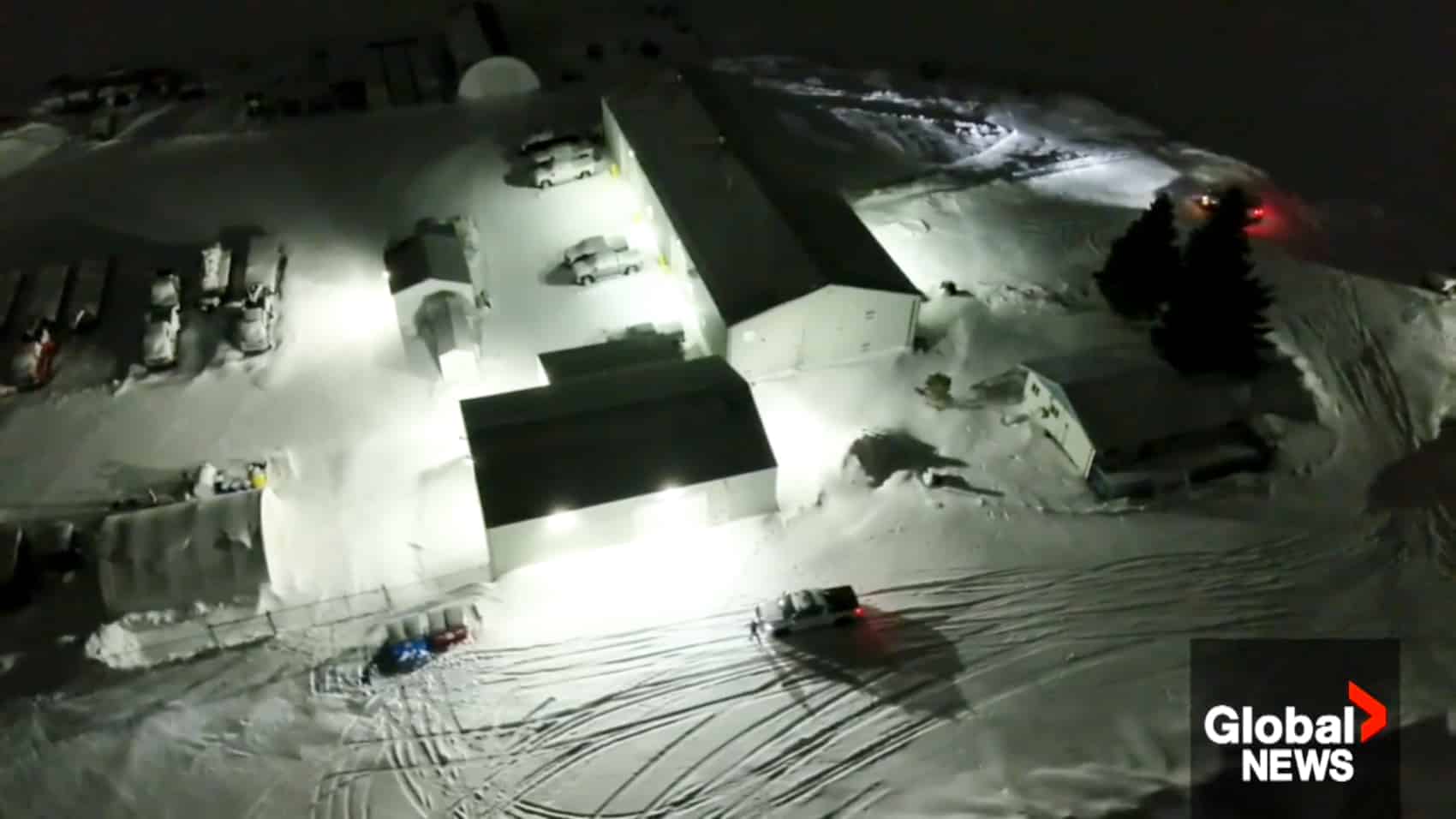
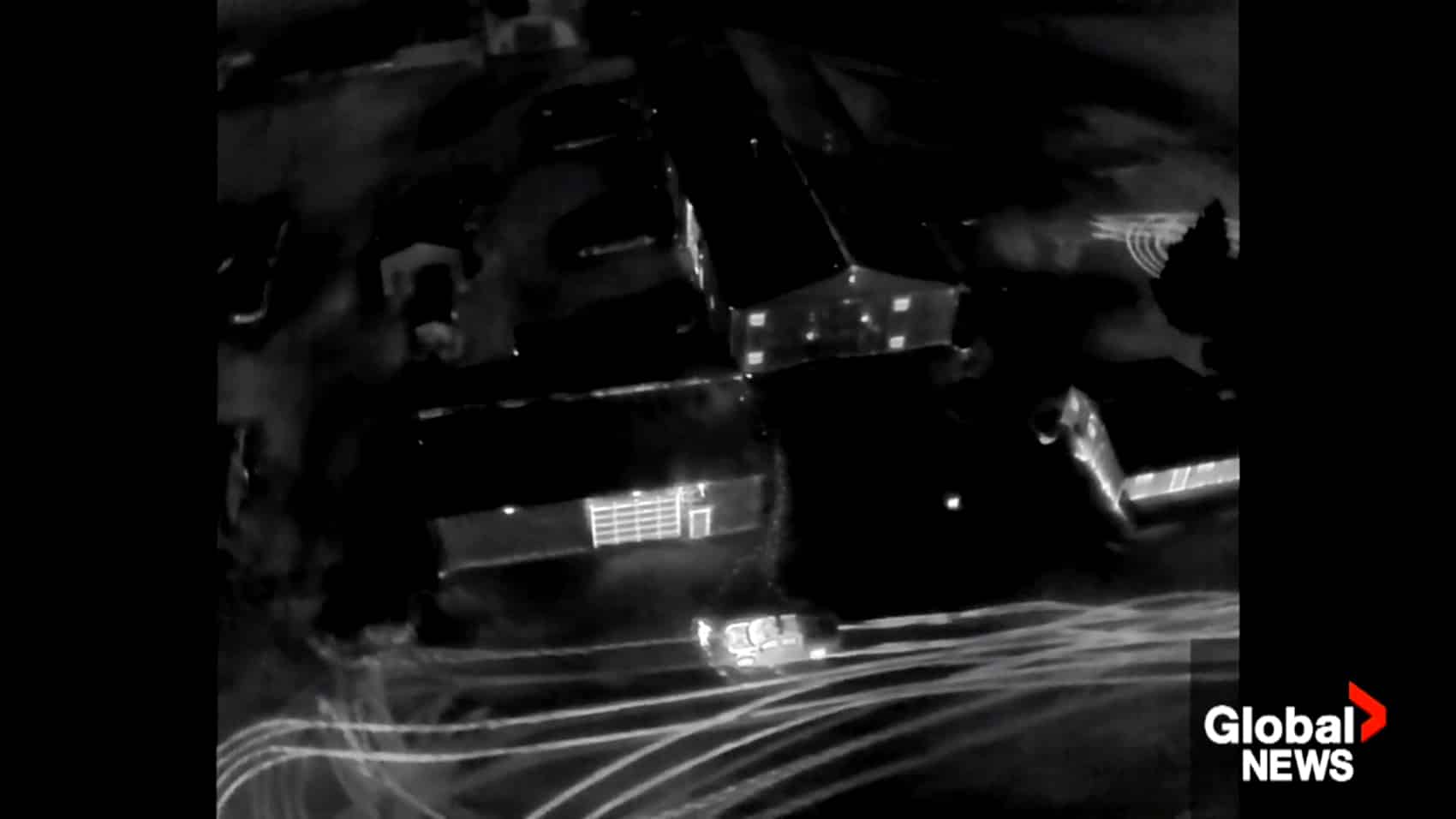
It is also the kind of case that builds political durability for a program. A small department that can point to a specific person who is alive because of a $10,000 aircraft does not have to fight the same budget battle next year.
Why the Canadian Prairie Is Ideal for This
The geography that makes Saskatchewan policing difficult is exactly what makes drones effective. Long distances between population centers, low density, vast tracts of rural land where a missing person can wander for hours before being noticed, and terrain that includes fields, treelines, and waterways that ground vehicles cannot cover quickly.
The Mavic 3T’s 56x zoom and thermal sensor compress search areas in ways that ground teams cannot match. A two-hour grid search by officers becomes a fifteen-minute aerial sweep, and the missing person is either visible to the thermal or the search shifts faster.
Transport Canada regulates remotely piloted aircraft through the RPAS framework, and Canada has not adopted the same blanket restrictions on Chinese-manufactured drones that several U.S. states have implemented. That regulatory environment is part of why DJI Enterprise platforms remain the default choice for Canadian public safety agencies.
DroneXL’s Take
Here’s the thing: this is the story for small rural departments across North America that have been watching big-city DFR programs and assuming the technology was not for them.
It is. A single DJI Mavic 3 Enterprise with thermal, zoom, and wide cameras plus a pair of spotlights, flown by a trained patrol officer, is enough to deliver real operational value in a rural agency. The 37-deployment cadence at Corman Park is the proof point.
The other thing worth saying is that the dumpster case is the kind of detail that travels. Police chiefs in similar-sized rural departments are going to hear about that call, picture their own jurisdictions, and start writing budget requests for the same hardware.
Photo credit: Corman Park Police Service


