

DJI officially launched the Neo 2 on November 13, 2025, bringing comprehensive safety upgrades and dramatically improved imaging capabilities to its palm-launched drone platform across Europe, Canada, and Brazil—but the United States remains conspicuously absent from the rollout despite the drone receiving FCC certification four months ago.
The Neo 2 announcement represents DJI’s response to nearly every criticism leveled at the original Neo since its 2024 debut. The company added omnidirectional obstacle avoidance, upgraded to a dual-axis gimbal, doubled video frame rates to 4K/60fps, and increased tracking speeds by 50%—transforming what was already a popular beginner drone into a far more capable aerial platform.

Major Safety And Camera Upgrades Address Original Neo’s Weaknesses
The Neo 2’s most significant improvement centers on comprehensive obstacle avoidance that was completely absent from the original model. DJI equipped the 151-gram (5.3-ounce) drone with an omnidirectional monocular vision system combined with forward-facing LiDAR and downward infrared sensing.

Forward-facing sensors detect obstacles from 0.5 to 15 meters (1.6 to 49.2 feet) at flight speeds up to 8 m/s (17.9 mph), while rear, side, up, and down sensors provide detection from 0.5 to 15 meters at speeds up to 3 m/s (6.7 mph). The infrared ranging sensor measures distances from 0.3 to 8 meters (1 to 26.2 feet) with a 60-degree viewing angle.
This sensor suite addresses one of the original Neo’s most criticized shortcomings. Early adopters frequently reported flyaways and collisions due to the complete lack of obstacle detection, making the drone unsuitable for beginners flying in complex environments.
DJI also upgraded the gimbal from single-axis to dual-axis mechanical stabilization, providing substantially smoother footage during complex maneuvers and windy conditions. The original Neo’s single-axis stabilization limited its appeal to serious content creators who needed reliable stabilization for professional-looking shots.

The upgraded camera captures 4K video at 60fps—double the original’s 30fps maximum—with additional support for 4K/100fps slow-motion recording. The Neo 2 uses a 12-megapixel 1/2-inch CMOS sensor with f/2.2 aperture, the same sensor size as the original but with improved image processing. The drone also offers 2.7K direct shooting optimized for vertical social media formats.

Enhanced Tracking And Intelligent Flight Capabilities
DJI dramatically improved the Neo 2’s tracking performance with faster response times and enhanced stability. In open areas, the drone can track subjects at speeds up to 12 m/s (43 km/h or 27 mph)—a 50% increase over the original Neo’s 8 m/s maximum.
The Neo 2 supports eight-direction tracking including forward, backward, left, right, and four diagonal angles, producing more natural follow shots and expanding creative possibilities. In complex environments, the drone automatically switches to rear tracking mode to maintain focus on subjects.

A new SelfieShot mode allows users to effortlessly switch between waist-up, full-body, and long shots without additional equipment. The drone automatically composes scenes and adjusts camera positioning to capture group photos, birthday parties, or family outings.
DJI retained the original Neo’s signature palm takeoff and landing features while adding gesture control capabilities. Users can control the drone’s direction and proximity using one or both hands without any remote controller. Voice control through smartphone or Bluetooth headphones enables hands-free operation during activities.

The Neo 2 also added a small onboard display showing battery life, connection status, and active flight mode—addressing a common complaint about the original Neo’s lack of at-a-glance telemetry.

Technical Specifications And Performance Improvements
Battery capacity increased to 1606 mAh (11.6 Wh), extending maximum flight time to approximately 19 minutes compared to the original’s 18-minute maximum. The drone achieves level 5 wind resistance, withstanding winds up to 10 m/s (22.4 mph) compared to the original’s level 4 rating.

Internal storage nearly doubled to 49GB from the original’s 22GB, accommodating up to 105 minutes of 4K/60fps video, 175 minutes of 4K/30fps video, or 241 minutes of 1080p/60fps video. Wi-Fi transfer speeds reach up to 80 MB/s, enabling quick footage transfer to smartphones via the DJI Fly app.
When paired with the DJI RC-N3 remote controller, the Neo 2 achieves a maximum video transmission distance of 10 kilometers (6.2 miles). The drone remains compatible with DJI’s complete ecosystem including RC 2, RC-N2, and RC-N3 controllers, plus RC Motion 3 and FPV Goggles N3 for immersive FPV flying.

The Neo 2 supports multiple intelligent shooting modes including Dolly Zoom for cinematic Hitchcock effects, QuickShots (Dronie, Circle, Rocket, Spotlight, Helix, and Boomerang), and MasterShots that automatically capture diverse footage with creative camera movements before intelligently editing with music.

Global Availability And Pricing Structure
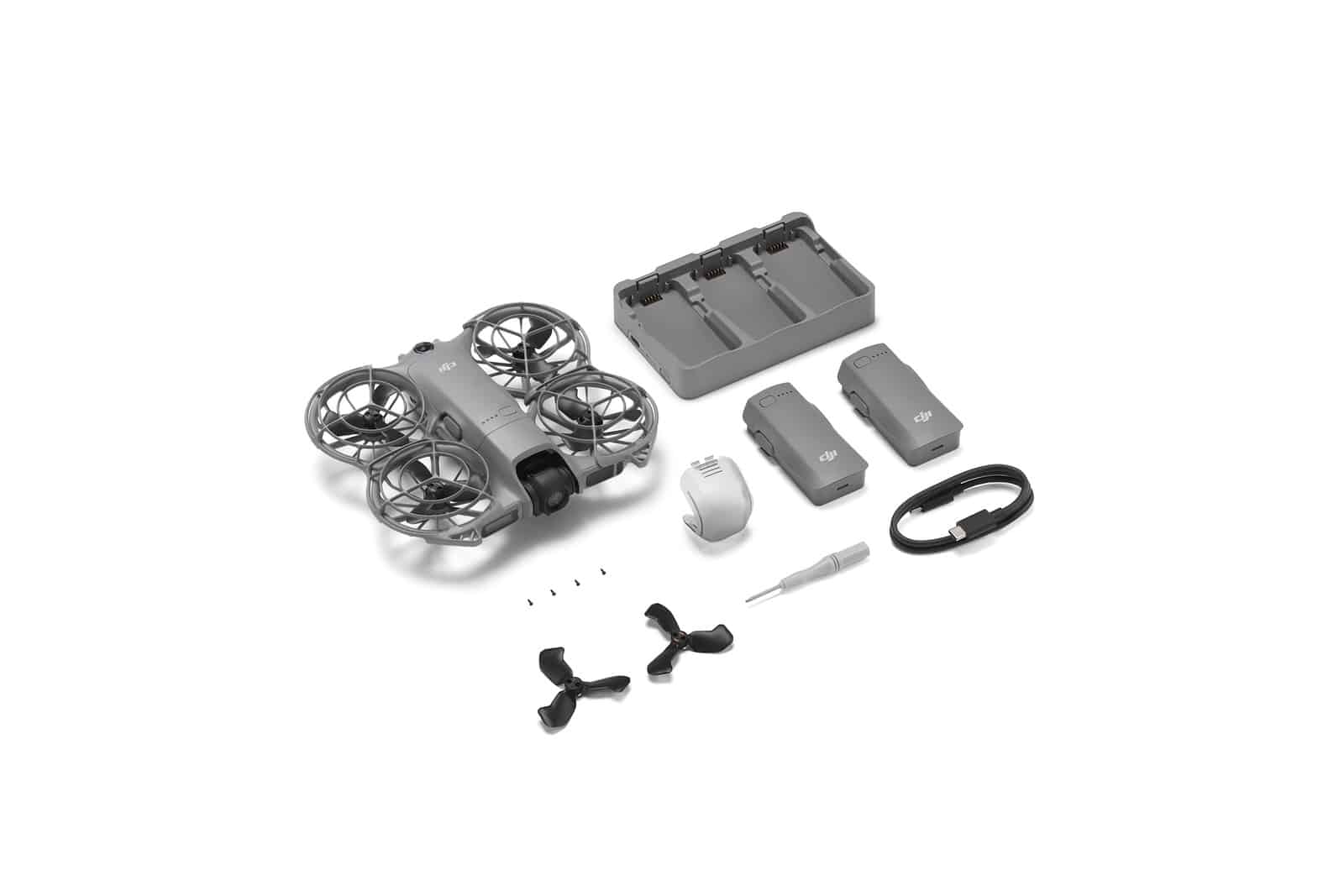
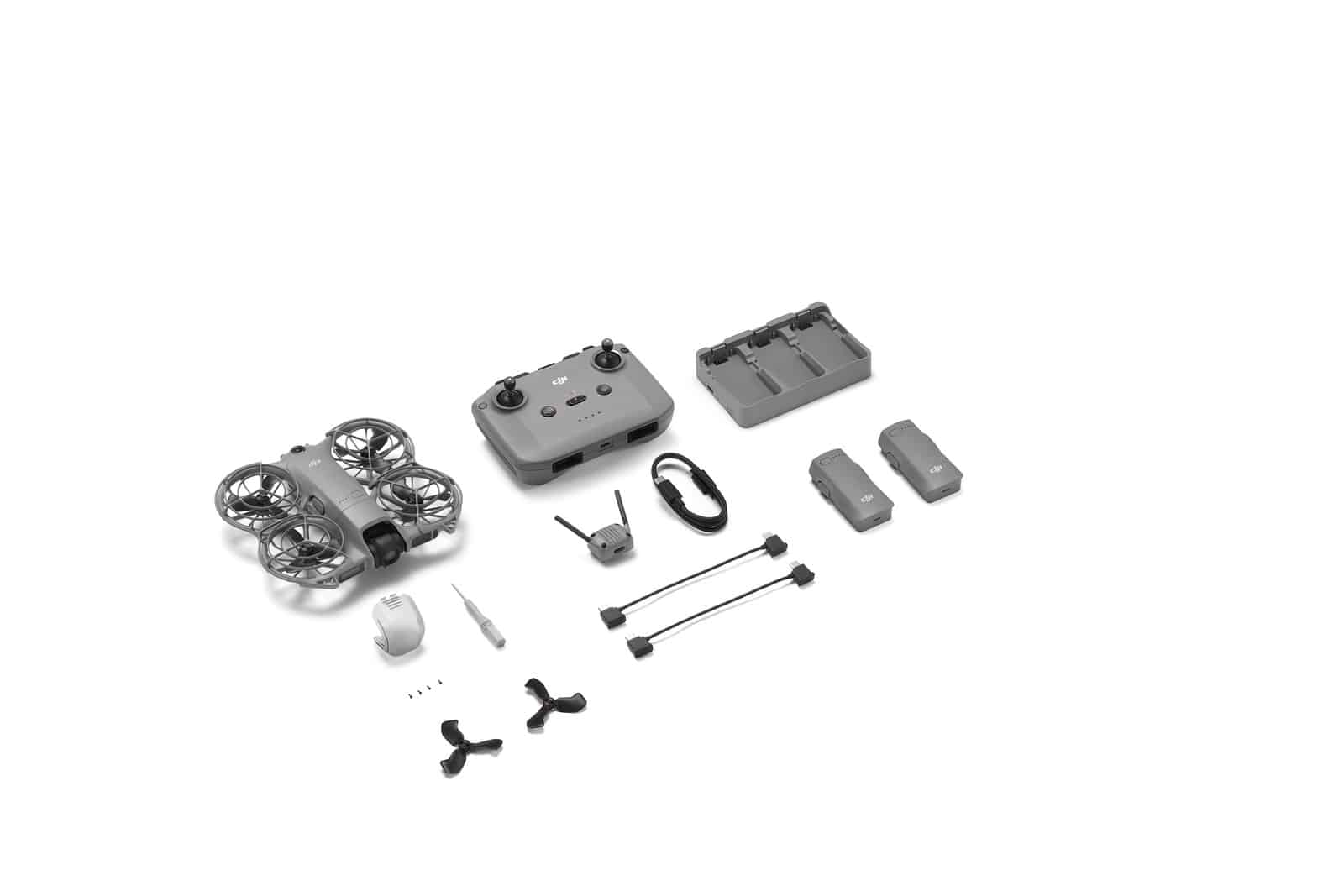
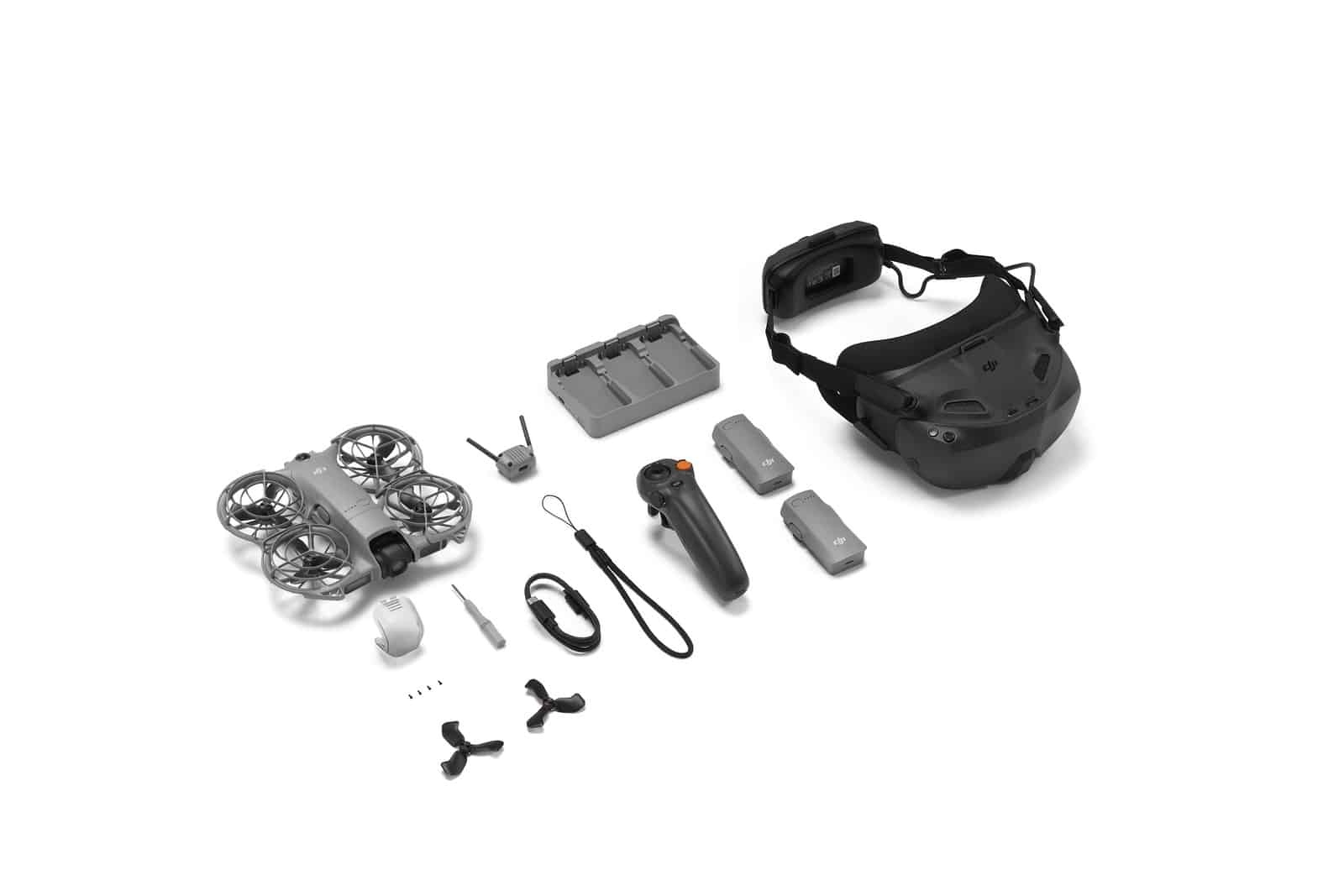
DJI launched the Neo 2 in China and Taiwan on October 30, 2025, followed by the November 13 expansion to Europe, Canada, and Brazil. The drone is available in three configurations:
- DJI Neo 2 (Drone Only): Includes the drone and one battery for $229 CAD.
- DJI NEO 2 Fly More Combo (Drone Only): Includes the drone, three batteries, charging hub for $309 CAD.
- DJI NEO 2 Fly More Combo: Includes the drone, three batteries, RC-N3 controller and additional accessories for $399 CAD.
- DJI NEO 2 Motion Fly More Combo: Includes the drone, Goggles N3, RC Motion 3 controller, three batteries, and additional accessories for $549 CAD.
Accessories include the Intelligent Flight Battery at $129, propeller sets at $39, and DJI Care coverage starting at $28 for one year or $48 for two years.
U.S. Market Availability Remains Uncertain
Despite receiving FCC certification in July 2025, the Neo 2 has not been officially announced for the United States. American customers clicking DJI’s teaser links encounter 404 errors on the company’s U.S. website, and DJI conducted no American marketing campaign—no English-language press releases, no U.S. teaser campaigns, and no pre-launch communications with American retailers.
The absence occurs against intensifying regulatory pressure threatening to cut off DJI’s access to American customers entirely. Section 1709 of the 2025 National Defense Authorization Act mandates that a U.S. national security agency must complete a security review of DJI by December 23, 2025.

If no agency finishes the review—and after ten months, none have confirmed they’re conducting one—DJI will automatically join the FCC’s Covered List. That designation would block new DJI products from receiving FCC equipment authorizations, effectively ending new drone sales in the United States.
The FCC voted October 28 to grant itself unprecedented authority to retroactively revoke equipment authorizations for companies on its Covered List, closing loopholes DJI attempted to exploit through shell companies.
For American drone operators interested in the Neo 2, some third-party retailers may import units from international markets, but official DJI warranty support, readily available accessories, and competitive pricing become significantly more challenging without an authorized U.S. launch.

DroneXL’s Take
The Neo 2 represents exactly what beginner pilots needed—and what we’ve been requesting since reviewing the original. DJI addressed every significant weakness: the missing obstacle avoidance that caused flyaways, the single-axis gimbal that produced shaky footage, the limited tracking speeds that couldn’t keep up with cyclists, and the 30fps video that looked dated compared to competitors.
Our YouTube partners have spent the past year documenting the original Neo’s strengths and limitations. Shawn from Air Photography praised its convenience and affordability while noting video quality concerns and wind sensitivity. Mike from Drone Supremacy found it outperformed the HoverAir X1 Pro Max in tracking accuracy despite the latter’s 8K capabilities. The Neo 2’s comprehensive upgrades should eliminate most of those compromises.
What’s frustrating is that American pilots—the market segment that would benefit most from an affordable, beginner-friendly, regulation-exempt sub-250-gram drone—face the greatest uncertainty about accessing it. DJI’s “China first” strategy reflects the regulatory reality we’ve been tracking for months: companies don’t invest in marketing campaigns when customs might seize shipments and the FCC could ban products 45 days after launch.
The timing is particularly cruel. The Neo 2 launches November 13, giving it exactly 40 days before the December 23 automatic FCC Covered List deadline. Even if some American retailers import units, the window for building inventory, establishing support infrastructure, and reaching customers remains dangerously narrow.
This isn’t about whether DJI poses legitimate security concerns—that determination should come from evidence-based security reviews, not automatic bans triggered by bureaucratic inaction. It’s about thousands of first responders, agricultural operators, small video production businesses, and recreational pilots losing access to the tools they rely on because of political theater masquerading as national security policy.
The Neo 2 demonstrates that Chinese drone manufacturers haven’t stopped innovating despite U.S. regulatory pressure. They’re simply selling elsewhere. American pilots, meanwhile, are left refreshing DJI’s website hoping for product pages that may never appear—or turning to gray-market imports with no warranty support and customs risk.
For context, the original DJI Neo remains available in the United States at $159 (down from $199), making it an excellent value for pilots who want to fly immediately rather than waiting for regulatory clarity. But it’s a Band-Aid solution when the superior product exists, has FCC approval, and simply can’t be sold through official channels.
What do you think? Should American pilots risk gray-market purchases, or wait for potential official availability? Share your thoughts in the comments below.


