Magnus Effect Drone Looks Like It Should Not Fly

Check out the Best Deals on Amazon for DJI Drones today!
Most drones follow a formula that feels almost automatic now. Four rotors. Stable electronics. Predictable flight. Even the more exotic platforms stick to familiar ideas, like hexacopters, octocopters, or tilt rotors that shift between hover and cruise. But once in a while a build appears that ignores every rule. Starsistor’s latest creation is one of those rare machines.

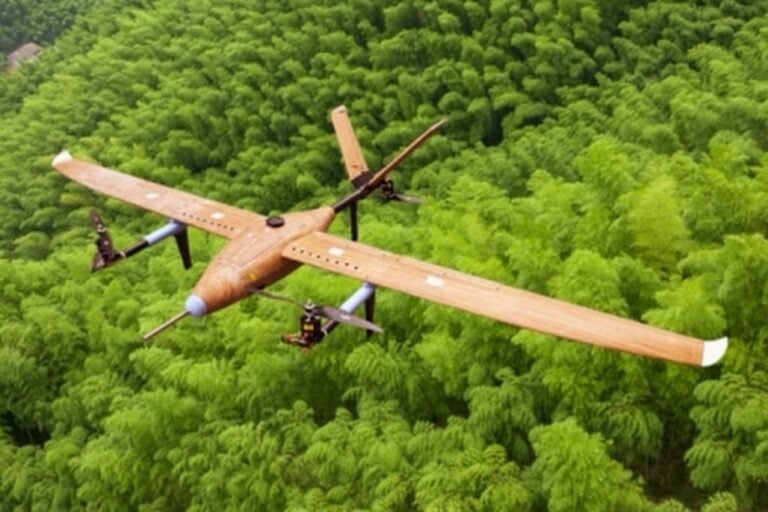
This drone uses only one motor. It also uses a single wing that sits off to the side of the body. At first glance the layout almost looks broken. But this odd design works because it uses the Magnus effect. Instead of a normal wing that cuts through the air like an airfoil, this wing spins. The shape is similar to a Savonius style wind turbine. When it rotates through the air, it produces lift.

The drone does not spin the wing with its own motor. Instead the whole craft spins. A single propeller pushes in a way that causes the frame to rotate. Once the body reaches a fast enough spin rate, the Magnus effect takes over. The wing begins to pull upward and the machine rises off the ground. It looks wild. It also looks like it should not work, yet it does.

Starsistor reached this point only after many failed tests. The first versions had almost no rotational inertia. The drone would start spinning and then tip at high speed like a toy top that is about to fall. The fix was to move the propeller farther away from the center. That change helped stabilize the rotation. The craft still lacked active control, but it was finally able to stay in the air long enough to prove that the idea was real. For a design this unusual, that is already a victory.
Builders Keep Trying To Make Magnus Lift Work
Magnus effect aircraft appear in the drone world every few years. The idea seems simple. Spin a cylinder and get lift. But builders always find out that the reality is tougher than the physics diagram suggests. James Whomsley from Project Air went through that challenge when he tried to build his own Magnus plane as a side experiment.

His aircraft had a T shaped layout with two spinning cylinders mounted across the top. A brushless motor and a belt system kept them rotating. A separate motor with a propeller pushed the aircraft forward. A small rudder provided basic steering. With the battery mounted under the main tube, the craft looked stable enough to try.
James’s first test flight surprised him. The plane lifted cleanly and looked promising. But that success fell apart right away. The center of gravity was off. The plane pitched too much. The power system was not strong enough. The drag from the spinning cylinders was worse than expected. James had to rebuild many times with larger motors, a bigger rudder, shorter wings, and a higher thrust line. Every change helped a little. The final version still flew like a wild animal, but it stayed in the air long enough to count as a win.
A Fun but Difficult Way To Fly
Magnus effect aircraft behave in a way that feels the opposite of normal wings. They need rotation. They need torque balance. They need strong structure to handle sideways forces. Even tiny balance errors can flip the craft at once. This is why airfoils dominate aviation. They are simply easier to control.
But these strange machines show that there is still room to explore new forms of lift. The results may never replace normal drones, yet they tell us something important. Creativity in this hobby is alive.
DroneXL’s Take
Magnus effect drones always look unreal. They spin like toys and somehow climb into the sky. They are not practical yet, but they remind us that the future of flight does not need to follow the past. Sometimes the best part of this hobby is watching someone try a crazy idea until it finally works… and maybe DJI grab the idea and made a new Magnus Drone.
Photo credit: Youtube / @starsistor
Discover more from DroneXL.co
Subscribe to get the latest posts sent to your email.
Check out our Classic Line of T-Shirts, Polos, Hoodies and more in our new store today!

MAKE YOUR VOICE HEARD
Proposed legislation threatens your ability to use drones for fun, work, and safety. The Drone Advocacy Alliance is fighting to ensure your voice is heard in these critical policy discussions.Join us and tell your elected officials to protect your right to fly.

Get your Part 107 Certificate
Pass the Part 107 test and take to the skies with the Pilot Institute. We have helped thousands of people become airplane and commercial drone pilots. Our courses are designed by industry experts to help you pass FAA tests and achieve your dreams.

Copyright © DroneXL.co 2026. All rights reserved. The content, images, and intellectual property on this website are protected by copyright law. Reproduction or distribution of any material without prior written permission from DroneXL.co is strictly prohibited. For permissions and inquiries, please contact us first. DroneXL.co is a proud partner of the Drone Advocacy Alliance. Be sure to check out DroneXL's sister site, EVXL.co, for all the latest news on electric vehicles.
FTC: DroneXL.co is an Amazon Associate and uses affiliate links that can generate income from qualifying purchases. We do not sell, share, rent out, or spam your email.