The Federal Communications Commission on July 10 proposed $25,000 fines against eight companies it suspects of selling rebranded DJI hardware in the United States, and it gave all of them until July 20 to answer the questions they have been dodging since May. The eight are Cogito Tech, Fikaxo Technology, Lyno Dynamics, Skyhigh Tech, Spatial Hover, SZ Knowact Robot (the company behind the Skyrover drone brand), WaveGo Tech, and Xtra Technology.
None of these names will surprise DroneXL readers. I first reported on the Fikaxo proxy in September 2025 and on Spatial Hover a week later, back when the shell-company pipeline was an open secret that most of the mainstream press would not touch. Ten months later, the paper trail has caught up with all eight.
The fines are not about the drones and cameras themselves, at least not yet. Each company is being penalized for refusing to respond to the FCC’s Letters of Inquiry, a procedural violation that carries its own penalty regardless of what the eventual product investigation finds.
Eight Companies Ignored Federal Letters And Now Face A July 20 Deadline
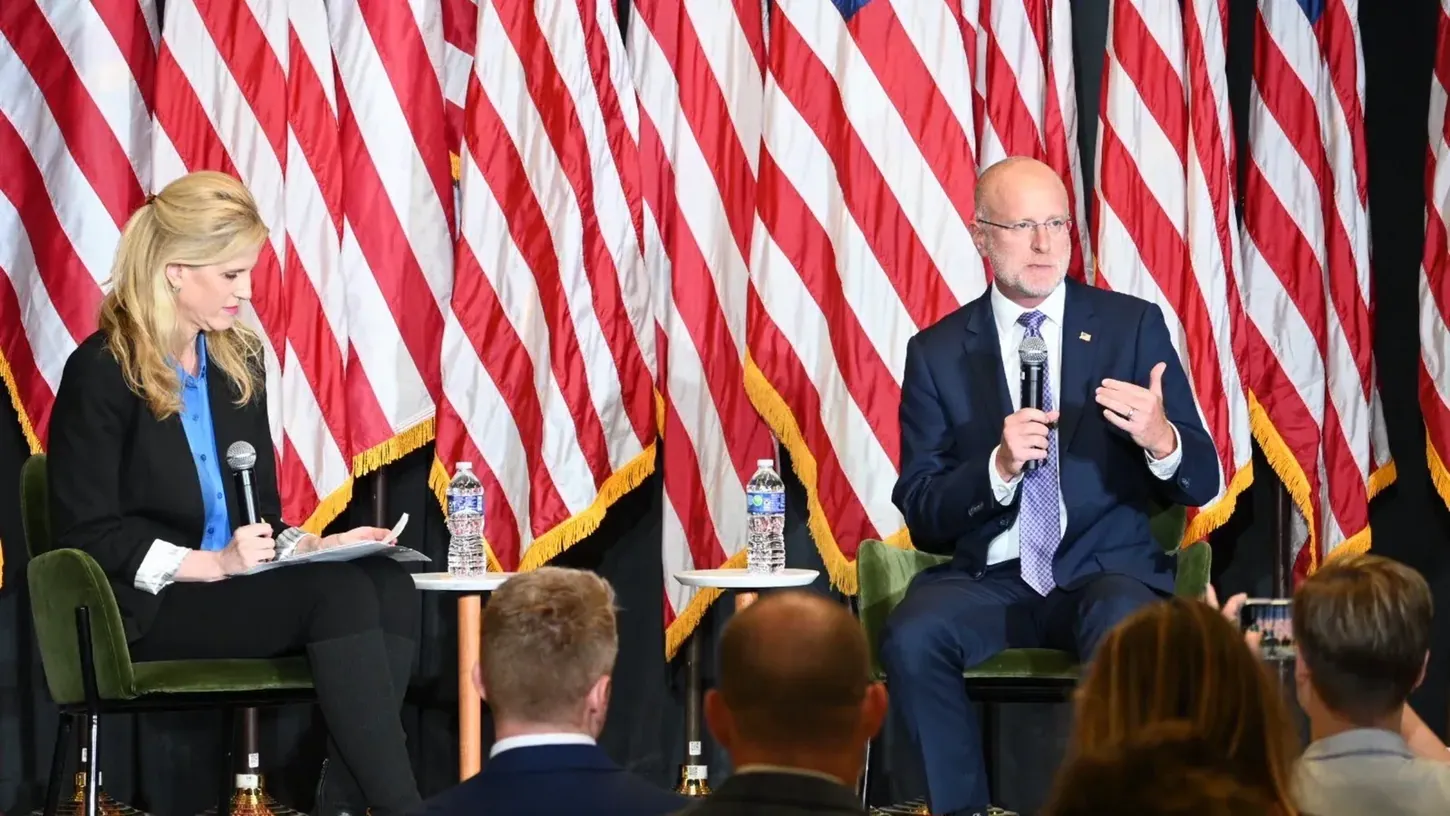
The FCC’s Enforcement Bureau issued Letters of Inquiry in May 2026 asking each company whether it markets radio-frequency equipment tied to the Covered List, and none of the eight responded, triggering the $25,000 proposed forfeitures announced July 10. The Notices of Apparent Liability (NALs), signed by Enforcement Bureau Chief Patrick Webre, are published on the FCC’s website.
The Cogito Tech document lays out the timeline in detail. The Bureau sent its Letter of Inquiry on May 8, 2026, by certified mail and email to the U.S. agents Cogito itself designated in its FCC equipment filings. The response deadline was May 22. Silence. A deficiency letter followed on May 29, with delivery confirmed to both the company and its agent, setting a new deadline of June 5. More silence. One of the two designated agents could not be reached at all: both the email and the certified letter came back undeliverable.
That pattern matters for the penalty math. The base forfeiture for ignoring Commission communications is $4,000. The Bureau adjusted it upward to $25,000 per company because the conduct was, in the agency’s words, “egregious, intentional, and continuous.” The statute allows far worse: up to $25,132 for each day of a continuing violation, capped at $188,491 per failure to act. Each company now has 10 calendar days from the July 10 release to finally answer the original inquiry, and 30 days to pay or contest the fine.
Konrad Iturbe’s Protocol Scans Set The Investigation In Motion
The trail to these eight companies runs through security researcher Konrad Iturbe, whose automated detection system, published openly on GitHub, flagged the brands months before the FCC acted, and whose findings DroneXL covered in detail last fall. His method was elegant. The system searched FCC filings for devices using the same unique proprietary communication protocol found in DJI equipment listed under Section 1709 of the FY25 National Defense Authorization Act.
Cogito’s Specta Mini and Specta Air drones, sold through Amazon by a Hong Kong company incorporated in June 2022, carried that protocol fingerprint. So did hardware from the other flagged brands, including the Fikaxo drone DroneXL investigated in September 2025 and the same aircraft that later migrated to Spatial Hover’s website.
The protocol scans supplied forensic certainty, but spotting these products never required special tools. Xtra’s own marketing invites the comparison, pitching its Muse 2 Pro as the jump “from Pocket to Pro.” Mainstream tech outlets flagged the Skyrover and Xtra lineups as suspiciously familiar within weeks of their appearance, noting how closely their designs and spec sheets track DJI’s catalog.
When I published the Fikaxo investigation last September, the December 23 statutory deadline was still looming and DJI was not yet on the Covered List. The FCC added all foreign-made drones and critical components to that list on December 22, 2025, converting Iturbe’s protocol matches from an academic curiosity into potential evidence of covert marketing of restricted equipment.

The Fines Punish Silence, Not Hardware
Nothing in the July 10 action determines that any Specta, Skyrover, or Xtra product violates FCC equipment rules, and nothing pulls existing gear off shelves or grounds drones already in customers’ hands. The proposed forfeitures rest entirely on the failure to respond to a Commission order, which decades of precedent treat as a standalone violation.
That distinction cuts both ways. The companies could theoretically respond by July 20, cooperate fully, and face nothing further if their equipment somehow checks out. But the FCC armed itself for the other outcome back in October, when it voted 3-0 to grant itself authority to revoke previously approved equipment containing Covered List components. If the investigation confirms these products are DJI hardware in disguise, their existing authorizations can be pulled, and the import and marketing bans follow.
The agency has already shown it will use that machinery. Its June 26 public notice cut off imports of legacy Huawei and Hikvision gear, a move I flagged as a live-fire demonstration of how DJI grandfathering could end.
The Test Lab Angle Reaches Beyond The Front Companies
The enforcement push extends upstream to the laboratories that certified this hardware in the first place. On May 11, the FCC issued a notice of intent to withdraw recognition of SGS Shenzhen as an accredited test lab, citing its 15 percent ownership by China Standard Science & Technology Group, which is wholly owned by the state-run China National Institute of Standardization. The Verge reported that SGS-CTST tested the DJI Osmo Pocket 4 and 4 Pro as well as WaveGo Tech equipment.
Disqualifying a test lab is a supply-chain weapon. Certification runs through a limited roster of recognized laboratories, and removing one complicates the path to market for every product that relied on it. Paired with the retroactive revocation power, the FCC is dismantling the certification plumbing the front-company strategy depended on, piece by piece.
DroneXL’s Take
I have two reactions to these fines, and they pull in opposite directions.
The first is disbelief that anyone thought this would work. It is bizarre to believe you can launch DJI clone products in the biggest, most scrutinized drone market on earth and have nobody notice. You do not need to be a security researcher to see that an Xtra Muse looks and works like a DJI Osmo Pocket, or that Skyrover’s lineup mirrors DJI’s model for model. Any pilot browsing Amazon could spot it, and plenty did. Konrad Iturbe supplied the technical proof, running protocol scans in public, on GitHub, for free, and DroneXL documented the shell game last fall. Which makes the other side of the ledger just as strange: it still took the federal government ten months to act on evidence hiding in plain sight. If clone hardware this obvious can sit in mainstream retail listings for the better part of a year, the enforcement gap was never a detection problem.
The second reaction is discomfort, because this crackdown proves a point I have been making since December 22: the ban was built on procedure, not evidence. DJI got added to the Covered List because no agency bothered to complete the security audit Congress ordered. Now eight companies are being fined for a paperwork offense, ignoring letters, rather than for any demonstrated harm from their products. The FCC keeps winning on process while the underlying security question sits unexamined. I oppose the shell games. Regulatory arbitrage through disposable Hong Kong entities is exactly the unfair competition DroneXL has always called out, whether it comes from Shenzhen or from protectionists in Washington. But fining proxies for silence is not the same as proving DJI hardware endangers Americans, and nobody in this administration seems in a hurry to attempt the second thing.
Watch July 20. If all eight companies stay silent past that deadline, expect the FCC to escalate toward revoking their equipment authorizations, the exact power it granted itself in October 2025. And watch DJI’s Ninth Circuit case, where the company claims the ban will cost it $1.56 billion in 2026 alone. A court ruling that narrows the Covered List designation would gut the legal foundation under every one of these NALs. The front companies were a bet that Washington wasn’t paying attention. Washington is paying attention now.
Sources: Federal Communications Commission, The Verge.
DroneXL uses automated tools to support research and source retrieval. All reporting and editorial perspectives are by Haye Kesteloo.