
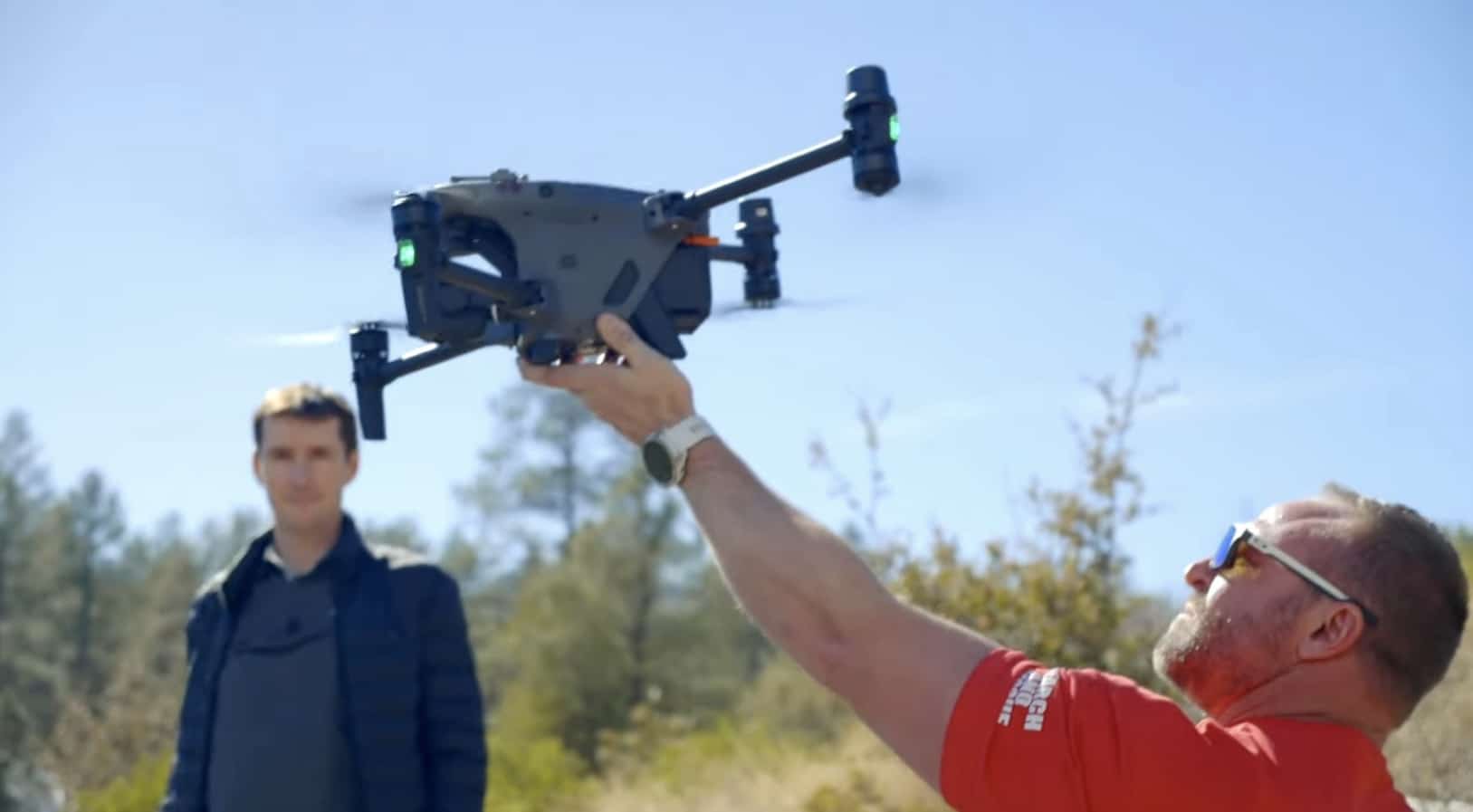
Captain Kyle Nordfors, the drone coordinator for Weber County Search and Rescue in Utah, has taken his fight against the Federal Communications Commission’s “military-grade” drone proposal to Washington’s own newspaper. In an opinion piece published by The Hill this morning, October 2, he writes that the drones the FCC wants to pull from the US market have helped his volunteer team save an estimated 25 to 30 lives and cut its average search from four and a half hours to under one.
The proposal, in PS Docket 26-189, would bar the import and sale of foreign-made drones carrying a thermal camera or LiDAR, among other categories. Nordfors says that describes nearly every aircraft his team flies, including the one that found a snowboarder in the dark two years ago.
He also says he has flown the American-made alternatives, and none of them match his fleet. The companies positioned to replace it charge three to eight times as much.
Nordfors Puts a Price on the Fleet and on the Alternative
Weber County bought its entire fleet of 12 drones for roughly $90,000, Nordfors writes in The Hill. A helicopter costs millions before crew, fuel and standby time. The thermal drone in that fleet had eyes on a missing North Fork snowboarder in 10 minutes, hours faster than a ground team or a helicopter launch.
The North Fork rescue is one DroneXL readers know. Our December 2025 investigation into DJI drones saving American lives documented it: a pre-release DJI Matrice 30T found the snowboarder off-trail, after dark, with ice forming on his skin. Nordfors uses the same case in The Hill to make the point that the FCC’s proposal would classify that exact aircraft as military-grade because of its thermal camera, and the LiDAR that keeps it out of trees and cliff faces.
On the domestic alternatives, Nordfors is specific. He writes that the US-made drones on the market cost three to eight times as much and deliver less than half the capacity, with shorter flight times, weaker thermal sensors and less reliable performance in high winds and cold. “I have tested them, and none have been able to match what my team’s current fleet can do,” he writes.
The federal government’s own test lab reached the same result, and DroneXL published it yesterday. A DHS addendum marked For Official Use Only scored the Matrice 30T at 4.3 out of 5 at Hudson Yards, against 3.7 for the Skydio X10D, with the DJI Matrice 4T at 4.6, the highest mark of any aircraft in the Blue UAS series. The two DJI aircraft outscored both Blue UAS on all nine criteria. DHS left those scores out of the public report.

That is the same claim he put on the record with the Commission itself. His comments in Docket 26-189, filed on September 2 and published in full by DroneXL, named Skydio directly and said the proposal would set the country back an easy ten years. The Hill piece drops the names and the “blood on their hands” language and keeps the numbers.
The Record Shows 16 Comments in Support of the FCC
Nordfors cites Pilot Institute’s analysis of the docket, which found 98.6 percent of comments opposed the proposal and just 16 supported it. Pilot Institute, a DroneXL partner, read and coded all 3,824 filings with readable text; Greg Reverdiau walked through the method and the results on DroneXL on September 9. On the economic-impact question, 1,701 filings addressed it and one agreed with the FCC.
Nordfors writes that many of the opposing comments came from agencies like his. The proposal’s own economic analysis tentatively concluded the impact would be minor and contained because domestic production is more prevalent in the higher-end categories. The comment record, and his own cost figures, say otherwise.
He closes the piece with the same offer he made the Commission: come to Utah and watch a search. “See side-by-side how the American drones match up to the equipment you want to ban,” he writes.
Nordfors is the sUAS Team Coordinator for Weber County Search and Rescue and UAS Chairman of the Mountain Rescue Association, which covers more than 90 rescue teams in North America. He is a 25-year aviation veteran and a current Boeing 737 captain for a US legacy airline. He won the Unsung Hero Award at the Global Search and Rescue Excellence Awards in London in May 2025 for the drone work behind these rescues.
DroneXL’s Take
Kyle is a friend, and I have covered his team’s rescues for years, so take this with that disclosure. He is right, and the fact that he has to say it in The Hill instead of being heard in the docket tells you something about how this proposal was built.
The FCC asked whether domestic alternatives exist and whether the economic impact would be minor. A rescue pilot with an airline captain’s certificate answered both questions with numbers: $90,000 for 12 aircraft, a search time cut by three and a half hours, and a domestic alternative that costs up to eight times more and does less than half the job. Then 3,770 other filers said some version of the same thing, and DHS’s own evaluators put the Matrice 30T six tenths of a point ahead of the best Blue UAS at Hudson Yards and filed the result where the public could not see it. A month after the record closed, the Commission has issued no order, and Nordfors is still extending the Utah invitation in print, which tells you nobody took it. I don’t expect the FCC to argue with his numbers. My read of the December Covered List action is that the agency’s habit is to not engage with the public safety record at all, and this docket is on the same path.
I have been making the “drones for good” argument since my DroneDJ days, and the people who need to hear it most are the ones who still think of drones as toys. A retired FDNY firefighter laughed at the idea over lunch a few years ago. Nordfors’s piece is written for that reader, not for me, and it is the right venue for it. Congressional staff read The Hill. I doubt many of them read PS Docket 26-189.
Whether the Commission’s order, whenever it comes, addresses the public safety record directly or hides behind its tentative finding that only recreational users are affected is the test. If you run a rescue program and have not told your congressional delegation what your fleet does and what it would cost to replace, Nordfors just wrote the template.
Source: The Hill; Pilot Institute FCC comment record analysis; FCC Public Notice DA 26-758
DroneXL uses automated tools to support research and source retrieval. All reporting and editorial perspectives are by Haye Kesteloo. Read our editorial standards.


