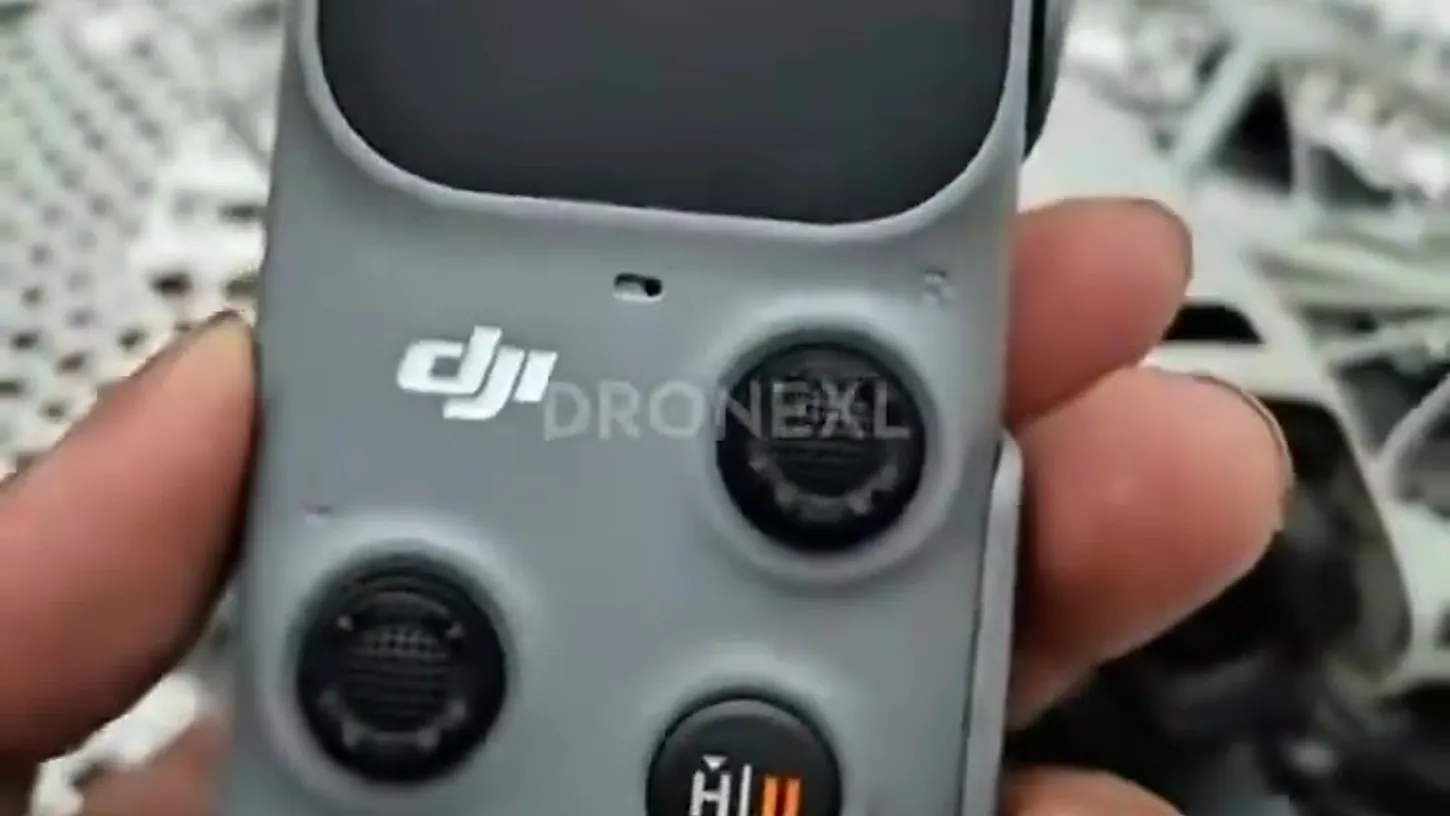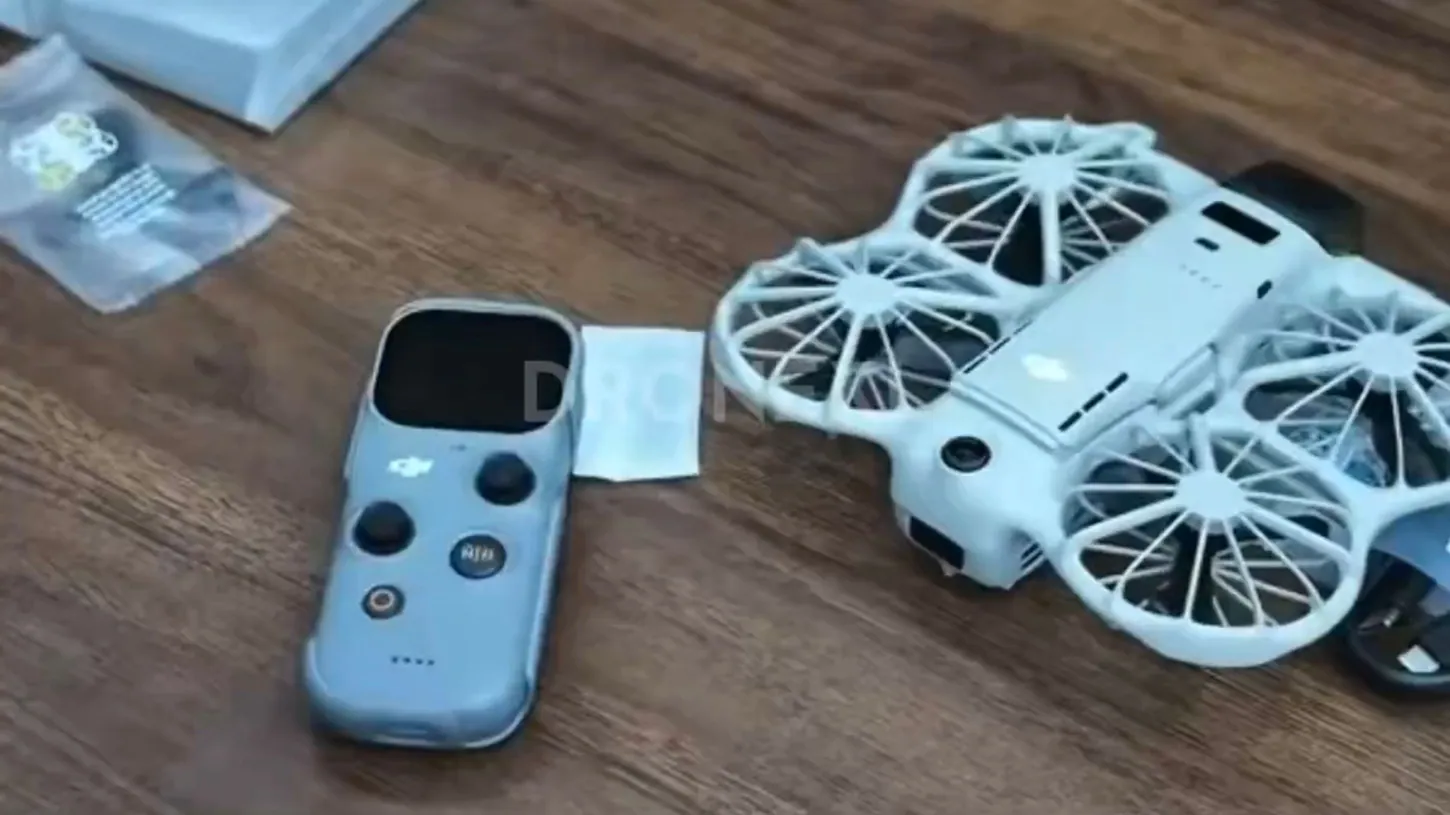
The DJI Neo 3 flies on a three-cell battery. A label photo that surfaced Wednesday afternoon in the replies to Jasper Ellens’s latest Neo 3 post reads 1,800 mAh, 10.5 V nominal, 12.9 V maximum charge and 18.9 Wh. The DJI Neo 2 battery is a two-cell, 1,606 mAh pack at 7.16 V and 11.5 Wh, so no Neo 2 pack will ever go into this drone and no Neo 3 pack will go into a Neo 2.
Ellens, who writes for DroneXL, posted two photos at 3:02 p.m. Eastern from the same Indonesian owner whose videos DroneXL covered on Wednesday morning: the drone from the front on a shop counter and the underside of a propeller cage with its screws. He put them up to answer readers who asked how the Neo 3’s propellers come off, and to close the argument over whether the footage was AI-generated. Reader Ángel, posting as @gelon1983, added the battery photo two hours later and counted seven contacts on the pack against five on the Neo 2’s.
The leaked spec sheet never mentioned a battery, and it still lists no flight time.
The Neo 3 Pack Holds 64 Percent More Energy Than the Neo 2’s, in a Third Cell
The Neo 3 flight battery stores 18.9 Wh, against 11.5 Wh for the Neo 2 and 10.5 Wh for the original Neo. Its 10.5 V nominal and 12.9 V charge voltage mean three cells in series, against two before. Capacity is 1,800 mAh, just 194 mAh above the Neo 2’s.
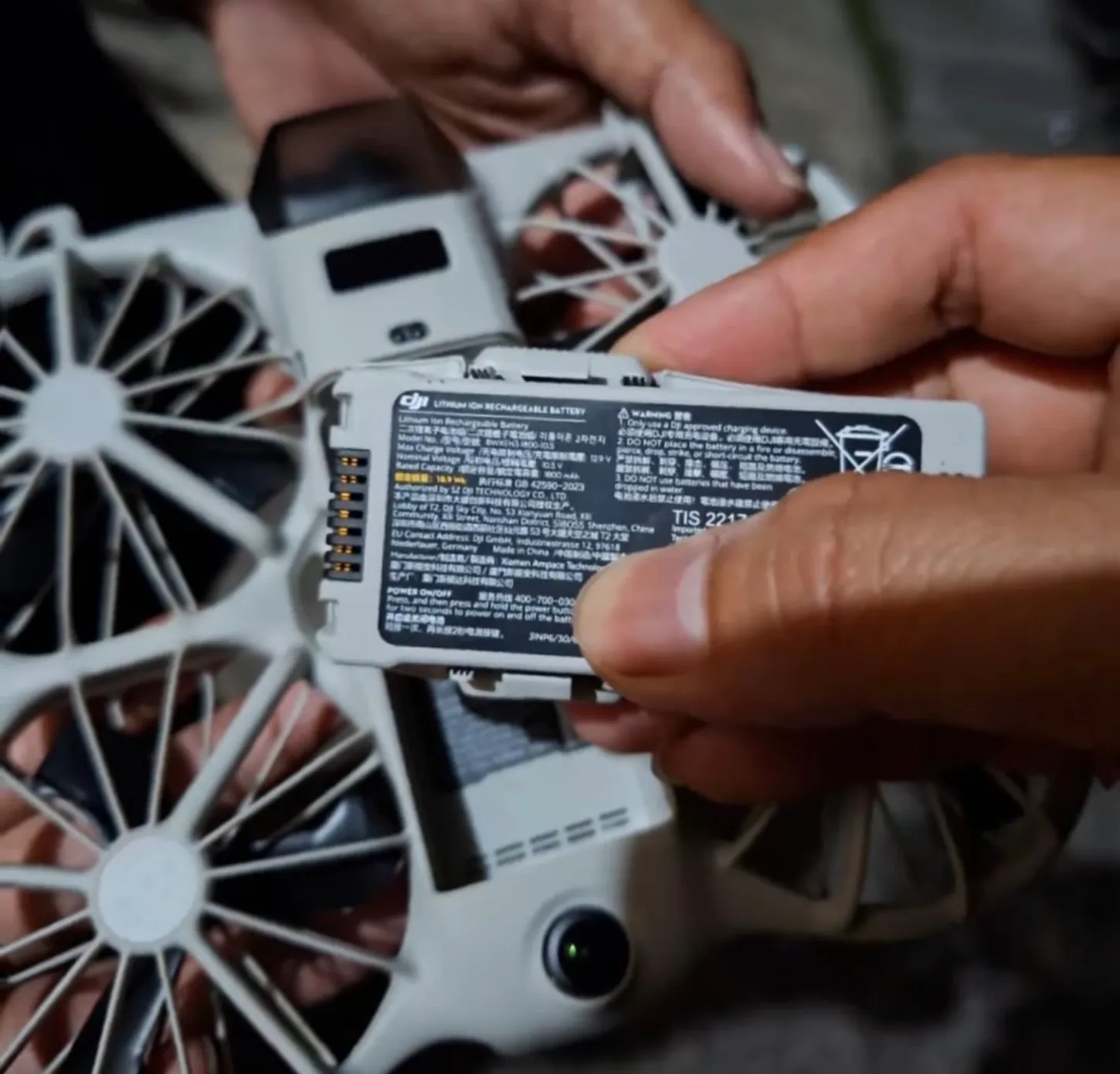
The label names Xiamen Ampace Technology as the cell maker and SZ DJI Technology as the authorizing company, cites China’s GB 42590-2023 battery standard, and carries a Thai TIS 2217 safety mark next to an importer line, on a drone photographed in Indonesia. The cell code along the bottom edge begins 3INP6, the IEC designation for three prismatic lithium-ion cells in series.
Ángel wrote that the pack has “7 pins instead of 5. So, yeah, new set of batteries once again.” He pointed out that DJI kept one battery across the Mini 3, Mini 3 Pro and Mini 4 Pro, and that the same pack works in the Mini 5 Pro. For scale, the Mini 4 Pro’s standard battery is 2,590 mAh at 7.32 V, or 18.96 Wh: the Neo 3 pack holds the same energy at a higher voltage and lower capacity.
No document yet says how long that energy keeps the Neo 3 in the air. The spec sheet Igor Bogdanov leaked on October 1 gives no flight time, and the production listing puts the Neo 3 at 192.7 g against 151 g for a bare Neo 2. The Neo 2’s 1,606 mAh pack is rated for 19 minutes.
Changing a Neo 3 Propeller Means Unscrewing the Cage Hub and Then the Motor
Ellens’s answer is that you unscrew a diamond-shaped part from the bottom of the cage and then unscrew the motor. His photo of two cages from below shows a screw in the centre of each hub and a third where the two cages meet, with the blades inside the spokes.
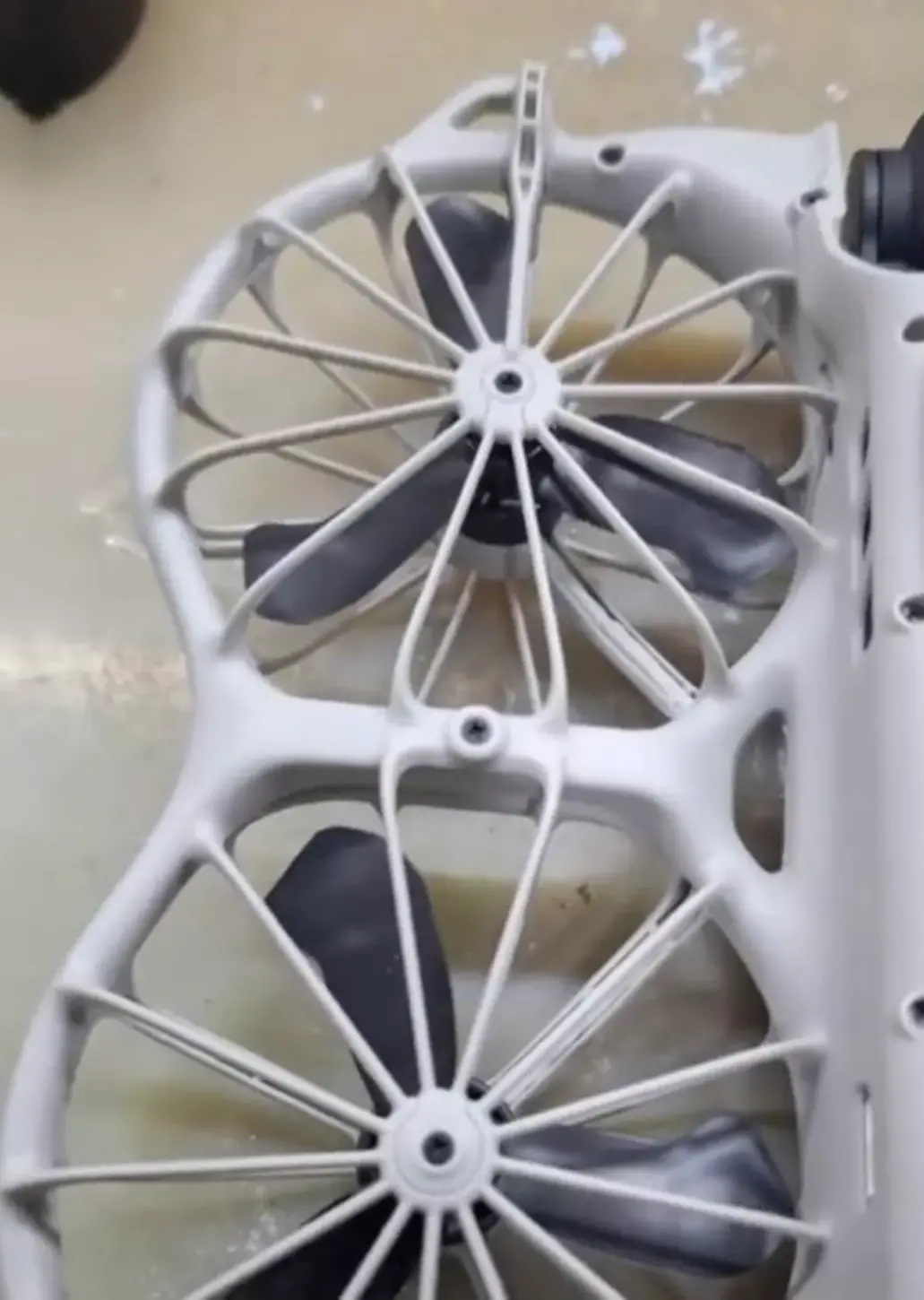
On the original Neo the guard unclips from the airframe without a tool, and each propeller is then held by a screw that DJI’s bundled screwdriver turns. The Neo 3’s cages are moulded into the arms, so the blades sit behind the structure instead of under a removable guard. Reader Taison looked at the photo and asked whether changing one propeller takes eight screws. Ellens had not answered him by Wednesday evening. The retail box DroneXL went through in September lists spare propellers and a screwdriver in the Fly More Combo.
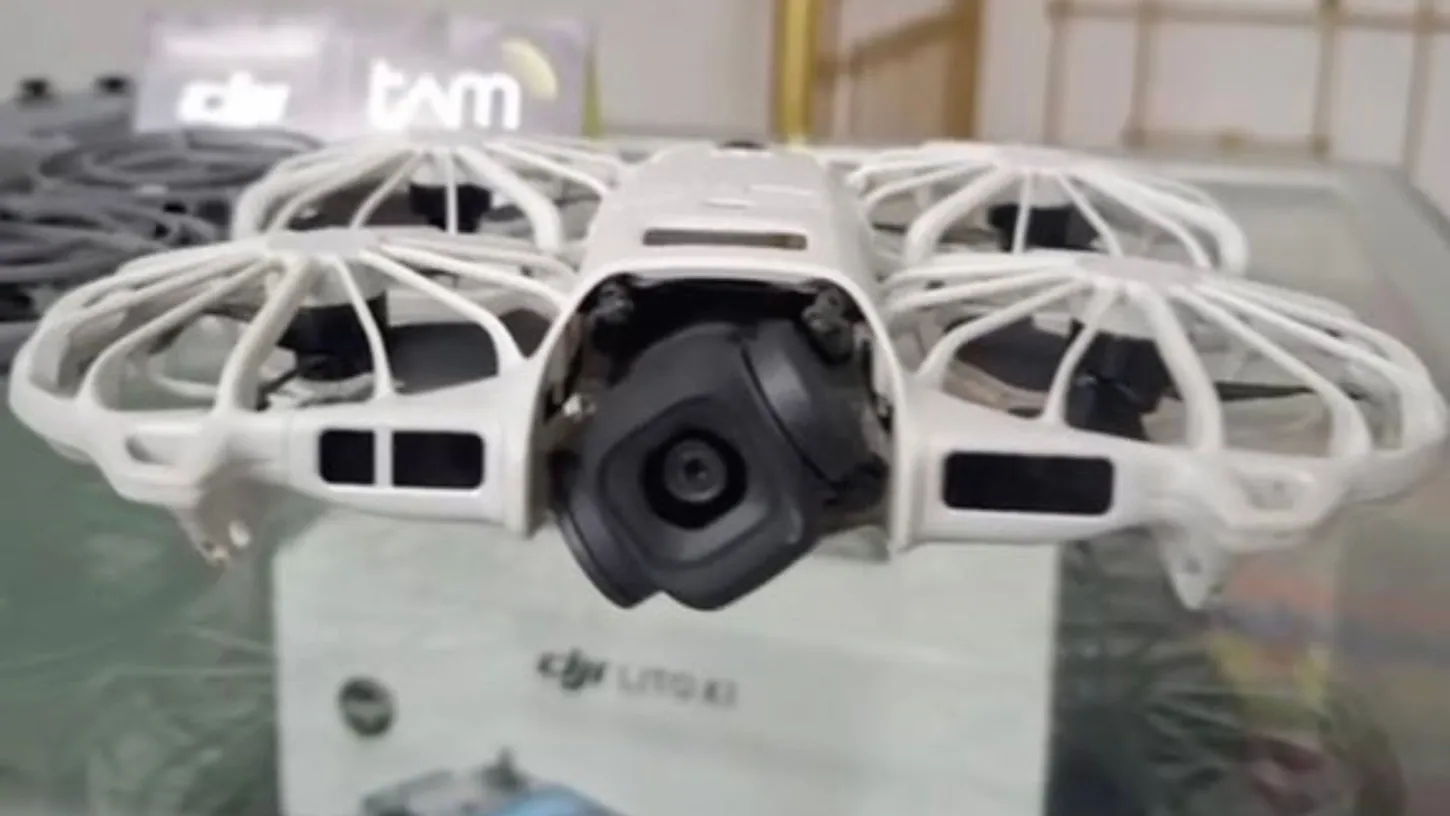
The front photo shows the Neo 3 on a glass counter at the same dealer, with a DJI Lito X1 box on the shelf below it, the gimbal camera in its cradle and dark sensor windows on both arms. Ángel wrote that in the owner’s TikTok upload, where the music sits lower in the mix, the Neo 3 sounds as loud as the Neo 2 at about the same pitch. Ellens replied that he is still waiting for a pocket drone that “doesn’t scream in my ears when filming.”
Ellens closed the post with a line for readers who still think the images are generated: if you are still convinced you are looking at AI, “you are pretty much in denial and nothing will convince you.” DJI has not announced the Neo 3, and the aircraft holds no FCC grant, as DroneXL reported on Wednesday.
DroneXL’s Take
The battery is the biggest change DJI has made to the Neo since it launched the line, and it costs every Neo 2 owner their spares. Three cells at 18.9 Wh is Mini 4 Pro energy in a 193 g drone. My read is that DJI went to a third cell for motor headroom, because the Neo 3 weighs 42 g more than a bare Neo 2 and now carries cages and a bigger sensor, and I’d accept that the airframe needed the voltage. The cost is a pack that fits nothing else DJI sells today. Ángel is right that DJI ran four Mini generations on one battery, so DJI knows how to protect an owner’s spares when it wants to. If you already own three Neo 2 batteries, the Neo 3 is a fresh start at the checkout.
Jasper Ellens (@JasperEllens), October 7, 2026
Source: Jasper Ellens on X
DroneXL uses automated tools to support research and source retrieval. All reporting and editorial perspectives are by Haye Kesteloo. Read our editorial standards.