Lakeland's $22M Axon Deal Adds Drones, Taps Immigration Grant
Lakeland OKs a $21.98M, 10-year Axon deal with Drone as First Responder flights. An immigration grant is applied to its first two years. Money itemized.
News, deep dives, and analysis — every Artificial Intelligence story, newest first.
AI in drones is two stories wearing one acronym: genuine autonomy arriving on battlefields, and a marketing word stamped on features that have existed for years. This desk keeps them separate.
The genuine story crossed its threshold in Ukraine. Kolibri, Ukraine’s autonomous FPV, flies 25 miles and finishes strikes alone after losing link. On the other side, a Russian AI drone guided by an off-the-shelf Nvidia Jetson chip killed three civilians in Zaporizhzhia — commodity hardware, weaponized autonomy, documented. The Ukraine desk carries the battlefield context.
The civilian counterweight is real research: University of Houston is building a provable drone safety net — mathematical guarantees rather than marketing assurances. And the marketing tax is real too: DJI drew creator backlash for using an AI avatar to sell a microphone built for human creators.
Autonomy also decides the defensive race — the counter-drone desk tracks interceptors that are themselves increasingly autonomous. Every AI drone story lands in the feed below.
Last updated October 5, 2026 — the feed below updates with every new story.
Lakeland OKs a $21.98M, 10-year Axon deal with Drone as First Responder flights. An immigration grant is applied to its first two years. Money itemized.

Hegseth ordered a four-star Autonomous Warfare Command for Oct. 1, 2027. The memo names no commander, no budget, and needs a law Congress hasn't passed.

Fired as defense minister in July, the man behind Ukraine's Army of Drones launched an Army of Robots and set a six-month target for a humanoid kill.
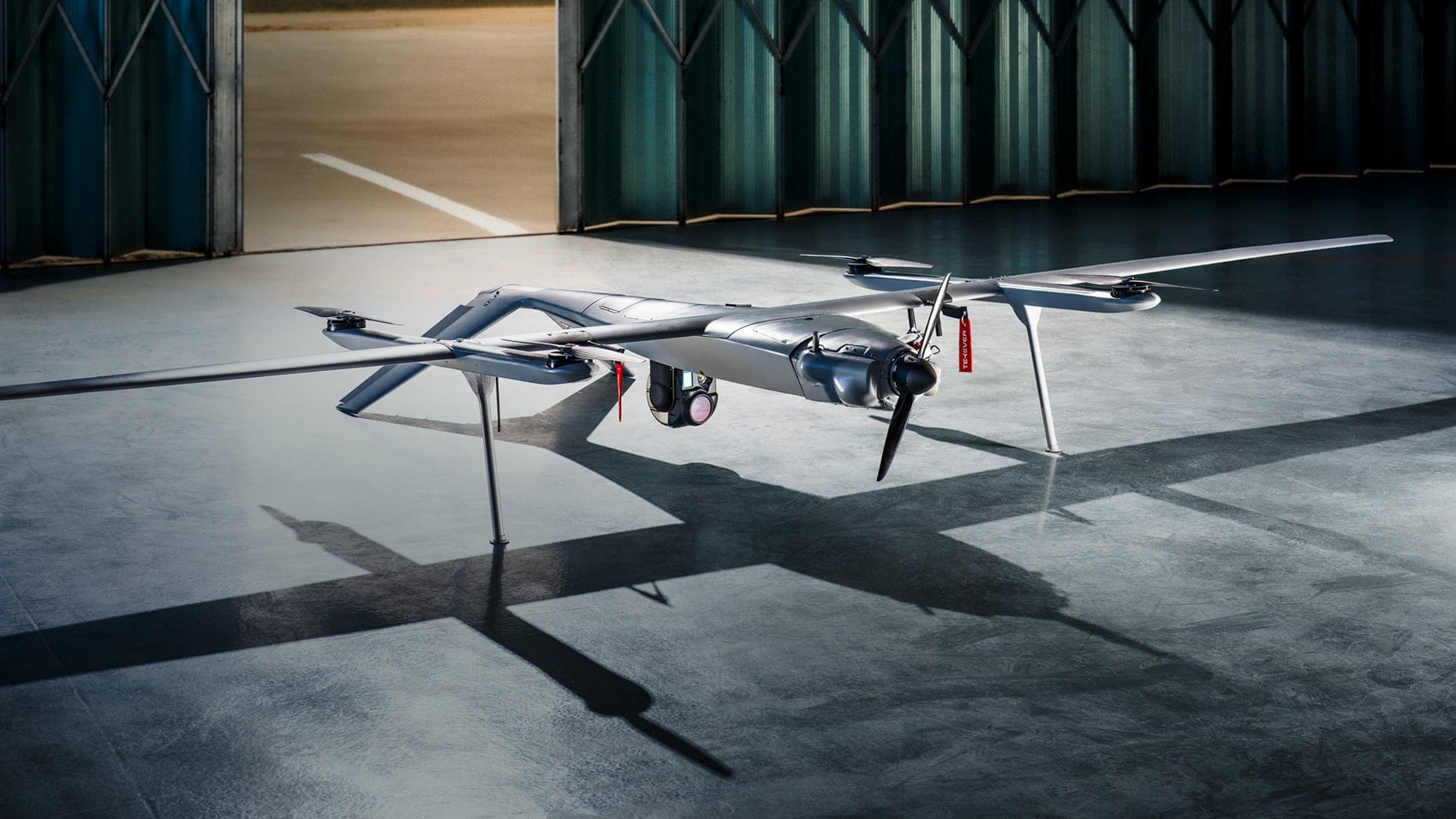
Tekever raised $580 million at a $6.4 billion valuation, led by UC Investments, a week after signing to replace the British Army's Watchkeeper drones.

Scaleout's onboard AI picked an armored vehicle out of a Swedish test range and struck it with no direct human command. Geneva is still arguing.

Joby flew a converted Cessna Caravan 3,199 miles across the US with zero pilot inputs, supervised remotely from California and Shaw Air Force Base.

Flytrex will preposition delivery drones on restaurant rooftops using predictive AI, claiming a 60% cut in cost per delivery and half the wait time.

Two drone experts warn that civilians who build and move attack drones may forfeit noncombatant status, and the texts deciding it date to 2009.
Both, and the difference is the story. Real: autonomous terminal guidance in Ukraine, a strike drone that finishes its attack after losing link, commodity Nvidia chips guiding munitions. Marketing: 'AI' stamped on obstacle avoidance and subject tracking that have existed for years.
The deployed systems mostly navigate and complete strikes autonomously after a human picks the target — but the Zaporizhzhia killing by an AI-guided drone on off-the-shelf hardware shows how thin that line has become in practice.
Seriously, yes — University of Houston's provable safety-net research is the encouraging kind, aiming at mathematical guarantees rather than assurances. It is outnumbered by the deployment pace, which is the honest summary of the field.
One email with the drone news that matters — DJI, FAA, public safety, and everything in between, straight from the newsroom. No spam, no fluff.