DJI Neo Drone Speed Test: Before and After Firmware Update

Check out the Best Deals on Amazon for DJI Drones today!
The DJI Neo had one significant problem when it came to flying: it was pitifully slow. It was so slow that I could actually outsprint it while running, let alone cycling. For a drone that builds much of its reputation on tracking you while doing activities like running and cycling, this was a considerable problem. While it excelled at keeping locked onto you from a following standpoint, it couldn’t keep up with the ride – something that their competitors like Hover could easily accomplish. Previously, the Neo was limited to about 20 kilometers per hour or 13 miles per hour, which is incredibly slow.

Testing Setup
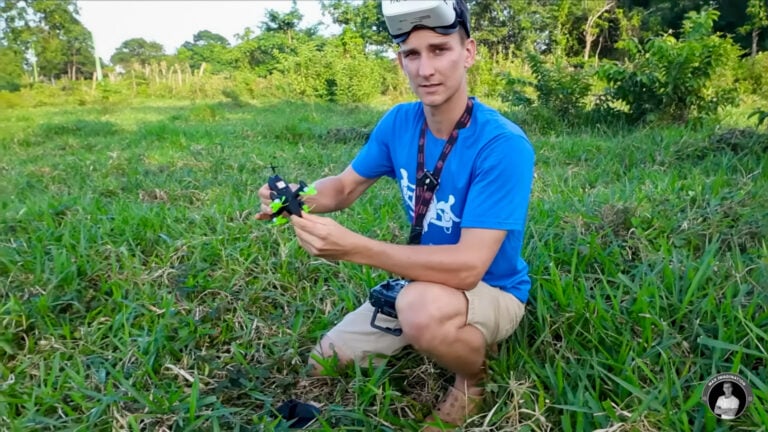
With a firmware update released just yesterday, things supposedly changed. DJI claimed they increased the tracking speed, though they didn’t specify the new speed in the release notes. We’re testing on a dead-end road, which makes it quick and easy to repeatedly test and determine exactly how fast it will go before heading into the woods for real-world testing.
Pre-Update Baseline Testing
In regular mode, flying around without tracking anything, the DJI Neo drone moved at walking speed. For context on how slow this was, I could walk basically next to it. The phone display didn’t show the speed, but it was pathetically slow.
In simple follow mode, using the phone as my tracking device, we started at 15 kilometers per hour. At 20 kilometers per hour, the drone started to slowly fall behind. At 25 kilometers per hour, while it was visually tracking me, it began losing ground. At 30 kilometers per hour (almost 19 mph), we completely lost tracking, so roughly 22 kilometers per hour was the limit in completely open space.
Using the RC2 controller to show the speed, we topped out at 20.5 kilometers per hour. In sport mode, we reached 25-26-27 kilometers per hour. When demonstrating sport mode tracking pre-firmware update, at 20 kilometers per hour it maintained tracking, but at 26 kilometers per hour, I was already moving away from it, and it would eventually lose me if I maintained that speed.
Post-Update Performance of the DJI Neo
The firmware update listed “optimized positioning performance and increased flight speed during tracking,” though without specific numbers. Testing manual control with the phone, there wasn’t much improvement – I was still walking basically as fast as it was going, even in cycling shoes.
However, in tracking mode, the DJI Neo’s performance improved significantly. At 20-22-25-26-30 kilometers per hour, it maintained tracking. At 32-33-34 kilometers per hour, it started to slowly separate. At 35 kilometers per hour with sustained speed, the gap increased steadily. Testing at 40 kilometers per hour showed the drone still following but with a clearly increasing gap.
With the RC2 controller post-update, in normal mode we topped out at about 20 kilometers per hour, similar to before. In sport mode, we reached 28 kilometers per hour, slightly slower than in tracking mode. Holding full sticks forward in perfectly level conditions with no wind, we maintained about 28 kilometers per hour, indicating they didn’t increase the sport mode settings but clearly increased the follow settings to the 32-35 kilometers per hour range.

Woodland Testing
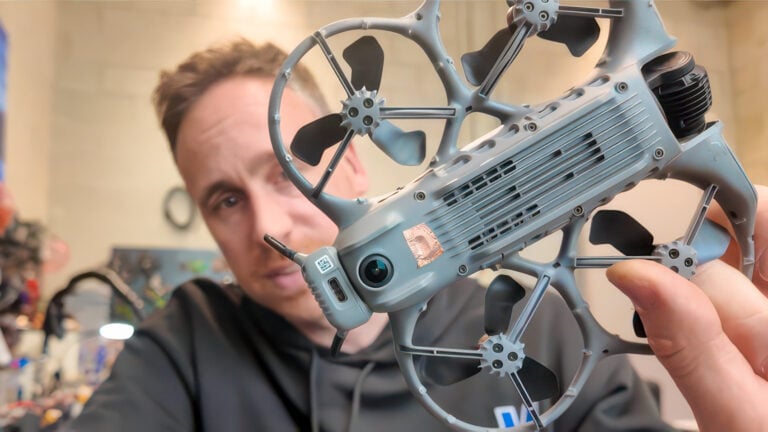
In the wooded area, the DJI Neo demonstrated one of its strengths: following your track on the ground rather than short-cutting turns, which typically means it lasts longer than its competitors. However, since it doesn’t have any obstacle avoidance sensors, it “YOLOs” everything, unlike the Hover drones, leading to some close encounters with trees.
Additional Features and Notes
The device, priced at $199, doesn’t fold, which affects its portability. It doesn’t fit super well in a back jersey pocket – it’s not terrible, but it’s not fantastic. The same goes for running shorts, whereas the Hover just folds and easily fits in any running shorts.
Competitor Context
The comparison Hover drone is currently stuck in customs, having been there for about five to six weeks. They’ve reportedly sent a new one out, but testing results are pending.
Final Assessment of the DJI Neo
Setting aside quality considerations, the Neo is now much more usable thanks to the firmware update. While the lack of folding capability remains a consideration for portability, at $199, the improved following speed and tracking capabilities make the DJI Neo a worthwhile consideration. A full comparison with the Hover Pro will provide more context once customs clearance is achieved.
Thank you for watching this video and I’ll see you in the next one.
Discover more from DroneXL.co
Subscribe to get the latest posts sent to your email.
Check out our Classic Line of T-Shirts, Polos, Hoodies and more in our new store today!

MAKE YOUR VOICE HEARD
Proposed legislation threatens your ability to use drones for fun, work, and safety. The Drone Advocacy Alliance is fighting to ensure your voice is heard in these critical policy discussions.Join us and tell your elected officials to protect your right to fly.

Get your Part 107 Certificate
Pass the Part 107 test and take to the skies with the Pilot Institute. We have helped thousands of people become airplane and commercial drone pilots. Our courses are designed by industry experts to help you pass FAA tests and achieve your dreams.

Copyright © DroneXL.co 2026. All rights reserved. The content, images, and intellectual property on this website are protected by copyright law. Reproduction or distribution of any material without prior written permission from DroneXL.co is strictly prohibited. For permissions and inquiries, please contact us first. DroneXL.co is a proud partner of the Drone Advocacy Alliance. Be sure to check out DroneXL's sister site, EVXL.co, for all the latest news on electric vehicles.
FTC: DroneXL.co is an Amazon Associate and uses affiliate links that can generate income from qualifying purchases. We do not sell, share, rent out, or spam your email.