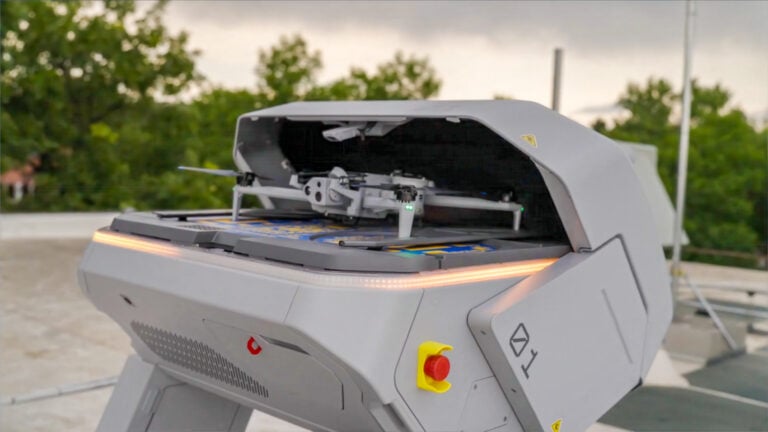
DJI NEO 2 Drone Tracking Ultimate Test! The Gauntlet!

Check out the Best Deals on Amazon for DJI Drones today!
I put the DJI Neo 2 through an absolute gauntlet, and the results genuinely surprised me. We’re talking tight forest trails, cliffsides, high-speed road cycling, and even an abandoned resort run all the way down to the ocean. Multiple crashes, multiple recoveries, and one very tough little drone.
The Neo 2 is DJI’s latest compact follow-me drone, designed to track you through challenging environments using gesture controls, obstacle avoidance, and various follow modes. But can it actually survive real-world punishment? That’s exactly what I set out to discover in this video.

The Test Setup: A Multi-Stage Gauntlet
I designed this test with multiple phases, each progressively harder. We started with a gentle downhill section to the ocean, moved into tight forest trails with downed trees from a recent windstorm, then hit the cliffsides.
After that came the high-speed sections on the road bike. And if the Neo 2 survived all of that, I had one final challenge: navigating through an abandoned resort down to the sea.
The drone was set to cycling mode, following behind me at medium height. No phone control, no remote, just gesture commands and the drone itself.

Gesture Controls: Surprisingly Intuitive
One thing that continues to amaze me is the engineering effort DJI put into avoiding the need for a beacon or remote control. You simply raise your hand, the blue light turns on, and you can direct where you want the drone to position itself.
Wave it to the left, it goes left. Push it up, it rises. Make a fist, it locks in position. It sounds gimmicky, but in practice, it’s remarkably useful for repositioning on the fly.
I moved the Neo 2 from behind me to in front of me multiple times during the test, all without stopping or pulling out a phone. That’s genuinely impressive.

Trail Performance: Tight Trees and Downed Branches
The forest section is where things got interesting. We had downed trees from a windstorm two days prior, and the trails were tight with low-hanging branches and olive trees.
At around 12 mph (20 km/h), the Neo 2 handled the obstacles well. It dipped under branches, navigated around trees, and maintained tracking even when I ducked under obstacles it couldn’t follow through.
When it temporarily lost me, it did exactly what it should do: fell back behind me and reacquired the track. DJI drones are designed to default to rear follow when front tracking fails, and the Neo 2 executed this perfectly.
Did it crash? Yes. Multiple times. But here’s the thing: this drone is designed to crash.

Durability: Built to Take a Beating
This is the critical difference between the Neo 2 and something like a Mini 5 or Mavic. Those drones are not designed for repeated impacts. The Neo 2 absolutely is.
I’ve tested the original Neo, the Hover Air X1, and now the Neo 2 in these active track environments. I’m estimating 200 to 250 crashes across my Hover X1 testing alone. Almost every run ends in some sort of crash.
And that’s totally fine. That’s what these caged drones are designed for. I threw the Neo 2 back in the air repeatedly after crashes, and it kept working without issue. Concrete marks on the body, sure, but fully functional.
Pocketability: Lighter Than a GoPro
For cyclists and runners wondering about portability, here’s the good news: the Neo 2 fits easily in a rear jersey pocket, cargo bibs, or even generic running shorts.
The little antenna pod pops off with a couple of screws. You only need it if you’re flying with a remote control, so for gesture-based tracking, you can remove it and simplify pocketing.
Weight-wise, it’s actually lighter than a GoPro. No issues in the back pocket while cycling or running.

High-Speed Testing: Chasing the 27 MPH Claim
DJI claims the Neo 2 can follow at 27 mph (43 km/h). I tested this on a road descent.
At 25 mph (40 km/h), tracking was solid. As I pushed through 27 mph (43 km/h) and beyond, the drone started falling behind. At 29-30 mph (47-48 km/h), it lost me completely.
But here’s what impressed me: when I slowed down, it caught back up. If I had maintained a consistent speed just under the limit, it would have been fine. The tracking algorithm is smart enough to reacquire you once speeds drop back into range.

The Limitation: No Moving Orbit Without Controller
I have to be honest about one disappointment. You cannot do a moving orbit with the Neo 2 using just gestures or your phone. You need the controller for that feature.
Without the controller, you’re limited to a single stationary circle. For the cool cliffside orbit shot I wanted, this was a bummer. Something to keep in mind if dynamic orbits are important to your workflow.
Abandoned Resort Challenge: The Ultimate Test
For the final challenge, I took the Neo 2 through an abandoned resort all the way down toward the ocean. This meant tight bushes, narrow doorways, and extremely challenging tracking conditions.
The drone navigated through surprisingly well. It followed me under low branches, around obstacles, and even through a building doorway, although the doorway was too narrow for a second attempt.
When it got stuck in a bush, I could literally bump it along to help it escape. The obstacle avoidance kept trying to figure out a path, and while it eventually triggered a collision landing, the attempts were impressive.

Obstacle Avoidance: A Double-Edged Sword
The Neo 2’s obstacle avoidance is both its strength and its limitation. Unlike the Hover Air drones, which follow your exact track assuming if you fit, they fit, the Neo 2 actively avoids obstacles.
This means it won’t blindly follow you into a tree. But it also means it sometimes takes wider paths or gets confused when you thread through gaps it deems too risky.
For open trail running and cycling, this is excellent. For tight technical sections where you’re threading needles, it can be more conservative than you might want.

Final Thoughts
The DJI Neo 2 handled my gauntlet impressively. Multiple crashes, challenging environments, high speeds, and tricky tracking scenarios. It kept coming back for more.
The gesture controls are genuinely useful for repositioning without stopping. The durability is exactly what you need for active sports. And the tracking intelligence, while not perfect, is smart enough to reacquire you after temporary losses.
The main limitations are the 27 mph (43 km/h) speed ceiling and the lack of moving orbit without a controller. If those fit your use case, this is an excellent active tracking drone.
If you want to see how the Neo 2 performs in 31 mph (50 km/h) winds, including out over the cliffs, check out my wind test video. And stay tuned for more drone content coming soon, including the anti-gravity drone from Insta360 and the Hover Aqua.
What do you think about the Neo 2’s tracking performance? Have you tested it in challenging environments? Share your experiences in the comments below.
Discover more from DroneXL.co
Subscribe to get the latest posts sent to your email.
Check out our Classic Line of T-Shirts, Polos, Hoodies and more in our new store today!

MAKE YOUR VOICE HEARD
Proposed legislation threatens your ability to use drones for fun, work, and safety. The Drone Advocacy Alliance is fighting to ensure your voice is heard in these critical policy discussions.Join us and tell your elected officials to protect your right to fly.

Get your Part 107 Certificate
Pass the Part 107 test and take to the skies with the Pilot Institute. We have helped thousands of people become airplane and commercial drone pilots. Our courses are designed by industry experts to help you pass FAA tests and achieve your dreams.

Copyright © DroneXL.co 2026. All rights reserved. The content, images, and intellectual property on this website are protected by copyright law. Reproduction or distribution of any material without prior written permission from DroneXL.co is strictly prohibited. For permissions and inquiries, please contact us first. DroneXL.co is a proud partner of the Drone Advocacy Alliance. Be sure to check out DroneXL's sister site, EVXL.co, for all the latest news on electric vehicles.
FTC: DroneXL.co is an Amazon Associate and uses affiliate links that can generate income from qualifying purchases. We do not sell, share, rent out, or spam your email.