OPUS Project Drones Are Flying Into Tornadoes. For Science.
Check out the Best Deals on Amazon for DJI Drones today!
Nobody handed the OTUS Project a research budget and a lab. Three friends on a midnight phone call in February 2024 decided to build drones from scratch and fly them into one of the most violent forces on Earth.
Less than three months later, Louis Tucker flew the first drone inside a tornado. History made. On a shoestring.
The Team That Built the Impossible
The Observations of Tornadoes by UAV Systems Project was founded by three people with complementary obsessions and zero quit in them. We already wrote about them. Nelson Tucker is the meteorologist, a Millersville University student who has been fixated on tornadoes since childhood and spent years researching their history and science, as KSN reported.
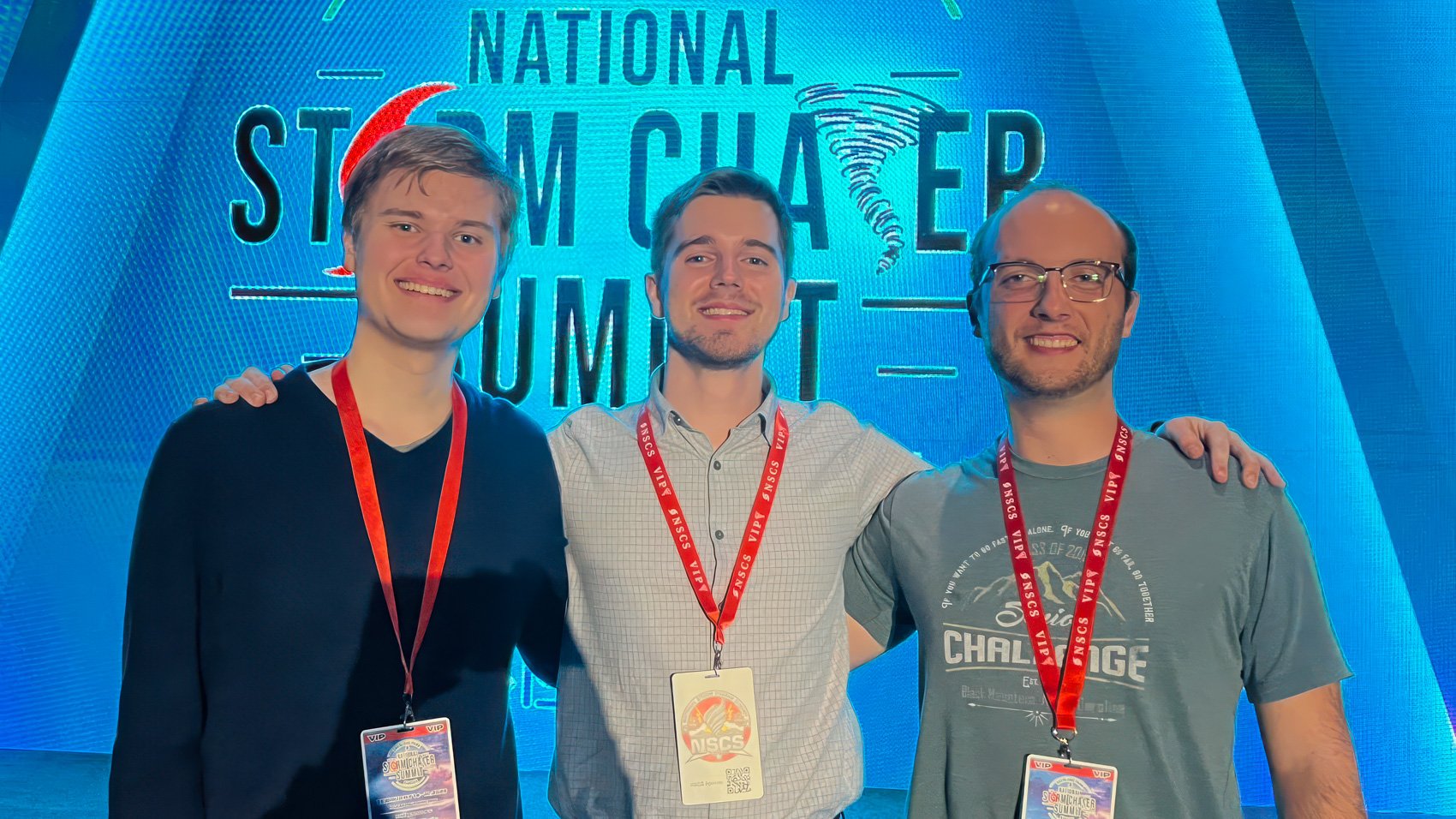
Louis Tucker, his older brother, is the drone builder and operations coordinator, a 2023 National Collegiate Drone Racing Champion who learned to think about aircraft in terms of extreme engineering problems rather than off-the-shelf solutions.
Tanner Beard is the mechanical engineer, the man who turned his house into a workshop with a mill, a lathe, a welder, and a bank of 3D printers. Erik Fox, a storm chaser since 1995 and a working police officer, rounds out the team as the veteran field presence.
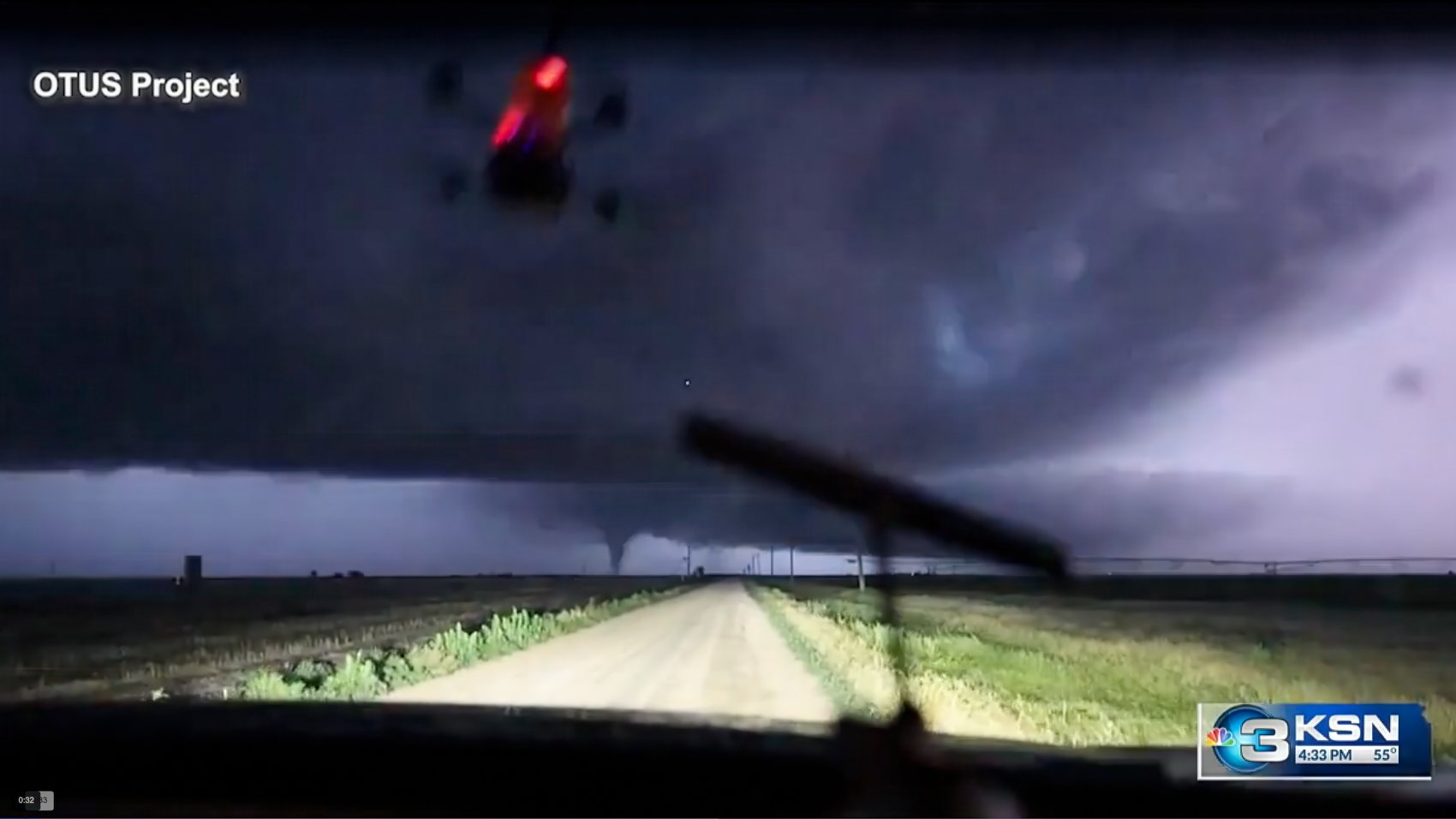
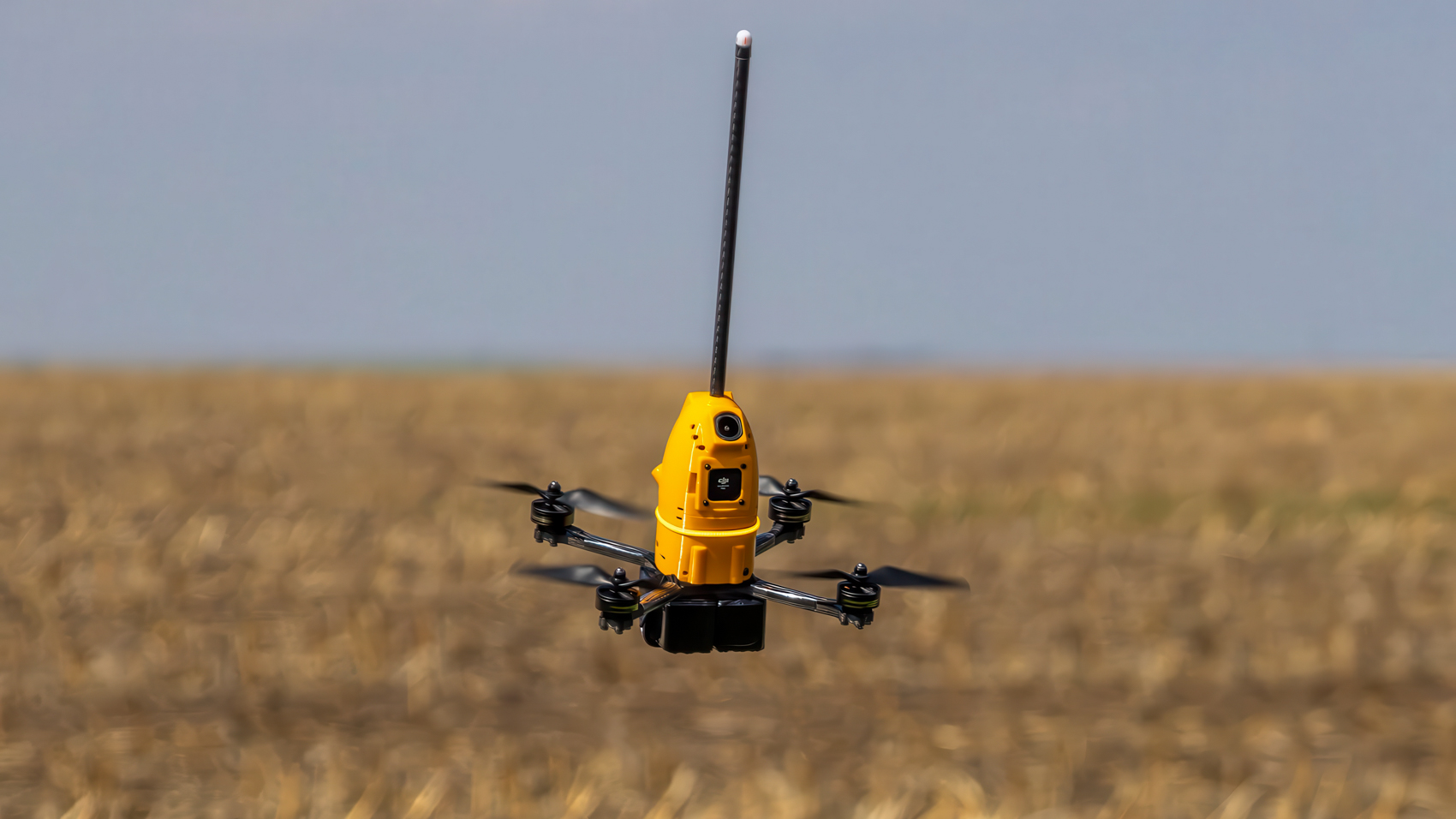
The drones they fly are not products you can buy. They are custom-built, 3D-printed aircraft capable of reaching 220 miles per hour, designed specifically to survive the debris, turbulence, vertical wind loads, and sheer chaos of a tornado’s interior.
Every component is purpose-built. Nothing is borrowed from a consumer catalog. Sensors measure temperature, humidity, pressure, and 3D wind loads simultaneously as the aircraft penetrates the funnel.
“It’s kind of a scary experience,” Louis said. “This is not something you usually want to go towards.”
No. It is not.
One Tornado. Then Eight. Then Twenty.
The first intercept happened in May 2024 near Arnett, Oklahoma. It was the last attempt of a long, exhausting chase season. Nelson called it a Hail Mary throw.

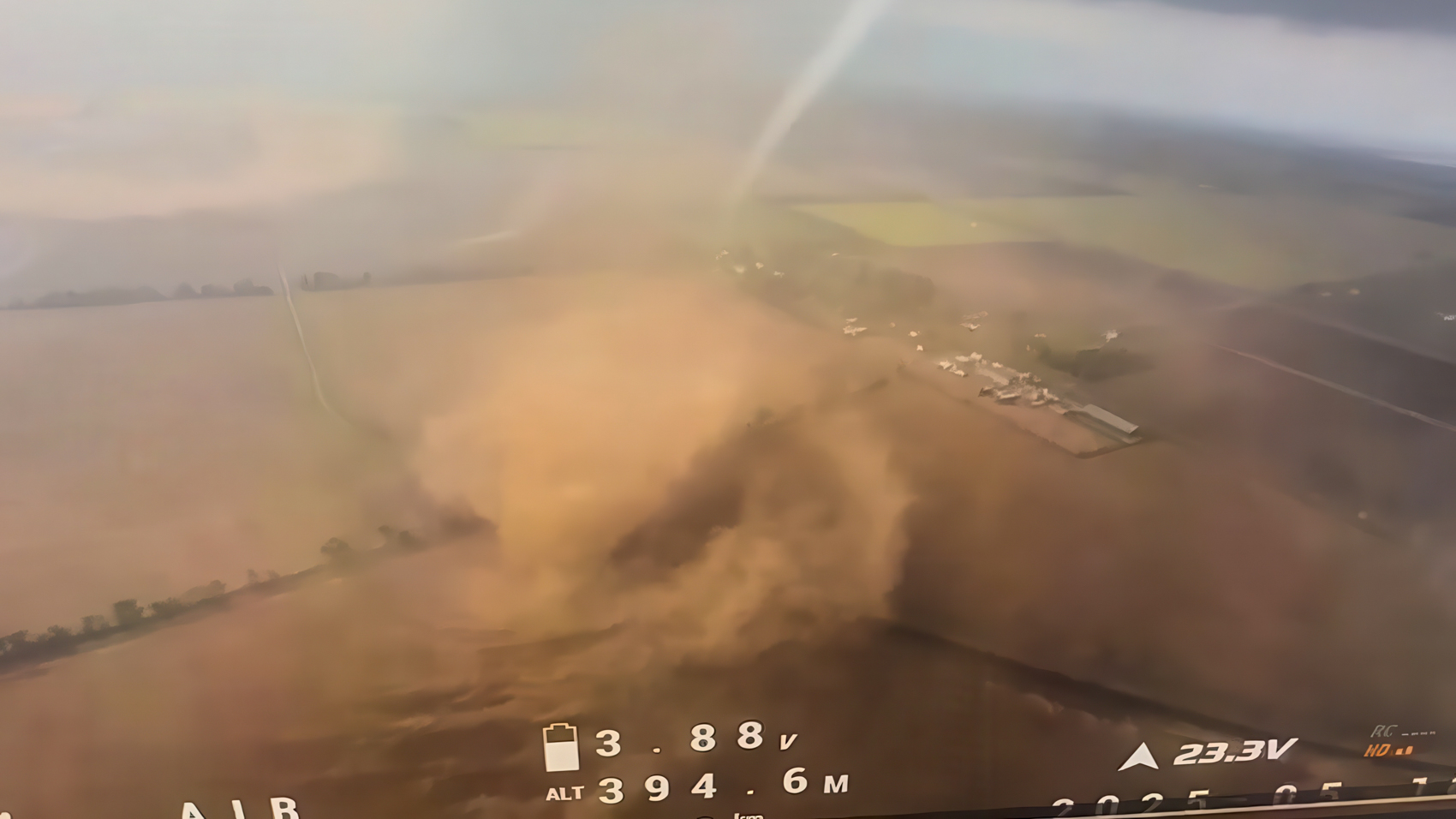
The drone entered a multi-vortex tornado under full pilot control, the FAA had already approved a special waiver for operations in and around active tornadoes, and the team walked away with data that tornado researchers had never been able to collect before.
“We proved that it was possible,” Louis said. “We got measurements we could only dream about.”
In 2025, OTUS expanded dramatically. Eight tornadoes intercepted. Eleven drone penetrations. High-resolution thermodynamic data and flight telemetry captured across multiple storm events throughout the central United States.
Partners now include NIST, the National Institute of Standards and Technology, where Nelson spent a summer fellowship developing an omnidirectional wind sensor capable of measuring the vertical component of tornado winds.
That vertical component is what pulls cars, trailers, and poorly constructed buildings into the air. Getting real measurements of it has been one of the great unsolved challenges in tornado research.
For 2026, OTUS is targeting more than 20 drone intercepts across an eight-week spring field campaign. A custom mobile command vehicle is being outfitted with satellite connectivity, redundant power systems, and integrated wireless drone networks to support operations deep in tornado country. The scale of what started as a midnight conversation between brothers has grown fast.
What This Data Actually Changes
Traditional tornado research has a fundamental problem. Tornadoes move. Ground-based instruments have to be placed precisely in the path of the storm, which requires prediction accuracy that does not yet exist. Turtles, probes, and ground sensors have given researchers fragments of data over decades. None of it comes from inside the funnel.
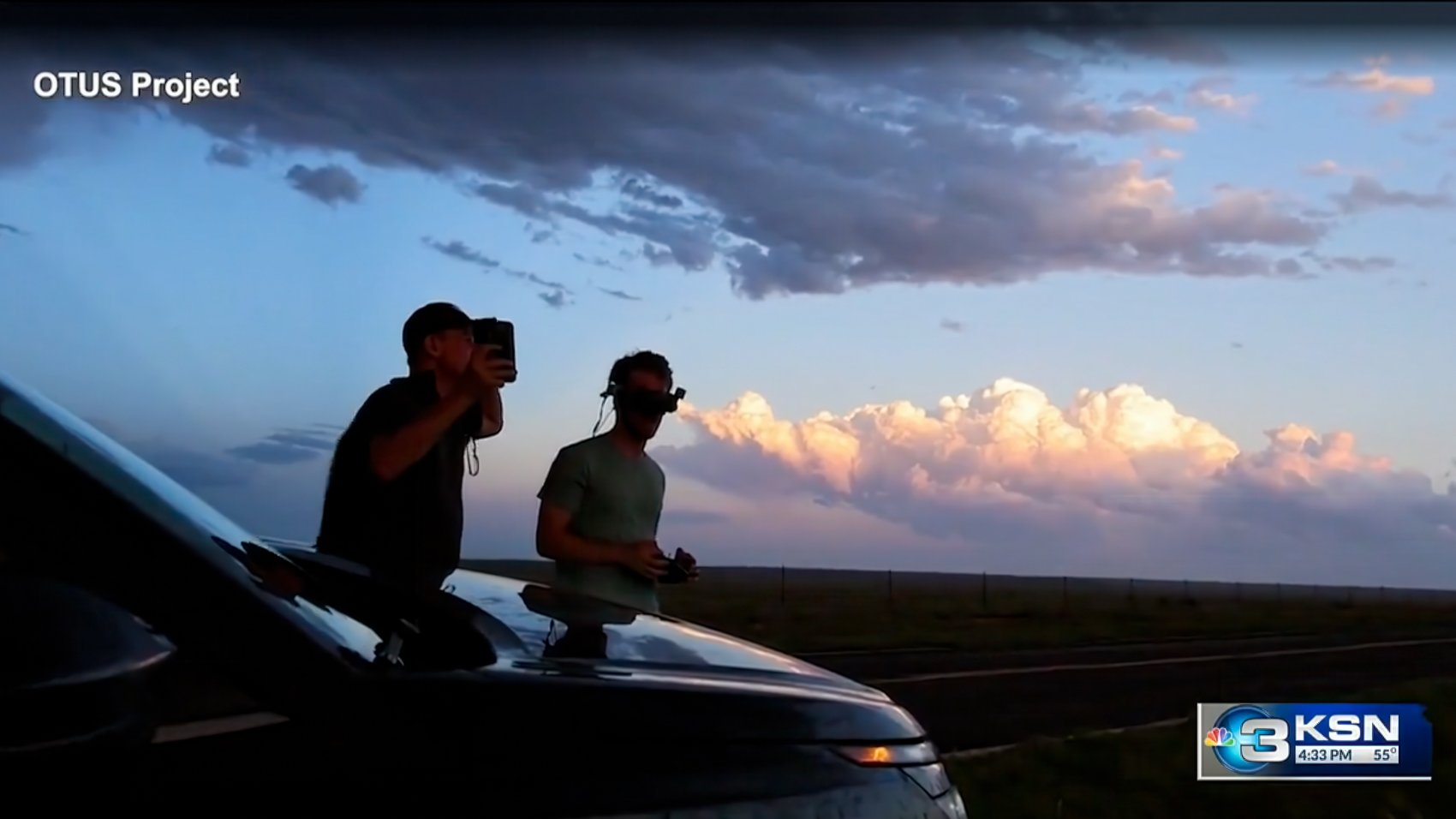
“Drones get you measurements in places where you couldn’t put a person or another instrument,” Nelson said. “They aren’t stuck on the ground. They can reach any part of a tornado, and nobody’s in harm’s way with the operator miles away.”
The OTUS methodology starts with circles. The team flies orbital patterns around the tornado, sampling the surrounding atmosphere at multiple altitudes. Then, as the circles tighten, the drone passes through the funnel itself. The result is a comprehensive picture of what the air is doing both inside and outside the storm simultaneously. No instrument placed on the ground has ever captured that.
The downstream uses are direct and practical. Meteorologists use the thermodynamic profiles to improve computer models and sharpen tornado warning lead times. Structural engineers use the 3D wind load measurements to understand how tornado forces act on buildings and update construction standards accordingly.
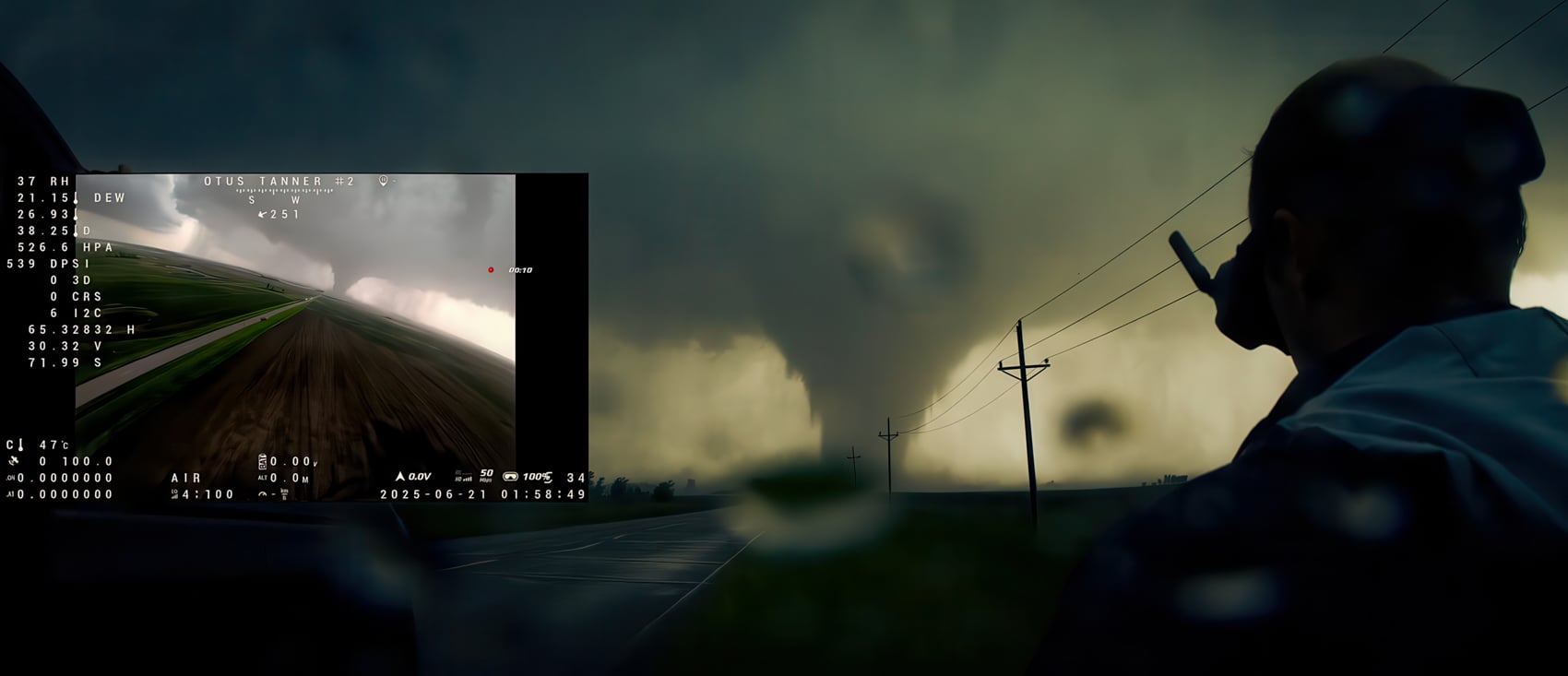
The hope, stated plainly by the team, is that homes in tornado country get built differently. Stronger. With better anchoring against the vertical wind component that current building codes barely account for.
“We hope, from our project, homes can be built better,” Louis said. “And we can better understand how they work and form to figure out where they go next.”
DroneXL’s Take
Here’s what I actually think: this might be the purest expression of what drones make possible that I have ever covered.
Not DFR. Not mapping. Not delivery. Three people on a midnight phone call who looked at one of nature’s most violent and least understood phenomena and decided that a custom-built, 3D-printed aircraft flown by a champion FPV pilot was the right tool to study it. And then they went and proved it in under three months.
No sugarcoating this: what OTUS is doing is genuinely dangerous, and the FAA waiver they operate under exists because the agency recognized the scientific merit of the work, not because flying drones into tornadoes is something anyone should do casually. The team’s engineering discipline and operational protocols are what make it survivable. They are not thrill-seekers. They are researchers who happen to be very good at building things that can survive a tornado.
The data they are collecting will matter. Better warning systems mean more minutes of lead time before a tornado hits a neighborhood. More minutes mean more lives. Better building codes mean the structures in tornado alley survive the winds that currently destroy them. Both outcomes trace directly back to measurements that only a drone inside a funnel can take.
From a midnight call in February 2024 to 11 tornado penetrations in 2025 to 20-plus planned intercepts in 2026. The OTUS Project is moving fast. So are the storms.
Photo credit: OPUS Project
Discover more from DroneXL.co
Subscribe to get the latest posts sent to your email.
Check out our Classic Line of T-Shirts, Polos, Hoodies and more in our new store today!

MAKE YOUR VOICE HEARD
Proposed legislation threatens your ability to use drones for fun, work, and safety. The Drone Advocacy Alliance is fighting to ensure your voice is heard in these critical policy discussions.Join us and tell your elected officials to protect your right to fly.

Get your Part 107 Certificate
Pass the Part 107 test and take to the skies with the Pilot Institute. We have helped thousands of people become airplane and commercial drone pilots. Our courses are designed by industry experts to help you pass FAA tests and achieve your dreams.

Copyright © DroneXL.co 2026. All rights reserved. The content, images, and intellectual property on this website are protected by copyright law. Reproduction or distribution of any material without prior written permission from DroneXL.co is strictly prohibited. For permissions and inquiries, please contact us first. DroneXL.co is a proud partner of the Drone Advocacy Alliance. Be sure to check out DroneXL's sister site, EVXL.co, for all the latest news on electric vehicles.
FTC: DroneXL.co is an Amazon Associate and uses affiliate links that can generate income from qualifying purchases. We do not sell, share, rent out, or spam your email.