Ukraine’s 66th Brigade Shifts to System Destruction on Lyman Axis, and It’s Working
Check out the Best Deals on Amazon for DJI Drones today!
The Lyman axis has been one of the more grinding sections of the front for months. But something has changed. Ukrainian forces there are no longer leading with infantry engagements. They’re going after the machine behind the machine.
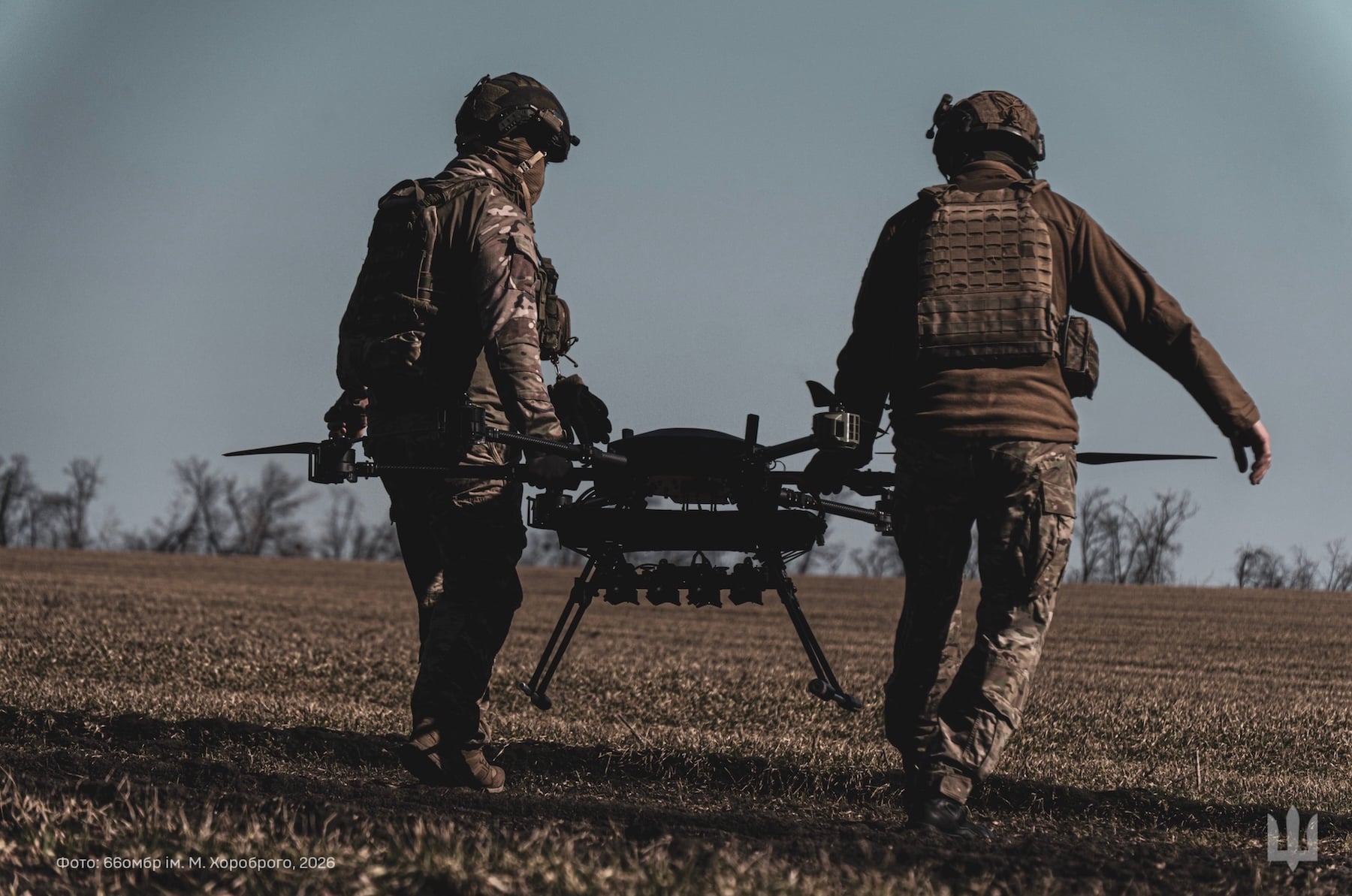
- The Development: Ukraine’s Mara UAV battalion, part of the 66th Mechanized Brigade, has stopped prioritizing Russian infantry as primary targets and shifted to destroying drone operators, logistics routes, artillery positions, and shelters instead.
- The Result: Russian assault attempts on the Lyman axis have decreased, and Ukrainian forces report gradual recovery of previously occupied ground.
- The Source: The account comes from Olena, planning officer of the Mara battalion, via Army Inform Ukraine, reposted by analyst Samuel Bendett on X. These claims originate from Ukrainian state military media and have not been independently corroborated by third-party OSINT sources.
- The Logic: Russia will sacrifice infantry. It won’t willingly sacrifice trained drone specialists, supply chains, or logistics infrastructure. That’s what Ukraine is now targeting.
Ukraine’s Mara Battalion Targets the System, Not the Soldier
The Mara UAV battalion of Ukraine’s 66th Mechanized Brigade changed its targeting priorities months ago, shifting focus away from front-line infantry and toward the infrastructure that enables Russian combat operations: drone positions, supply lines, artillery, bunkers, and staging areas. According to Olena, the unit’s planning officer, the results have been measurable — fewer Russian assaults, degraded resupply capability, and Ukrainian forces reclaiming ground.
“We stopped focusing only on enemy infantry and began destroying their drone positions, logistics routes, and shelters,” Olena said. “As a result, assaults decreased — and we started taking back our land.”
The shift in targeting priority breaks down into four categories Ukrainian forces are now systematically pursuing:
- Russian drone operators and UAV infrastructure
- Artillery positions
- Logistics routes and supply chains
- Bunkers and staging areas
The outcomes Olena describes match that targeting list closely: Russian units are attempting fewer assaults, struggling more to resupply and reinforce, and ceding ground where pressure is sustained.
Russia Guards Its Specialists. Ukraine Is Targeting That.
The strategic premise behind Ukraine’s approach is simple and sharp: Russia has infantry it is willing to expend in large numbers, but it guards its equipment, logistics infrastructure, and trained technical specialists far more carefully. Targeting the expendable doesn’t break the system. Targeting what Russia protects does.
“If you only fight infantry, you’re hitting what Russia doesn’t value,” Olena explained. “But if you deny them logistics and equipment — you start seeing results.”
This tracks directly with what a Russian Rubikon drone operator who surrendered to Ukrainian forces told Ukrainian intelligence earlier this year. The Rubikon unit — Moscow’s showcase UAV formation — was described as well-equipped and centrally managed, with considerable investment in infrastructure, vehicles, and specialist training. That kind of investment creates a vulnerability. Losing a conscripted soldier is, to Russian command, a rounding error. Losing a trained drone operator or a logistics hub is not.
Ukraine has been building toward this logic for some time. Ukraine’s points-based drone incentive system already assigned 25 points for destroying an enemy drone operator — more than four times the original 6-point infantry kill reward — suggesting Ukrainian military planners understood the asymmetric value of specialist targeting well before the Lyman shift became public.
Systems Disruption as the New Doctrine
What the Mara battalion is doing on the Lyman axis is a ground-level expression of a doctrine reshaping Ukraine’s entire approach to this war. Ukraine’s naval drone units have applied the same logic at sea — not engaging Russian warships head-on, but degrading their ability to operate in contested waters. Long-range strike drones have knocked out fuel depots and refinery infrastructure, at one point temporarily disabling more than ten percent of Russia’s refining capacity.
On land, the use of thermobaric drone payloads against entrenched Russian positions was an earlier sign of this same thinking — finding ways to use drone platforms to remove the structures that sustain Russian combat capability, not just the soldiers inside them.
The broader point, as Army Inform Ukraine summarized it, is that victory in this conflict is no longer about attrition alone. It’s about denying the enemy the systems that keep it capable of fighting. Drone-enabled logistics disruption is the tool Ukraine has in quantity. The Lyman results suggest applying it precisely is producing gains that frontal pressure couldn’t.
As DroneXL’s analysis of algorithm warfare put it earlier this year, the side that can cycle through observe-orient-decide-act faster than its adversary — and target what the adversary actually values — wins the war of attrition even before the body count settles.
DroneXL’s Take
This report from the Lyman axis is worth reading carefully, because it describes a tactical evolution with real implications beyond this specific front.
Olena’s framing — “if you only fight infantry, you’re hitting what Russia doesn’t value” — is one of the clearest distillations of modern drone doctrine I’ve seen from a serving operator. It’s not analysis from a think tank. It’s a planning officer describing what she changed, why she changed it, and what happened after. That’s field-tested doctrine, and according to her account, it’s working.
Ukraine has been refining this approach across every domain. Naval drones don’t sink sailors — they deny Russia the use of its Black Sea fleet. Long-range strike drones don’t just kill; they take refineries offline for weeks. And now on the Lyman axis, UAV battalions aren’t hunting infantry waves — they’re dismantling the operator networks, supply chains, and shelter infrastructure that make those waves possible in the first place.
The UK’s 12th Regiment took the kill-chain lessons from Ukraine to the Middle East — the sense, warn, target cycle. But the Mara battalion is now pointing at the next chapter: sense, warn, target the operator, not just the drone. That’s a harder problem for Russia to solve than absorbing more infantry losses.
Over the next six months, expect other Ukrainian units along contested axes to report similar tactical pivots. When a planning officer openly describes results this concrete — reduced assaults, recovered ground — that travels fast through Ukrainian military networks. The Lyman model won’t stay in the 66th Brigade.
Editorial Note: AI tools were used to assist with research and archive retrieval for this article. All reporting, analysis, and editorial perspectives are by Haye Kesteloo.
Discover more from DroneXL.co
Subscribe to get the latest posts sent to your email.
Check out our Classic Line of T-Shirts, Polos, Hoodies and more in our new store today!

MAKE YOUR VOICE HEARD
Proposed legislation threatens your ability to use drones for fun, work, and safety. The Drone Advocacy Alliance is fighting to ensure your voice is heard in these critical policy discussions.Join us and tell your elected officials to protect your right to fly.

Get your Part 107 Certificate
Pass the Part 107 test and take to the skies with the Pilot Institute. We have helped thousands of people become airplane and commercial drone pilots. Our courses are designed by industry experts to help you pass FAA tests and achieve your dreams.

Copyright © DroneXL.co 2026. All rights reserved. The content, images, and intellectual property on this website are protected by copyright law. Reproduction or distribution of any material without prior written permission from DroneXL.co is strictly prohibited. For permissions and inquiries, please contact us first. DroneXL.co is a proud partner of the Drone Advocacy Alliance. Be sure to check out DroneXL's sister site, EVXL.co, for all the latest news on electric vehicles.
FTC: DroneXL.co is an Amazon Associate and uses affiliate links that can generate income from qualifying purchases. We do not sell, share, rent out, or spam your email.