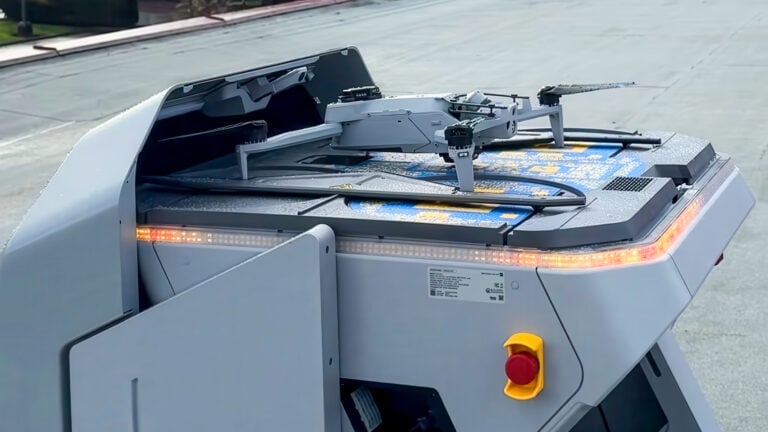
US Army Grenadier System Adds Counter-Drone Ammo After 18 Years
Check out the Best Deals on Amazon for DJI Drones today!
The U.S. Army is finally moving past two decades of failed grenade launcher programs, and this time it’s baking counter-drone capability directly into the weapon from the start.
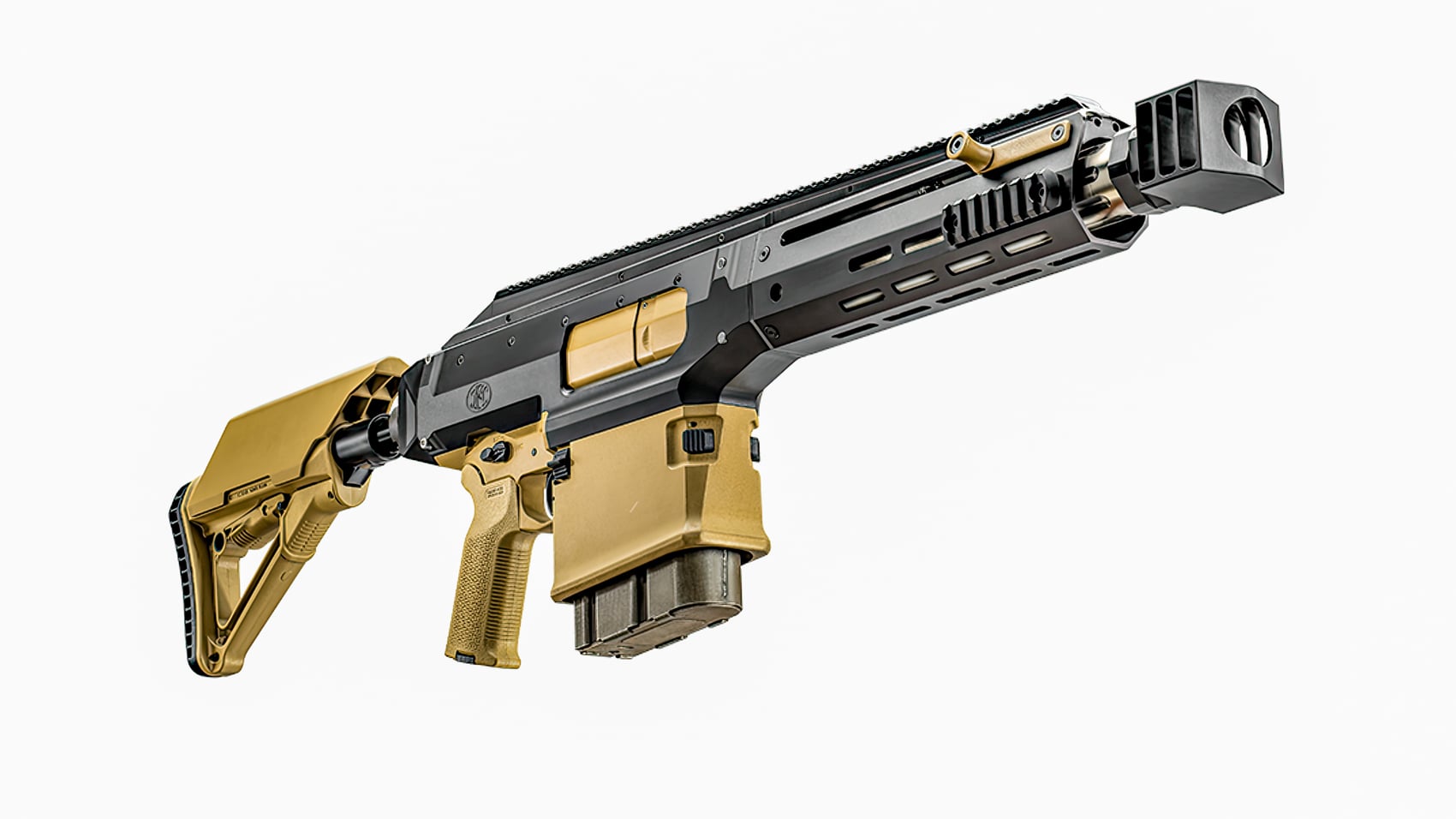
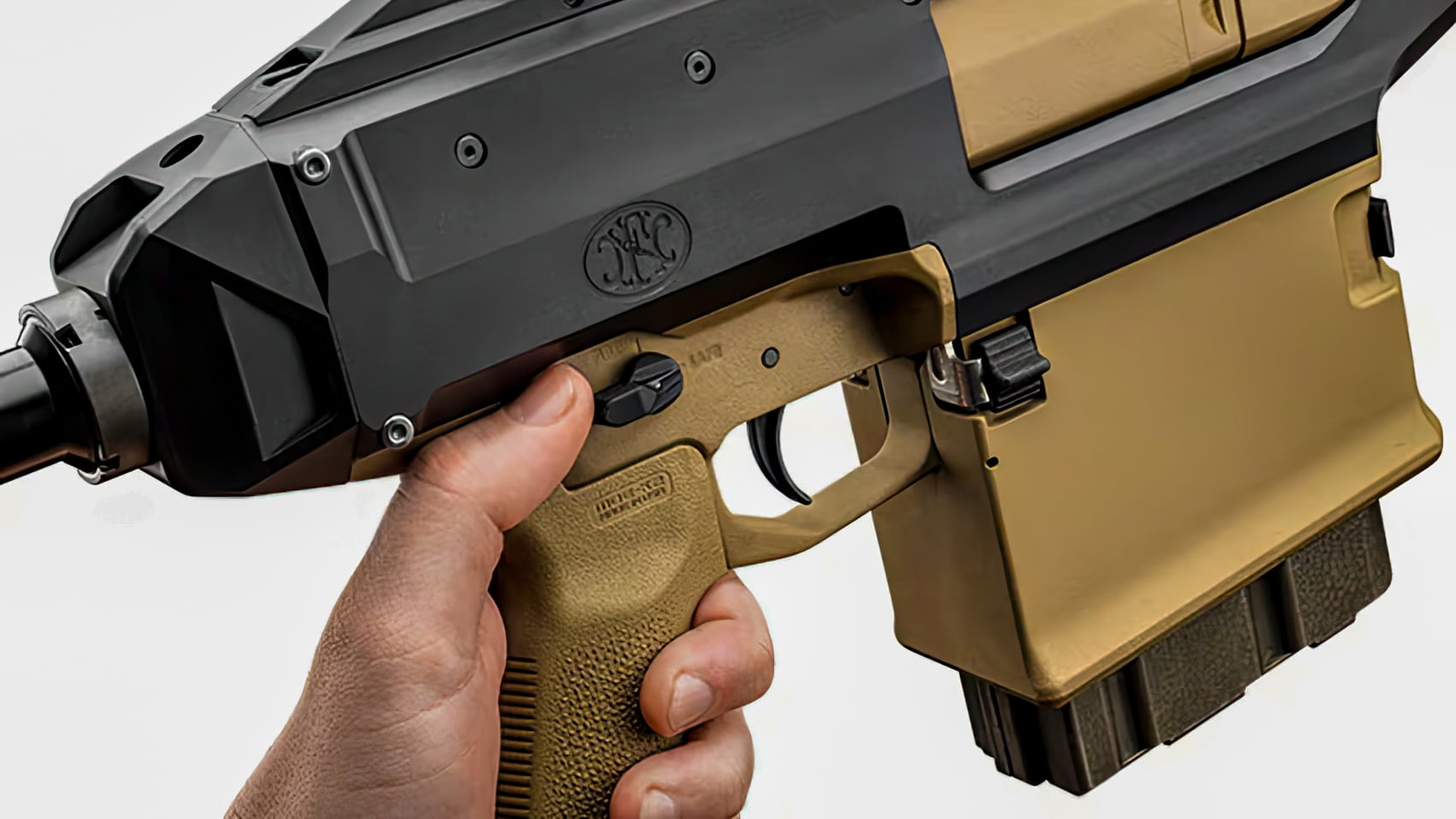
A new solicitation published April 6, 2026, asks defense contractors to submit prototypes for the Precision Grenadier System (PGS), a man-portable weapon that will replace the aging M203 and M320 40mm grenade launchers — and specifically lists destroying unmanned aerial systems (UAS) as a core mission requirement.
The prototype submission deadline is May 11, 2026. Full details appear in the Military Times report by Michael Peck.
Twelve days before the solicitation posted, a small FPV drone struck a U.S. Army HH-60M Black Hawk helicopter at a base in Baghdad — what appeared to be the first confirmed successful drone attack on an American military aircraft.
The infantry squad, as currently equipped, has no organic tool purpose-built to shoot down a drone flying at low altitude a few hundred meters away.
What the Army Is Actually Asking For
The PGS solicitation calls for 16 prototype weapons, supporting fire control systems, and approximately 25,000 rounds of ammunition across four categories: counter-defilade, counter-drone, close quarters battle, and training rounds. The Army intends to award two Other Transaction Agreements (OTAs) for competing prototypes. The end-state goal is two PGS launchers per rifle squad.
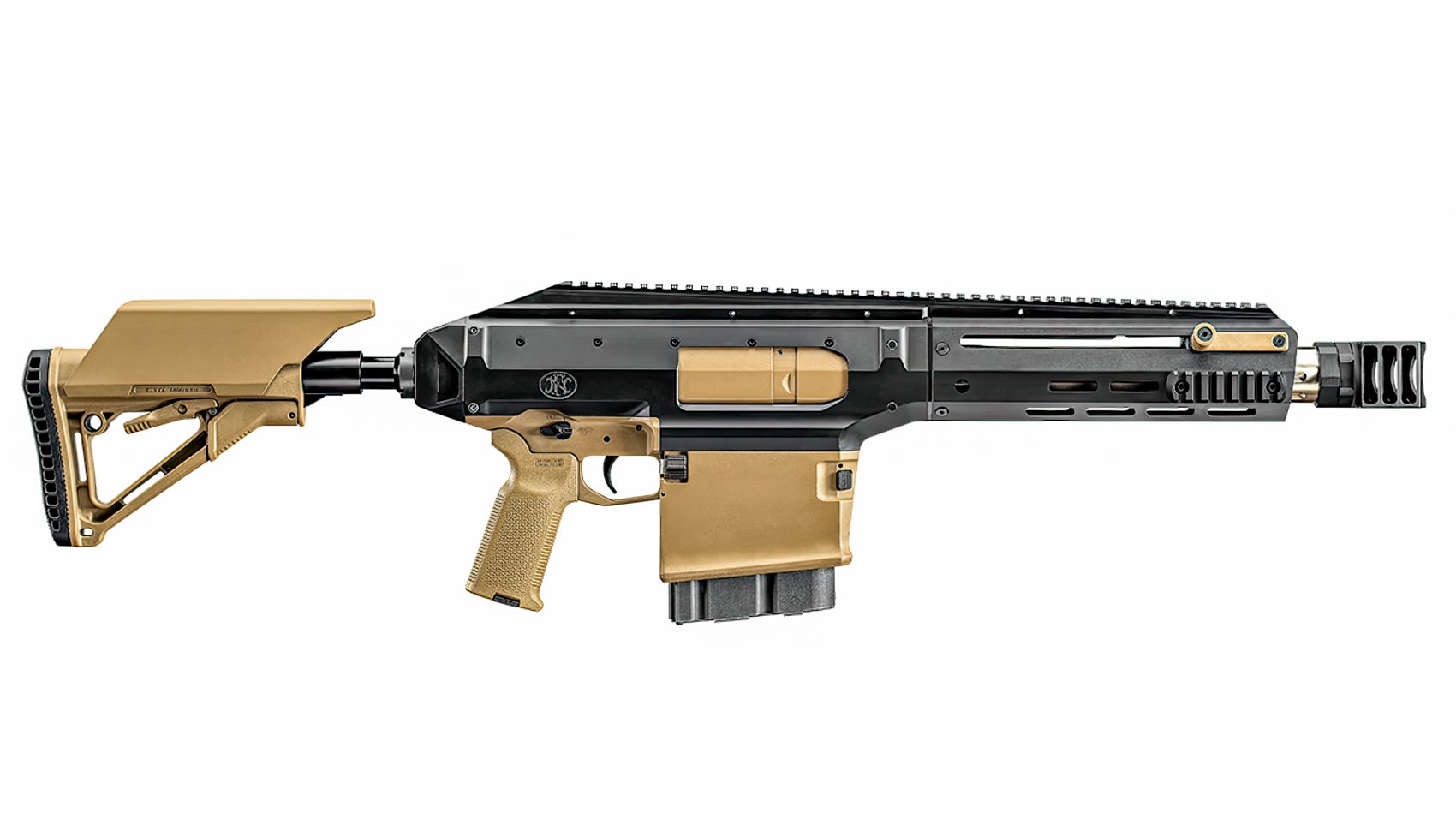
The defilade requirement alone has been on the Army’s wish list since the 2008 Small Arms Capabilities-Based Assessment, which drew lessons from combat in Afghanistan and Iraq. The M203 and M320 top out at 350 meters effective range. The Army wants 500 meters — a gap that’s been sitting unaddressed for nearly 20 years.
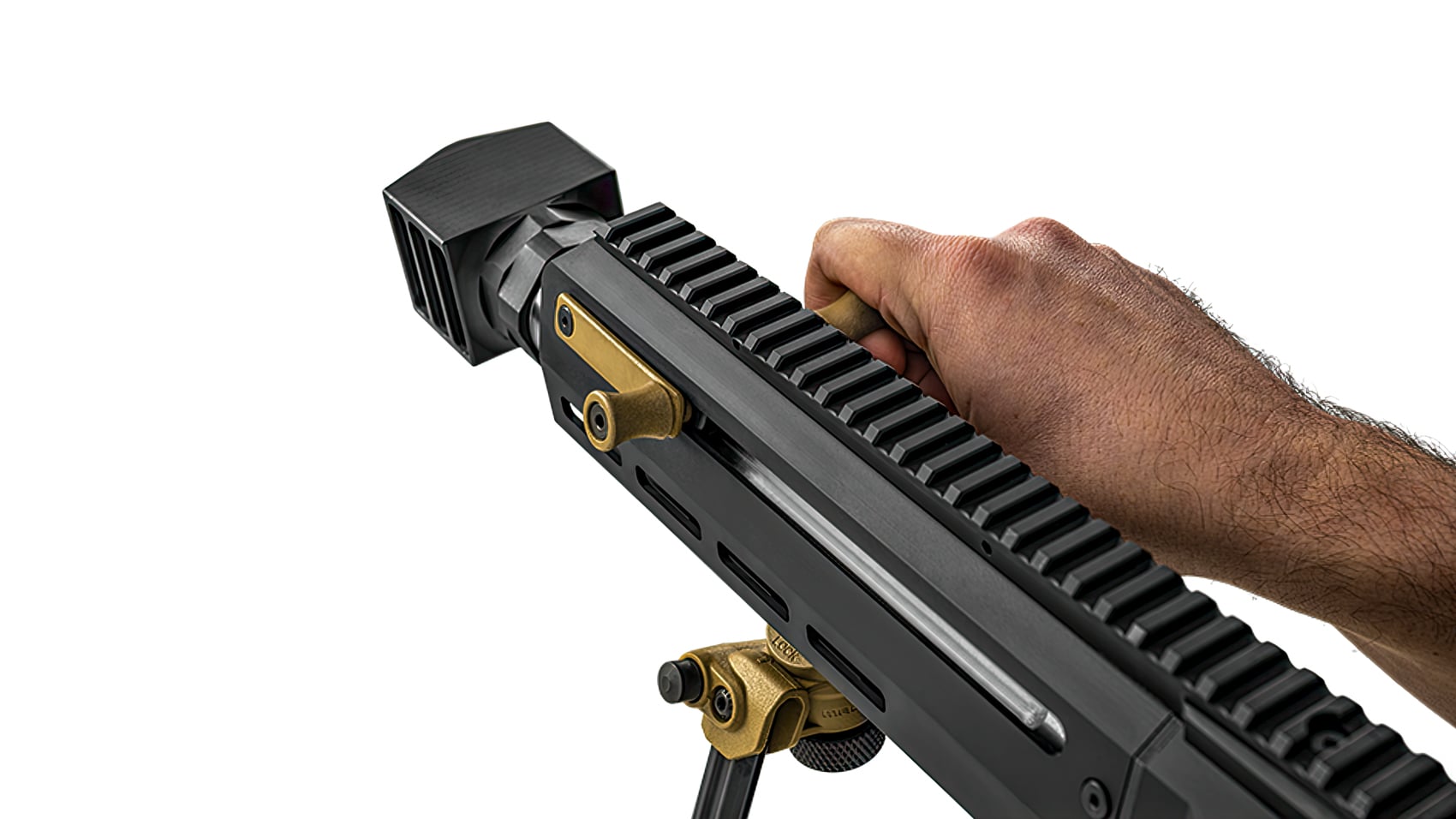
The counter-drone requirement is new to this iteration and reflects how completely the threat picture has changed. As we’ve covered extensively, Ukraine’s frontline has become a drone-dominated kill zone where a soldier moving in the open faces almost certain detection and engagement from a small UAS within minutes. The Army is now writing that reality into its small arms requirements.
The XM25 Punisher Is Still in the Room
The Army tried this before. The 25mm XM25 “Punisher” was supposed to solve the defilade problem with programmable airburst rounds that detonate behind cover.
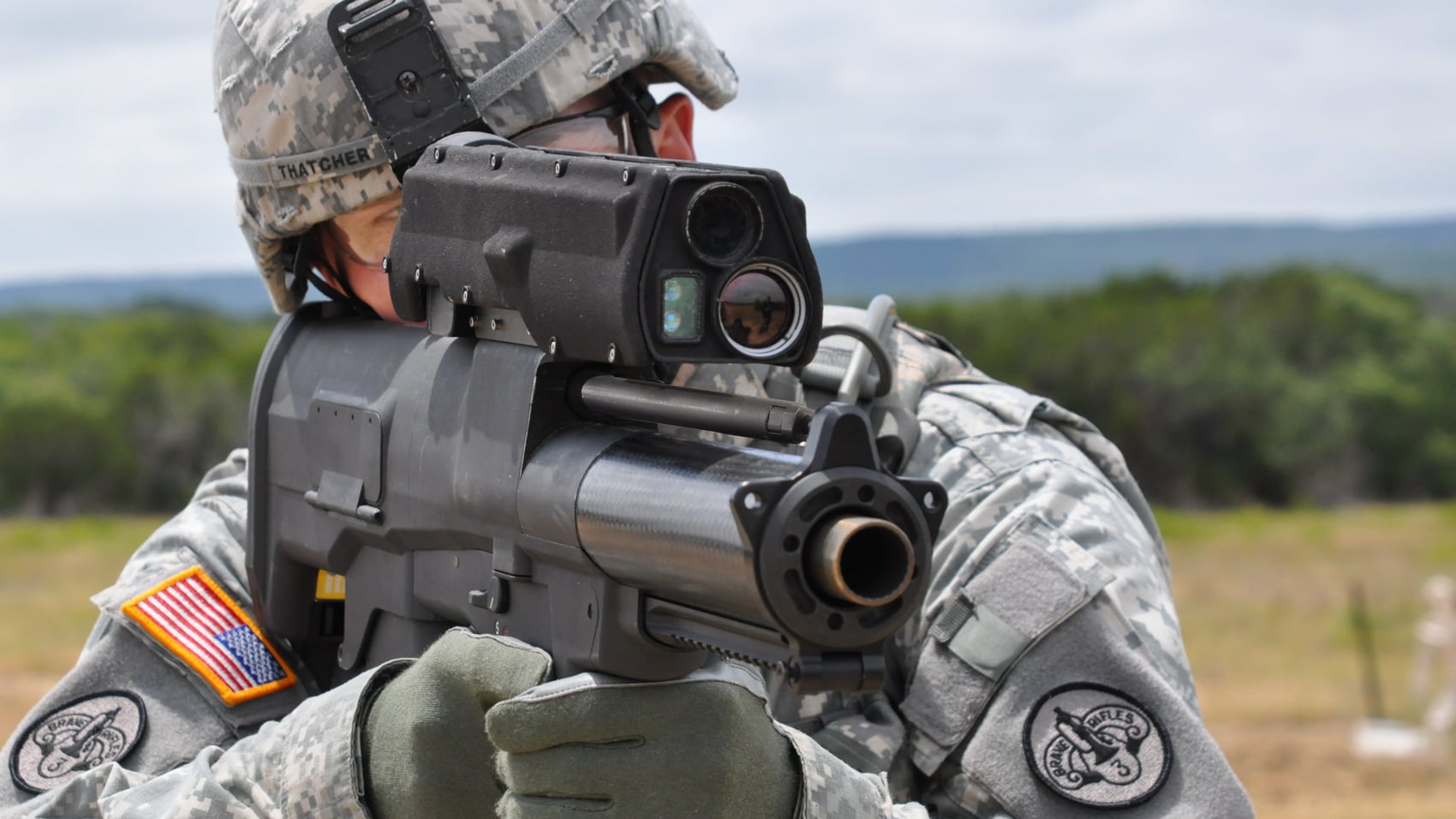
Photo credit: US ARMY
After years of development and field testing in Afghanistan, the program was canceled in 2018 over cost and performance concerns. That left squads with the same M320 they already had, plus airburst rounds and the Carl Gustaf 84mm recoilless rifle for heavier work.
The 2026 PGS solicitation is notably narrower than the 2020 Request for Information that preceded it. The 2020 RFI asked for breaching rounds capable of blasting through 1.5-inch solid wood doors at 50 meters, plus armor-piercing rounds that could defeat lightly armored vehicles at 500 meters with 1.0 to 2.0 inches of rolled homogenous armor penetration.
Neither requirement appears in the current solicitation. What remains: personnel targets in defilade, drone intercept, close quarters battle, and limiting collateral damage. The Army appears to have decided to stop asking for everything and start asking for what it can actually field.
The Drone Threat Forcing This Redesign
The inclusion of a dedicated counter-drone ammunition type in a squad-level weapon reflects how far the threat has migrated down the chain. Electronic warfare and dedicated interceptor systems handle the high end. But a $500 commercial FPV drone flying at low altitude is a different problem — one that currently falls to soldiers carrying whatever they arrived with. As we reported, $500 commercial drones are already defeating $5 million tanks. The math extends to infantry in the open.
The Army’s own pivot confirms the urgency. Last October, we covered how the Army scrapped a $1 billion tank program and bet on consumer-style drones after an experimental brigade tripled its kill rate. In November, Army Secretary Daniel Driscoll announced plans to buy at least one million drones over two to three years. The same service that’s buying a million drones now needs its infantry squads to be able to shoot them down. That’s not a contradiction. That’s the new normal.
Other NATO allies are moving in the same direction. The Netherlands became the first NATO nation to embed drone and counter-drone units in every army combat formation, and the Air Force opened a hunt for drone killers at its own home bases. The PGS is the Army’s answer at the squad level — the lowest tactical rung.
DroneXL’s Take
I’ve been watching the Army chase this program since the XM25 was still being called a “revolutionary” weapon in press releases. What’s different now is that the threat driving the requirement is real, recent, and documented.
The Baghdad Black Hawk strike happened twelve days before this solicitation posted. Whether that’s coincidence or institutional memory moving at unusual speed for a procurement office is genuinely unclear — but the timing sharpens the political case for funding.
The stripped-down requirements list is actually encouraging. Cutting the breaching and anti-armor asks removes the scope creep that killed the XM25. A focused weapon with a counter-drone round and a defilade round is something that can actually get fielded. Asking for one weapon to do everything is how you end up with nothing.
What I’d watch closely: the fire control system. Hitting a person crouching behind a wall at 500 meters with an airburst round is hard. Hitting a maneuvering FPV drone at the same range is a different order of difficulty entirely — the targeting solution will determine whether the counter-drone round is a real capability or a checkbox.
If the Army awards both OTAs and runs a genuine competitive prototype evaluation, the PGS could reach initial fielding by 2029. If the fire control requirements aren’t nailed down before prototyping starts, this program will be back in the requirements phase in 2030 with a new name and the same problem.
DroneXL uses automated tools to support research and source retrieval. All reporting and editorial perspectives are by Rafael Suárez.
Photo credit: US ARMY, FN America
Discover more from DroneXL.co
Subscribe to get the latest posts sent to your email.
Check out our Classic Line of T-Shirts, Polos, Hoodies and more in our new store today!

MAKE YOUR VOICE HEARD
Proposed legislation threatens your ability to use drones for fun, work, and safety. The Drone Advocacy Alliance is fighting to ensure your voice is heard in these critical policy discussions.Join us and tell your elected officials to protect your right to fly.

Get your Part 107 Certificate
Pass the Part 107 test and take to the skies with the Pilot Institute. We have helped thousands of people become airplane and commercial drone pilots. Our courses are designed by industry experts to help you pass FAA tests and achieve your dreams.

Copyright © DroneXL.co 2026. All rights reserved. The content, images, and intellectual property on this website are protected by copyright law. Reproduction or distribution of any material without prior written permission from DroneXL.co is strictly prohibited. For permissions and inquiries, please contact us first. DroneXL.co is a proud partner of the Drone Advocacy Alliance. Be sure to check out DroneXL's sister site, EVXL.co, for all the latest news on electric vehicles.
FTC: DroneXL.co is an Amazon Associate and uses affiliate links that can generate income from qualifying purchases. We do not sell, share, rent out, or spam your email.