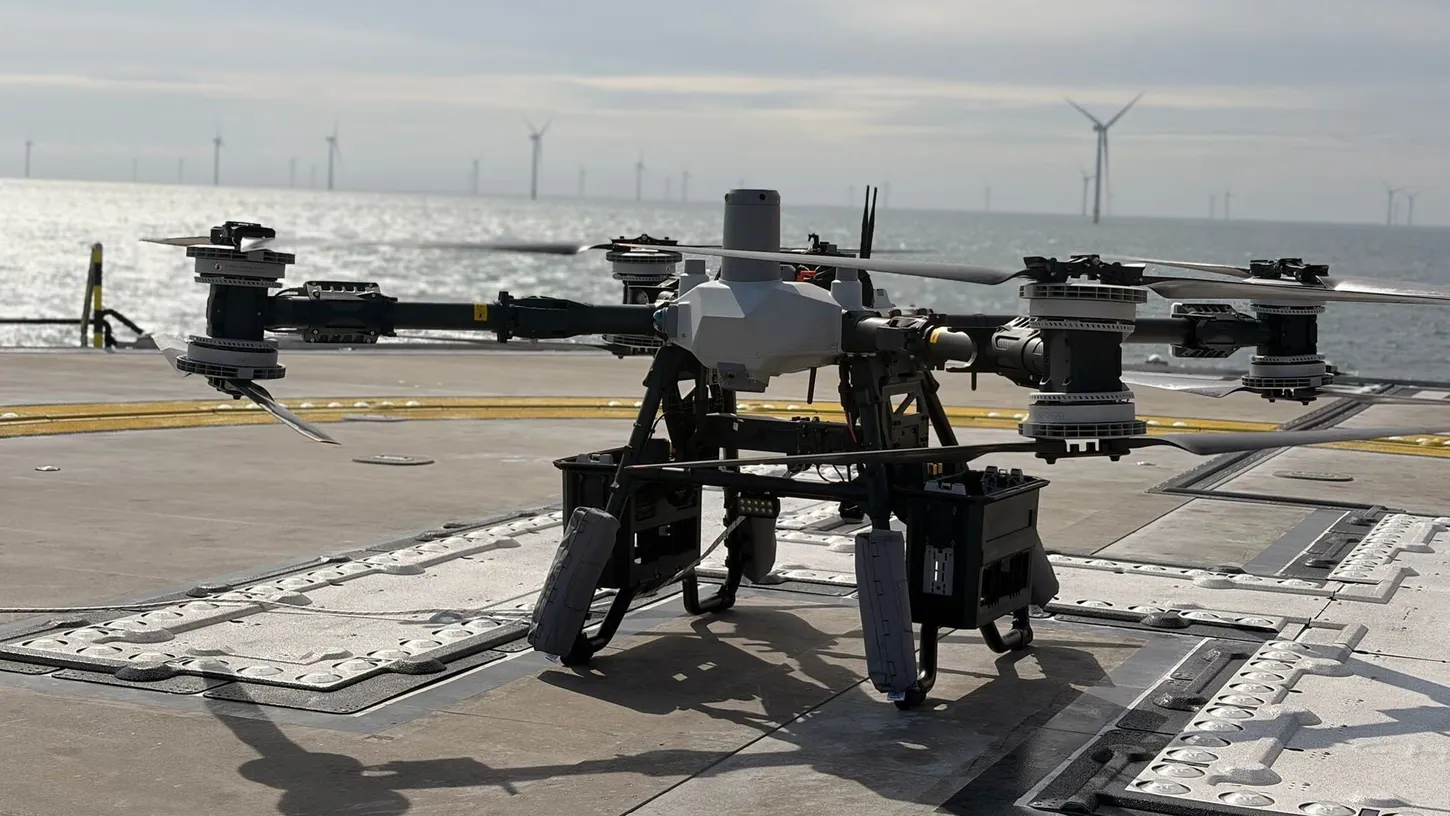
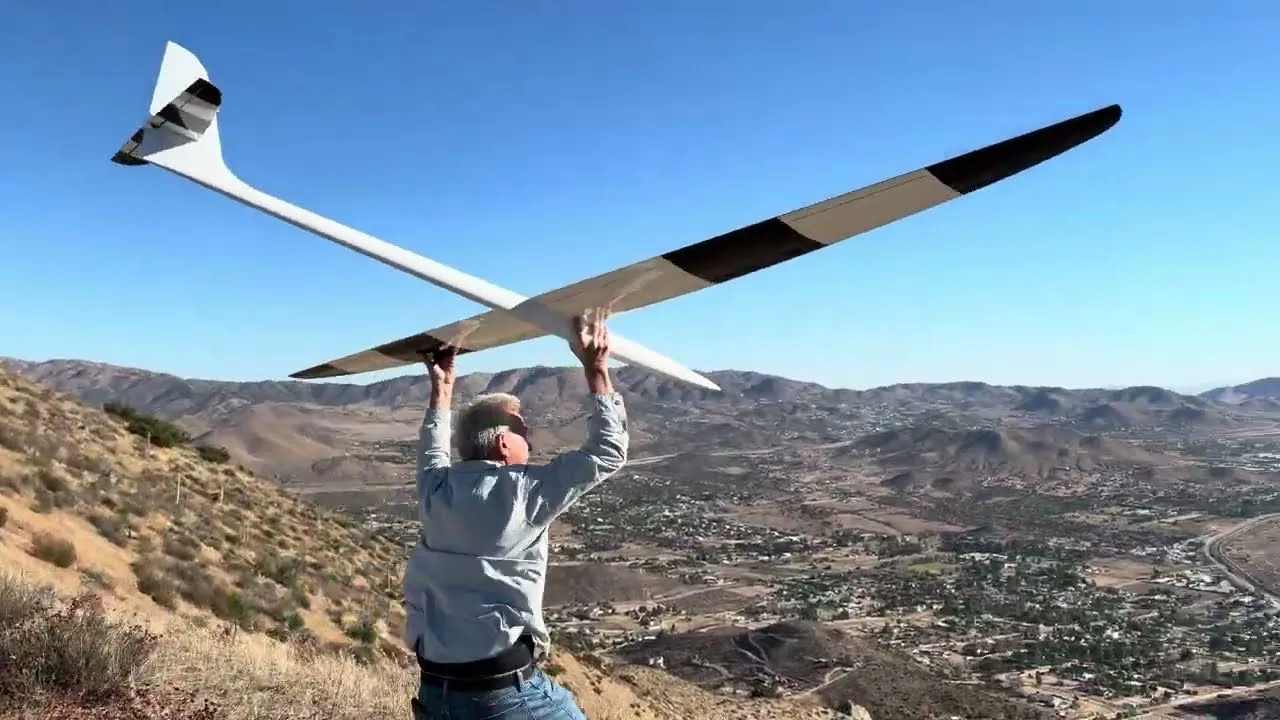
Intelligent Energy unveiled a 120 kW hydrogen fuel cell powertrain for heavy-lift fixed-wing drones this week and, in the same breath, announced the largest commercial order in its UAV history for its existing IE-SOAR fuel cell systems. The British company did not name the customer or the contract value. The pairing is the story: a new product on one hand, and proof that the old one already sells on the other.
I have tracked hydrogen drone propulsion for years at DroneXL, and announcements in this field usually come with demo footage and a promise. This one came with a purchase order.
A 120kW Fuel Cell Built For Drones That Carry Real Cargo
The new system, called IE-FLIGHT 120, delivers 120 kW (about 161 horsepower) and is designed for fixed-wing UAVs carrying payloads between 331 and 1,653 pounds (150 to 750 kg). That is not camera-drone territory. That is logistics, defense, intelligence and surveillance work, the missions where an aircraft earns its keep by staying up for hours with something heavy strapped to it.
Intelligent Energy positions the IE-FLIGHT 120 as the bridge between its smaller IE-SOAR modules, which already fly on smaller UAVs, and the higher-power fuel cell technology it is developing for eVTOL aircraft and regional aviation. The company says its fuel cells deliver flight times three to five times longer than comparable battery systems while emitting only water vapor.
Greg Harris, Intelligent Energy’s Chief Commercial Officer, framed the demand side simply: the UAV market is moving toward larger aircraft that need to fly further, carry heavier payloads and stay airborne longer. Batteries hit a wall on all three. Hydrogen, at least on paper and increasingly in the field, does not.
The Record Order Matters More Than The Reveal
The unnamed customer’s order for IE-SOAR systems is the largest Intelligent Energy has ever taken in the UAV sector, and it deserves more attention than the shiny new powertrain next to it. New products get unveiled every trade show. Repeat commercial volume for hydrogen propulsion is the rarer animal.
This is where the announcement separates itself from most of what crosses my desk. The advances that happen inside a drone are not sexy. Nobody sees a powertrain. Nobody films a fuel cell stack for TikTok. But in this case the system is not only built, it is already sold. Not a prototype, not a sketch, not a limited run. A product with a customer base writing checks.
The money behind it is public, even if the customer is not. Intelligent Energy secured 17 million pounds (about $23 million) earlier this year through the UK’s Aerospace Technology Institute HEIGHTS programme, and the company is building a high-power fuel cell test centre in Chelveston, Northamptonshire. The UK government has separately committed 5 billion pounds (about $6.7 billion) to drones and autonomous systems under its Defence Investment Plan.
Hydrogen Keeps Moving From Lab Benches To Purchase Orders
Intelligent Energy is not alone, and the pattern across 2026 is consistent: hydrogen drone propulsion keeps graduating from demonstration to commerce. In May I covered the Dalian Institute of Chemical Physics taking a Chinese fuel cell system from the lab to a field demonstration flight, with a national appraisal that put it on the path to deployment.
Before that, in December, I wrote about an Indian partnership pairing composite hydrogen cylinders with fuel cell airframes. Three continents, the same direction of travel. The chemistry stopped being the problem some time ago. The remaining questions are manufacturing volume, refueling logistics and price per flight hour.
What the IE-FLIGHT 120 adds to that picture is scale. A 120 kW system aimed at three quarters of a ton of payload is a statement that hydrogen’s near-term home is the big, boring, profitable end of the market: cargo corridors, maritime patrol, long-endurance surveillance. The glamour segment can wait.
DroneXL’s Take
The most bankable sentence in this announcement is the one without numbers in it: largest commercial order to date. Every propulsion startup can rent a stage and unveil something. Far fewer can point at repeat customers, and Intelligent Energy just did, even while keeping the name behind the check to itself. I would rather see an undisclosed buyer with real volume than a splashy logo on a memorandum of understanding that never converts.
The through-line from my earlier reporting holds. Dalian proved the tech travels from bench to sky. India proved the supply chain wants in. Intelligent Energy is proving someone will pay for it at scale. That is a technology maturing in the correct order, demonstration before decoration.
And here is my question, the one this announcement raises and does not answer. This class of technology is demonstrated, working and sold at the heavy end. When do we see it miniaturized into a small drone, the kind that fits in a backpack and flies for three hours instead of thirty minutes? Intelligent Energy’s own IE-SOAR line already serves smaller airframes, but the sub-250 gram and prosumer classes remain battery country. Whether fuel cells can shrink to that scale at a price a working pilot would pay is an open question, not a prediction. The company that answers it owns the next decade of small drone endurance.
Watch the Chelveston test centre. What Intelligent Energy chooses to test there next will say more about that roadmap than any press release.
Sources: Unmanned Systems Technology, UAS Vision