Volkswagen killed its Chinese air taxi program in June 2024 after five years and three full-scale prototypes, without ever carrying a passenger. Reuters published the internal file this week, drawn from hundreds of pages of company documents and legal records. The reason the project died is not the one the American drone industry keeps telling itself.
Nobody banned Volkswagen. No trade restriction blocked it. It lost a footrace.
I have covered the US side of low-altitude policy since the FCC voted itself retroactive ban authority in October 2025, and I was standing on the East 34th Street pad in May watching a Joby prototype settle in over the East River. What these documents describe is a competitor that reached the same milestones faster because the state had already built the runway.
Volkswagen Never Flew A Passenger In Five Years Of Trying
Volkswagen started in 2019 with fewer than ten people in Beijing, chasing an electric vertical takeoff and landing aircraft called V.MO and aimed at wealthy buyers flying routes like Beijing to Tianjin in a craft roughly half as loud as a helicopter. It reached prototypes and stopped there.
The configuration was conventional enough for the category: eight rotors for lift, two for forward flight, first built with Hunan Sunward Technology in 2022 under the name Flying Tiger. A luxury-cabin version called Sky Garden became the version Volkswagen put in front of officials, and Chinese Premier Li Qiang sat inside the mock-up in March 2023. A third airframe went to remote test sites in Inner Mongolia, where engineers lived and worked in converted shipping containers.
Volkswagen’s own March 2024 strategy paper stated the problem before management killed the program, according to the documents Reuters reviewed. Momentum in China, it said, was already held by established Chinese players, and it named Xpeng and Geely.
China Opened A $523 Million Road-Air Proving Ground In March
On March 20, 2026, China put its first national road-air integrated proving ground into operation in Xinfeng County, Shaoguan, Guangdong. The facility covers 573 hectares (1,416 acres) against a total investment above 3.6 billion yuan (roughly $523 million), and it holds something no American site has.
That is 100 square kilometers (39 square miles) of dedicated airspace, inside which test aircraft fly below 1,200 meters (about 3,900 feet) without filing in advance, according to Caixin. Unauthorized aircraft need the center’s permission to enter. Six taxiways, more than four vertical landing pads, a 3,645-square-meter service hangar and a dedicated flying-car powertrain laboratory sit on the ground beneath it.
The airspace grant is the part worth staring at. Access, not hardware, is the binding constraint in this sector, and the American record on that question is a Part 108 BVLOS rule that blew past its February 1 deadline and still has not landed.
The FAA Broke Ground On $8.3 Million Three Months Later
On June 25, the FAA and the Department of Transportation broke ground on V-PAR at the Mike Monroney Aeronautical Center in Oklahoma City, the agency’s first dedicated range for studying how vertical takeoff aircraft behave around vertiports. DroneXL covered it in July.
The buildout: one touchdown and liftoff area, one taxiway, a two-space verticraft apron, a covered shelter, an observation building and charging capability. Cost, roughly $8.3 million. Concept studies began in the fall of 2021, Congress appropriated the first $6 million in spring 2024, and the doors open in the summer of 2027.
The comparison is not one-to-one, and I want to be straight about that. Guangdong’s site is a combined automotive and aviation facility, so a real share of that 3.6 billion yuan bought a high-speed loop for ground vehicles. Discount the road half entirely and the ratio is still not close, and the Chinese facility opened well over a year before the American one will.
Seven Chinese eVTOL Makers Are Expected By The End Of This Year
CCID Consulting, a Chinese state-affiliated research group, expects at least seven domestic companies to be offering eVTOL aircraft by the end of 2026. That forecast rests on certification work that already happened rather than on projections.
EHang holds China’s first type, production and standard airworthiness certificates for a pilotless passenger eVTOL, and now runs the EH216-S commercially under the country’s first air operator certificates for human-carrying service. Xpeng’s Aridge unit reports roughly 7,000 pre-orders for its Land Aircraft Carrier and is targeting mass production in 2027, per Reuters’ tally of company announcements. Geely subsidiary Aerofugia is pushing its AE200 series toward certification.
Aerospace firm Eve Air Mobility projects about 30,000 eVTOLs operating worldwide by 2045, with 41 percent of them in Asia-Pacific and 29 percent in North America. Volkswagen had a five-year head start on most of that field and shipped nothing.
The DJI Ban Is The Same Argument Pointed The Other Way
Washington’s answer to Chinese low-altitude dominance has been restriction. DJI and Autel Robotics went onto the FCC’s Covered List on December 22, 2025, and DJI has told the Ninth Circuit in Case 26-1029 that the designation blocks 25 planned 2026 launches and costs it roughly $1.56 billion in US revenue this year.
Meanwhile the FAA selected eight eVTOL Integration Pilot Program projects across 26 states in March, Florida wrote full state vertiport funding into law in April with a December 2026 commercial target, and Joby Aviation flew the first point-to-point eVTOL route in New York City history. That is real progress, assembled from venture capital and a state legislature moving faster than its own federal regulator. It is not a national program.
DroneXL’s Take
The Volkswagen file is the cleanest control experiment this sector has produced, and American policymakers should read it as one. Here is a manufacturer that spent years as China’s top-selling automaker, with full market access, a Chinese engineering team, a state-owned aerospace consultant on contract and a sitting Premier photographed in its mock-up. It still lost. No tariff caused that. No entity list caused that. It lost to companies that could test where they needed to, when they needed to, because Beijing designated the low-altitude economy a national priority and then paid for the ground and the airspace to match.
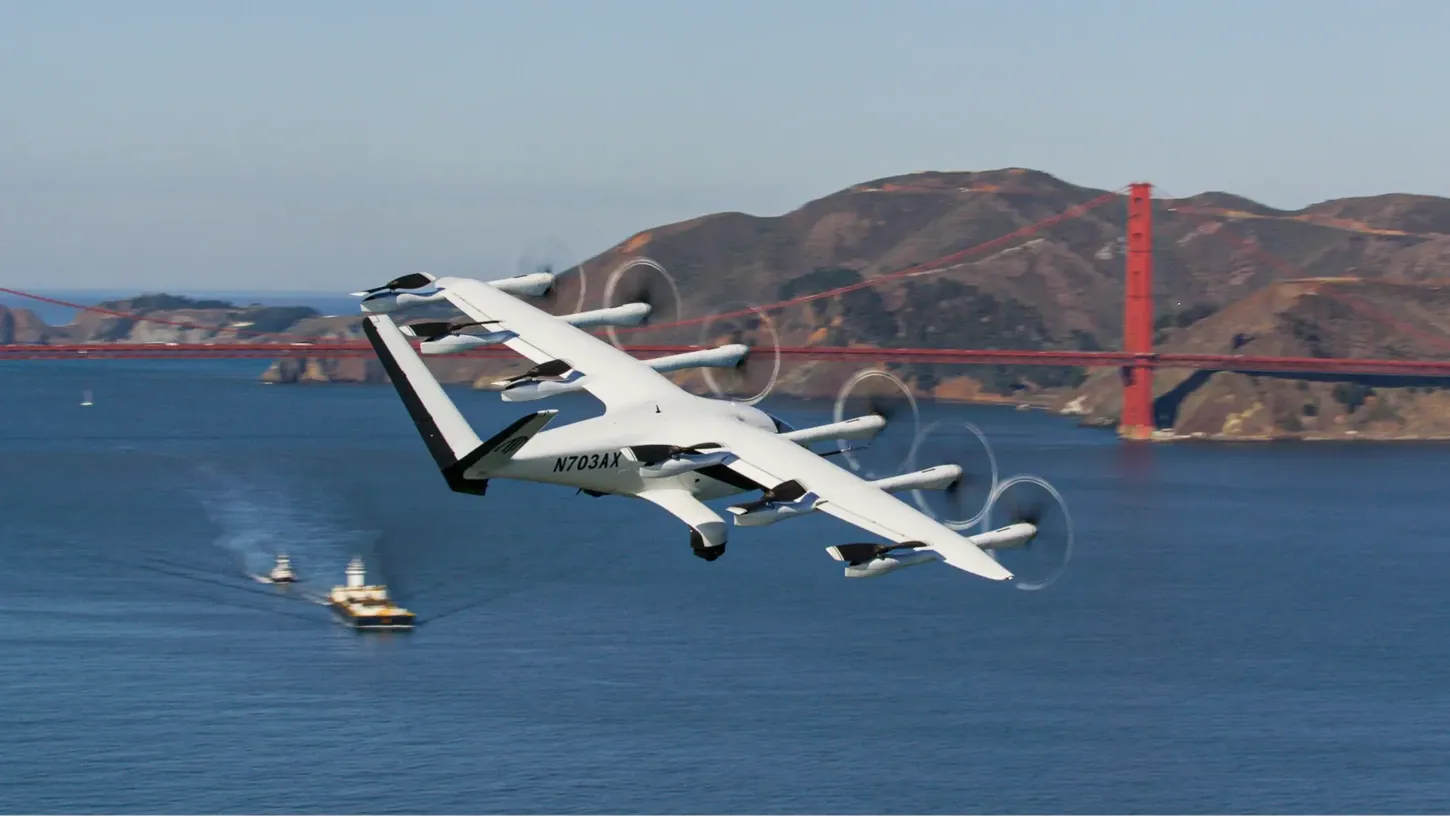
Standing on that pad in May, watching a Joby prototype come in quieter than the FDR traffic behind it, I was looking at engineering that is genuinely world-class. What I was not looking at is a country that has decided this matters. We are spending our policy bandwidth on who is allowed to sell a quadcopter while the airspace, the test infrastructure and the certification throughput that would let American companies win get funded at $8.3 million with a 2027 opening date.
Chinese state subsidy is not fair competition, and DroneXL has never pretended otherwise. But restriction is not industrial policy, and the Volkswagen documents make that case better than any DJI filing has managed. What beat a well-capitalized Western entrant here was speed, in a country that had already built the place to be fast in.
Watch December 31, 2026. The eleven UAS conditional approvals granted through early June all expire that day, and Florida’s commercial air taxi target lands in the same month. The Ninth Circuit remains the only forum testing whether the Covered List has a legal floor under it. If those break the wrong way, the US will have spent this year deciding who gets to sell a drone while the market that matters was built somewhere else.
Sources: Reuters, Caixin Global, Eve Air Mobility, CCID Consulting, Federal Aviation Administration.
DroneXL uses automated tools to support research and source retrieval. All reporting and editorial perspectives are by Haye Kesteloo.