Cartel drone activity over the Rio Grande Valley has dropped roughly 75% since the US Army started burning drones out of the sky with a high-energy laser on August 25, military officials told CBS News. The laser has destroyed eleven drones in ten days, and the officers running it say the point is to stop the same drones from coming back night after night.
The claim arrives ten days after DroneXL reported the laser’s first three kills, when neither Joint Task Force-Southern Border nor US Northern Command would say whose airspace the shots crossed. That question is still open. So is a new one: 75% of what. Army Col. Robert Felicio, who commands the 130th Maneuver Enhancement Brigade on the border, declined to give CBS News the daily count his unit sees before or after the laser arrived.
The Laser Killed Eleven Drones And Border Traffic Fell By Three Quarters
Joint Task Force-Southern Border has stopped about 300 cartel-linked drones since January 1, most by jamming them back across the river. The Army Multipurpose High Energy Laser destroyed eleven of them between August 25 and early September, and officials say drone traffic thinned sharply after the first three fell.
Felicio told CBS News the change since the laser arrived has been marked. His distinction between jamming and destroying is the whole argument for the weapon: a jammed drone flies home and returns the next night, while a lased one is a pile of parts. “If it’s an immediate threat, I’m getting rid of it,” Felicio said, adding that sending the same drone back only lets the cartel keep using it.
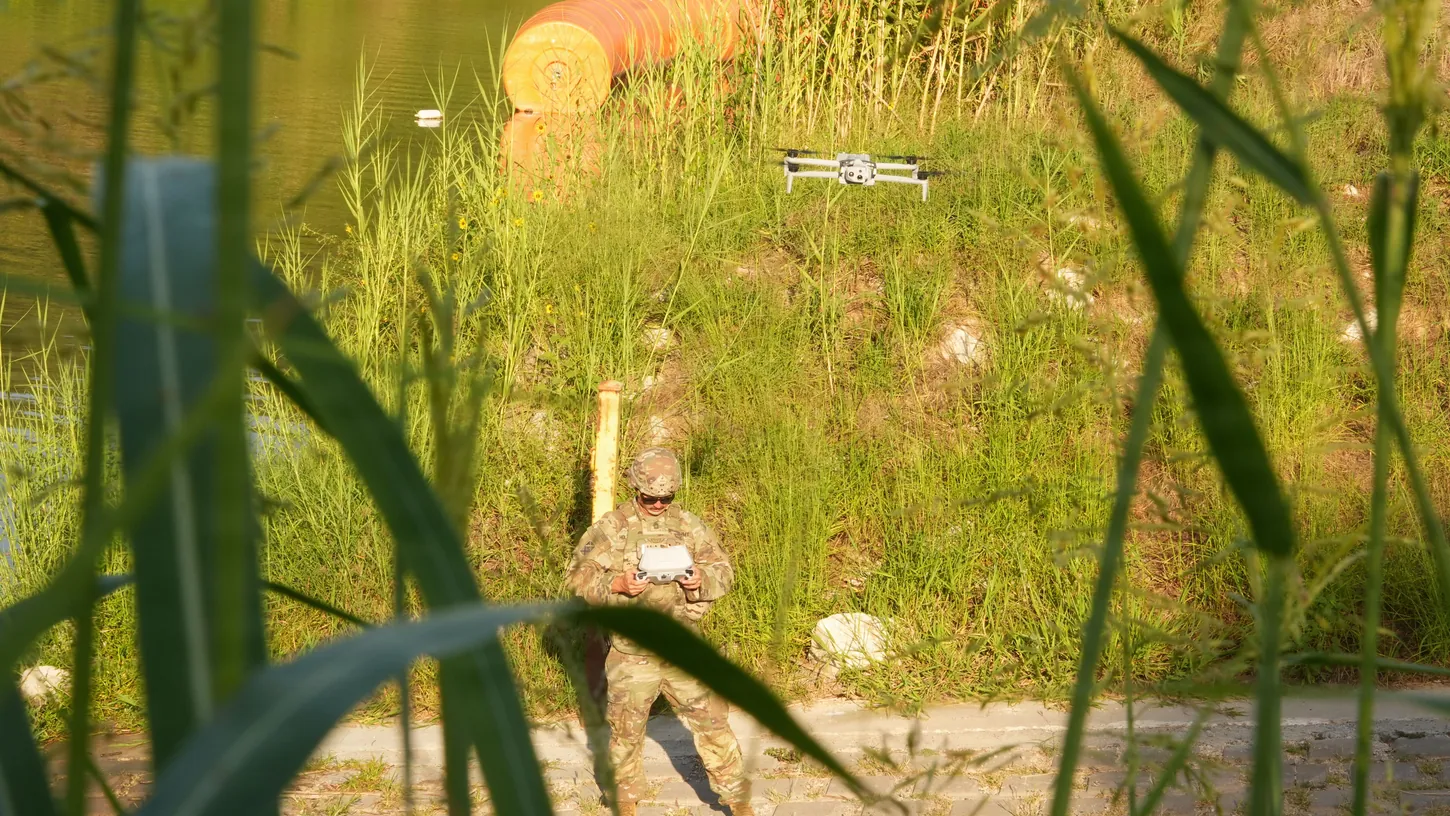
Soldiers tracked one drone passing the same Rio Grande overlook three times before CBS News arrived there Friday. It is the behavior DroneXL described when cartels started fielding FPV drones and their own counter-drone gear last year: cheap quadcopters flown as spotters, over and over, to map where agents are so smugglers can be where they aren’t.
Army Lt. Col. Ray Richards of the Massachusetts National Guard’s 211th Military Police Battalion put the effect in cartel accounting terms. Every drone that does not come home is money spent for nothing. Richards said “disruption to the cartels, that is a huge part of that story.”
Soldiers Aim The Laser With An Xbox Controller For $3 A Shot
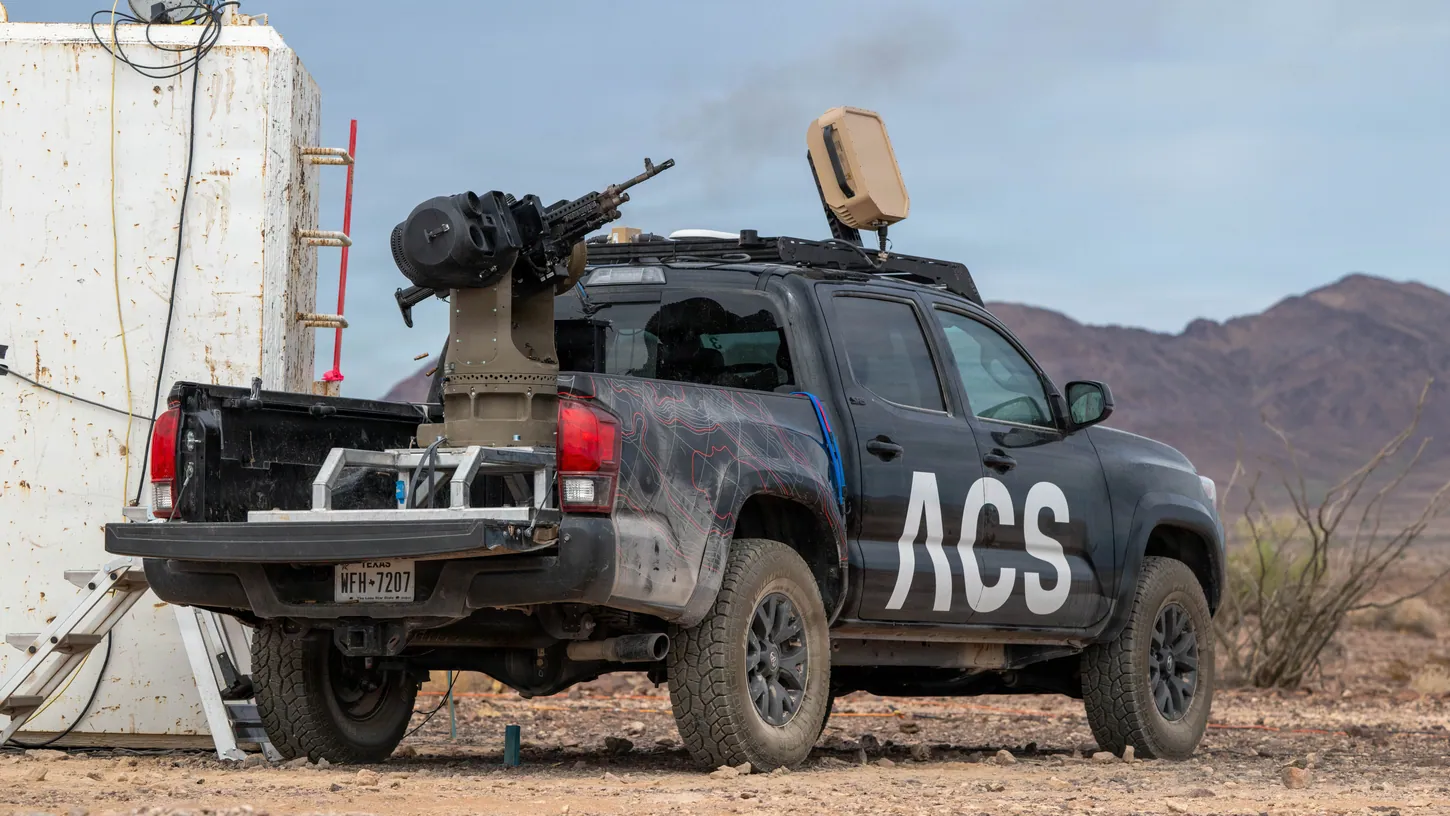
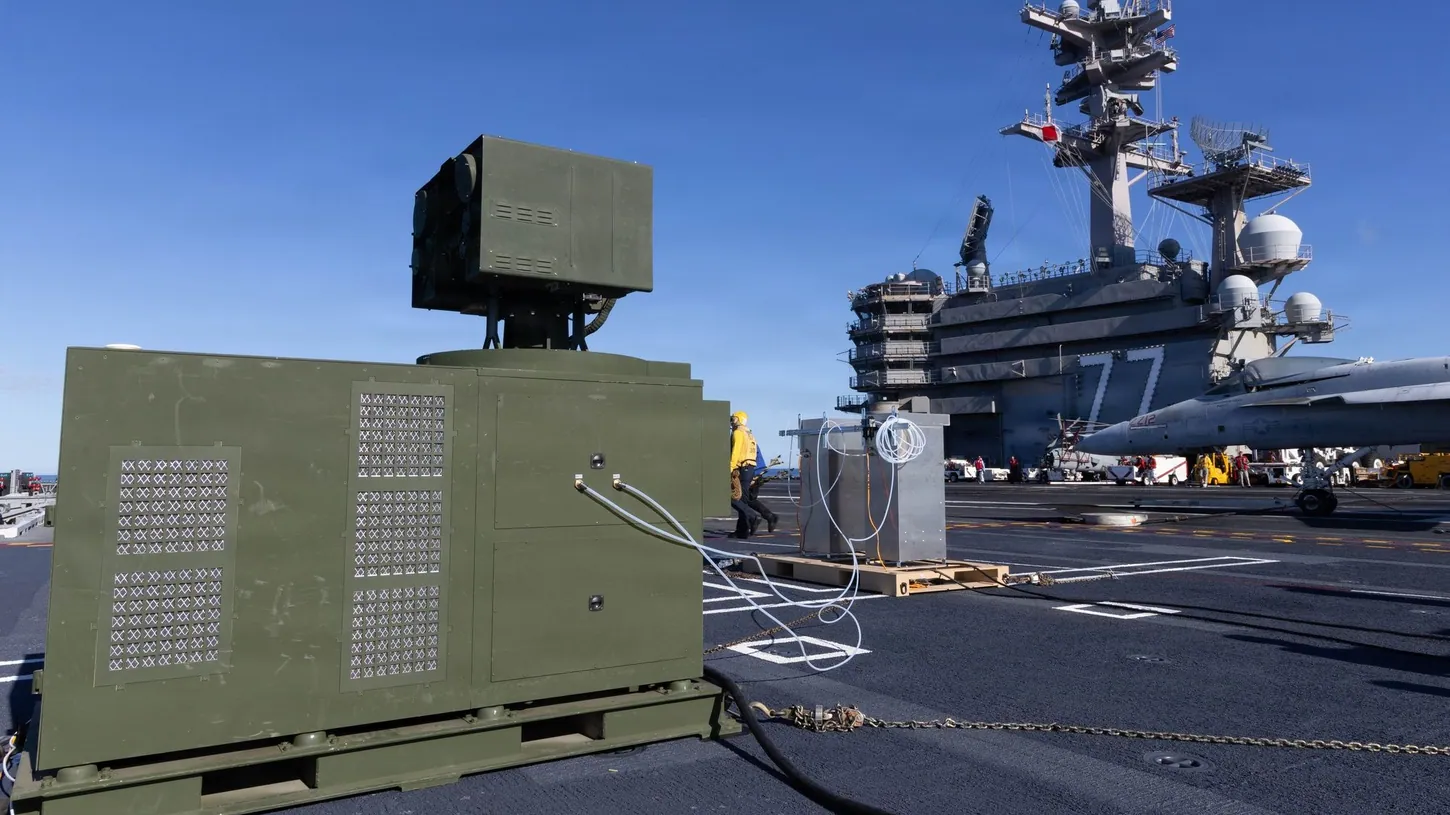
The border laser is an Army version of AeroVironment’s LOCUST, vehicle-mounted and aimed from inside. Operators track the target on a tablet-style display with an Xbox controller, then fire. AeroVironment puts each shot at $3, against interceptor missiles that run into the millions per round.
In a demonstration CBS News watched Friday, soldiers launched a small quadcopter over an empty field near the border wall and dropped it from the vehicle. The beam was invisible; the only sign of it was a brief flash where it hit. The recovered drone had a damaged propeller and no battery but was otherwise identifiable.
The $3 figure is real but it is the wrong denominator. Per Laser Wars, a Substack tracking military directed-energy programs and citing budget documents, a single unit costs between $17.4 million and $25 million. The Army just committed to dozens: on September 2 it awarded AeroVironment a $464.8 million production contract for the 30-kilowatt LOCUST X3, the first production contract for a laser weapon in US military history. That deal follows the $96 million Army interceptor award DroneXL covered last October, and it makes AeroVironment the company most exposed to whether the border numbers hold up.
The laser also has a weather problem. Rain and vapor scatter the beam and cut its power. Navy Chief of Naval Operations Adm. Daryl Caudle, in a Washington Post op-ed published the same day as the Army contract, made the case for lasers as an additional layer with known limits, not a replacement for missiles.
The 75% Drop Is Measured Against A Number Nobody Has Published
Felicio did not disclose how many drones his brigade detected before August 25 or after it, and officials told CBS News the drop could reflect cartels rerouting around the Rio Grande Valley rather than grounding their fleets. The 75% figure is a military estimate with no published baseline.
The last public figure is old. Air Force Gen. Gregory Guillot, then commanding US Northern Command, told the Senate Armed Services Committee in March 2024 that border incursions probably ran over 1,000 a month, while conceding that nobody knew the actual number. The Rio Grande Valley sector alone logged more than 10,000 incursions in one year, per Border Patrol testimony from 2023. A 75% drop from a thousand a month is a very different story than a 75% drop from a few dozen a night in one sector, and the military has not said which one it is measuring.
Felicio also declined to say which side of the border the eleven drones came down on, offering only that the US government is coordinating with Mexican authorities on tracking threats. That is the formula USNORTHCOM used after the first three kills, and Mexico’s president has already called unilateral US action on Mexican soil a breach of sovereignty.
The FAA Fight From February Is Now Called Coordination
Military officials told CBS News they coordinate regularly with the Federal Aviation Administration, checking its requirements before and after each laser shot so civilian aircraft are never put at risk. Seven months ago that coordination did not exist, and the same program shut an airport and destroyed another agency’s aircraft.
In February the FAA closed El Paso International Airport’s airspace after a laser at Fort Bliss fired at what turned out to be metallic balloons, and two weeks later the same system shot down a Customs and Border Protection drone near Fort Hancock because CBP had not told the Pentagon it was flying. The FAA’s objection then, as CBS News reported at the time, was blunt: a misfire into an airliner would be an instant disaster.
The path from there to eleven operational kills ran through a joint safety test at White Sands in March and the FAA’s April clearance for the military to run anti-drone lasers in US airspace under a signed agreement. What checking the FAA’s requirements means in practice, which airspace gets restricted and for how long before a shot, has not been published.
The threat the laser answers has a body count, though not yet on this side of the river. A report from the National Counterterrorism Innovation, Technology, and Education Center, funded by the Department of Homeland Security, documented 221 cartel drone attacks inside Mexico between 2021 and 2025 that killed 77 people. Roughly 8,000 US service members are posted along the border, and officers took CBS News to an overlook to show how little ground separates their positions from the drones’ launch points.
DroneXL’s Take
Ten days ago I wrote that there would be a next engagement announcement, and that what mattered was whether it got more specific about where the drones fell. It did not. It got a percentage instead, and a percentage with no denominator is harder to check than a location.
I want to be fair to the soldiers here. Destroying a spotter drone instead of chasing it home is sound logic, Richards is right that every lost airframe is money out of a cartel’s pocket, and a $3 shot against a consumer quadcopter is the first time in this fight that the defender pays less per engagement than the attacker. If traffic really fell by three quarters in two weeks, that is the most consequential counter-drone result along the US border this year.
But 75% is doing a lot of work for a number with no denominator. The military would not give CBS News a before count or an after count, and it volunteered that the cartels may simply have moved. A drop the Army cannot show a baseline for is a press line, not a finding. My suspicion is that the real number sits in JTF-SB’s detection logs and is perfectly releasable. Northern Command’s commander at the time told the Senate in 2024 that nobody knew how many drones crossed the border, and its deputy commander said last month that the command lacks the sensors to see a drone swarm forming. A command that says it cannot count the threat should not get credit for a precise reduction in it.
The airspace question is also still sitting there, unanswered for the second time. Eleven drones have been destroyed and neither government will say on which bank they fell. Watch two things. Whether the FAA publishes what its pre- and post-shot requirements are, now that the Army is buying dozens of these systems for domestic use. And whether Mexico’s government says anything once the count of destroyed drones climbs past the point where “coordination with all partners” can carry it.
For commercial pilots working anywhere near the southern border, the practical note from August stands, with more force. A weapon that fired at balloons in February has destroyed eleven drones in ten days, and the Army is about to have a lot more of them.
Sources: CBS News, U.S. Army, AeroVironment, Breaking Defense, The Washington Post
DroneXL uses automated tools to support research and source retrieval. All reporting and editorial perspectives are by Haye Kesteloo.