
U.S. Marines Test Fiber Optic FPV Drones at Sea

Check out the Best Deals on Amazon for DJI Drones today!
The U.S. Marine Corps is rediscovering an old truth with a very modern twist. When the airwaves are hostile, unreliable, or outright weaponized, the smartest move might be to avoid them entirely.

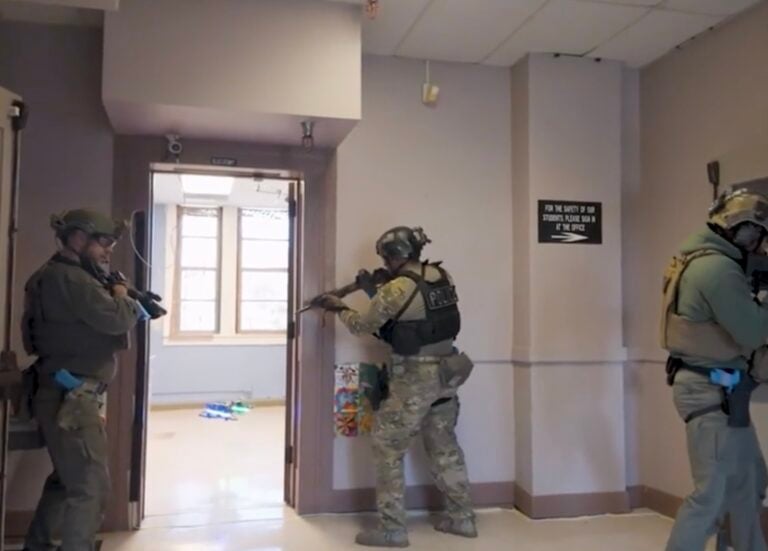
From January 27 to 29, 2026, I Marine Expeditionary Force, working with the Defense Innovation Unit, evaluated fiber optic FPV drones at Marine Corps Base Camp Pendleton, and the results suggest that the future of drone warfare may involve a literal glass thread trailing behind the aircraft.
These tests focused on operating in signal degraded and contested electromagnetic environments, the kind where GPS lies, radios go quiet, and jammers hum happily to themselves.
Fiber optic FPV drones bypass that entire problem by refusing to participate. No radio frequency emissions means no jamming, no spoofing, and no easy way for the enemy to find the operator. Electronic warfare systems, in this case, are left staring at empty spectrum displays wondering what just happened.
This approach may feel oddly retro in an age obsessed with wireless everything, but the Marines are not sentimental. They are practical. If a thin strand of fiber keeps a drone flying when radios fail, then the fiber wins.
Over Water Flights and Live Fire Reality Checks
The evaluation unfolded over three days and steadily increased in seriousness. The first day focused on over water flights, a setting that quickly exposes weak designs and bad assumptions.
Wind, glare, salt air, and the complete lack of safe recovery options tend to sharpen everyone’s attention. These demonstrations simulated amphibious and littoral operations, where a mistake does not bounce, it sinks.
The second day shifted to rehearsals for live fire, allowing Marines and industry partners to prepare systems, test ascent profiles, and make sure nothing unexpected happened later when expectations would be higher and targets less forgiving.

The final day delivered live fire demonstrations, where fiber optic FPV drones were evaluated for precision and effectiveness in simulated combat scenarios. Marines from I MEF, including elements of the 3rd Light Armored Reconnaissance Battalion, flew the systems directly, working alongside industry vendors and DIU representatives.
The event was thoroughly documented, because nothing sells a concept like clean footage of it working under pressure.
One platform that stood out was the Renegade UxS Nightmare FPV, a fiber optic system from Denmark that has already seen combat use in Ukraine.

Tested in both analog and digital variants, the drone performed well in maritime conditions and live fire scenarios. Its addition to the Department of Defense BLUE UAS Cleared List in December 2025 means it is not just interesting, it is buyable, which is often the real test.
Why Fiber Optic Drones Are Suddenly Everywhere
Fiber optic FPV drones solve a very specific problem, and they solve it brutally well. By using a physical cable to transmit control signals and video, they become immune to most electronic warfare threats. Jammers cannot jam what they cannot hear, and spoofers cannot fool a signal that never enters the spectrum.

These drones also offer excellent video clarity, lower power consumption, and the ability to operate in environments that frustrate RF systems, including forests, urban clutter, and below launch points. Operators can loiter, wait, and ambush without lighting themselves up like a wireless router in a combat zone.
There are tradeoffs, of course. Fiber can snag, break, or complicate logistics, and range is limited by how much cable you can carry. This is not a universal replacement for traditional FPV drones. It is a specialized tool for high threat environments, where reliability matters more than convenience.

Ukraine has already demonstrated the value of this approach. In heavily jammed battlespaces, fiber optic FPV drones have continued operating while RF systems struggled. Some units reportedly rely on them for a significant portion of their FPV missions, which explains why Western militaries are now paying close attention.
DroneXL’s Take
Fiber optic FPV drones are not flashy, and they are not elegant in the way wireless systems pretend to be. They are unapologetically practical. When electronic warfare turns the spectrum into a minefield, these drones simply opt out and keep flying.
For the Marine Corps, especially in amphibious and distributed operations, that reliability is more valuable than any theoretical range or bandwidth advantage.
There is something quietly funny about the idea that after decades of chasing ever more complex wireless solutions, the answer might be a spool of glass fiber and a drone that refuses to talk on the radio.
Electronic warfare keeps evolving, and so do the countermeasures. Sometimes the smartest response is not to fight the jammer, but to make it irrelevant.
Photo credit: Cpl. Joshua Bustamante / Marine Expeditionary Force
Discover more from DroneXL.co
Subscribe to get the latest posts sent to your email.
Check out our Classic Line of T-Shirts, Polos, Hoodies and more in our new store today!

MAKE YOUR VOICE HEARD
Proposed legislation threatens your ability to use drones for fun, work, and safety. The Drone Advocacy Alliance is fighting to ensure your voice is heard in these critical policy discussions.Join us and tell your elected officials to protect your right to fly.

Get your Part 107 Certificate
Pass the Part 107 test and take to the skies with the Pilot Institute. We have helped thousands of people become airplane and commercial drone pilots. Our courses are designed by industry experts to help you pass FAA tests and achieve your dreams.

Copyright © DroneXL.co 2026. All rights reserved. The content, images, and intellectual property on this website are protected by copyright law. Reproduction or distribution of any material without prior written permission from DroneXL.co is strictly prohibited. For permissions and inquiries, please contact us first. DroneXL.co is a proud partner of the Drone Advocacy Alliance. Be sure to check out DroneXL's sister site, EVXL.co, for all the latest news on electric vehicles.
FTC: DroneXL.co is an Amazon Associate and uses affiliate links that can generate income from qualifying purchases. We do not sell, share, rent out, or spam your email.














Watching that video was a waste of 4 minutes of my life. It showed nothing but a drone that is a stable as a rowboat in a hurricane.