
US Army Wants Robots to Wash Away Chemical Weapons

Check out the Best Deals on Amazon for DJI Drones today!
The U.S. Army is shopping for a very specific kind of help. Not another tank. Not another jet. It wants autonomous flying drones and ground robots that can scrub away chemical and biological contamination while humans stay at a safe distance, as Military Times reports.
The program is called the Autonomous Decontamination System, or ADS, and the idea is simple and quietly brilliant. Let machines do the dirty, dangerous work. Vehicles, bridges, command posts, key terrain, all of it could be cleaned by robots that do not breathe, panic, or get tired.
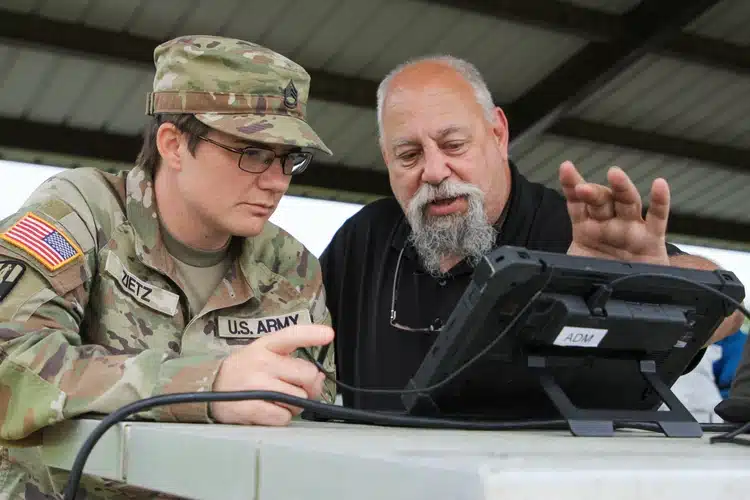
According to an Army Request for Information due February 20, the goal is to let a squad sized unit deliver what normally takes a full platoon to accomplish. Less gear. Fewer people. Faster response. And most important, less exposure to chemical and biological threats.
The Army is blunt about the problem. Decontamination eats time, logistics, and manpower like a hungry beast. ADS is meant to starve that beast by replacing human labor with robotic precision. No heroic gas mask moments required.
What these decontamination bots actually do
This is not just a robot with a pressure washer taped to it. The Army wants a full workflow in metal and code.
First comes the pre wash. The robot sprays water to remove surface contamination and prep the area. Think of it as the rinse cycle before the real cleaning starts.
Next is mapping. The system must detect and map contamination footprints. Where exactly is the threat? How concentrated is it? This data matters because the Army does not want to waste decontaminants or soak everything blindly.
Then comes the main event. The robot applies decontamination agents precisely where needed. Solids, liquids, foams, all are on the table. The request specifically mentions High Test Hypochlorite and the M333 Joint General Purpose Decontaminant for hardened military equipment. Industrial strength soap for industrial strength nightmares.
Finally, there is a post wash and assessment phase. More water. More sensing. Existing fielded detector technology confirms whether the area is actually safe again or still pretending.
Navigation and autonomy are also under the microscope. Contractors must explain whether their systems rely on GPS, Real Time Kinematic positioning, Visual Simultaneous Localization and Mapping, or other methods. The Army wants to know how smart these machines are. Fully autonomous. Operator in the loop. Or old school remote control.
Yes, I immediately thought of Battlefield
Let us be honest for a moment. The first thing that came to my mind was that robot from Battlefield 6. The one that rolls around the chaos repairing vehicles, spotting enemies, and generally being the most useful teammate on the map while half your squad is doing something questionable behind a wall.

I use that robot a lot. Probably too much. And when I read this Army request, I could not help but imagine a real world version trundling across a contaminated battlefield, calmly cleaning a Stryker while chaos unfolds in the background.
In my head, it even makes the same helpful beeping noises.
Jokes aside, the comparison fits. The Army wants mobile systems, both tethered and untethered, that can be hauled by light or medium tactical vehicles. These are not lab toys. They are frontline tools meant to move with maneuver units and work under pressure.

This push fits into a broader modernization of U.S. CBRN defenses. The threats are not theoretical. North Korea exists. Iran looms in the background. Terrorist groups are experimenting with biology and AI like it is a dangerous science fair.
The Army is also upgrading the CBRN Stryker. The Nuclear, Biological, and Chemical Reconnaissance Vehicle Sensor Suite Upgrade adds onboard drones that can scout ahead for contamination without risking the crew.
In January 2025, the Army said these upgrades improve reliability, maintainability, and remote maneuverability, thanks to unmanned aerial vehicles, modular mission payloads, and improved data processing.
One strange footnote to all of this is that CBRN training was recently made optional under the updated Army Regulation 350-1. The training is available, but commanders decide whether to use it. Robots that can clean chemical weapons might soon be mandatory. Training humans to deal with the same threats is now apparently situational.
That contrast is hard to ignore.
DroneXL’s Take
The U.S. Army asking for autonomous decontamination robots feels like science fiction finally punching in for work. It is practical, overdue, and a little surreal. If a robot can map poison, scrub it away, and tell you when it is safe to breathe again, that is not a gimmick. That is survival tech.
And yes, part of me hopes the final version looks suspiciously like my favorite Battlefield robot. If the future of warfare includes autonomous machines calmly cleaning chemical weapons off vehicles while humans stay alive, I am fine with a little gamer nostalgia baked into the design.
Photo credit: Gabriella White/U.S. Army, Battlefield 6.
Check out our Classic Line of T-Shirts, Polos, Hoodies and more in our new store today!

MAKE YOUR VOICE HEARD
Proposed legislation threatens your ability to use drones for fun, work, and safety. The Drone Advocacy Alliance is fighting to ensure your voice is heard in these critical policy discussions.Join us and tell your elected officials to protect your right to fly.

Get your Part 107 Certificate
Pass the Part 107 test and take to the skies with the Pilot Institute. We have helped thousands of people become airplane and commercial drone pilots. Our courses are designed by industry experts to help you pass FAA tests and achieve your dreams.

Copyright © DroneXL.co 2026. All rights reserved. The content, images, and intellectual property on this website are protected by copyright law. Reproduction or distribution of any material without prior written permission from DroneXL.co is strictly prohibited. For permissions and inquiries, please contact us first. DroneXL.co is a proud partner of the Drone Advocacy Alliance. Be sure to check out DroneXL's sister site, EVXL.co, for all the latest news on electric vehicles.
FTC: DroneXL.co is an Amazon Associate and uses affiliate links that can generate income from qualifying purchases. We do not sell, share, rent out, or spam your email.







![Review And Rewrite This Article For Publication. Do All Of The Following: 1. Fact-Check: Verify Dates, Locations, Quotes, Agency Names, And Acronyms. Mark Anything Uncertain With [Verify]. Did The Article Reference And Link To The Original Source? Flag If Missing. 2. Devil'S Advocate: In 3–4 Sentences, Assess Whether The Article Is Factually Sound, Well-Written, And Reads As Human. Be Blunt. 3. Humanize: Fix All Ai Patterns — Break Parallel Sentence Pairs, Remove Em-Dashes Used As Dramatic Pauses, Cut Redundant Consecutive Sentences, Remove Rhetorical Counting Devices. Strip These Words: Crucial, Vital, Key, Significant, Notably, Importantly, Essentially, Arguably, Landscape, Ecosystem, Trajectory, Transformative, Game-Changer, Groundbreaking, Unprecedented, Cutting-Edge, Robust, Seamless, Leverage (Verb), Utilize, Going Forward, In Conclusion, In Summary. Vary Sentence Length. Make The Take Section One Editor'S Sharp Opinion, Not A Summary. 4. Seo: Give 5 Alternative Title Ideas, A Permalink Slug, And A Meta Description (Under 155 Characters). Output Order: Devil'S Advocate Assessment → Revised Article With [Verify] Flags → Seo Block.](https://dronexl.co/wp-content/uploads/2025/02/DJI-Dock-3-and-Matrice-4D-and-4TD-Usher-in-Versatile-Drone-in-a-Box-Solution-for-Remote-Operations-0022.jpg.webp)
