Georgia House Bill Opens Hog Hunting with Drones

Check out the Best Deals on Amazon for DJI Drones today!
Georgia lawmakers are moving to loosen the rules around hog hunting and tracking, and one line in House Bill 946 is getting drone pilots’ attention. The bill would expand when and how hogs can be taken, including allowing drones to help locate hogs, which is a big shift in a country where drone use for hunting is usually clamped down hard.
Supporters argue the state needs more tools to deal with an invasive animal that tears up farmland, habitat, and basically anything it can root up overnight.

What Could This Mean For Other States?
For years, I’ve been asked the same question by people between the ages of ten and seventy: “can I use a drone to hunt?”
Typically, the answer is no across the board. If HB 946 becomes law, it is a rare example of a state explicitly carving out drone utility for a hunting-related use case. Even with limits (this is not “weaponized drones”), it is still a meaningful signal that states are starting to separate “drones as a hunting advantage” from “drones as a tool for invasive population control.”
What Changed?
During Georgia’s current legislative session, the state House passed HB 946 by a wide margin (reportedly 163–1). The bill’s sponsor, Rep. Rob Clifton, framed it as removing statutory burdens so landowners and hunters can hit feral hog populations harder.
What’s in the mix, based on reporting and bill summaries:
- Broader authorization to hunt and trap feral hogs under specified circumstances.
- Removal of certain permit requirements tied to feral hog control (wildlife control permit language has been called out in coverage).
- Drone use to locate hogs (supporters have been explicit that the idea is spotting and locating, not killing from the drone).
- Other loosening measures mentioned in coverage include hunting a hog from a vehicle and expanded trapping rules (again, depending on exact scenario and compliance).
What Part do Drones Play
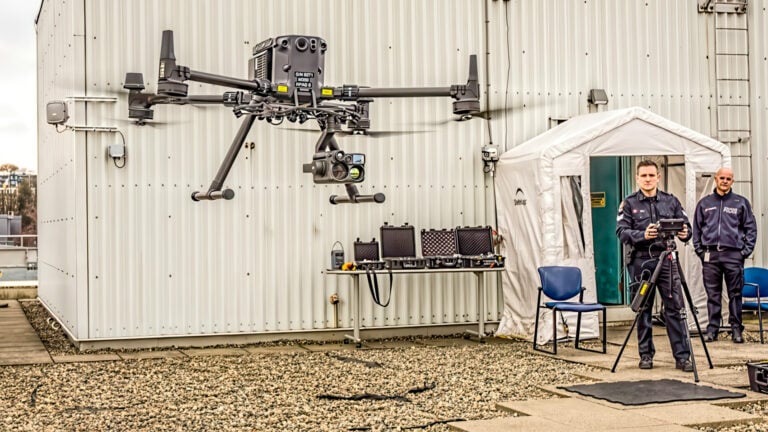
The moment you allow aerial spotting, you change the world of hunting entirely – as seen when Mississippo proposed a similar bill in 2024. Hog hunting can be surprisingly difficult. Hogs are smart, mostly nocturnal, and they do not politely stand in the open, waiting for a hunter to line up their shot. A drone with a thermal payload can cover a lot of ground fast, confirm numbers, and identify tracks easier.
Also worth noting: reporting around the bill specifically calls out that it is not about weaponized drones. That matters, because “drone-assisted spotting” is a different conversation than “drone-with-gun,” and lawmakers pushing this bill seem to know how quickly the second one would get torched.
Why it matters
1) Feral hogs have been a southern problem for a long time
Wild hogs are not a cute nuisance. They destroy crops, tear up fields, damage habitat, and spread disease risk for livestock operations. Georgia reporting around HB 946 cites estimates of major annual losses, with one figure commonly referenced at about $150 million in damage per year (based on a UGA Extension estimate from 2020 that was repeated in recent coverage).
2) States rarely loosen “technology + hunting” restrictions
Across the US, wildlife agencies and state legislatures tend to be conservative about anything that smells like an unfair advantage, spotlighting, remote pursuit, or “distance hunting.” Drones end up lumped into that category often, even when the target is an invasive animal that is doing real damage.
So even a narrow allowance like “hog hunting with UAS” is a big deal. It is a policy shift that says: we can treat invasive control differently than traditional game hunting.
3) It puts drone ops in the real world, with real risks
This is also where things get messy. If Georgia opens the door, people will try to sprint through it.
A few practical realities:
- FAA rules still apply. State hunting law can say “go ahead,” but that does not override flight restrictions, careless or reckless prohibitions, operations over people, or any federal restrictions.
- The aircraft is not the only hazard. Hog hunts can involve vehicles, firearms, dogs, and adrenaline. A drone in that environment needs a real safety plan, not just “send it.”
- Thermal makes it easier, but it does not make it simple. Misidentification, property line confusion, and bad decision-making are how you end up with headlines nobody wants.
What happens next
HB 946 still has to clear the Georgia Senate before anything becomes law. If it advances, the next thing to watch is how Georgia agencies and enforcement interpret the practical boundaries of “hog hunting with drones,” and what guidance (if any) emerges around safe use cases.
If it stalls, it still matters, because it shows that the idea has traction. Expect versions of this to pop up elsewhere, especially in states where feral hog damage is a constant drain on agriculture and land management.
DroneXL’s Take
This is cool, and it is long overdue that invasive species control gets treated differently than traditional hunting. Wild hogs have been hammering the southern US for decades, and anyone who has seen a rooted-up field knows this is not a “let people have fun” issue, it is a property and agriculture problem.
That being said, the US does not have the best history with regulating species’ populations. My hope is that this doesn’t get out of control, but I’m afraid this bill could result in an accident that only tightens regulations on drone operators here in the US.
If Georgia wants this to work, it needs to be crystal clear that this is about locating and coordination, not turning drones into the next round of hunting drama.
Would you want your state or country to allow the use of drones to deal with invasive species? Let me know in the comments if you would want your state/country to allow the use of drones for invasive population control.
Discover more from DroneXL.co
Subscribe to get the latest posts sent to your email.
Check out our Classic Line of T-Shirts, Polos, Hoodies and more in our new store today!

MAKE YOUR VOICE HEARD
Proposed legislation threatens your ability to use drones for fun, work, and safety. The Drone Advocacy Alliance is fighting to ensure your voice is heard in these critical policy discussions.Join us and tell your elected officials to protect your right to fly.

Get your Part 107 Certificate
Pass the Part 107 test and take to the skies with the Pilot Institute. We have helped thousands of people become airplane and commercial drone pilots. Our courses are designed by industry experts to help you pass FAA tests and achieve your dreams.

Copyright © DroneXL.co 2026. All rights reserved. The content, images, and intellectual property on this website are protected by copyright law. Reproduction or distribution of any material without prior written permission from DroneXL.co is strictly prohibited. For permissions and inquiries, please contact us first. DroneXL.co is a proud partner of the Drone Advocacy Alliance. Be sure to check out DroneXL's sister site, EVXL.co, for all the latest news on electric vehicles.
FTC: DroneXL.co is an Amazon Associate and uses affiliate links that can generate income from qualifying purchases. We do not sell, share, rent out, or spam your email.