Fiber optic drone webs are reshaping Ukraine’s battlefields

Check out the Best Deals on Amazon for DJI Drones today!
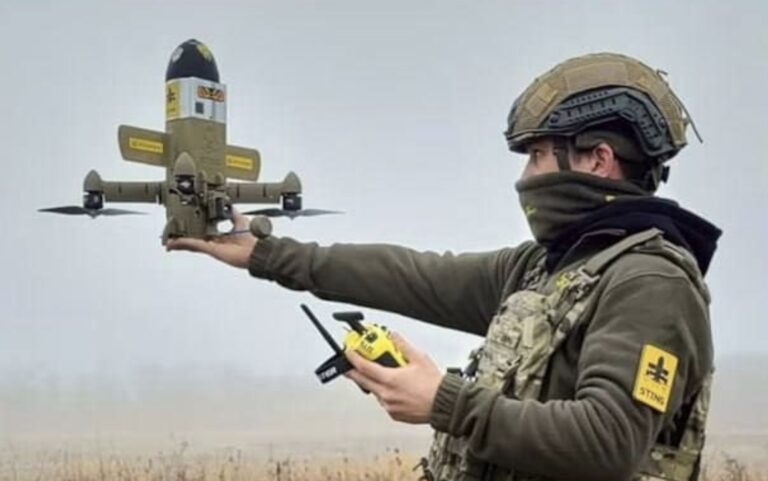
Russia’s full scale invasion of Ukraine is often called the world’s first true drone war, and not without reason. FPV drones buzz across the frontlines every day, striking targets, scouting positions, and doing jobs that once required far more people and far more risk, as UWEC Work Group reports.
Recently, another layer has been added to this airborne ecosystem: fiber optic guided drones.
These drones trail a thin optical fiber behind them as they fly, unspooling a nearly invisible thread that keeps them connected to their operators.

The result is a strange new landscape below, fields and forests laced with what looks like spider silk caught in the sun. Effective for warfare, yes. Environmentally harmless? That part is still very unclear.
Fiber optic drones matter so much in combat
Fiber optic FPV drones have only been used on the frontlines for roughly two years, but they have already earned a reputation. Because the video and control signal travels through a physical cable instead of radio waves, these drones are immune to electronic warfare and jamming. No signal to disrupt means fewer defenses that actually work.

The technology itself is not new. Optical fiber has been around since the 1970s and underpins the modern internet, mobile networks, and global communications. What is new is the scale and speed at which it is now being deployed in active combat zones.
Ukraine has relied heavily on imported fiber optic systems so far, but new laws passed in June 2025 by the Verkhovna Rada introduced tax and customs incentives aimed at domestic production. That is expected to lower costs and accelerate adoption. More drones in the air, however, also means more fiber left behind on the ground.
From invisible threads to visible environmental risks
As fiber optic FPV drones race toward their targets, they leave long trails behind them. In frontline areas, entire fields are now covered with thin white strands that glint in sunlight and tangle into bushes and trees. Research into the environmental impact of this material is still in its early days.

Maxim Soroka, environmental safety expert and science director at Dovkol Laboratory, says serious study only began about a year ago. For now, scientists rely largely on what is already known about plastics and polymers.
Most of the fiber used in these drones is made from PMMA, a plastic optical fiber material that is chemically stable and slow to degrade. That durability is a double edged sword. Over time, PMMA can break down into microplastics and nanoplastics, especially in harsh environments like active combat zones where burning, explosions, and soil disturbance are common.
Studies cited by the Conflict and Environmental Observatory warn that plastic fibers can entangle animals, damage limbs, and cause suffocation or starvation.
German and international research has also linked microplastics in soil to reduced crop yields, disrupted microbial ecosystems, and even increased emissions of nitrogen oxide, a potent greenhouse gas.
Not all experts agree on the severity of the threat. Soroka argues that when agricultural fields are plowed, fiber strands are broken up and dispersed, reducing direct harm to crops. He believes the overall impact on agricultural production will be limited, especially for crops harvested above ground.
Alexander Vinyukov, professor of agronomy and director of the Donetsk State Agricultural Experimental Station, largely agrees. He points out that lithium batteries from crashed drones may pose a bigger long term risk than fiber itself, a problem that receives far less attention.
When birds build nests from battlefield leftovers
One of the more surreal consequences of fiber optic drone use is how wildlife adapts. There are documented cases of birds using the thin fibers to build nests. From a bird’s perspective, it makes sense. The material is strong, lightweight, and does not rot.

That durability also creates danger. Fiber strands can wrap around branches, antlers, or wings, forming traps. Ukrainian soldiers have already shared videos of themselves cutting birds free from fiber webs.


Deer have been found with strands tangled around their antlers. In large enough concentrations, animals can become exhausted trying to escape and may die as a result.
The fibers themselves are thin and light, and many animals can bite through them. A single strand is rarely the problem. Dense clusters are. Anti drone nets pose similar risks, but fiber optic trails are far less predictable and far harder to spot.
Greenpeace Ukraine director Nataliia Hozak stresses that time will be the ultimate judge. How these fibers behave under sunlight, rain, snow, and seasonal change is still unknown. Do they sink into the forest floor, fragment into microplastics, or remain intact for decades? The answers will take years, possibly decades, to emerge.
DroneXL’s Take
Fiber optic drones are undeniably effective tools of modern warfare, and on today’s battlefields they save lives while shaping tactics in real time. But their ghostly leftovers are quietly rewriting the environment beneath them.
Compared to landmines, unexploded munitions, and scorched earth, fiber optic pollution may seem minor, yet it represents a new category of wartime impact that nobody planned for.
As drone technology continues to evolve faster than cleanup strategies, these silent threads serve as a reminder that even the smartest machines leave a mess behind.
Photo credit: Yurii Fedorenko, Azov Brigade Telegram channel, Bezpeka-shop.com and Euro-SD.com
Discover more from DroneXL.co
Subscribe to get the latest posts sent to your email.
Check out our Classic Line of T-Shirts, Polos, Hoodies and more in our new store today!

MAKE YOUR VOICE HEARD
Proposed legislation threatens your ability to use drones for fun, work, and safety. The Drone Advocacy Alliance is fighting to ensure your voice is heard in these critical policy discussions.Join us and tell your elected officials to protect your right to fly.

Get your Part 107 Certificate
Pass the Part 107 test and take to the skies with the Pilot Institute. We have helped thousands of people become airplane and commercial drone pilots. Our courses are designed by industry experts to help you pass FAA tests and achieve your dreams.

Copyright © DroneXL.co 2026. All rights reserved. The content, images, and intellectual property on this website are protected by copyright law. Reproduction or distribution of any material without prior written permission from DroneXL.co is strictly prohibited. For permissions and inquiries, please contact us first. DroneXL.co is a proud partner of the Drone Advocacy Alliance. Be sure to check out DroneXL's sister site, EVXL.co, for all the latest news on electric vehicles.
FTC: DroneXL.co is an Amazon Associate and uses affiliate links that can generate income from qualifying purchases. We do not sell, share, rent out, or spam your email.