Durham Regional Police (DRPS) Launches Drone as First Responder (DFR) Program, Ask Your Questions TODAY

Check out the Best Deals on Amazon for DJI Drones today!
Durham Regional Police Service (DRPS) is officially jumping into the Drone as First Responders world, announcing a new Drone First Responder (DFR) pilot project and hosting a community information event tonight, Thursday, February 26, 2026.
If you have followed DFR programs in the U.S., you’ll be familiar with the general idea of using drones to reach a scene first. For those of you that are not aware, many public safety and law enforcement agencies have adopted DFR programs in recent years.
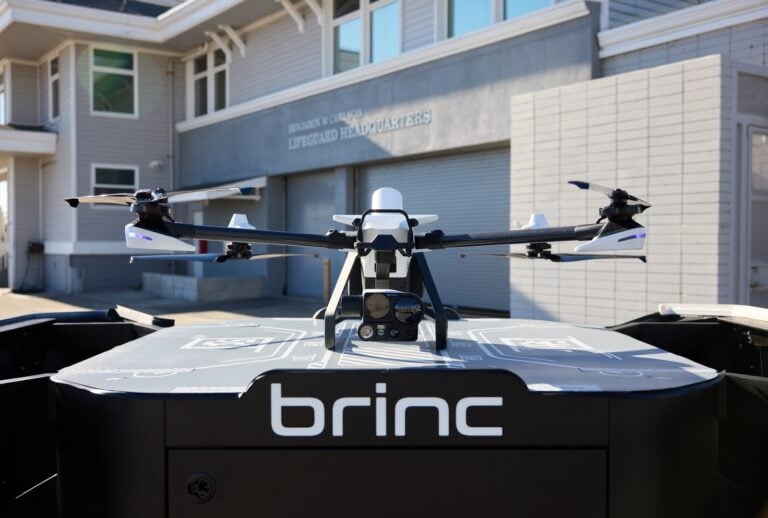
From a high-speed chase to a hostage situation, drones are able to relay information to other safety personnel way quicker than waiting for a responding officer. DRPS says its system can respond to certain eligible incidents in roughly 60 seconds, launching from a base station, and being flown remotely by their certified pilots.
What DRPS Says The Drone(s) Will Be Used For
According to DRPS, the DFR platform is intended for operational needs like missing persons, unknown-risk or high-risk calls, large or evolving scenes, natural disasters, and other incidents where rapid aerial awareness could change the outcome.
CityNews Toronto also describes the program as a limited-time pilot where a drone is dispatched to eligible 911 calls or emergency incidents and then guided to the scene to capture real-time video for responders. DRPS even highlights a missing-person scenario in its promotional messaging, using the drone as the early “search and clear” tool that can rule out areas quickly and redirect ground units where they are actually needed.
DRPS Claims “No Surveillance,” No Facial Recognition, No Audio
DRPS is leaning hard into the privacy lane, and that is smart because public trust is the make-or-break point for any DFR project.
On its own DFR pilot page, DRPS states the drones are not intended for general surveillance or routine monitoring, they are not equipped with facial recognition tools, and they are not equipped to record audio.
DRPS also says access to video is restricted, logged, and auditable, and that the program operates under Transport Canada regulations, privacy legislation, and an approved Privacy Impact Assessment.

DRPS Is Committed to Transparency (At Least on Paper)
DRPS explicitly says “public transparency is a core element” of the project, and that it plans to release public-facing materials, including previously collected video footage, to help residents understand how the system works and how privacy is protected.
A lot of agencies love the “trust us” approach. They want the drones, they want the funding, they want the PR-approved “DFR” title, but when you ask for flight logs, policy details, retention rules, or real-world examples, the answers get vague real quick.
DRPS at least appears to be acknowledging something basic: if you are going to fly robotic cameras into public space under government authority, you owe the public receipts.
What We Can Expect to See from DRPS
DRPS is hosting a Drone as First Responder Community Information Night on Feb. 26, 2026, from 6:30 p.m. to 8:00 p.m. where residents can see live drone demonstrations, meet pilots, and hear details about how the system operates, oversight, and privacy protections. DRPS has promoted the event as part of its transparency push, and it is also a chance for the public to press for specifics before the pilot becomes “the new normal.”
DroneXL’s Take
DFR programs can absolutely save lives. Missing persons, natural disasters, evolving scenes, and time-sensitive emergencies are exactly where drones give public safety teams the edge needed to get the job done.
At the same time, if a law enforcement agency is operating a DFR program, it is not enough to publish a feel-good FAQ and call it accountability. There should be a baseline expectation that the agency can publish info for each and every flight: flight logs, dispatch context, where it launched from, where it flew, retention timelines, what was recorded, and what oversight applied.
That should include Remote ID related details where applicable, and it should be standardized. The public should not have to fight through freedom-of-information requests just to understand how a government-operated aerial surveillance tool is being used.
In the U.S., the surveillance vendor ecosystem keeps getting deeper, and public backlash is getting louder.
License plate reader networks, data fusion platforms, and “public safety” surveillance networks can quietly evolve into something far bigger than what the public agreed to. If you believe citizens are entitled to opt out from mass surveillance, then the bare minimum is demanding transparency and real oversight where opting out is not realistically possible.
And if you are sitting there thinking, “No, agencies here totally do that,” prove it. Drop examples in the comments. Show the policies, the public footage libraries, the flight transparency dashboards.
Discover more from DroneXL.co
Subscribe to get the latest posts sent to your email.
Check out our Classic Line of T-Shirts, Polos, Hoodies and more in our new store today!

MAKE YOUR VOICE HEARD
Proposed legislation threatens your ability to use drones for fun, work, and safety. The Drone Advocacy Alliance is fighting to ensure your voice is heard in these critical policy discussions.Join us and tell your elected officials to protect your right to fly.

Get your Part 107 Certificate
Pass the Part 107 test and take to the skies with the Pilot Institute. We have helped thousands of people become airplane and commercial drone pilots. Our courses are designed by industry experts to help you pass FAA tests and achieve your dreams.

Copyright © DroneXL.co 2026. All rights reserved. The content, images, and intellectual property on this website are protected by copyright law. Reproduction or distribution of any material without prior written permission from DroneXL.co is strictly prohibited. For permissions and inquiries, please contact us first. DroneXL.co is a proud partner of the Drone Advocacy Alliance. Be sure to check out DroneXL's sister site, EVXL.co, for all the latest news on electric vehicles.
FTC: DroneXL.co is an Amazon Associate and uses affiliate links that can generate income from qualifying purchases. We do not sell, share, rent out, or spam your email.