Drone Operators Trained for Modern Combat at Fort Indiantown Gap

Check out the Best Deals on Amazon for DJI Drones today!
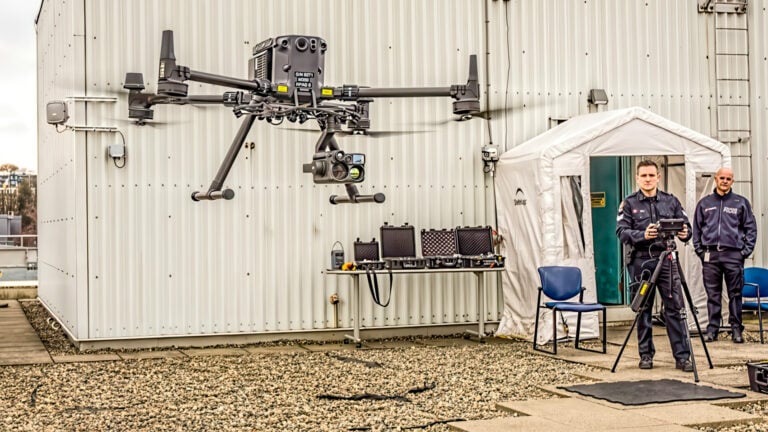
At Fort Indiantown Gap, the quiet February air is buzzing, not with helicopters, but with something smaller, sharper, and far more personal: drones.
For ten days, as the National Guard reports, soldiers from across different units and specialties gathered to attend a small unmanned aircraft system operator course, known in military shorthand as sUAS

The training, which runs from February 19 to February 28, is led by the 166th Regiment – Regional Training Institute, and it reflects a simple reality. Modern battlefields are no longer just dirt and steel. They are data, sensors, and software.
And the soldiers know it.
A Tactical Shift in the Making
Sgt. Stephen Scharf of the 1st Battalion, 111th Infantry Regiment describes the course as a front row seat to a rapidly changing world.
“It’s a very evolving world,” he said, noting how quickly drone technology and tactics are shifting.
That phrase, evolving world, echoes far beyond this Pennsylvania training ground. Small drones are no longer niche tools reserved for elite units. They are becoming as fundamental as radios and rifles. The course is structured to reflect that shift, pushing soldiers to think beyond basic flight controls and toward tactical integration.

Sgt. 1st Class Brandon Wahl, the course manager, emphasizes realism. The goal is not just to teach someone how to launch and land a quadcopter. It is to build a mindset where any soldier, regardless of specialty, can deploy a drone as part of a larger combat operation.
At any moment, Wahl explains, a soldier could be tasked with operating one.
That is a major cultural shift. Drones are no longer “someone else’s job.” They are everyone’s business.
Engineers, Infantry, Intel, One Drone Ecosystem
The student roster reads like a cross section of the Army. Infantry. Engineers. Intelligence specialists. Members of the 111th Engineer Brigade from the West Virginia National Guard are attending ahead of an upcoming deployment, where these systems will play a direct operational role.
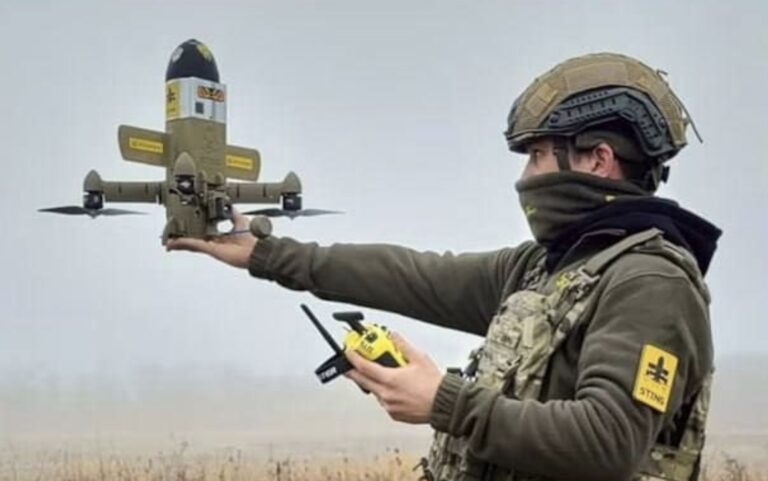
For infantry soldiers, the value is obvious. Small drones provide real time reconnaissance, allowing units to scan terrain, clear structures visually, and identify threats without exposing troops unnecessarily.
But what stands out here is not just the tactical advantage. It is the normalization.
When an engineer brigade trains alongside infantry and intel personnel, the message is clear. Small drones are not a boutique capability. They are an Army wide force multiplier.
Spc. Simon Bertram noted that expanding the number of trained operators will be “very beneficial.” That may be an understatement. Globally, conflicts have demonstrated how small, commercially inspired drones can reshape battlefield awareness almost overnight.
Doctrine Catching Up to Technology
Scharf pointed to something even bigger than the aircraft themselves. Doctrine.
As more soldiers train and more units integrate sUAS into daily operations, official procedures and battlefield playbooks evolve. The Army is actively codifying how these tools fit into large scale combat operations.
That process matters. Technology without doctrine is noise. Technology with doctrine becomes strategy.
The course at Fort Indiantown Gap is one small piece of that transformation. But it signals a broader trend across the U.S. military. Small drones are moving from experimental programs and specialized detachments into mainstream force structure.
They are becoming expected.
And that expectation changes everything.
DroneXL’s Take
This is how revolutions quietly begin.
Not with flashy announcements, but with ten day courses at training sites in Pennsylvania, where infantrymen, engineers, and intel specialists learn to fly small drones as naturally as they handle their standard equipment.
The key takeaway is not just that the National Guard is training more operators. It is that sUAS capability is being democratized inside the force. When every soldier understands how to deploy a drone, the battlefield becomes a web of airborne sensors rather than isolated patrols.
For drone enthusiasts watching from the civilian world, there is a familiar pattern here. Small drones proved their value commercially first. Now the military is fully embedding them into doctrine and daily operations.
The buzz over Fort Indiantown Gap is more than background noise. It is the sound of a tactical shift taking root.
Photo credit: Sgt. Kayden Bedwell
Discover more from DroneXL.co
Subscribe to get the latest posts sent to your email.
Check out our Classic Line of T-Shirts, Polos, Hoodies and more in our new store today!

MAKE YOUR VOICE HEARD
Proposed legislation threatens your ability to use drones for fun, work, and safety. The Drone Advocacy Alliance is fighting to ensure your voice is heard in these critical policy discussions.Join us and tell your elected officials to protect your right to fly.

Get your Part 107 Certificate
Pass the Part 107 test and take to the skies with the Pilot Institute. We have helped thousands of people become airplane and commercial drone pilots. Our courses are designed by industry experts to help you pass FAA tests and achieve your dreams.

Copyright © DroneXL.co 2026. All rights reserved. The content, images, and intellectual property on this website are protected by copyright law. Reproduction or distribution of any material without prior written permission from DroneXL.co is strictly prohibited. For permissions and inquiries, please contact us first. DroneXL.co is a proud partner of the Drone Advocacy Alliance. Be sure to check out DroneXL's sister site, EVXL.co, for all the latest news on electric vehicles.
FTC: DroneXL.co is an Amazon Associate and uses affiliate links that can generate income from qualifying purchases. We do not sell, share, rent out, or spam your email.