U.S. MQ-4C Triton Disappears Near Iran

Check out the Best Deals on Amazon for DJI Drones today!
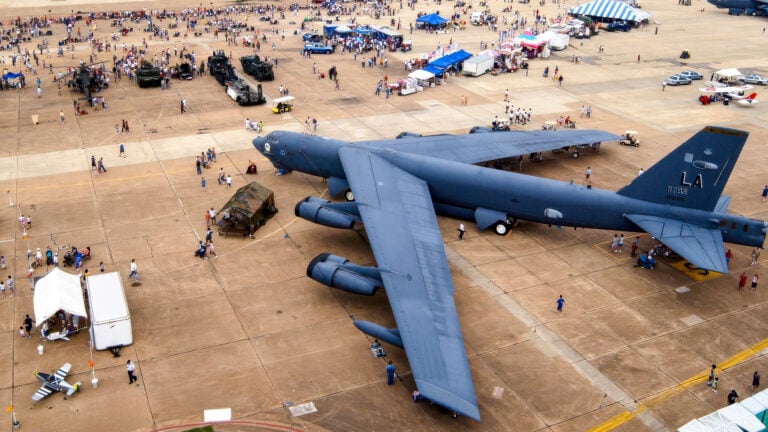
An American Northrop Grumman MQ-4C Triton reconnaissance drone vanished from radar on February 22 while flying near Iran, adding a new layer of tension to an already volatile region.

The aircraft, registration 169660 and call sign OVRLD1, had taken off from Al Dhafra Air Base in the United Arab Emirates and was operating over international waters near the Strait of Hormuz when it transmitted emergency code 7700, as Militarnyi reported.
Moments later, it disappeared from tracking systems.
Data from Flightradar24 shows the drone flying close to Iranian airspace before the distress signal. Code 7700 is aviation shorthand for a general emergency, used when something serious is happening onboard. In this case, they didn’t have DJI care.

After that transmission, the signal stopped.
No official U.S. statement has confirmed whether the aircraft crashed, was jammed, or was otherwise lost. But the timing and location raise immediate questions.
Electronic warfare or mechanical failure?
The Defence Network suggested that Russian or Chinese electronic warfare systems possibly available to Iran could have interfered with the drone’s communications or navigation systems. That claim remains unverified.
Still, the region is known for GPS spoofing and signal jamming activity. The Strait of Hormuz is one of the most electronically contested corridors in the world. Military aircraft operating there face both physical and digital threats.
Interestingly, just three days later, on February 25, another Triton flew a long reconnaissance mission southeast of the Iranian coast, operating for several hours over international waters in the Gulf of Oman. That move suggests the U.S. Navy is continuing operations despite the incident.
Three MQ-4C Triton drones are currently stationed at Al Dhafra.
A high altitude surveillance powerhouse
The MQ-4C Triton is designed for long range maritime intelligence missions. It can stay airborne for more than 30 hours, fly at altitudes up to 17,000 meters, and reach speeds of around 575 to 610 km per hour depending on configuration.

Derived from the RQ-4 Global Hawk, the Triton is optimized for ocean surveillance. It carries the AN ZPY 3 active electronically scanned array radar, capable of providing 360 degree coverage and scanning roughly 5,200 square kilometers per cycle. In theory, a single aircraft can survey up to 7 million square kilometers per day.
That makes it a key asset for monitoring shipping lanes, naval movements, and coastal activity.
But the program has faced scrutiny.
In 2008, Northrop Grumman received a 1.16 billion dollar contract to develop and produce the MQ-4C. The prototype first flew in 2013, with testing at Edwards Air Force Base and Naval Air Station Patuxent River.
Initial operational capability was achieved in 2023, allowing the U.S. Navy to deploy five aircraft for continuous patrols in key regions. However, auditors have previously flagged management and technical concerns within the program. The Navy recently allocated 83.1 million dollars to upgrade two aircraft and is expected to seek additional funding to address fleet wide issues.
Officials maintain there are no serious readiness problems at the moment.
Why this matters
The Strait of Hormuz handles a significant portion of the world’s oil shipments. Any disruption in surveillance over that corridor has geopolitical implications.
If the Triton was lost due to mechanical failure, it raises questions about reliability in high stress operational zones. If electronic warfare played a role, it signals growing sophistication in counter drone capabilities near contested regions.
Either way, the disappearance underscores how fragile even advanced, high altitude systems can be when operating close to rival powers.
DroneXL’s Take
The MQ-4C Triton is one of the most capable maritime surveillance drones in the world, built to watch vast oceans for more than a day at a time. Losing one near Iran, especially after transmitting a 7700 emergency code, is not routine.
The bigger story may not be whether the drone crashed. It may be whether someone quietly proved they can blind one of America’s most advanced unmanned aircraft without firing a shot.
In modern drone warfare, silence can be strategic.
Photo credit: US Navy, Flightradar24
Discover more from DroneXL.co
Subscribe to get the latest posts sent to your email.
Check out our Classic Line of T-Shirts, Polos, Hoodies and more in our new store today!

MAKE YOUR VOICE HEARD
Proposed legislation threatens your ability to use drones for fun, work, and safety. The Drone Advocacy Alliance is fighting to ensure your voice is heard in these critical policy discussions.Join us and tell your elected officials to protect your right to fly.

Get your Part 107 Certificate
Pass the Part 107 test and take to the skies with the Pilot Institute. We have helped thousands of people become airplane and commercial drone pilots. Our courses are designed by industry experts to help you pass FAA tests and achieve your dreams.

Copyright © DroneXL.co 2026. All rights reserved. The content, images, and intellectual property on this website are protected by copyright law. Reproduction or distribution of any material without prior written permission from DroneXL.co is strictly prohibited. For permissions and inquiries, please contact us first. DroneXL.co is a proud partner of the Drone Advocacy Alliance. Be sure to check out DroneXL's sister site, EVXL.co, for all the latest news on electric vehicles.
FTC: DroneXL.co is an Amazon Associate and uses affiliate links that can generate income from qualifying purchases. We do not sell, share, rent out, or spam your email.