Michigan’s Third-Largest City Just Went All-In on DFR
Check out the Best Deals on Amazon for DJI Drones today!
Warren, Michigan did not test the waters. When the city decided to launch a Drone as First Responder program, it built one that covers both police and fire response simultaneously, funded by a millage voters passed in November, and it went fully operational on March 5. It is the first program of its kind in the state, as reported by Michigan Public.
That matters more than a typical launch announcement.
Six Drones, Two Departments, One City
Warren is Michigan’s third-largest city, a dense Macomb County suburb of 140,000 people sitting directly north of Detroit. Its police and fire departments share many of the same 911 calls, which made building a joint DFR program the obvious move.
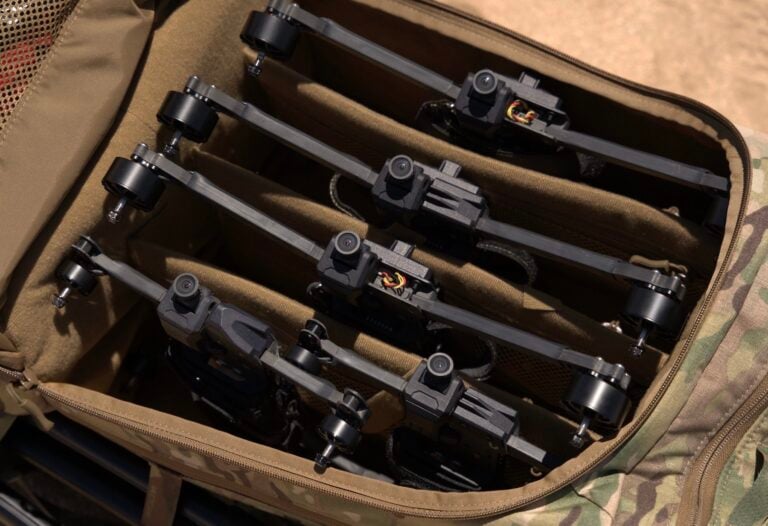
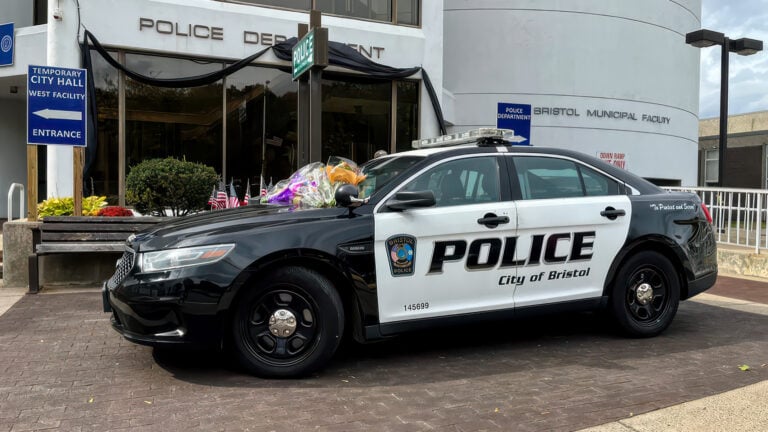
The result is a fleet of Skydio X10 drones launching from six fixed locations: the city’s five fire stations plus the Christopher M. Wouters Warren Police Headquarters. That coverage map was deliberate. Every neighborhood in the city falls within reach.
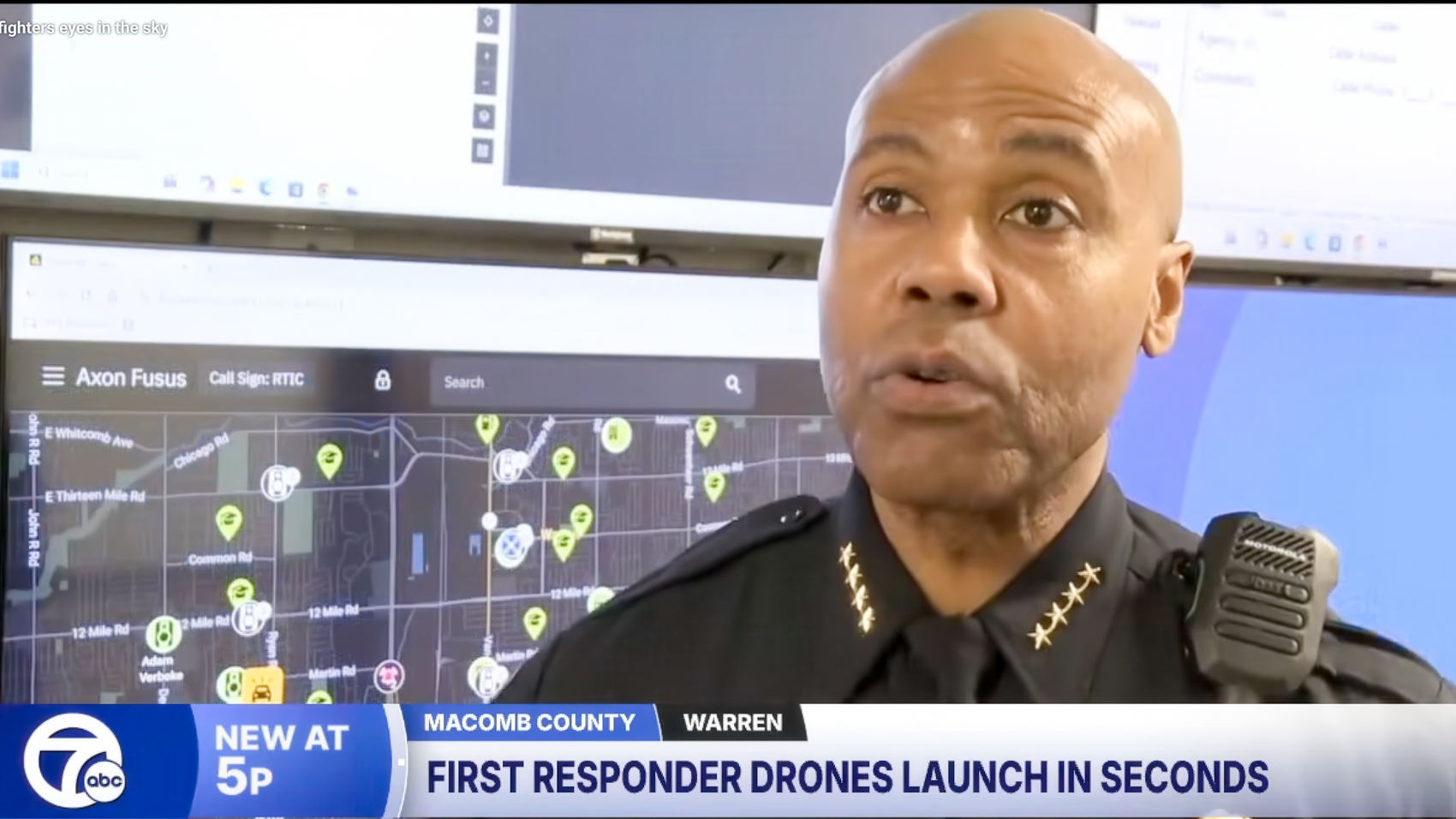
“This is a real-time intelligence program that we’re using to leverage a lot of different capabilities for our first responders on the road to respond more efficiently, faster and safer to things that are happening in real time,” said Warren Police Lieutenant Brandon Roy.
Warren Police Commissioner Eric Hawkins put the significance plainly at the March 3 press conference: in his 35-plus years in law enforcement, he had never seen a genuine operational partnership between a local police and fire department at this scale.
The Warren Fire Department has run its own drone program for the past couple of years. This new initiative absorbs that experience and builds on it.
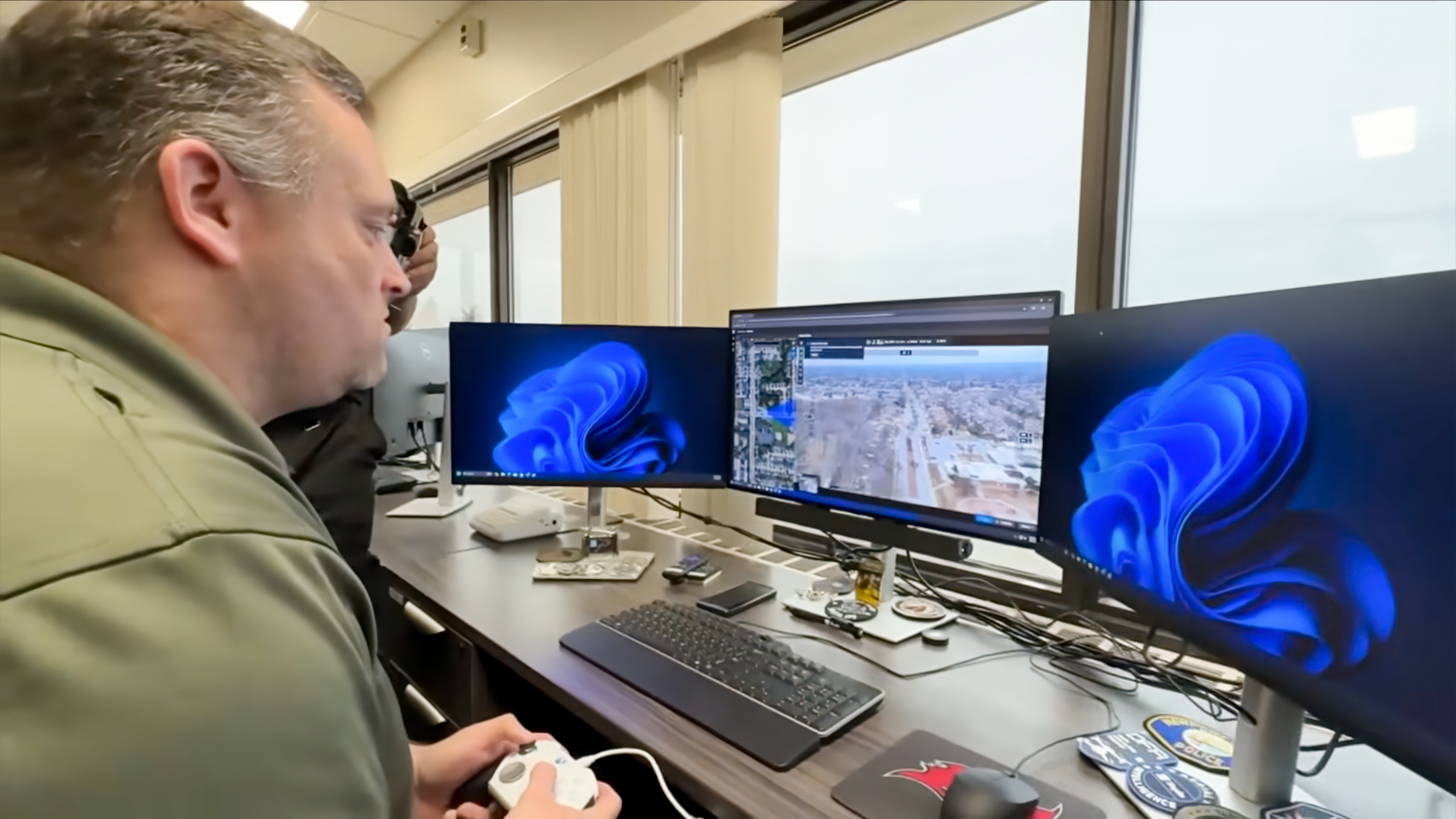
Pilots cover the program between 10 a.m. and 2 a.m. most days, working a combination of eight-hour and ten-hour shifts. They monitor radio traffic in real time and proactively launch when a call can benefit from aerial intelligence. Officers can also request a drone at any time.
What the Skydio X10 Does at a Scene
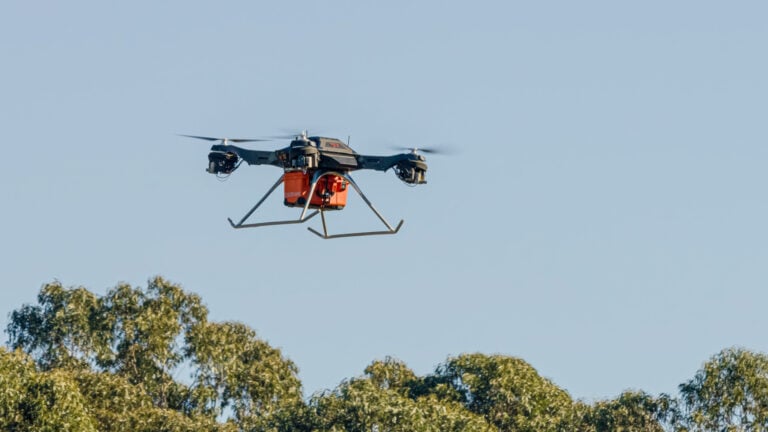
The aircraft behind this program is the Skydio X10, one of the most used public safety drones currently operating in American law enforcement.

It weighs 4 pounds, most of the time deploys from a Skydio Dock automated launch station, and carries a triple-sensor payload: a 64 mp camera, a 128x digital zoom camera, and a 640×512 FLIR thermal camera. Flight time goes around the 40 minutes. It is IP55 rated, so it can fly even with rain and winds.
For fire response, thermal imaging changes everything about the opening minutes of a structural incident. At the March 3 demonstration, Warren showed footage of a drone flying over an extinguished house fire and identifying residual hotspots invisible to the naked eye. Fire Commissioner Skip McAdams made the operational impact concrete.
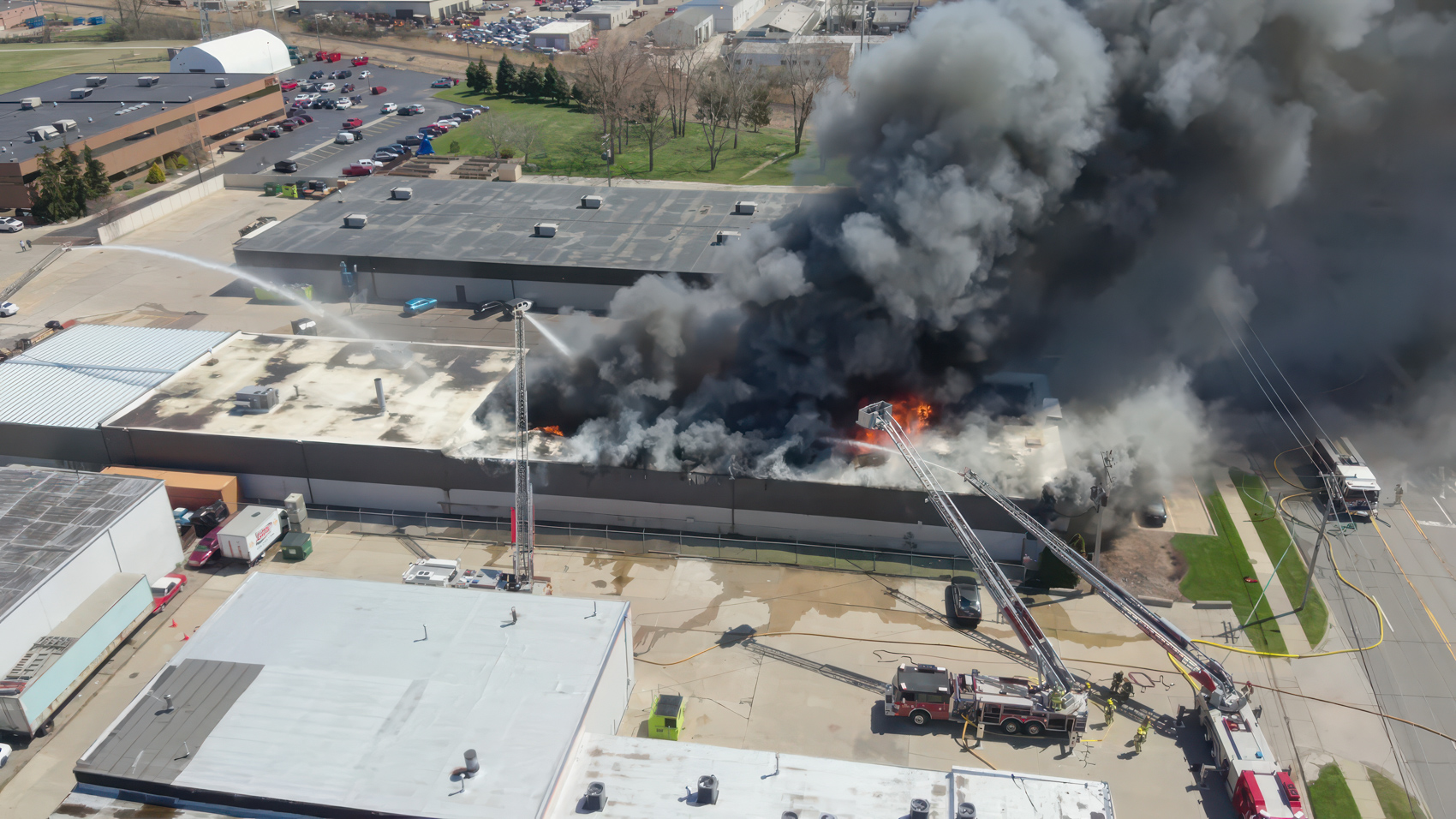
“This capability allows our incident commanders to begin scene size-up within moments of the drone’s arrival, rather than waiting the typical five to seven minutes for the first responding unit from police or fire,” he said.
For police, the same thermal sensor tracks suspects through backyards and wooded areas during perimeter containment, detects discarded evidence in grass and snow, and locates individuals in low-visibility conditions.
The X10 tops out at over 45 miles per hour, though Roy noted that pushing past that threshold disables the onboard anti-collision software, which automatically avoids buildings, power lines, and other obstacles.
The department also operates a separate fleet of interior drones for confined space and building search missions. As Chief Safety Officer Jeff Middleton put it: “The way I think of it is like a golf club. Drones have different capabilities. This could be a driver, I can get a distance, but when I need to get up close and personal, like a putter, I have a different drone for that.”
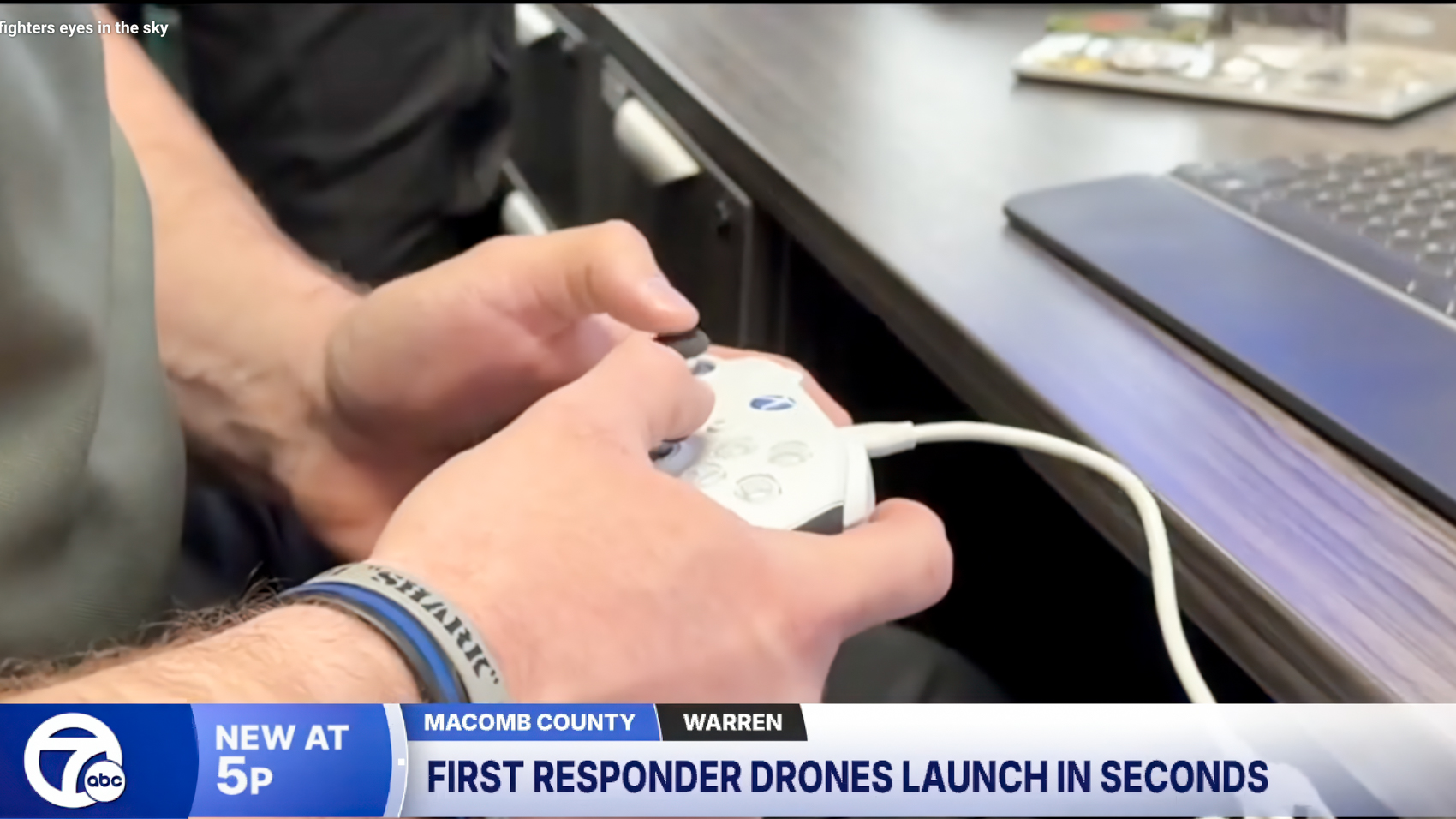
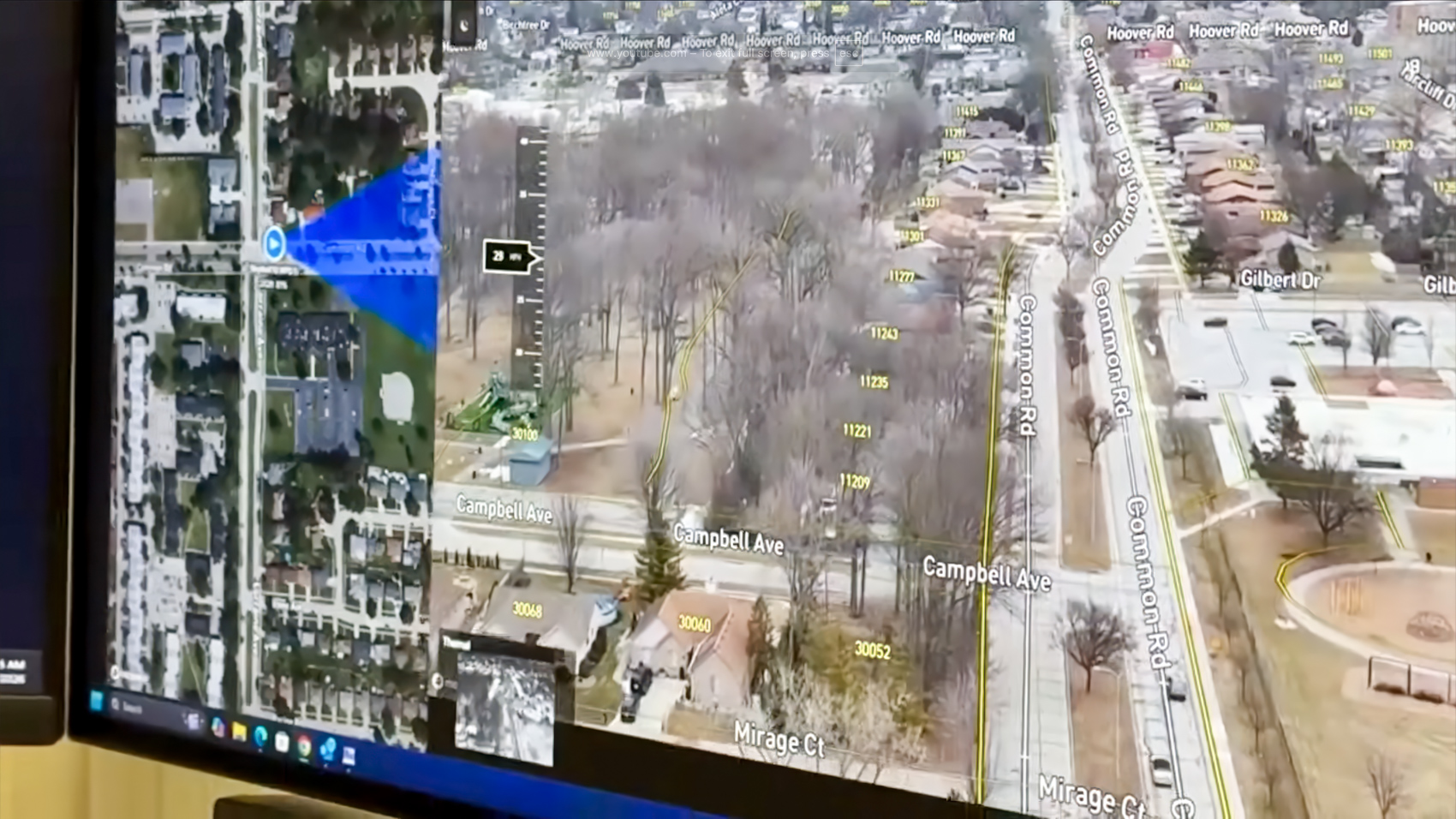
Every flight is recorded and stored in a secure evidence vault. Live feeds go directly to officers on the ground, to dispatchers, and to incident commanders.
The Economics Make the Argument
Each Skydio X10 unit costs approximately $30,000, with an operational lifespan of five years, though Warren plans to replace them after three.
Roy laid out the cost case with a single comparison: one fire truck costs more than $1 million. Warren runs approximately 23,000 calls per year. Sending a $30,000 drone to assess whether a full truck response is actually needed saves money on every call where it is not.
“If you multiply that by the cost of a $30,000 drone, and you equate that to being able to send that as a first responder to determine what assets we truly need on the scene, this is significantly more cost-effective than sending a million-dollar truck,” Roy said.
The staffing numbers reflect serious commitment. The Fire Department has 21 employees trained and FAA-certified to operate the drones.
The Police Department currently has three full-time drone operators and plans to train an additional 20. The program runs on a Part 107 waiver allowing beyond-visual-line-of-sight operations.
Rules Built Into the Program From Day One
Warren’s policy framework was locked in before the rotors ever spun. The commitments are specific: no routine surveillance flights, no facial recognition technology, no audio recording of conversations, and no weapons carried on any aircraft. Every flight requires a documented public safety purpose or active call for service.
Roy said public response has been overwhelmingly positive. Middleton noted that the Fire Department has been demonstrating drone capabilities publicly for nearly three years, building community familiarity long before the joint DFR launch. That groundwork shows.
DroneXL’s Take
Here’s what I actually think: Warren built this correctly, and the detail that stands out most is not the technology. It is the partnership.
Police and fire departments share calls every single day. They share scenes, risks, and outcomes. And yet in most cities, their drone programs are completely siloed. One department buys aircraft. The other buys different aircraft. Nobody coordinates in the air over an active scene.
Warren looked at that model and said no. One program. Two departments. Six launch locations. Shared airspace. Shared intelligence. It is such an obvious approach that it is almost embarrassing how rarely it gets done.
No sugarcoating this: the program is days old. Three police pilots is a thin bench for a city running 23,000 calls a year, and training those additional 20 officers will determine whether this scales the way the city is hoping. The 45-mph speed cap with collision avoidance active is a real operational limit. And sharing airspace with commercial drone delivery operators and civilians livestreaming police scenes is a challenge that has no clean answer yet.
None of that undermines what Warren built. It just means the hard work is not the launch. It is what comes next.
Michigan’s DFR era started in Dearborn a few weeks ago. Warren just made it a movement.
Photo credit: Concord Police Department Facebook,Michigan Public.
Discover more from DroneXL.co
Subscribe to get the latest posts sent to your email.
Check out our Classic Line of T-Shirts, Polos, Hoodies and more in our new store today!

MAKE YOUR VOICE HEARD
Proposed legislation threatens your ability to use drones for fun, work, and safety. The Drone Advocacy Alliance is fighting to ensure your voice is heard in these critical policy discussions.Join us and tell your elected officials to protect your right to fly.

Get your Part 107 Certificate
Pass the Part 107 test and take to the skies with the Pilot Institute. We have helped thousands of people become airplane and commercial drone pilots. Our courses are designed by industry experts to help you pass FAA tests and achieve your dreams.

Copyright © DroneXL.co 2026. All rights reserved. The content, images, and intellectual property on this website are protected by copyright law. Reproduction or distribution of any material without prior written permission from DroneXL.co is strictly prohibited. For permissions and inquiries, please contact us first. DroneXL.co is a proud partner of the Drone Advocacy Alliance. Be sure to check out DroneXL's sister site, EVXL.co, for all the latest news on electric vehicles.
FTC: DroneXL.co is an Amazon Associate and uses affiliate links that can generate income from qualifying purchases. We do not sell, share, rent out, or spam your email.