Ukraine’s Armed Ground Robots Are Already Fighting — and the K2 Brigade Now Has the World’s First UGV Battalion
Check out the Best Deals on Amazon for DJI Drones today!
The kill zone on Ukraine’s eastern front has pushed out to roughly 15 kilometers from the line of contact. At that distance, sending infantry forward isn’t a tactical decision anymore — it’s a casualty guarantee. Ukraine’s answer, confirmed this week in a BBC report by Russia editor Vitaly Shevchenko titled “Armed robots take to the battlefield in Ukraine war,” is a large-scale deployment of armed uncrewed ground vehicles (UGVs) that can absorb that risk instead.
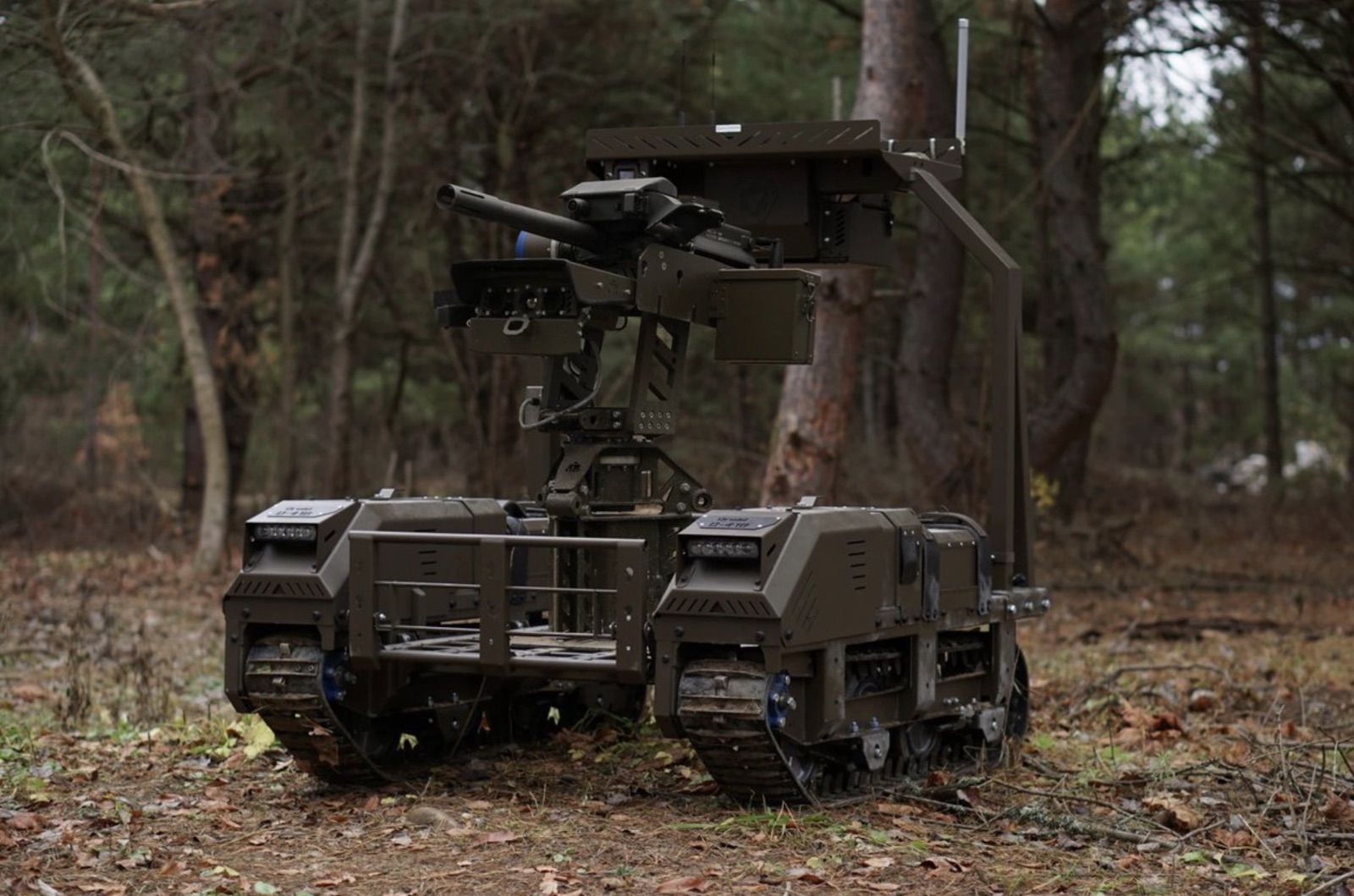
- The Development: Ukraine has stood up what the BBC describes as the world’s first dedicated UGV battalion inside the K2 Brigade, deploying armed ground robots equipped with Kalashnikov machine guns, grenade launchers, and kamikaze payloads against Russian forces.
- The Scale: Ukrainian manufacturer Tencore produced over 2,000 UGVs for the Ukrainian army in 2025 and expects demand to reach roughly 40,000 units in 2026, with 10–15% of those armed.
- The Constraint: Human operators still make every firing decision. The robots can move, observe, and detect, but the trigger stays with a person — by deliberate design, not technical limitation.
- The Source: Full reporting from BBC News by Vitaly Shevchenko, published March 7, 2026.
The K2 Brigade’s UGV Battalion Is a Documented First
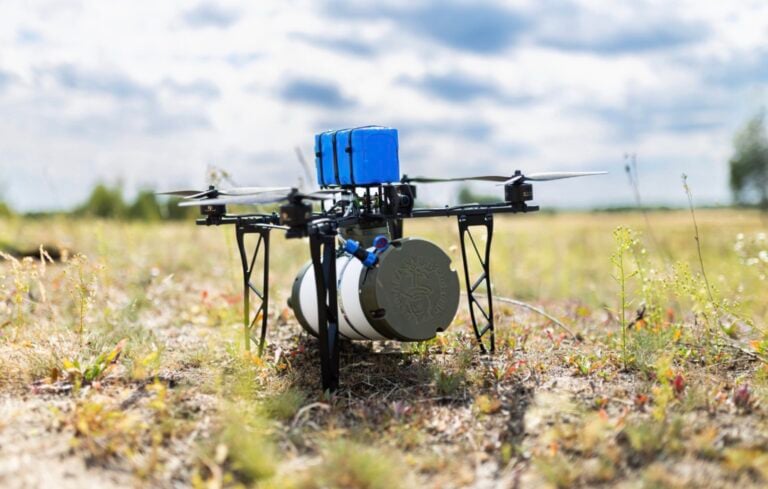
Ukraine’s K2 Brigade now commands what the BBC and Ukrainian military sources describe as the world’s first dedicated uncrewed ground vehicle battalion — led by Major Oleksandr Afanasiev, whose unit has mounted Kalashnikov machine guns on wheeled and tracked platforms and sent them into positions where no soldier would willingly go. The battalion also operates battery-powered kamikaze UGVs: explosive-laden vehicles that roll silently toward enemy positions and detonate. Unlike aerial drones, they produce no audible warning on approach.
“They open fire on a battlefield where an infantryman would be afraid to turn up. But a UGV is happy to risk its existence,” Maj Afanasiev told BBC News.
A separate unit, the 33rd Detached Mechanised Brigade, reported one of its UGVs ambushing a Russian armored personnel carrier with a machine gun. Another held a Ukrainian defensive position for weeks without relief. That’s not experimental. That’s operational.
We’ve been tracking Ukraine’s shift toward ground robots since the early logistics deployments. In December 2025, we reported that ground drones were already handling 90% of frontline logistics as the kill zone expanded. The armed variant is the logical next step — and it’s already here.
Human Operators Keep the Trigger — For Now
Every armed UGV currently deployed by Ukraine requires a human operator to authorize lethal force. The vehicles can navigate terrain autonomously, identify targets, and track movement, but the decision to fire is always made remotely, over an internet connection, from a safe distance. This isn’t a technical ceiling. It’s a deliberate ethical and legal boundary.
“Robots can misidentify the wrong person or attack a civilian. That’s why the final decision must be made by an operator,” said the deputy commander of the 33rd Brigade’s tank battalion, using the callsign Afghan.
That human-in-the-loop design aligns with international humanitarian law requirements. But the architecture is already being stress-tested. Devdroid CEO Yuriy Poritsky, whose company built hundreds of strike UGVs for the Ukrainian military in 2025, is actively developing a system to bring robots home if communications with their operator are lost — a direct response to Russian jamming on the front.
Devdroid’s longer-term roadmap goes further: autonomous travel to a designated location, target engagement if enemy soldiers advance, and autonomous return to base after a set time window. That’s a substantially different capability profile from what’s deployed today.
Russia Has Ground Robots Too — and They’ve Already Clashed
Russia’s combat UGV program is real and accelerating. The Russian Kuryer platform can reportedly operate autonomously for five hours and mount a heavy machine gun or a flamethrower. Russia has also used the Lyagushka (“Frog”) kamikaze vehicle against Ukrainian positions.
According to Poritsky, Ukrainian and Russian killer robots have already clashed on the battlefield without humans present at the engagement site. He’s direct about where this is heading: “Robot wars may sound like science fiction, but there’s nothing sci-fi about the battlefield. It’s our reality.”
This mirrors what we’ve seen in the air. Russia’s drone program has scaled fast, and Chinese-sourced components have accelerated Russian drone production in ways that Ukraine’s allies have struggled to counter. The ground robot race looks set to follow the same pattern.
Zaluzhnyi’s AI Swarm Vision and the 40,000-Unit Demand Signal
Former Ukrainian commander-in-chief and current UK ambassador Valerii Zaluzhnyi has laid out the next phase of this shift: AI-powered swarms combining aerial, ground, and maritime drones attacking simultaneously from multiple directions and altitudes. “In the near future we’ll see dozens and even hundreds of smarter and cheaper drones attack from various directions and heights, from the air, ground and sea at the same time,” he said in remarks at London’s Chatham House.
The production numbers back the ambition. Tencore — which built more than 2,000 UGVs for the Ukrainian army in 2025 — expects orders for approximately 40,000 units in 2026. If the 10–15% armed figure holds, that’s 4,000 to 6,000 weapon-equipped ground robots entering service in a single year. That’s not a pilot program. That’s an army.
Tencore’s director Maksym Vasylchenko sees humanoid combat robots further down the road: “It won’t be science fiction anymore.” Given the pace of the past 24 months — from logistics bots to machine-gun-armed ambushers to robot-on-robot engagements — that timeline is probably shorter than most Western defense ministries are planning for. NATO officers showed up to Hedgehog 2025 with paper maps. Ukraine showed up with ground robots.
The shift toward autonomous systems we identified back in February 2024 has moved faster than expected. Ground robots operating through heavy fog on the eastern front and Starlink-connected UGV platforms tested in Ukrainian conditions were early signals. Armed UGV battalions are the conclusion that follows.
DroneXL’s Take
The 40,000-unit demand figure from Tencore is the number that should stop every defense analyst cold. That’s not procurement planning. That’s wartime industry. And if 10–15% of those units arrive armed, Ukraine will field more armed ground robots in 2026 than most countries have deployed in total across all military platforms combined.
What strikes me about the K2 Brigade’s approach is the deliberate conservatism on autonomy. These are operators who understand what their machines can do, and they’re choosing to keep humans in the loop anyway — not because the technology forces it, but because the ethics demand it. That’s a more sophisticated position than most Western defense procurement offices have reached on paper, let alone in the field.
The robot-on-robot engagements Poritsky describes deserve more attention than they’ve received. Once two autonomous or semi-autonomous systems engage each other without a human decision in the loop, the speed of escalation changes entirely. We covered how drone warfare pushed the kill zone out to roughly 15 kilometers. Ground robots will compress the decision cycle further still.
My prediction: by Q4 2026, at least one Ukrainian UGV manufacturer will publicly demonstrate a system with conditional autonomous engagement — a robot that fires without a real-time human trigger under predefined circumstances. Devdroid’s stated roadmap already describes the technical prerequisites. The ethical framework Ukraine has built will be tested hard at that point, and the international community has no agreed rules ready for it.
Editorial Note: AI tools were used to assist with research and archive retrieval for this article. All reporting, analysis, and editorial perspectives are by Haye Kesteloo.
Discover more from DroneXL.co
Subscribe to get the latest posts sent to your email.
Check out our Classic Line of T-Shirts, Polos, Hoodies and more in our new store today!

MAKE YOUR VOICE HEARD
Proposed legislation threatens your ability to use drones for fun, work, and safety. The Drone Advocacy Alliance is fighting to ensure your voice is heard in these critical policy discussions.Join us and tell your elected officials to protect your right to fly.

Get your Part 107 Certificate
Pass the Part 107 test and take to the skies with the Pilot Institute. We have helped thousands of people become airplane and commercial drone pilots. Our courses are designed by industry experts to help you pass FAA tests and achieve your dreams.

Copyright © DroneXL.co 2026. All rights reserved. The content, images, and intellectual property on this website are protected by copyright law. Reproduction or distribution of any material without prior written permission from DroneXL.co is strictly prohibited. For permissions and inquiries, please contact us first. DroneXL.co is a proud partner of the Drone Advocacy Alliance. Be sure to check out DroneXL's sister site, EVXL.co, for all the latest news on electric vehicles.
FTC: DroneXL.co is an Amazon Associate and uses affiliate links that can generate income from qualifying purchases. We do not sell, share, rent out, or spam your email.