Ukraine’s FirePoint: 200 Drones Daily, Seven Navigation Generations, Zero GPS Required
Check out the Best Deals on Amazon for DJI Drones today!
Ukraine’s top long-range strike drone company just put a number on its war production capacity, and it’s bigger than most people expected.
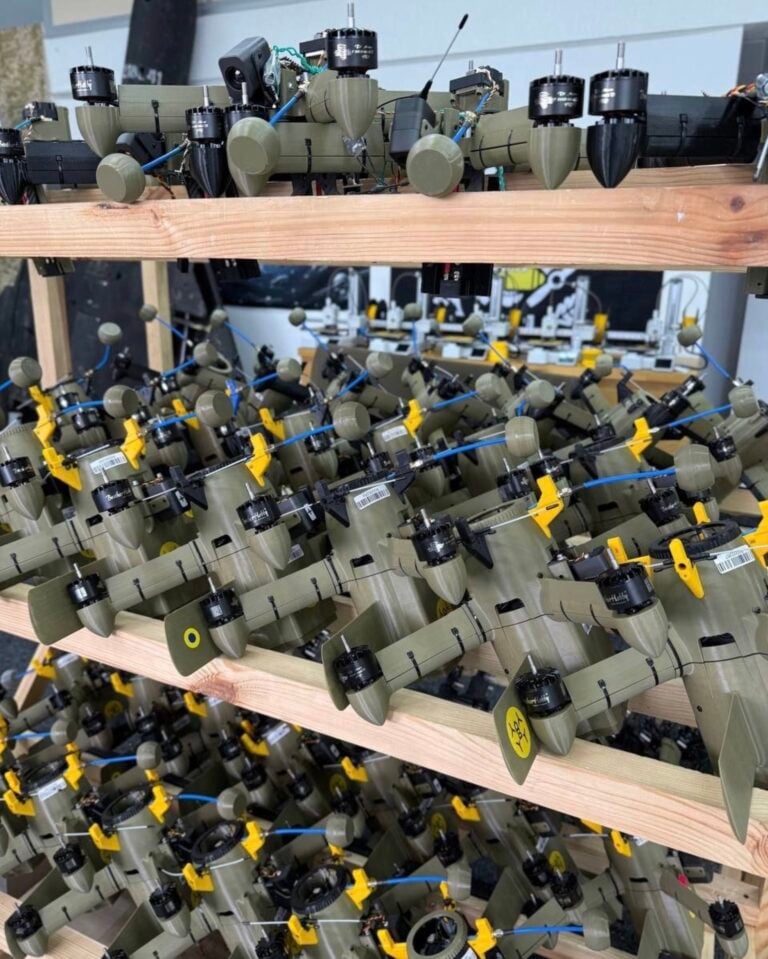
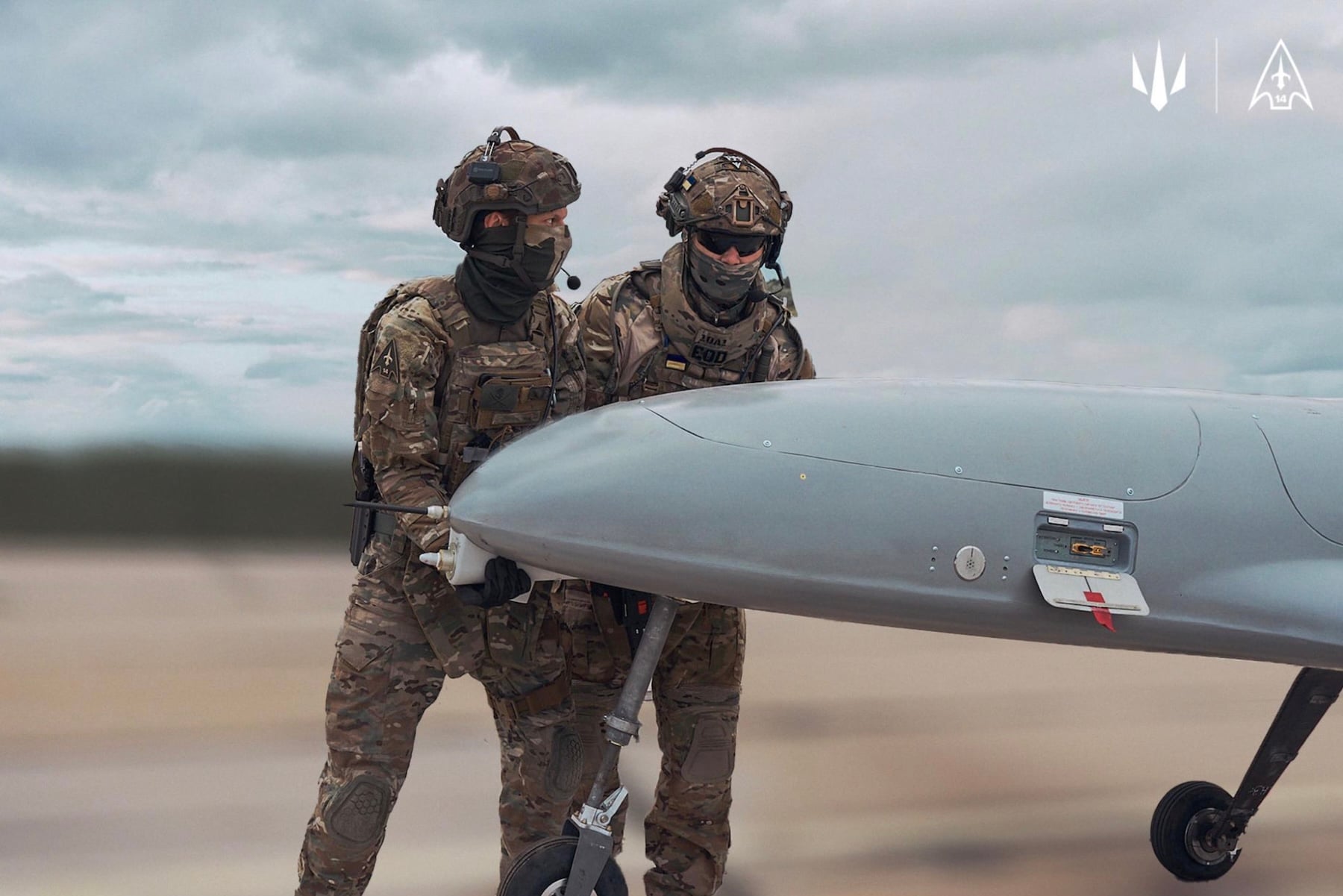
In an interview published today by ArmyTV and reported by ArmyInform, FirePoint co-founder and chief designer Denys Shtilerman confirmed the company now produces roughly 200 deep-strike UAVs per day across its FP-1 and FP-2 families — and said it can double or triple that output quickly if needed. That’s not a theoretical ceiling. It’s current production.
- The Development: FirePoint produces approximately 200 long-range strike drones daily, accounting for roughly 60% of all Ukrainian drone strikes against Russian forces.
- The Specs: The FP-1 now carries a 105 kg warhead over 1,000 km. The FP-2 targets front-line objectives within 200 km and is being upgraded to carry a 158 kg warhead.
- The Scale: Production runs across 50+ distributed sites throughout Ukraine. Each FP-1 costs roughly $55,000 — about one-third the price of Russia’s Shahed-136.
- The Source: ArmyInform, March 9, 2026, citing the ArmyTV interview with Shtilerman.
FirePoint’s Production Network Spans More Than 50 Sites
FirePoint’s distributed manufacturing approach is a direct response to Russian missile strikes. The company deliberately spreads production across more than 50 locations throughout Ukraine, so a single strike can’t cripple output. Each site can recover and resume operations independently. This wasn’t some grand strategic plan drawn up before the war — it evolved under fire, which is true of almost everything FirePoint has built.
Shtilerman was direct about current capacity: “Right now we calmly produce about 200 aircraft per day, and we can very quickly double or triple these capacities.”
The company employs roughly 3,700 people — a number it reached in under two years. For context, FirePoint didn’t exist as a defense company when Russia launched its full-scale invasion in February 2022. Its founders were a film location scout, an IT entrepreneur, and a concrete production business owner. They started building the FP-1 in November 2022 with about a dozen people.
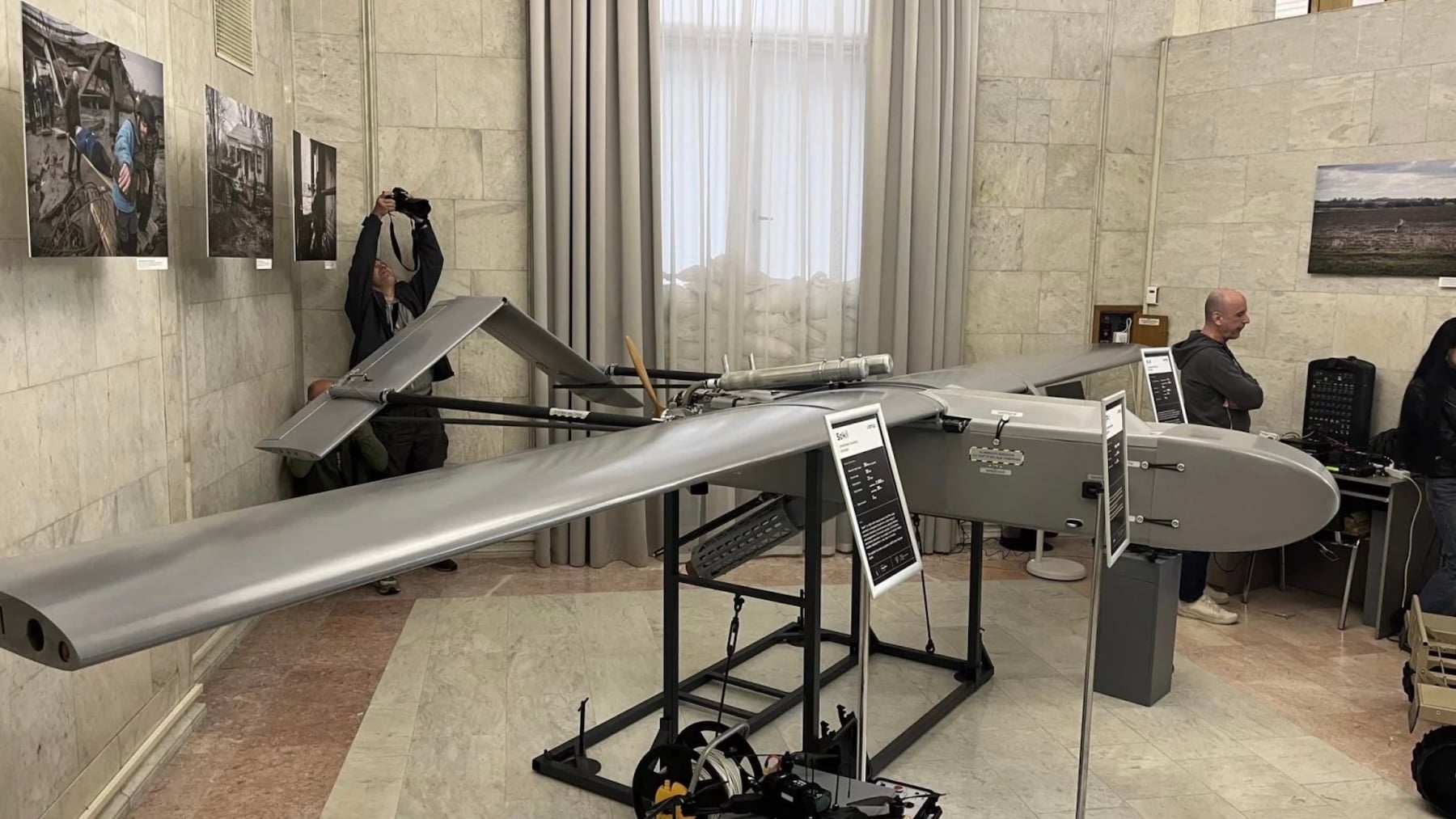
The FP-1 Now Carries More Payload Without Sacrificing Range
The FP-1 is a propeller-driven one-way attack drone with a maximum documented range of 1,600 km and a warhead capacity between 60–120 kg. The current configuration Shtilerman described — 105 kg over 1,000 km — reflects a specific upgrade: engineers moved the fuel tank into the wing structure, which freed up fuselage space for a heavier payload while maintaining long-range performance. That’s a meaningful change to the internal architecture, not a simple spec bump.
At roughly $55,000 per unit, the FP-1 is delivering cruise-missile-equivalent results for a fraction of the cost. Ukraine’s General Staff has attributed more than 59% of long-range strike missions and 54% of confirmed target hits to FP-1 systems. The platform has been used against ammunition depots, oil refineries, radar stations, and air defense systems deep inside Russian territory.
The FP-2 fills a different role. It’s designed for targets within 200 km of the front line and prioritizes payload over range. The upgraded version will carry 158 kg — heavier than the FP-1’s standard load — and is compatible with FirePoint’s existing FP-1 production lines, which accelerates delivery timelines to Ukrainian units.
Seven Navigation Generations Developed Under Active Combat Conditions
One detail from the ArmyTV interview stands out more than the production numbers: FirePoint has developed seven generations of navigation systems since the war began.
Seven generations. In roughly three years. That pace would be remarkable in a peacetime R&D environment. Under active Russian electronic warfare — with GPS jamming, spoofing, and signal denial a constant operational reality — it’s something else entirely.
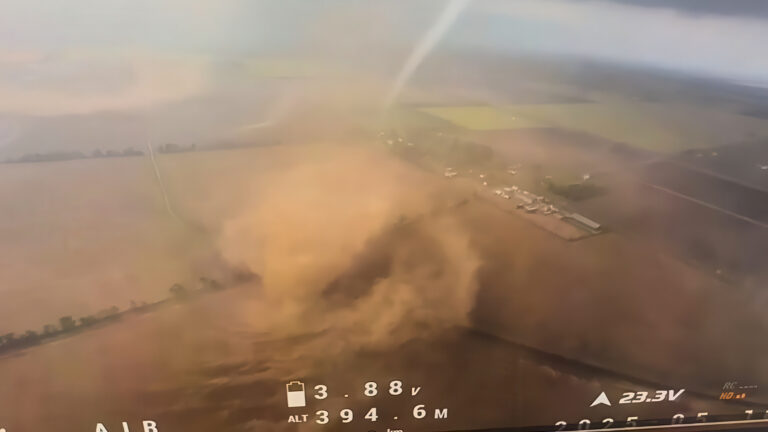
The current generation is GPS-independent. Shtilerman described a terrain image-matching system using a low-cost night camera: “We implemented map-matching using a cheap night camera. This will allow flights without GPS and precise strikes on targets.” The system compares real-time camera imagery against stored terrain data to navigate without any satellite signal. Russia can jam GPS. It can’t jam a drone that doesn’t need GPS.
This matters beyond Ukraine. Every military operating in a GPS-denied environment is watching these developments closely. The navigation arms race between Ukraine’s drone makers and Russia’s electronic warfare units has produced more practical battlefield innovation in 36 months than most defense programs see in a decade.
DroneXL’s Take
We covered FirePoint’s story in depth back in October 2025, when the NABU corruption investigation was dominating the headlines. The company was under scrutiny for alleged pricing inflation, potential ties to a Zelenskyy associate, and questions about whether procurement connections mattered more than performance. Those are legitimate issues and the investigation is ongoing.
What today’s production announcement adds is a cleaner view of what FirePoint has actually built, whatever the politics around it. A company that didn’t exist as a defense manufacturer in 2022 is now producing 200 strike drones daily, running seven generations of navigation software, and hitting targets across most of Russia. That output didn’t come from connections — it required solving real engineering problems under live fire conditions.
The GPS-independent terrain-matching navigation is the detail I keep coming back to. We’ve documented Ukraine’s drone warfare evolution since the early FPV days — from civilians building $295 FPV drones at home to the fiber-optic drone kill zones that have redefined frontline movement. But seven navigation generations on a production platform in three years is a different category of development entirely. It tells you that Russian EW is effective enough to force constant redesign, and that FirePoint is fast enough to keep pace.
According to Army Recognition, Russia’s launch tempo averages around 200 Shahed-type drones per day at Ukraine. Ukraine now matches that rate — but with deep-strike weapons that fly ten times farther. By mid-2026, if FirePoint delivers on its ballistic missile programs — the FP-7, which completed test launches in late February, and the FP-9, targeting service entry by June 2026 — Russia’s strategic depth won’t provide the protection it once did. That’s the trajectory this announcement points toward.
Editorial Note: AI tools were used to assist with research and archive retrieval for this article. All reporting, analysis, and editorial perspectives are by Haye Kesteloo.
Discover more from DroneXL.co
Subscribe to get the latest posts sent to your email.
Check out our Classic Line of T-Shirts, Polos, Hoodies and more in our new store today!

MAKE YOUR VOICE HEARD
Proposed legislation threatens your ability to use drones for fun, work, and safety. The Drone Advocacy Alliance is fighting to ensure your voice is heard in these critical policy discussions.Join us and tell your elected officials to protect your right to fly.

Get your Part 107 Certificate
Pass the Part 107 test and take to the skies with the Pilot Institute. We have helped thousands of people become airplane and commercial drone pilots. Our courses are designed by industry experts to help you pass FAA tests and achieve your dreams.

Copyright © DroneXL.co 2026. All rights reserved. The content, images, and intellectual property on this website are protected by copyright law. Reproduction or distribution of any material without prior written permission from DroneXL.co is strictly prohibited. For permissions and inquiries, please contact us first. DroneXL.co is a proud partner of the Drone Advocacy Alliance. Be sure to check out DroneXL's sister site, EVXL.co, for all the latest news on electric vehicles.
FTC: DroneXL.co is an Amazon Associate and uses affiliate links that can generate income from qualifying purchases. We do not sell, share, rent out, or spam your email.