Kratos Wins $7M Contract to Detect Drones and Cruise Missiles
Check out the Best Deals on Amazon for DJI Drones today!
A classified customer just handed Kratos a production contract for a system that hunts low-profile drones and cruise missiles. Who ordered it and where it deploys stays secret. What it does does not.
The Contract Kratos Will Not Talk About
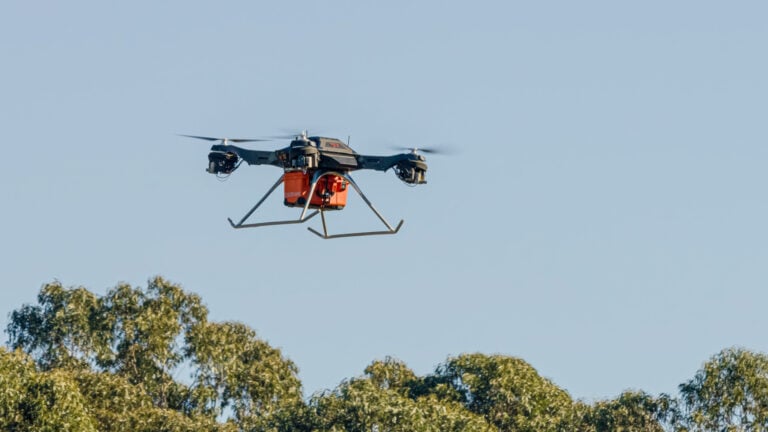
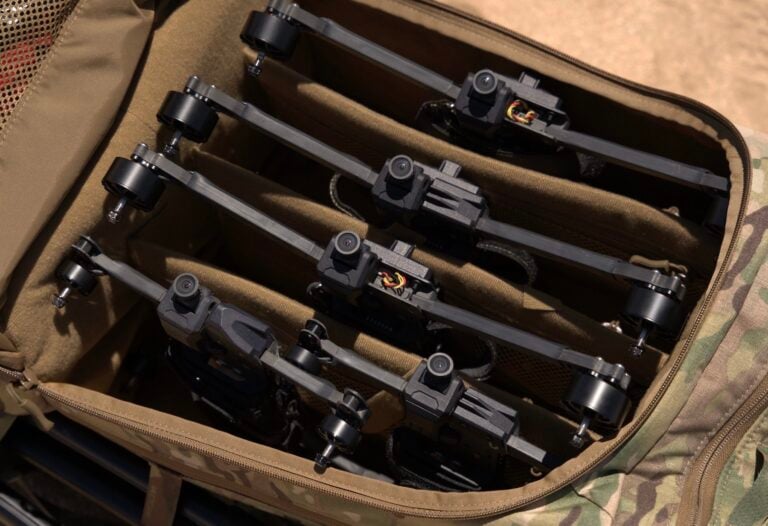
On March 3, Kratos Defense and Security Solutions announced a $7 million production contract for a counter-UAS system designed to detect, track, and classify aerial threats including low-profile drones, cruise missiles, and other airborne systems, as The Defense Post reports.
The customer is undisclosed. The deployment location is undisclosed. The system’s specific configuration is undisclosed.
Kratos cited security considerations and offered nothing further.
That level of opacity is unusual even by defense industry standards, where programs routinely list at least a branch of service or a geographic command. The complete blackout on customer identity suggests either a classified program, a foreign military sale through sensitive channels, or both.
The fact that this is a production contract rather than a development or prototype award means the system already exists and has been validated. Someone ordered it off the shelf and is deploying it.
Eric DeMarco, Kratos President and CEO, was characteristically direct without being informative. Manufacturing military-grade hardware in large-scale production runs that must work every time is hard and a clear differentiator.
Drones, missiles, and loitering munitions are proliferating globally among adversaries, and Kratos is proud to manufacture the systems that defend and protect warfighters.
That is a CEO speaking in code. The message underneath it: this is not a niche program. It is a scalable production capability responding to a threat that is growing faster than any single solution can address.
A Company Building on Multiple Fronts
The $7 million contract is the most recent in a string of Kratos announcements that paint a picture of a company accelerating hard across several defense technology lanes simultaneously.
On February 5, Kratos and Taiwan’s National Chung-Shan Institute of Science and Technology successfully completed integration testing of the Mighty Hornet IV attack drone, a transformation of the Kratos MQM-178 Firejet target drone into a Mach 0.8 strike platform with a service ceiling above 35,000 feet and high-G maneuvering capability.
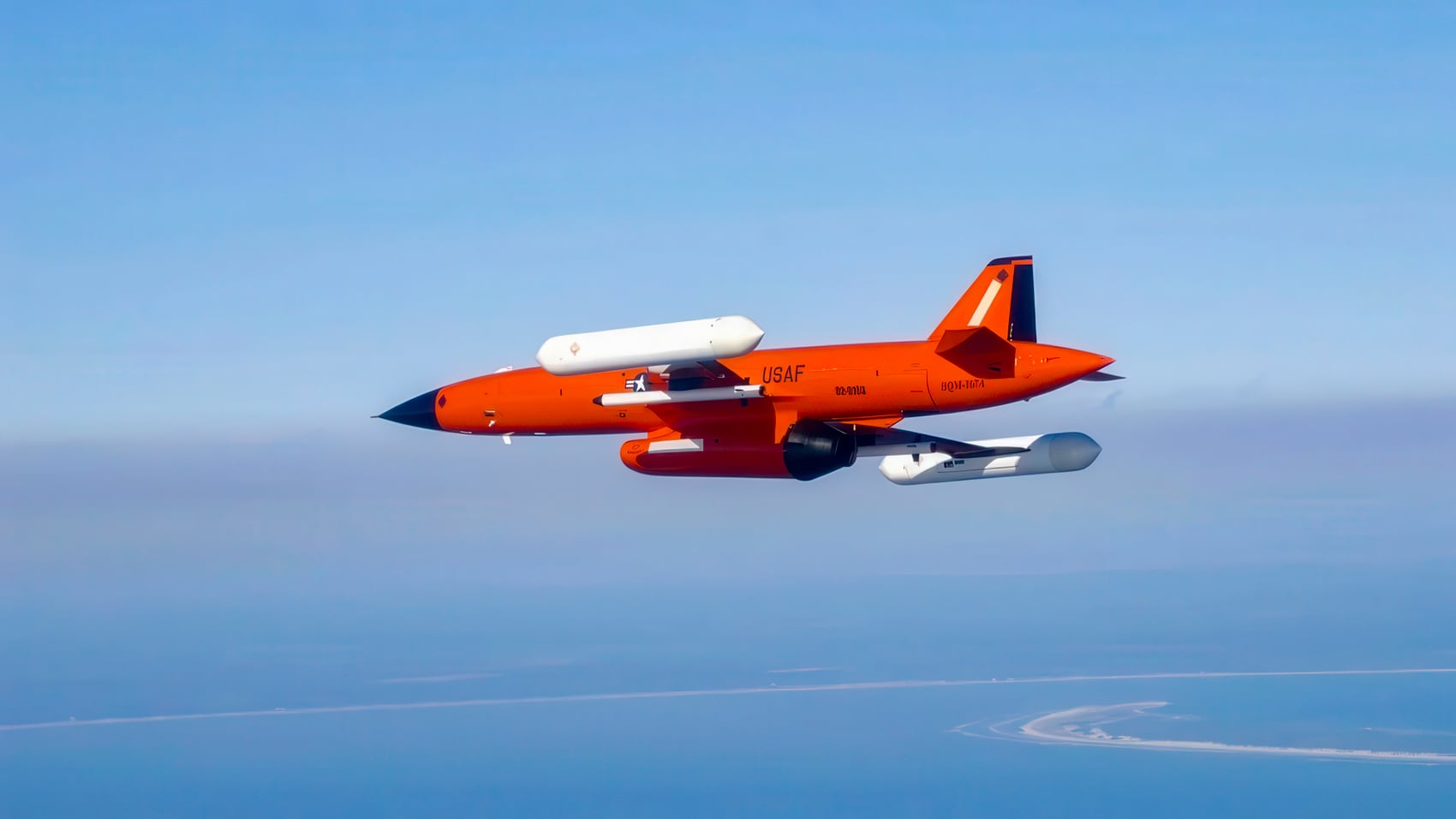
The NCSIST-developed payload and mission system validated full operational compatibility with the airframe without requiring any design revisions. Flight testing is scheduled for later in 2026.
The ultimate objective is a large fleet of Mighty Hornet IV systems in Taiwan delivering what Kratos calls affordable mass, meaning enough volume to function as both a deterrent and an operational strike capability. Kratos holds the international marketing rights for the platform.
Separately, Kratos is expanding its Birmingham, Alabama facility with a new 40,000-square-foot building dedicated to electro-mechanical systems development and integration.

In Princess Anne, Maryland, a new 55,000-square-foot hypersonic manufacturing and payload integration facility opened in January. These are not announcements about future plans. They are physical infrastructure being built and occupied now.
Also in February, GE Aerospace and Kratos were jointly awarded $12.4 million by the US Air Force to design a next-generation expendable engine for small Collaborative Combat Aircraft. That program feeds directly into the Pentagon’s vision of low-cost autonomous wingmen operating alongside crewed fighters.
The Detection Problem Nobody Has Fully Solved
The classified counter-UAS contract sits at the intersection of the most urgent and least publicly discussed capability gap in modern air defense.
Conventional radar systems were designed to detect large, fast, high-altitude targets. Ballistic missiles. Fighter aircraft. Bombers. They struggle with the opposite problem: small, slow, low-altitude objects flying erratic paths in cluttered environments.
A commercial quadcopter drone and a Shahed-series one-way attack aircraft both exploit the same weakness in legacy detection infrastructure. They are hard to see, hard to track, and hard to classify as hostile before they reach their targets.
Detection, tracking, and classification are three distinct problems that most single-sensor systems cannot solve simultaneously. Detection requires sensitivity. Tracking requires persistence.
Classification requires intelligence, the ability to distinguish a DJI Mavic from a cruise missile from a wayward weather balloon, in real time, under operational conditions, without generating so many false alarms that operators stop trusting the system.
That is what Kratos is selling. Not a jammer. Not an interceptor. A system that solves the front end of the kill chain. Find it. Know what it is. Then decide what to do with that information.
DroneXL’s Take
The opacity of this contract is itself informative.
Kratos does not hide customer identities for domestic US military contracts. The Army, Navy, Air Force, Marine Corps, these appear by name in virtually every other Kratos announcement from the past several months.
When a production contract comes out with no customer, no location, and no program name, the list of entities that require that level of security around a counter-UAS detection system is not long. It includes foreign governments facing active drone threats, intelligence community customers, and classified domestic programs tied to specific infrastructure protection missions.
All of those scenarios reflect the same underlying reality. The drone threat has moved from a specialized military problem to a general security problem affecting governments, military installations, critical infrastructure, and population centers simultaneously.
Detection systems that can tell the difference between a harmless quadcopter and an incoming cruise missile are no longer a nice-to-have. They are a baseline requirement for any serious security architecture.
Here is what I actually think about Kratos as a company right now. They are doing something that most defense contractors talk about but rarely execute: building affordable systems at production scale. The Mighty Hornet IV at Mach 0.8 is designed to be cheap enough to field in large numbers.
The Collaborative Combat Aircraft engine is designed for expendability. The counter-UAS detection system is a production contract, not a prototype. Affordability as a technology is the Kratos philosophy and the drone era is exactly the environment where that philosophy wins.
Seven million dollars is a small contract by Pentagon standards. Watch what comes after it.
Photo credit: Kratos
Discover more from DroneXL.co
Subscribe to get the latest posts sent to your email.
Check out our Classic Line of T-Shirts, Polos, Hoodies and more in our new store today!

MAKE YOUR VOICE HEARD
Proposed legislation threatens your ability to use drones for fun, work, and safety. The Drone Advocacy Alliance is fighting to ensure your voice is heard in these critical policy discussions.Join us and tell your elected officials to protect your right to fly.

Get your Part 107 Certificate
Pass the Part 107 test and take to the skies with the Pilot Institute. We have helped thousands of people become airplane and commercial drone pilots. Our courses are designed by industry experts to help you pass FAA tests and achieve your dreams.

Copyright © DroneXL.co 2026. All rights reserved. The content, images, and intellectual property on this website are protected by copyright law. Reproduction or distribution of any material without prior written permission from DroneXL.co is strictly prohibited. For permissions and inquiries, please contact us first. DroneXL.co is a proud partner of the Drone Advocacy Alliance. Be sure to check out DroneXL's sister site, EVXL.co, for all the latest news on electric vehicles.
FTC: DroneXL.co is an Amazon Associate and uses affiliate links that can generate income from qualifying purchases. We do not sell, share, rent out, or spam your email.