Baykar Unveils K2: A Cruise Missile That Costs Like a Drone
Check out the Best Deals on Amazon for DJI Drones today!
Turkey’s Baykar unveiled the K2 Kamikaze UAV on March 14, and the promotional video was set to Shostakovich’s Waltz No. 2. That detail tells you something about how Baykar sees itself at this point, as QUWA reported.
Five K2s lifted off from the Keşan Flight Training and Test Center in Edirne Province, flew sorties over the Gulf of Saros roughly 93 miles to the south, cycled through right echelon, line, and V-formation patterns, and landed back on the runway. The footage is clean, the aircraft look serious, and the specifications sitting behind them are genuinely significant.
What the K2 Actually Is
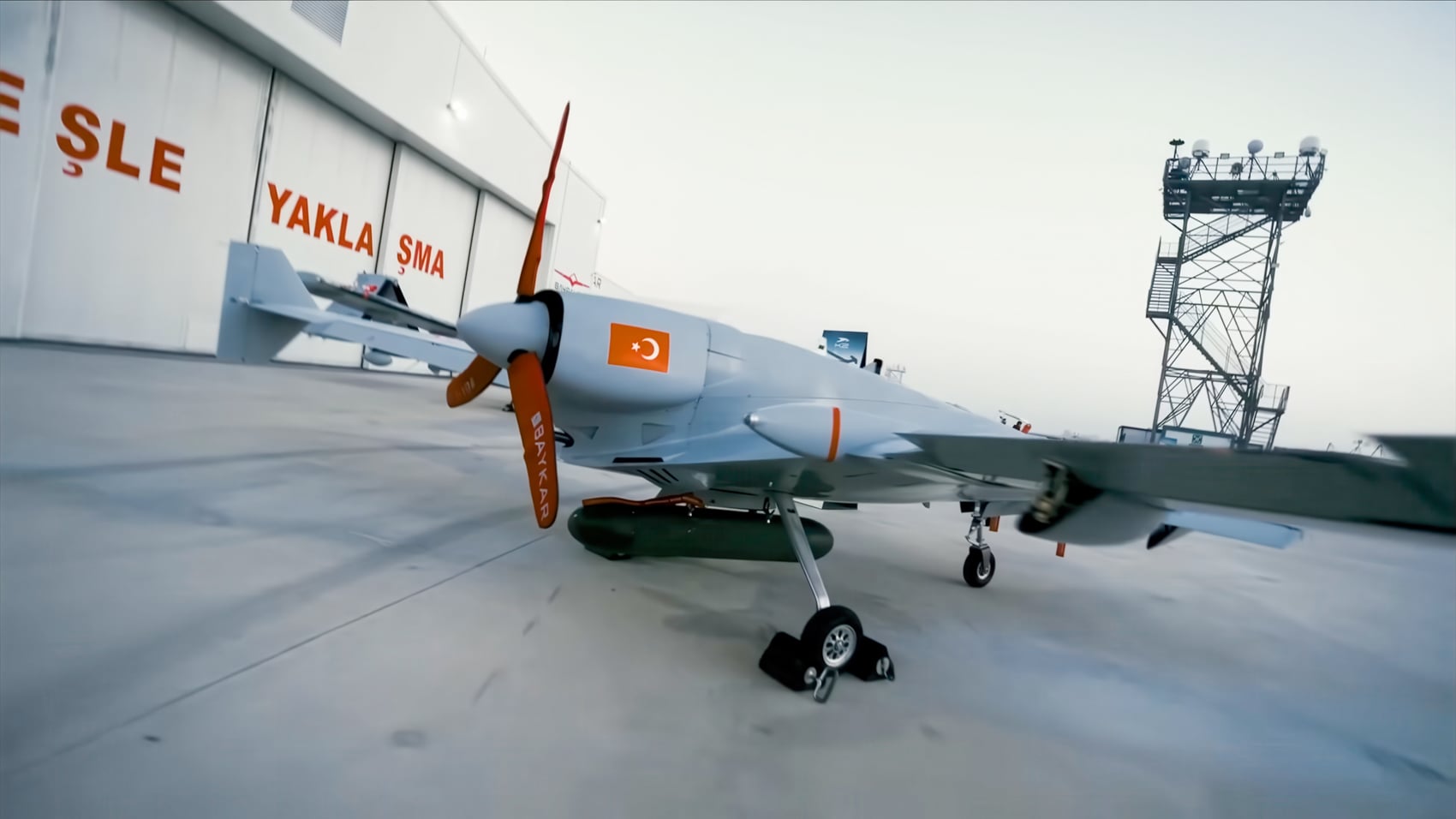
The K2 is a fixed-wing loitering munition with a maximum takeoff weight of approximately 1,764 lbs, a 441-lb warhead, a range exceeding 1,243 miles, a top speed above 124 mph, and an endurance of more than 13 hours.
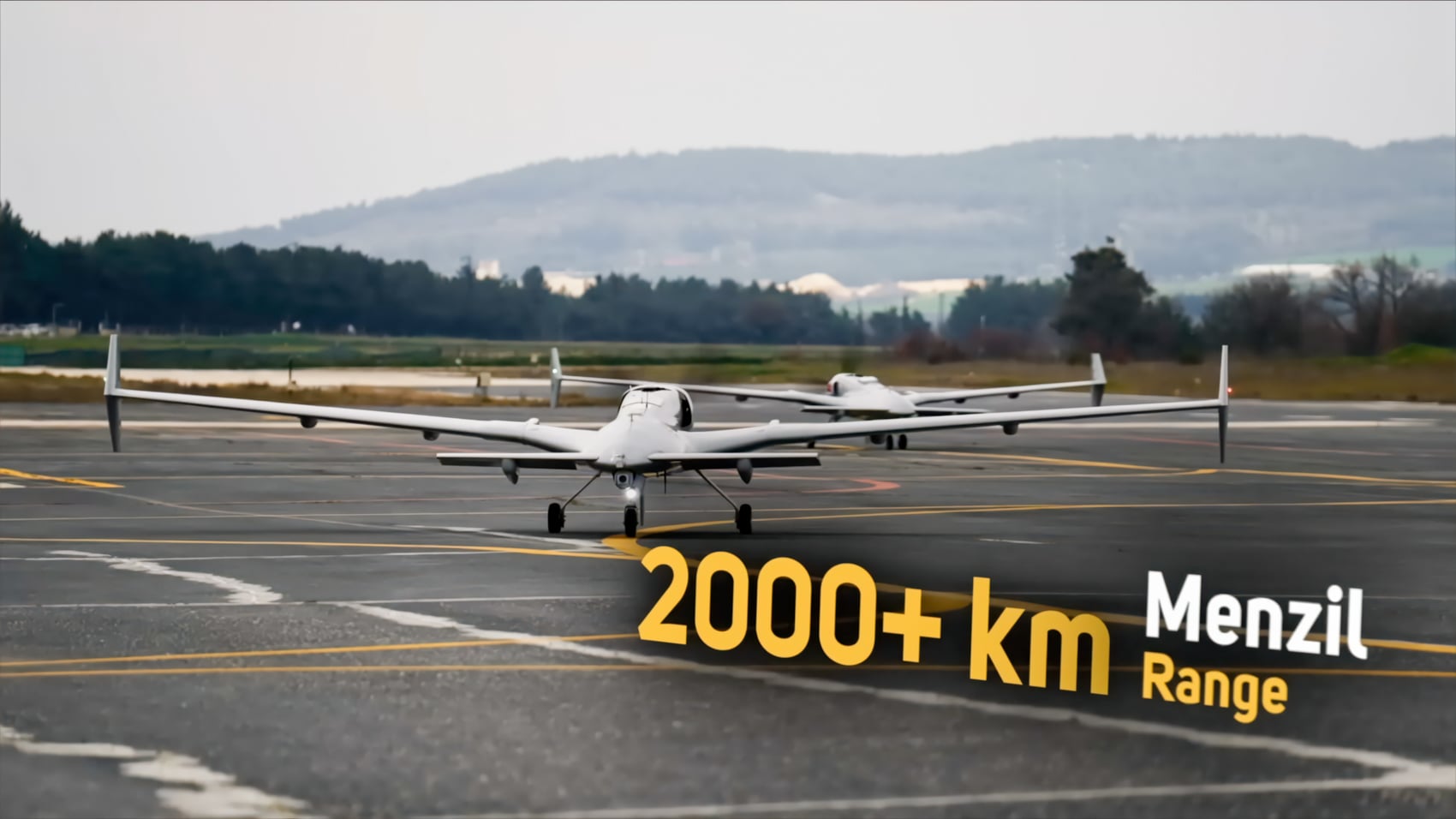
It takes off from short or unprepared runways, carries landing gear for recovery if a mission is aborted, and is designed for low-cost mass production.
Those numbers don’t put it in the same category as the Shahed-136, which Iran produced by the thousands and Russia used to saturate Ukrainian air defenses. The Shahed weighs roughly 441 lbs total and carries a warhead estimated between 66 and 110 lbs.
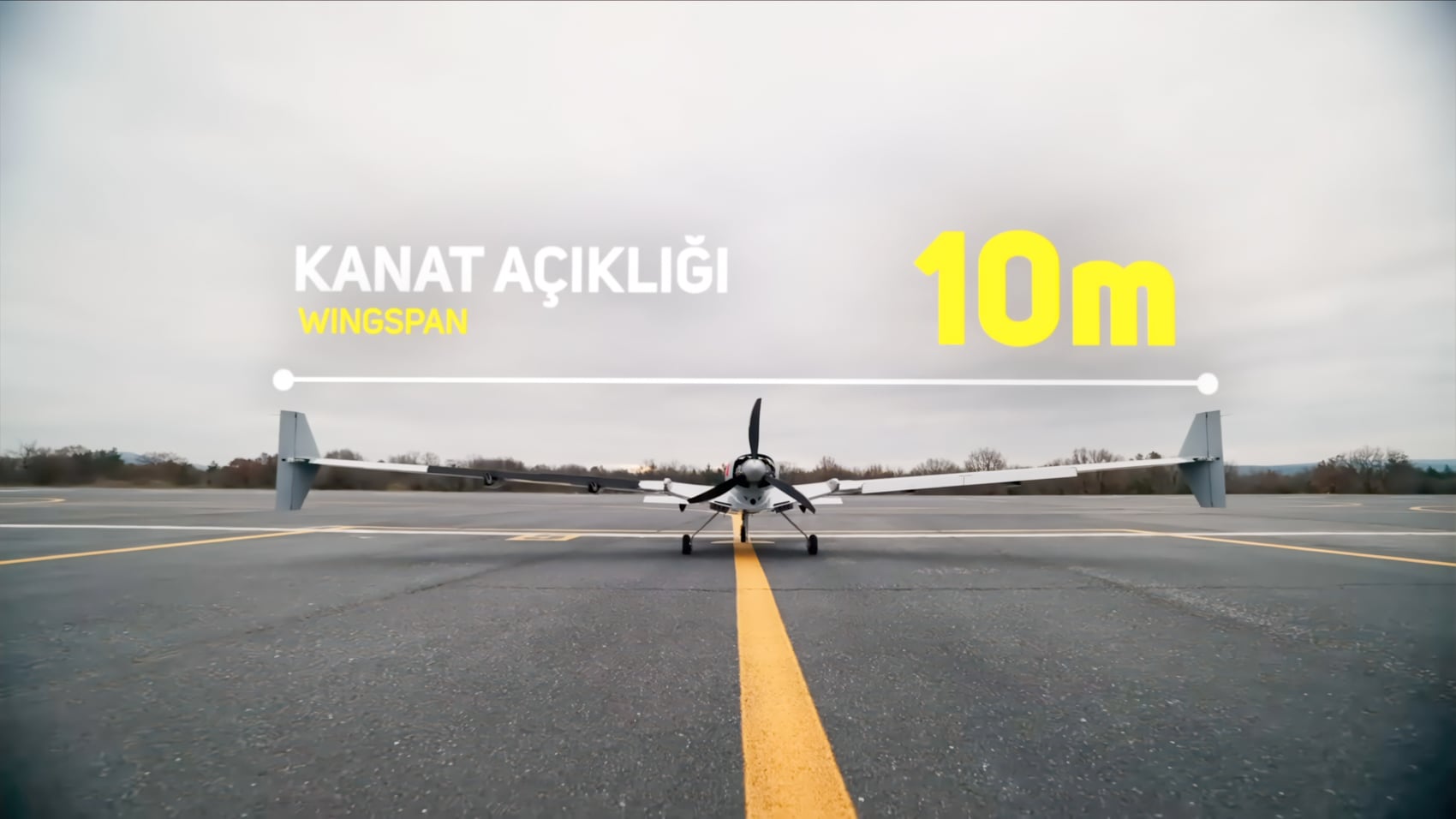
The K2 carries a warhead four times heavier than the Shahed’s entire airframe on a platform that can fly six times further.
What Baykar has actually built is closer in capability to a cruise missile than to a tactical loitering munition, at a fraction of the unit cost of either, if it delivers on the mass-production promise.
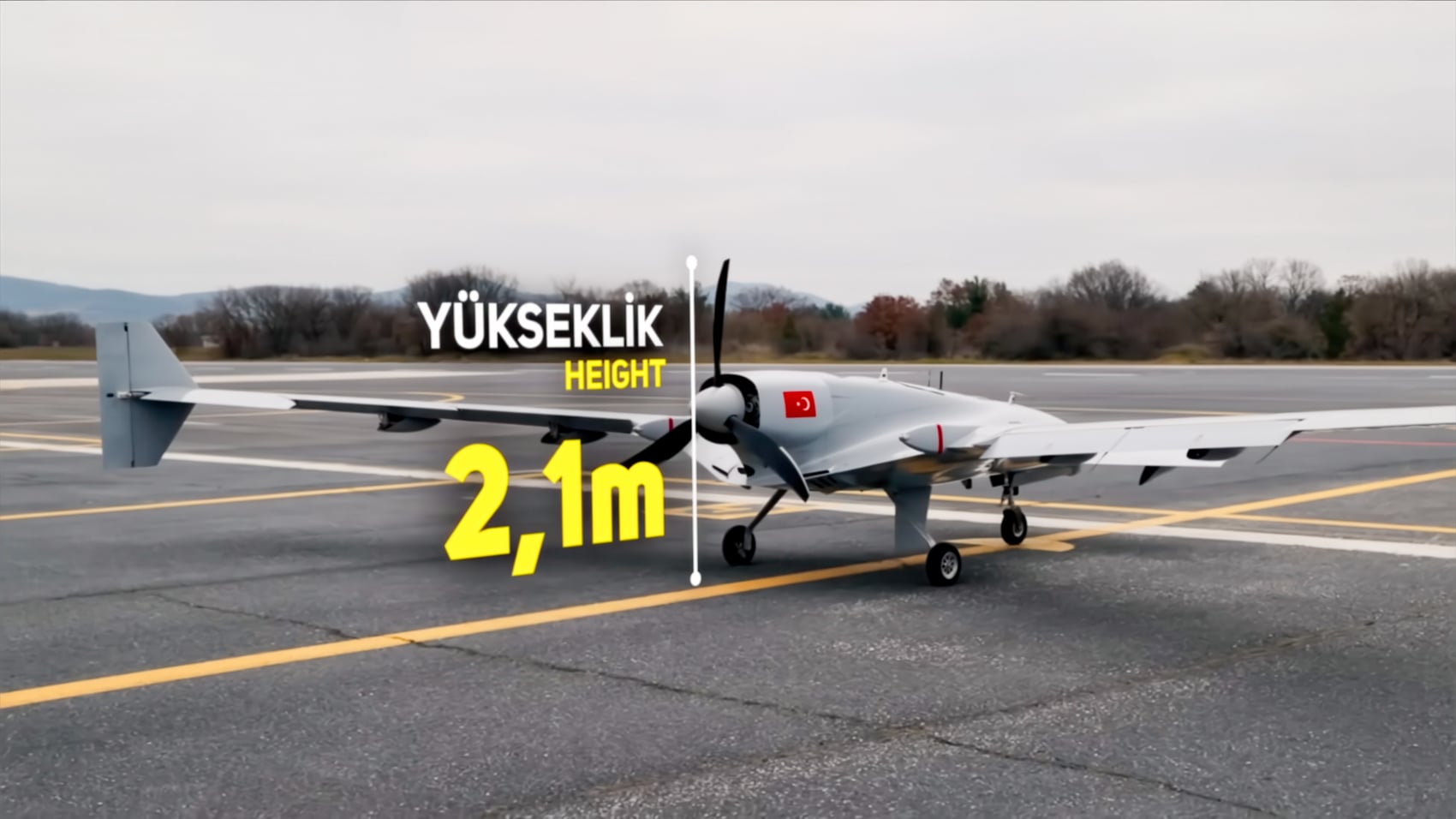
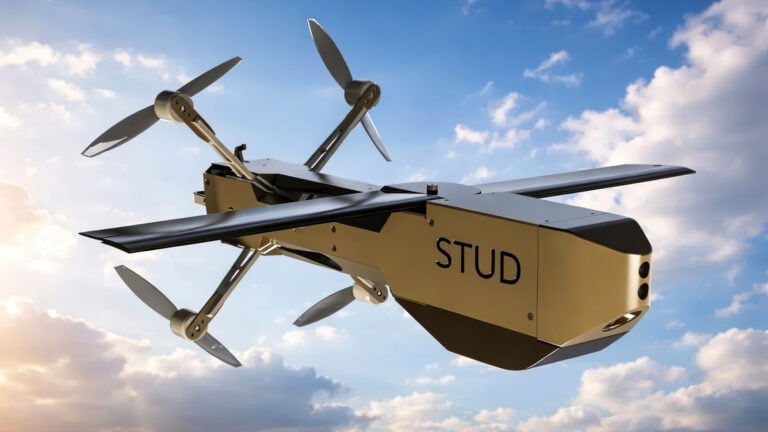
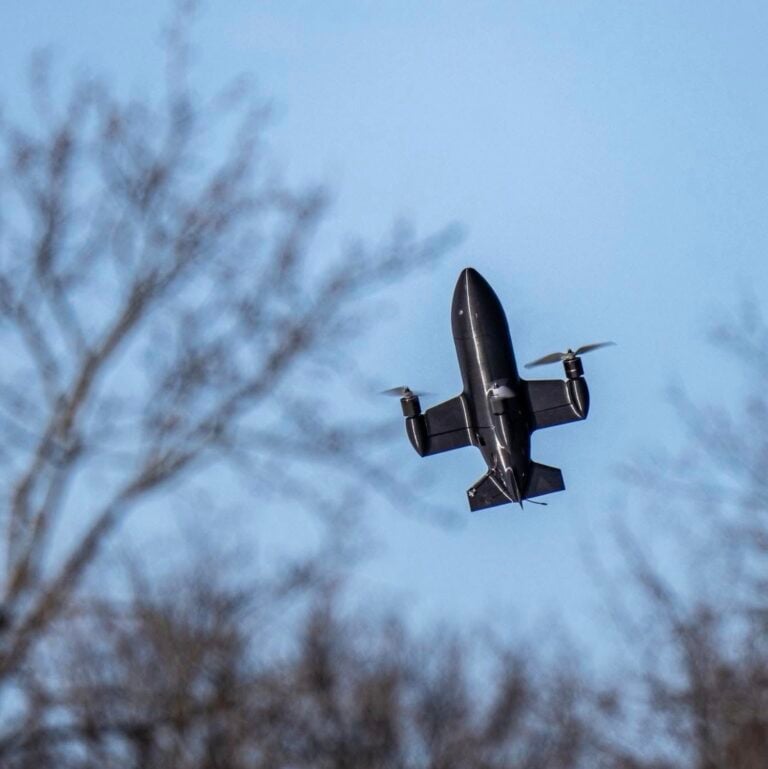
Its aerodynamic layout borrows the Bayraktar TB2’s fuselage lineage but adopts a practically tailless configuration with swept wings, wingtip rudders, and lifting canards with flaps to shorten takeoff roll and improve agility at low speeds.
The airframe can operate from austere forward strips, which matters operationally because it removes the fixed-base dependency that makes conventional strike aircraft vulnerable to counter-battery fire.
The AI Navigation and Targeting System
The K2’s most operationally significant feature isn’t the warhead. It’s the navigation architecture. The drone carries a stabilized EO/IR gimbal and a night-vision optical system that allow it to estimate its own position by visually scanning terrain features below, a technique called visual odometry.
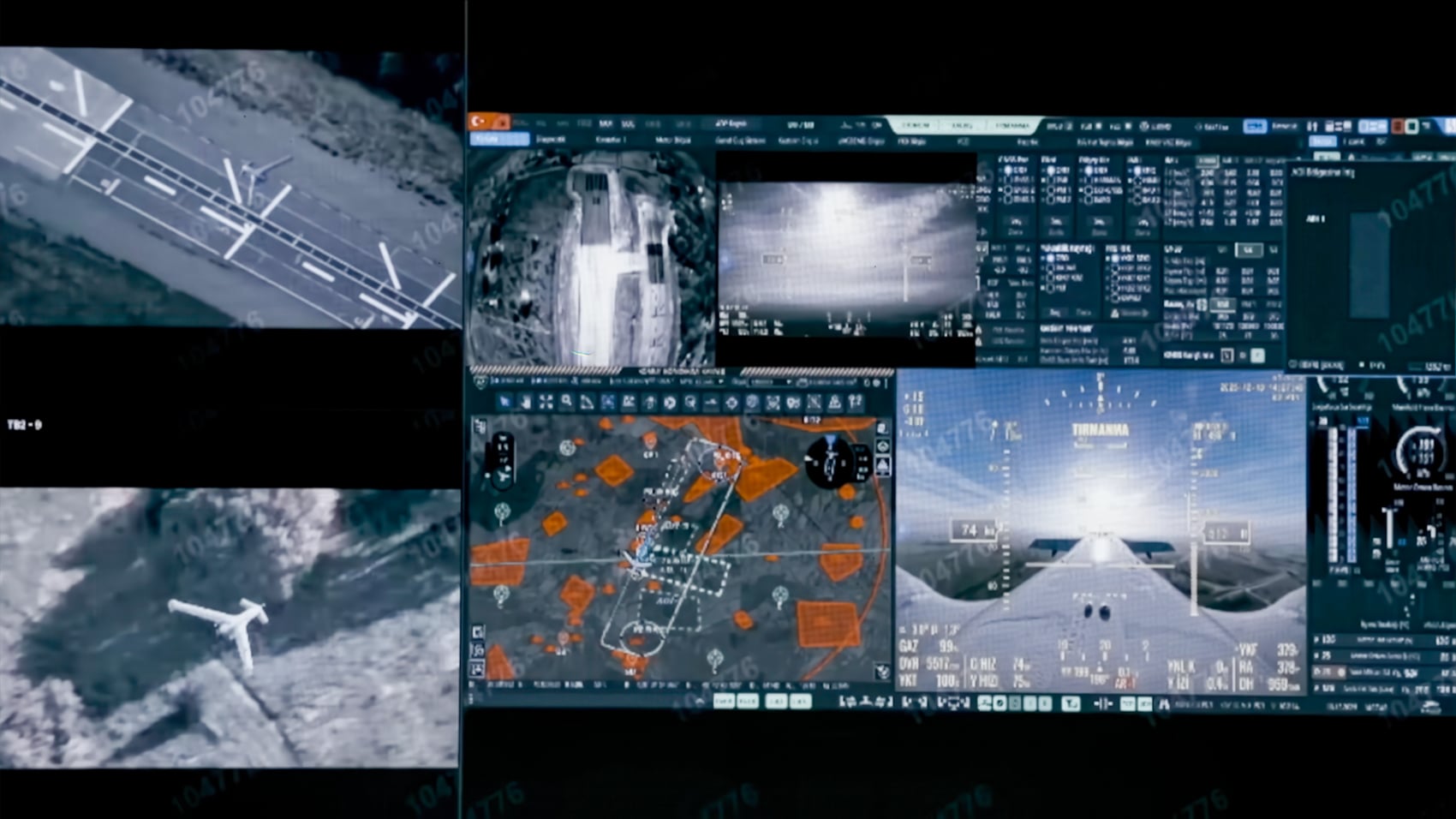
This allows the K2 to navigate accurately in GPS-denied environments where electronic warfare is jamming or spoofing GNSS signals, which is effectively every modern battlefield where this platform would actually be used.
It supports both line-of-sight and beyond-line-of-sight satellite data links and can execute coordinate-based precision strikes using visual lock-on targeting without relying on satellite navigation at any point in the engagement.
That combination, long range plus GPS-independence plus a 441-lb warhead, is what puts the K2 in a different category from most of what’s currently on the market.
About That Swarm
Baykar is calling the March 14 demonstration an autonomous swarm flight, and technically the five aircraft did maintain formation positions using onboard AI, sensors, and software without direct human input during the maneuvers.
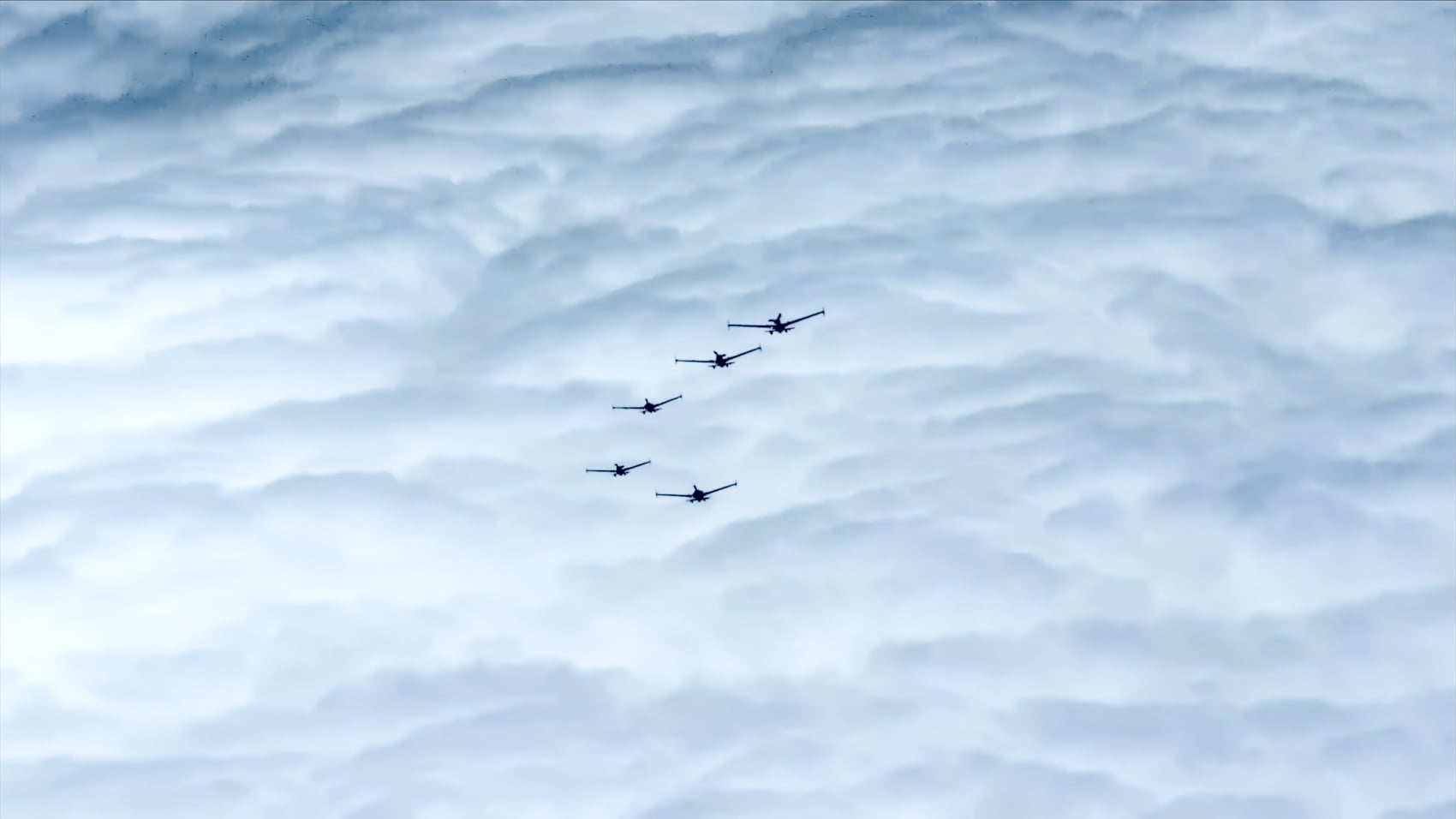
During the trials one unit appeared to serve as a pack leader for coordination, equipped with an unidentified pod beneath the fuselage, while the remaining four held their positions autonomously.
But it’s worth being precise about what was demonstrated and what wasn’t. Five coordinated aircraft executing pre-planned formation patterns is not the same as a decentralized autonomous swarm of the kind that could dynamically reassign targets, adapt to losses, or prosecute an evolving target set without human intervention.
Baykar’s demonstration shows that the company is building toward genuine swarm capability. It does not show that the K2 has achieved it. The distinction matters because adversary air defense planning against a true autonomous swarm is a fundamentally different problem than planning against five coordinated aircraft flying predictable formation geometries.
That’s not a dismissal of what Baykar showed. It’s a calibration of the claim.
Baykar’s Export Position and What K2 Adds
Baykar reported $2.2 billion in export revenue for 2025, with approximately 90% of revenue coming from international sales and signed agreements with 37 countries.
Its existing product line covers most of the conventional strike and reconnaissance spectrum: the TB2 for tactical ISR and light strike, the Akıncı for high-altitude long-endurance operations, the TB3 for ship-based carrier operations, and the Kızılelma jet-powered combat drone for high-speed contested airspace missions.
What the K2 adds is the gap none of those platforms fill: a low-cost, expendable yet recoverable platform capable of striking strategic targets at cruise missile ranges without requiring expensive precision-guided munitions or a sophisticated logistics chain behind it.
Existing Baykar customers looking at their own deep-strike requirements, many of whom can’t afford or aren’t permitted to buy cruise missiles, now have a credible option from a supplier they already have a procurement relationship with.
Reports from Turkish defense media also suggest Baykar intends to deploy the K2 from the TCG Anadolu LHD, Turkey’s flat-deck assault ship, potentially operating alongside the ship-capable TB3 as an overseer while K2 units execute stand-off strikes.
If realized, that gives Turkish naval forces a distributed, AI-coordinated strike package launchable from a single vessel without a conventional carrier air wing behind it.
Baykar has not disclosed pricing, production timelines, or export availability. Given the company’s track record of rapid iteration and aggressive export marketing, the 12 to 18-month window before K2 appears in foreign procurement conversations is a reasonable estimate, but it remains an estimate.
DroneXL’s Take
Here’s what I find genuinely significant: the K2 is not the most sophisticated drone Baykar has built. It might be the most strategically consequential.
The TB2 changed the calculus of small wars by giving middle powers a precision ISR and strike capability they previously couldn’t afford. The K2 does something different. It gives those same middle powers a deep-strike capability previously reserved for nations with cruise missile programs, at a cost point that makes mass production viable.
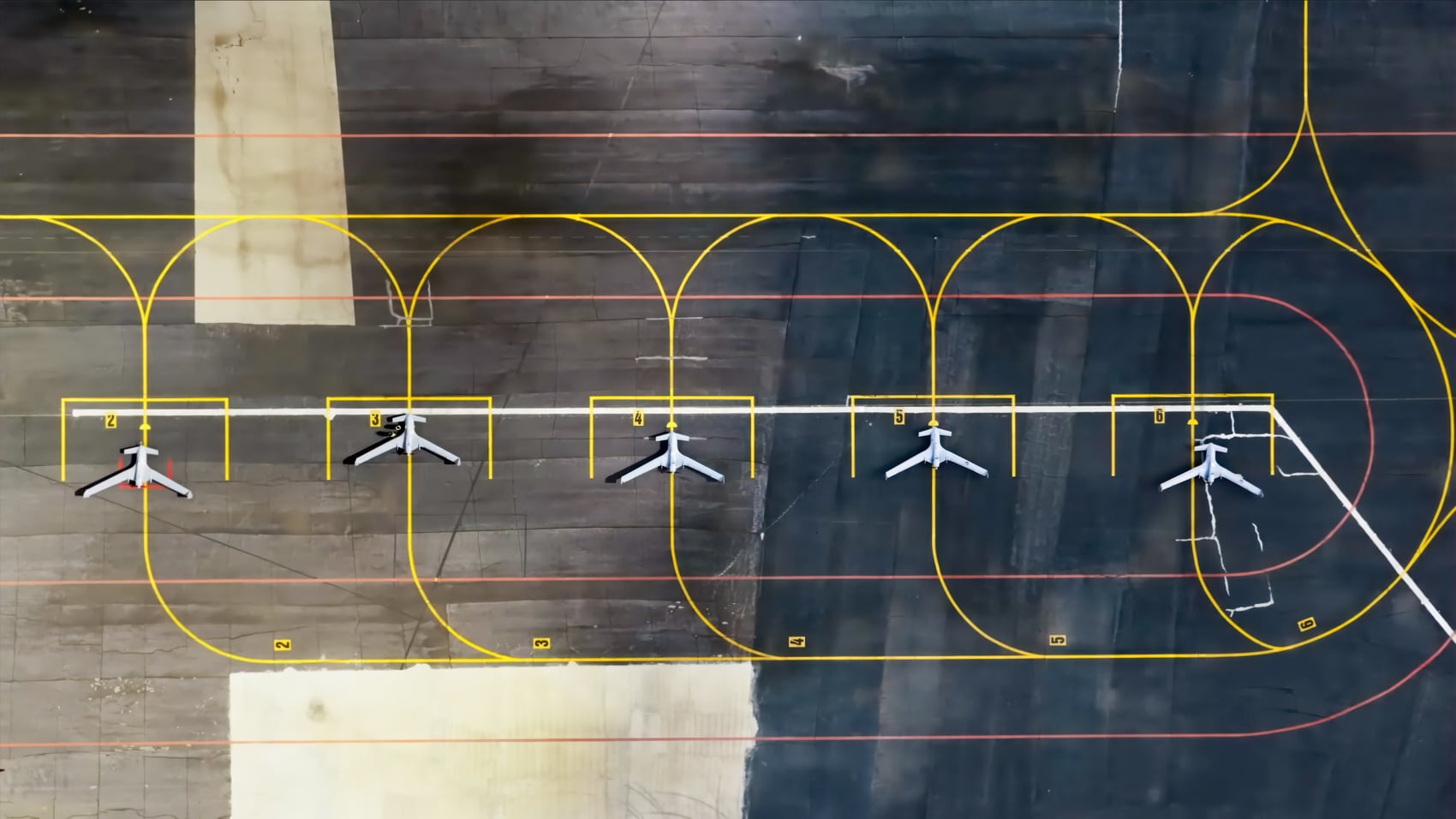
A country that couldn’t afford to field 50 cruise missiles can potentially afford to field 500 K2s. The defense math on the other side of that equation doesn’t work in the defender’s favor.
Unit pricing hasn’t been disclosed, which means the mass-production cost argument is still a promise rather than a verified figure. And the reusable future variant that would dramatically reduce per-sortie cost is still in the research and development phase.
But Baykar has a track record of turning promising demonstrations into fielded systems faster than most Western defense programs move from requirements document to first prototype. That track record is exactly why the K2 deserves to be taken seriously right now, before the production contract announcements start arriving.
The very honest part is that I personally, would love to see drones with this amount of technology doing deliveries of medicine, food, construction material, everything but explosives or bombs. Yeah, I know that war is business. But also you can earn money of many other ways, also with drones, without having to take out lives.
Photo credit: Baykar
Discover more from DroneXL.co
Subscribe to get the latest posts sent to your email.
Check out our Classic Line of T-Shirts, Polos, Hoodies and more in our new store today!

MAKE YOUR VOICE HEARD
Proposed legislation threatens your ability to use drones for fun, work, and safety. The Drone Advocacy Alliance is fighting to ensure your voice is heard in these critical policy discussions.Join us and tell your elected officials to protect your right to fly.

Get your Part 107 Certificate
Pass the Part 107 test and take to the skies with the Pilot Institute. We have helped thousands of people become airplane and commercial drone pilots. Our courses are designed by industry experts to help you pass FAA tests and achieve your dreams.

Copyright © DroneXL.co 2026. All rights reserved. The content, images, and intellectual property on this website are protected by copyright law. Reproduction or distribution of any material without prior written permission from DroneXL.co is strictly prohibited. For permissions and inquiries, please contact us first. DroneXL.co is a proud partner of the Drone Advocacy Alliance. Be sure to check out DroneXL's sister site, EVXL.co, for all the latest news on electric vehicles.
FTC: DroneXL.co is an Amazon Associate and uses affiliate links that can generate income from qualifying purchases. We do not sell, share, rent out, or spam your email.