Ukraine’s Deep Strike Drone Campaign Stretches the Kill Zone to 150 Kilometers, Strangling Russia’s Rear Logistics

Check out the Best Deals on Amazon for DJI Drones today!
Ukraine’s drone forces have pushed the battlefield kill zone to roughly 150 kilometers behind the front line, a dramatic expansion from the 15 kilometers the Financial Times confirmed in February, according to The Telegraph (May 16, 2025, paywalled). Ukrainian drones can now strike Russian troops, vehicles, and supply infrastructure up to 93 miles into occupied territory, making movement across vast stretches of the rear hazardous or impossible. The campaign is not a surge of numbers alone. It is a coordinated, systematic effort to destroy the Russian systems that once protected those rear areas, opening the route to deeper and more frequent strikes.
The anonymous Ukrainian drone battalion soldier quoted by The Telegraph described it plainly: “The drones are constantly watching, constantly striking. It slows them down, it breaks their rhythm and it gives us the space to control the battlefield without sending men to die.” That sentence captures the entire strategic logic. Ukraine cannot match Russia in raw manpower, so it is turning depth of territory into a liability for Moscow instead.
Ukraine’s Deep Strike Command Centre Coordinates the Campaign
According to The Telegraph, Ukraine operates a Deep Strike Command Centre under the Unmanned Systems Forces, built specifically to coordinate drone strikes well behind Russian lines. The unit pools real-time intelligence, targeting data, and strike execution across multiple units into a single planning structure. DroneXL could not independently verify this unit’s designation or its reported founding date in early 2026.
Kateryna Stepanenko, Russia team lead at the Institute for the Study of War, told The Telegraph: “This takes time and a tremendous amount of planning. It is becoming much more systematic.” She pointed to geo-located footage confirming not just vehicle strikes on roads, but successful attacks on Russian drone positions, assembly areas, and storage facilities, the infrastructure Russia depends on to sustain offensive operations.
Anton Zemlianyi, senior analyst at the Ukrainian Security and Co-operation Centre, described the model directly, telling The Telegraph: “Precision, co-ordination and technological superiority play a key role.” Ukraine is moving toward what analysts call network-centric warfare, where shared real-time information replaces massed troop movements as the driver of battlefield effect. We covered a related inflection point when we reported on how $500 commercial drones are outperforming $5 million tanks. The Deep Strike Command Centre is that principle applied at operational rather than tactical scale.

Heavy Bomber Drones Dismantled Russia’s Air Defence Layer
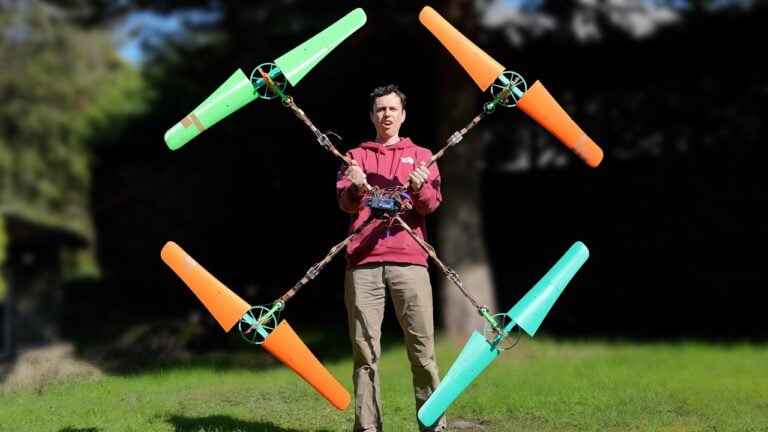
The campaign’s opening phase relied on heavy bomber drones. Russian troops gave the entire class the nickname “Baba Yaga” for the platforms’ ability to strike silently at night. The Nemesis is among the most widely used of these Ukrainian-developed attack platforms. We first covered these heavy bomber platforms in January 2025, when per-unit costs ran around $20,000 and operational ranges reached roughly 19 km. The picture today is dramatically different.
These heavy bombers have been aimed primarily at Russian electronic warfare units and the air defence radars and interceptors that once kept lighter Ukrainian drones from penetrating deep. Stepanenko explained the logic: “By undermining and suppressing these Russian assets, Ukrainian forces create conditions in which more drones can fly at greater distances without being intercepted or jammed.”
Russian Buk and Pantsir-S1 batteries have been destroyed or degraded across occupied territories. Tor installations have suffered the same fate. With those gone, the lighter FPV and long-range strike drones most vulnerable to electronic jamming can now operate at ranges that were impossible before. Russia has been forced to improvise: Dimko Zhluktenko, a soldier and analyst at Ukraine’s 413th Unmanned Systems Regiment, told The Telegraph that some Russian units stripped multi-barrel machine-gun mounts from old Soviet attack helicopters and bolted them onto trucks to engage drones with repurposed gunfire. That is not an air defence strategy. That is a sign of system failure.
Starlink Outages Are Compounding Russian Drone Problems
The Telegraph reports that Starlink connectivity issues in Ukraine are creating a secondary problem for Russian forces. With access to SpaceX’s satellite internet unreliable, Russian drone operators have been forced to move into the open to rig communications equipment to lamp posts and trees to maintain control of their own drones. On a battlefield watched by Ukrainian surveillance drones around the clock, leaving cover to fix a communications rig is not a minor inconvenience. It is a lethal exposure.
The feedback loop Ukraine has built around this environment is the real competitive advantage. Zemlianyi described it directly: “Ukraine continuously analyses battlefield data, including operational reports and signals intelligence, to determine which technologies and tactics work effectively and which are vulnerable.” Ukraine’s ongoing effort to build open-source battlefield AI training datasets is the institutional form of exactly this process, failure analysis turned into the next generation of hardware and software.
Many of the heavy bomber drones now carry machine learning or AI targeting systems, according to Stepanenko. Lighter drone ranges have also increased steadily. FirePoint, Ukraine’s top long-range strike drone manufacturer, is now producing roughly 200 deep-strike UAVs per day, with GPS-independent terrain-matching navigation developed across seven generations in roughly four years of war.
Russia Is Losing Air Defence Systems It Cannot Quickly Replace
Zhluktenko was direct about the material consequences: “Russia is losing crazy amounts of rare air defence systems, radars, and there is no way to quickly replenish them.” Russian war bloggers on Telegram have confirmed Ukraine’s gains from their own side, with one writing: “The enemy has once again taken control of the ‘lower sky.’ The situation is difficult.”
Successful Ukrainian drone campaigns have been documented along the Zaporizhzhia and Donetsk front lines, with confirmed advances near Dobropillia, Huliaipole, Kupiansk, Petrovske, and Kostiantynopil, among others. The strategic goal, according to Stepanenko, is to force Russian troops to travel long distances on foot to reach their positions, gradually exhausting their ability to hold defensive lines. Ukraine’s K2 Brigade, now operating the world’s first UGV battalion, is positioned to exploit those degraded Russian positions once the drone campaign has done its work.
The pattern connects directly to what we documented in February when the Financial Times confirmed the kill zone’s front-line reality. At that point, the zone extended roughly 15 kilometers from the line of contact. The Telegraph’s reporting now puts the deep strike boundary at 150 kilometers. The concept has not changed. Its reach has.
DroneXL’s Take
I’ve been tracking this progression since before the FT’s kill zone report landed in February. What The Telegraph’s latest reporting adds is the first clear picture of how Ukraine graduated from owning a 15-kilometer band near the front line to threatening everything within 150 kilometers of it. That’s not incremental improvement. That’s a different war.
The Deep Strike Command Centre is the piece most analysts are underweighting. Production numbers matter. Range figures matter. But the difference between a lot of drones and a coordinated drone campaign at this depth is the command-and-control architecture behind it. Ukraine spent early 2026 building that architecture. The results being reported now are what it looks like when that system is operational. We saw Ukraine exporting its drone warfare expertise to Gulf states in March, and that knowledge transfer is accelerating precisely because Ukraine now has documented, repeatable doctrine to export, not just battlefield improvisation.
The heavy bomber detail matters more than it looks. When I covered these platforms back in January 2025, they were night-strike tools operating at 19-kilometer range. The same conceptual platform is now leading a systematic campaign to strip Russia’s air defence layer at operational depth. That’s the same tool used for an entirely different strategic purpose. The doctrine evolved faster than the hardware.
Russia’s air defence attrition is irreversible on any relevant timescale. Buk and Pantsir-S1 systems take years to manufacture and cannot be rushed off a production line the way FPV drones can. Ukraine will consolidate air superiority over the occupied rear areas before Moscow can restore what it has lost. By the end of 2026, Russia’s ability to sustain offensive tempo anywhere along the eastern front will depend almost entirely on how much it can move on foot, at night, under conditions Ukraine’s drones are already tracking.
DroneXL uses automated tools to support research and source retrieval. All reporting and editorial perspectives are by Haye Kesteloo.
Discover more from DroneXL.co
Subscribe to get the latest posts sent to your email.
Check out our Classic Line of T-Shirts, Polos, Hoodies and more in our new store today!

MAKE YOUR VOICE HEARD
Proposed legislation threatens your ability to use drones for fun, work, and safety. The Drone Advocacy Alliance is fighting to ensure your voice is heard in these critical policy discussions.Join us and tell your elected officials to protect your right to fly.

Get your Part 107 Certificate
Pass the Part 107 test and take to the skies with the Pilot Institute. We have helped thousands of people become airplane and commercial drone pilots. Our courses are designed by industry experts to help you pass FAA tests and achieve your dreams.

Copyright © DroneXL.co 2026. All rights reserved. The content, images, and intellectual property on this website are protected by copyright law. Reproduction or distribution of any material without prior written permission from DroneXL.co is strictly prohibited. For permissions and inquiries, please contact us first. DroneXL.co is a proud partner of the Drone Advocacy Alliance. Be sure to check out DroneXL's sister site, EVXL.co, for all the latest news on electric vehicles.
FTC: DroneXL.co is an Amazon Associate and uses affiliate links that can generate income from qualifying purchases. We do not sell, share, rent out, or spam your email.