Brazil Lets Delivery Drones Fly Over Cities Without Asking Permission First

Check out the Best Deals on Amazon for DJI Drones today!
Brazil just made drone delivery significantly less bureaucratic, which is not a sentence most people expected to write about any country’s aviation regulator, as AINONLINE reported.
On March 16, ANAC, Brazil’s civil aviation authority, authorized Speedbird Aero to fly its DLV-2 A25 delivery drone over areas with population densities up to 12,950 people per square mile, under pre-approved conditions, without filing for individual route approval every single time.
To understand why that matters, you need to understand what the old system looked like.
The Problem With Asking Permission for Every Flight
Under the previous framework, every new route required its own regulatory approval. Not every new type of operation. Not every new city. Every. Route. Imagine if a trucking company had to file paperwork with the government every time it wanted to drive a different street. That’s roughly what drone delivery operators in Brazil were dealing with before this week.
ANAC superintendent Roberto Honorato put it as diplomatically as regulators tend to: the country is now adopting a framework that supports scale, predictability, and sustainable growth.
Translation: the old approach was never going to produce a functioning drone delivery industry at any meaningful scale, and everyone involved knew it.
The new framework flips the model. Instead of asking for permission per route, Speedbird now operates under a pre-approved national set of conditions, the same way trucks, ships, and crewed aircraft work. You meet the certification requirements, you demonstrate the safety case, and then you operate. You don’t call the regulator every time you want to cross a bridge.
What the DLV-2 A25 Actually Does
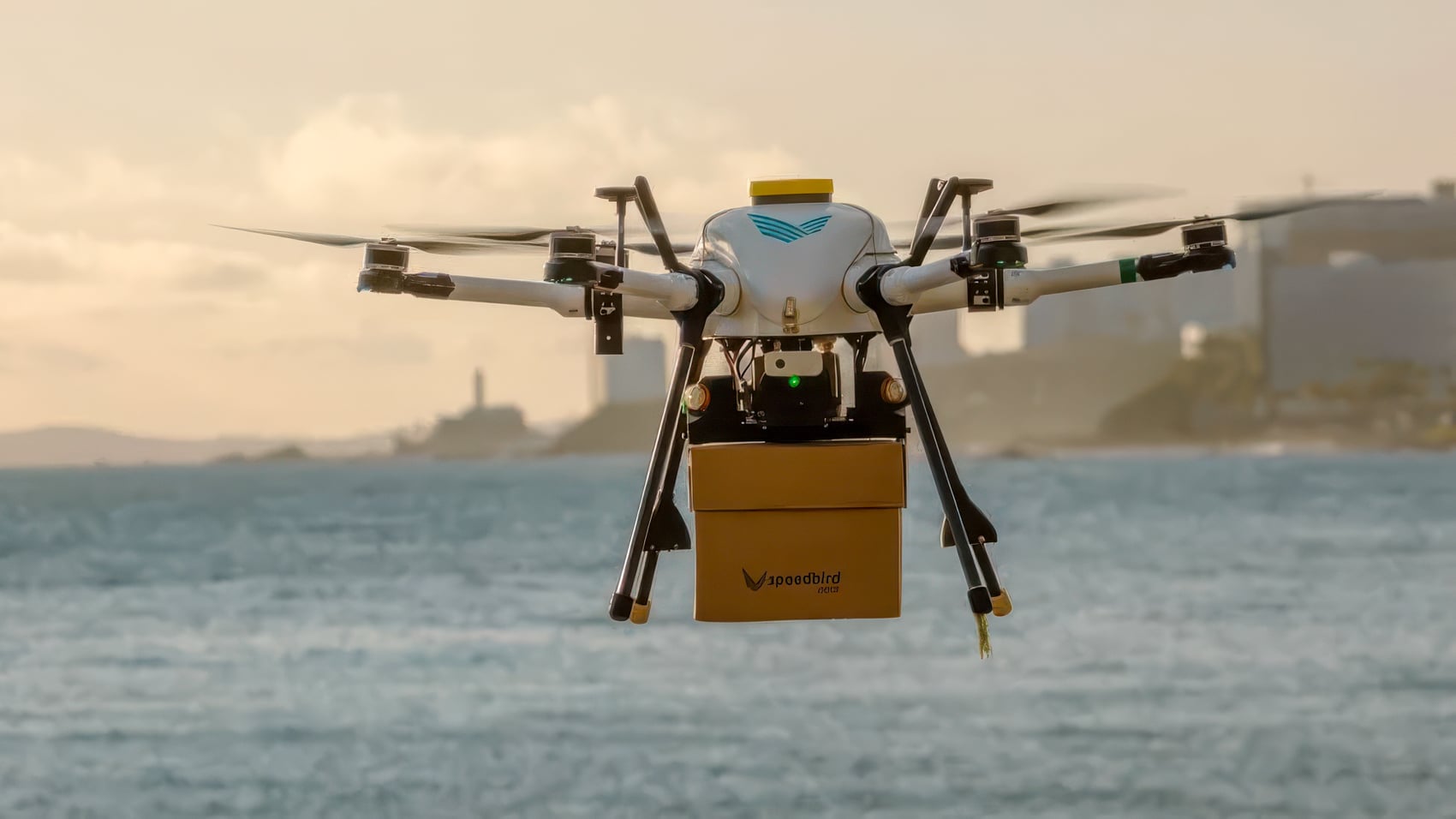
The DLV-2 A25 is Speedbird’s primary commercial platform, a heavy-lift multirotor with a maximum takeoff weight of approximately 55 lbs, a payload capacity of up to about 13 lbs, and a range of roughly 25 miles.
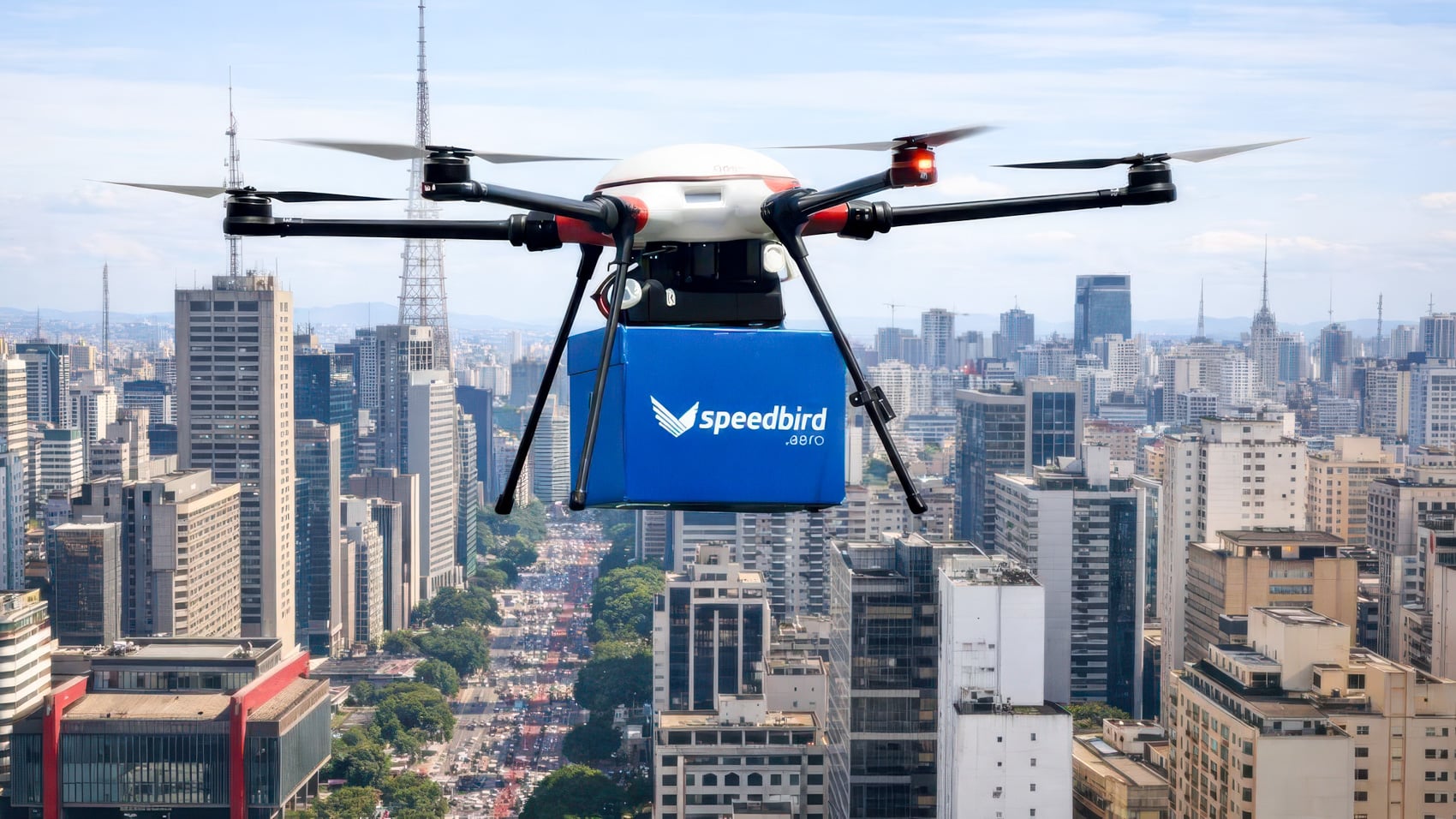
It flies day and night, in light rain, under BVLOS conditions, and carries an emergency parachute recovery system that was specifically validated by ANAC as part of the safety case for this approval. That parachute isn’t a nice-to-have. It’s what convinced the regulator that a drone flying over a neighborhood at 12,950 people per square mile doesn’t turn into a falling anvil if something goes wrong.
For context on what this drone is already doing in the real world: at the Carajás mine in northern Brazil, Speedbird used the larger DLV-2 E35 variant to transport mineral samples 26 miles for mining company Vale. The trip took 45 minutes by air. By road, through the terrain surrounding Carajás, the same trip takes up to four hours. That’s not a marginal improvement. That’s a different category of logistics capability.
Smaller variants, including the DLV-1 Neo, remain limited to areas with population densities up to 500 people per square mile under the current approvals. The DLV-1 carries up to 5.5 lbs, operates within a 1.9-mile radius, and serves lighter urban delivery, medical logistics, and rural routes where regulatory requirements are less stringent.
iFood, Big Brother, and 40,000 Missions
Speedbird has been building toward this moment since 2018, and the flight hours behind this approval are real. The company has completed nearly 40,000 commercial drone missions across 14 countries, making it one of the most operationally experienced drone delivery companies in the world that most people in North America have never heard of.
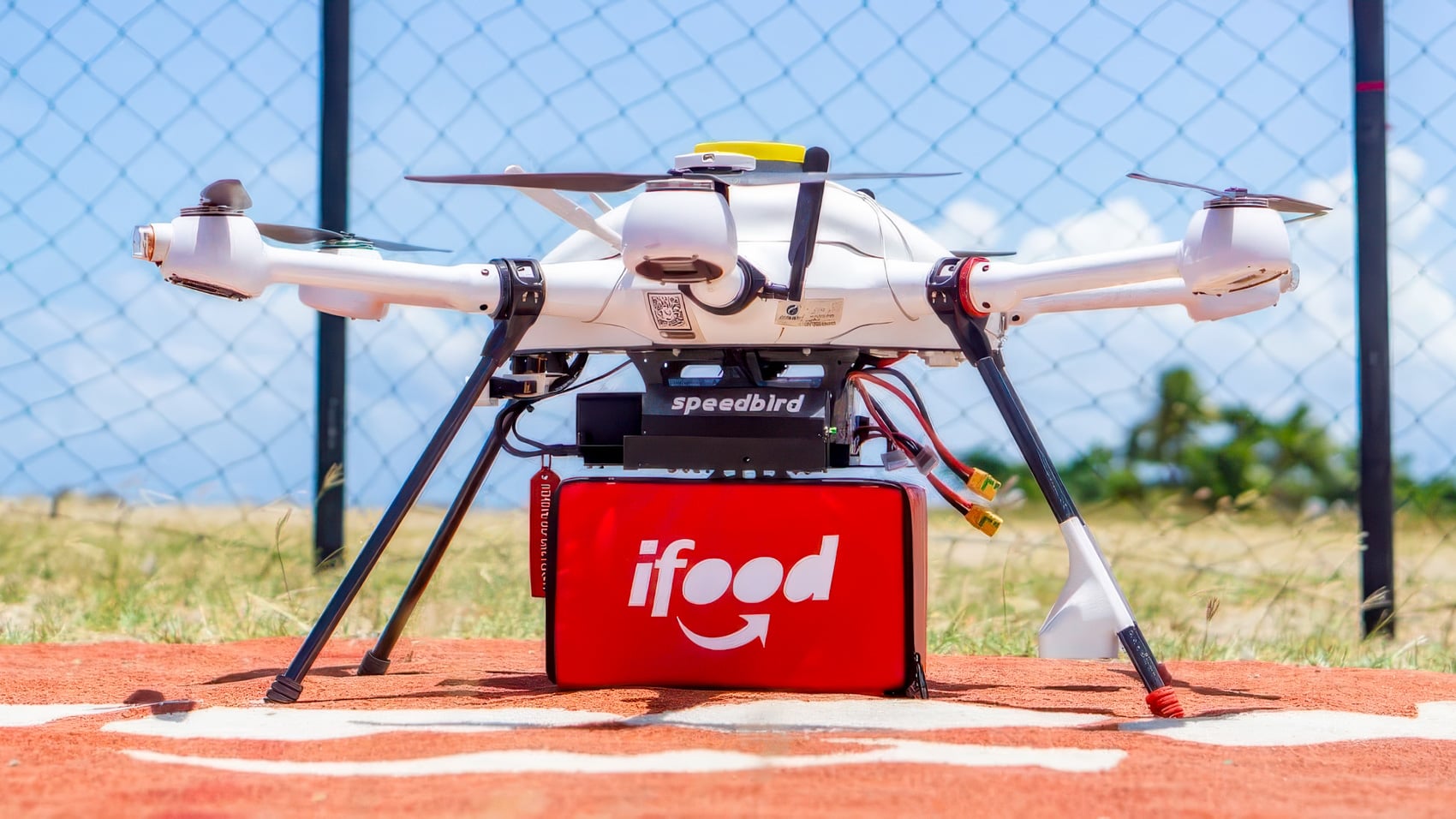
Its partnership with iFood, Brazil’s dominant food delivery platform with 180 million deliveries in January 2026 alone, is the commercial engine behind the São Paulo expansion. iFood recently made a $5.8 million investment in Speedbird and has already logged approximately 2,000 deliveries with the platform this year. The partnership is developing new routes connecting a shopping center to nearby residential condominiums in the São Paulo metropolitan area.
In what is either the most Brazilian possible way (excepting doing it with soccer balls) to debut a technology or a stroke of pure marketing genius, Speedbird also recently completed a live drone food delivery to the Big Brother Brazil house while the show was on air. The program averages 40 million viewers. Nothing says scalable urban logistics infrastructure quite like dropping a delivery through the ceiling of the most watched reality show in South America.
The Hardware Family and the Naming Situation
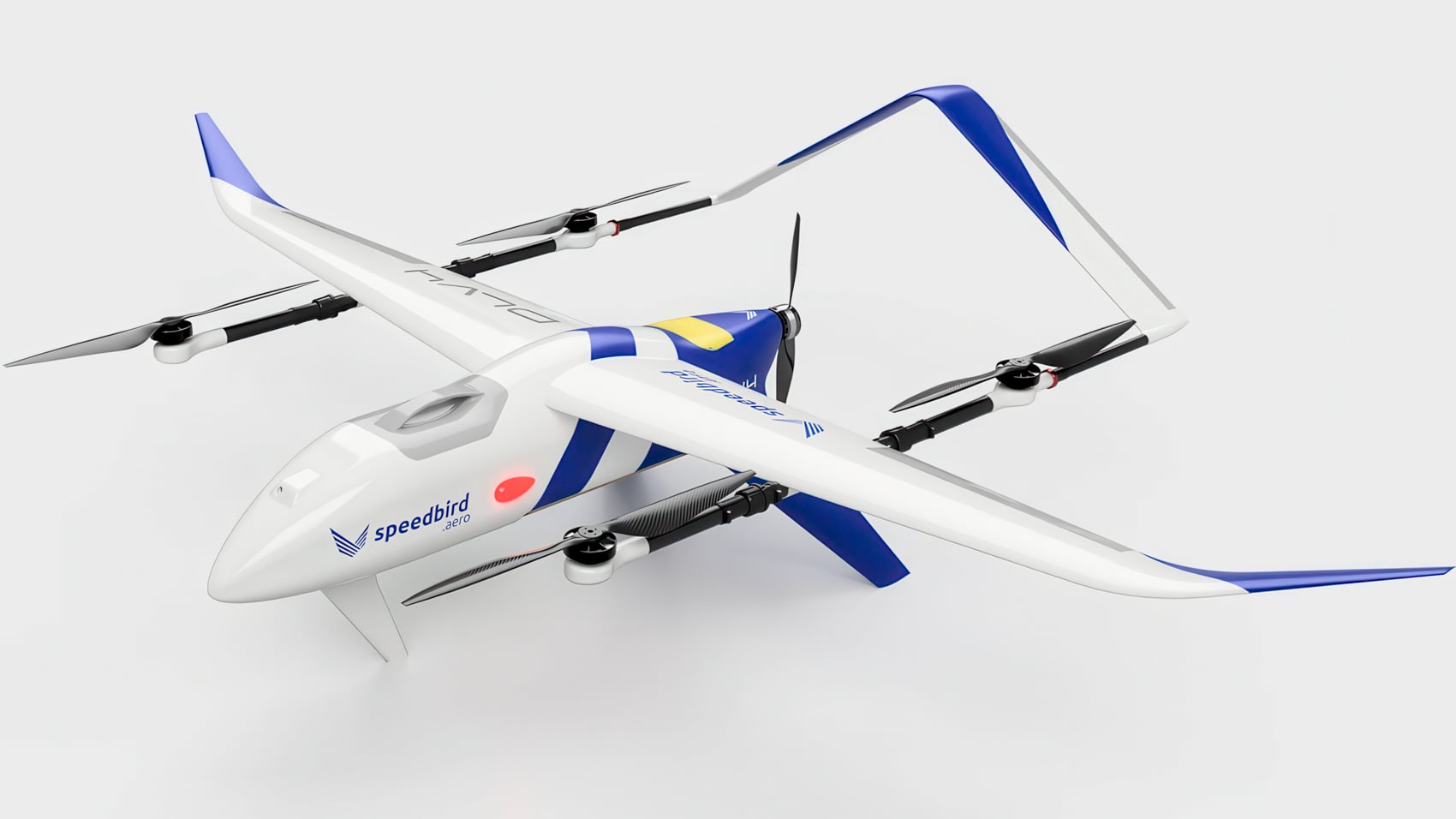
Speedbird’s platform lineup currently covers three operational tiers. The DLV-1 handles lightweight short-range urban delivery. The DLV-2 handles heavy-lift urban and industrial routes and is the platform at the center of this approval. The DLV-4 is a lift-plus-cruise eVTOL with a 13-foot wingspan designed for longer-range missions, carrying up to 11 lbs for up to 62 miles.
Then there is the DLV-3, which requires a brief explanation because the numbering system has developed what engineers would charitably call a non-linear relationship with logic. CEO Manoel Coelho said plainly that the company missed the mark on the DLV-4 in terms of competitiveness.
So they are now building the DLV-3, which will be larger and more capable than the DLV-4, and will feature a shorter wingspan than the DLV-4 despite being the bigger aircraft. The DLV-3 is aimed at middle-mile, cargo, offshore, and industrial logistics missions, replacing the DLV-4’s role in longer-range heavy work.
To be clear: the DLV-3 comes after the DLV-4 in development but supersedes it in capability. Speedbird’s numbering convention is apparently a creative choice rather than a sequential one. This will not affect their flight hours, which remain impressive regardless of what order the model numbers run in.
The FAA Is the Next Conversation
Speedbird’s expansion ambitions don’t stop at Brazil’s borders. The company has already secured SAIL III operational authorization in Italy, earned through a test campaign at Rome Fiumicino Airport in partnership with vertiport developer UrbanV.
SAIL III is the same internationally recognized SORA framework standard that underpins the Brazilian approval, which means the safety documentation translates across jurisdictions.
North America is the next target. CEO Coelho has been direct about the strategy: use Brazil’s 40,000-plus flight hours and multiple international certifications to walk into an FAA conversation with a documented body of evidence rather than a pitch deck. The FAA is currently finalizing Part 108, its new BVLOS drone rules, which makes 2026 the right moment to be having that conversation.
The gap between where Brazil is and where the FAA currently stands is wide enough that Speedbird board member Andre Stein described the regulatory environment as the bottleneck. That bottleneck is starting to open.
Whether American regulators move at Brazilian speed or at the more traditional American aviation regulatory speed, which is to say slowly and with extensive documentation, remains to be seen.
DroneXL’s Take
Strip away the press release language: Brazil just ran an eight-year proof of concept for scalable urban drone delivery, certified it under internationally recognized safety standards, and is now handing the playbook to the FAA with a stack of flight logs attached.
The route-by-route approval model was always a placeholder, a way for regulators to maintain control while they figured out how to think about drones at scale.
ANAC figured it out. The shift to a performance-based framework where you certify the aircraft, validate the safety case, and then operate without permission-per-flight is how every other mode of transport has always worked. The fact that it took the drone industry this long to get there says more about regulatory inertia than it does about the technology.
Here’s what I find genuinely significant: Speedbird is not a Silicon Valley drone company burning venture capital on vision statements.
It’s a Brazilian company founded by two people who went home, built the aircraft, did the work, logged the hours, and earned the approvals one by one across 14 countries. That’s not a particularly glamorous origin story. It’s a better one.
Photo credit: Speedbird
Discover more from DroneXL.co
Subscribe to get the latest posts sent to your email.
Check out our Classic Line of T-Shirts, Polos, Hoodies and more in our new store today!

MAKE YOUR VOICE HEARD
Proposed legislation threatens your ability to use drones for fun, work, and safety. The Drone Advocacy Alliance is fighting to ensure your voice is heard in these critical policy discussions.Join us and tell your elected officials to protect your right to fly.

Get your Part 107 Certificate
Pass the Part 107 test and take to the skies with the Pilot Institute. We have helped thousands of people become airplane and commercial drone pilots. Our courses are designed by industry experts to help you pass FAA tests and achieve your dreams.

Copyright © DroneXL.co 2026. All rights reserved. The content, images, and intellectual property on this website are protected by copyright law. Reproduction or distribution of any material without prior written permission from DroneXL.co is strictly prohibited. For permissions and inquiries, please contact us first. DroneXL.co is a proud partner of the Drone Advocacy Alliance. Be sure to check out DroneXL's sister site, EVXL.co, for all the latest news on electric vehicles.
FTC: DroneXL.co is an Amazon Associate and uses affiliate links that can generate income from qualifying purchases. We do not sell, share, rent out, or spam your email.