Air Force Opens Hunt for Drone Killers at Home Bases

Check out the Best Deals on Amazon for DJI Drones today!
The Air Force has had enough of watching small drones poke around its installations without a reliable way to stop them.
This week, the service’s Point Defense Battle Lab put out two Requests for Information asking industry for exactly what’s been missing: systems that can spot the threat and systems that can kill it, as Breaking Defense reports.
The Lab Behind the RFIs
The PDBL sits at Grand Forks Air Force Base in North Dakota, where the 319th Reconnaissance Wing was selected in October 2025 to lead the lab, with the 184th Wing of the Kansas Air National Guard as its partner.
The two units bring complementary skill sets. The 184th Wing was chosen specifically for its expertise in air battle management, cyber operations, and AI-enabled intelligence, surveillance, and reconnaissance. Together they support Air Combat Command’s broader Point Defense Task Force, the larger organizational effort the PDBL feeds into.
The lab’s mandate isn’t purely defensive. Among its stated priorities is shifting the Air Force’s posture at bases from purely defensive to offensive. That framing matters. It signals that the service isn’t looking for passive detection nets. It wants the ability to reach out and terminate a threat before it reaches something important.
Two RFIs, Two Gaps
The kinetic hard-kill RFI has a very specific shopping list. It asks for “rapidly deployable” systems that a team of four can set up in two hours or less.
The weapons it covers span an interesting range of approaches: APKWS mid-range precision vehicle and container launchers, large-caliber 30mm airburst guns, small-caliber automated weapon stations, drone-on-drone autonomous kinetic interceptors that can be 3D-printed to full size, high-energy lasers in the 2 to 20 kilowatt range, and high-power microwave systems using gallium nitride solid-state technology capable of engaging swarms in any weather.
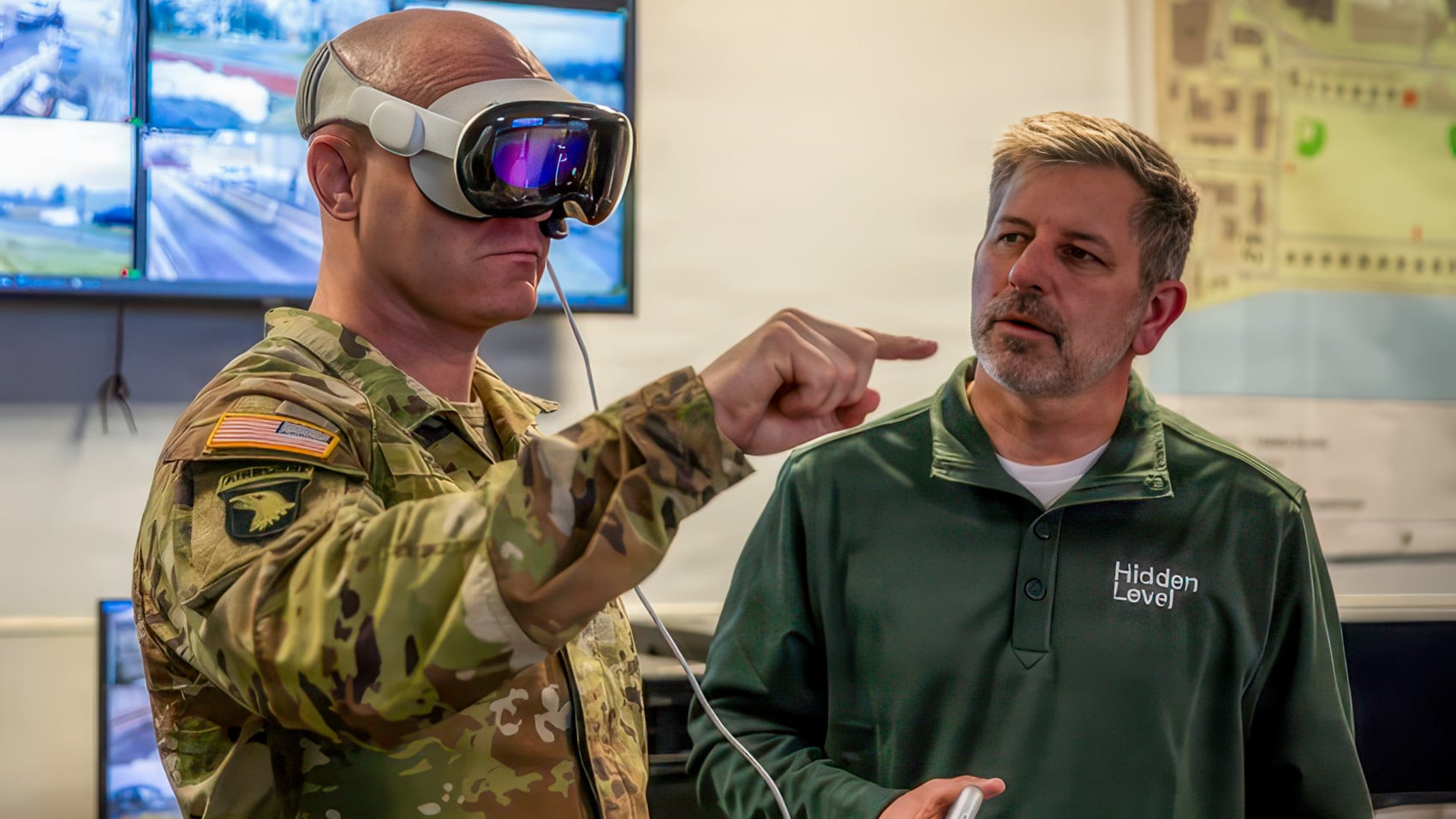
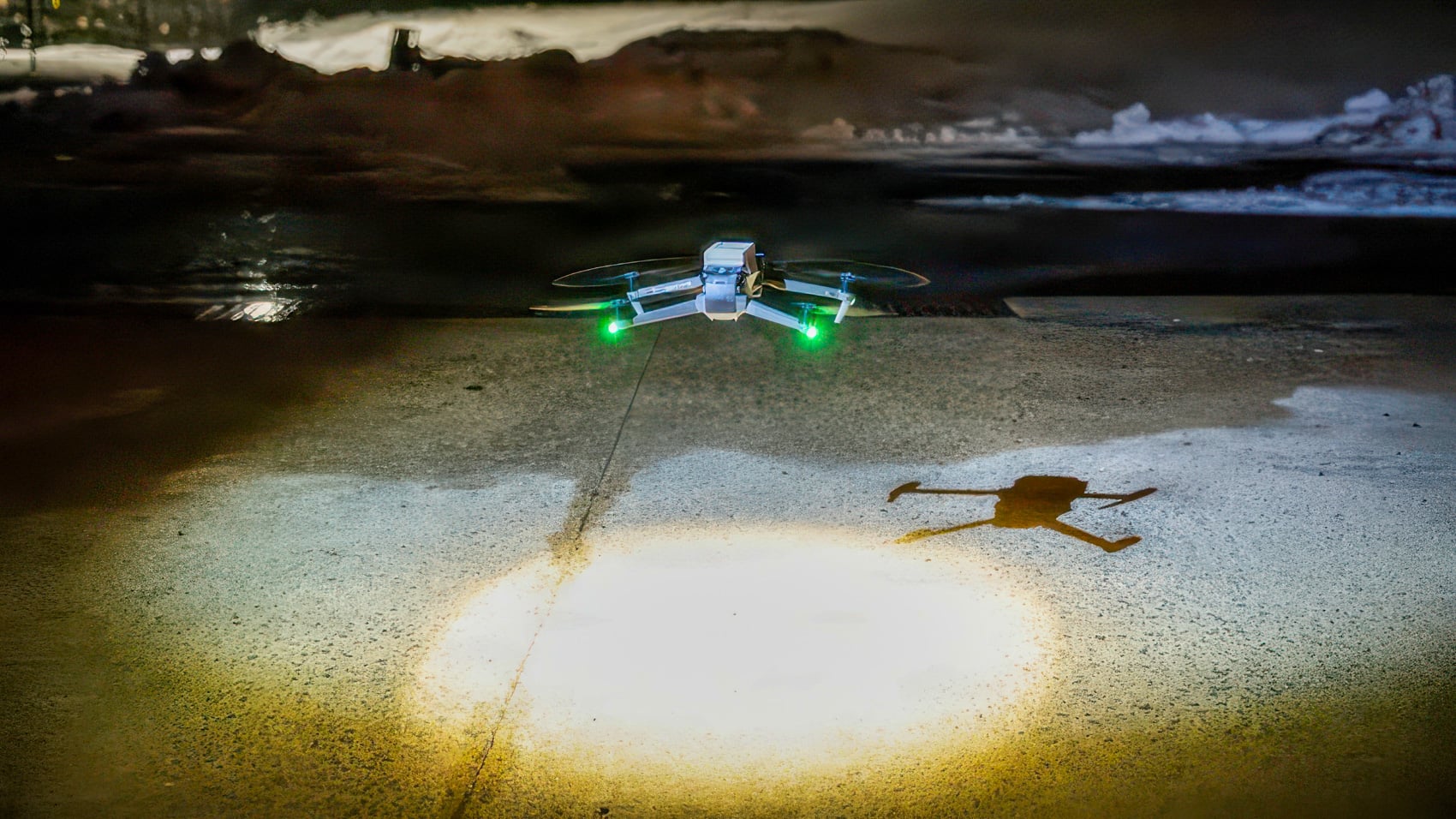
The detection RFI is more technical in its requirements. Its primary focus is tracking Group 1 drones at ranges of up to 1.2 miles, with secondary interest in Groups 2 and 3. Systems must work in GPS-degraded environments, discriminate real targets from radar clutter, and track multiple drones simultaneously.
What the Drone Groups Actually Mean
To understand why the detection RFI leads with Group 1, the classification system is worth knowing. Group 1 covers UAS weighing less than 20 pounds, operating below 1,200 feet above ground level at speeds under 100 knots.
Group 2 drones weigh between 21 and 55 pounds and fly below 3,500 feet at under 250 knots. Group 3 steps up significantly, covering aircraft weighing between 55 and 1,320 pounds flying below 18,000 feet.
The smallest category is the hardest to detect and the most likely to show up uninvited outside a base perimeter. That’s why the PDBL wants industry to nail that problem first.
APKWS: The Proven Low-Cost Killer
The APKWS inclusion on the kinetic hard-kill list is notable because it’s already combat-proven in the counter-drone role, not just on paper. The system adds a mid-body laser guidance unit to standard 2.75-inch Hydra 70 rockets, turning an unguided munition into a precision weapon at roughly one-third the cost and weight of other US precision-guided munitions.

A proximity fuze variant specifically designed for counter-UAS use has been fielded and tested. In March 2023, the Joint Counter-Small Unmanned Aircraft Systems Office confirmed APKWS rockets achieved complete effectiveness against drones weighing between 25 and 50 pounds traveling at speeds exceeding 100 mph.
The system has seen real combat use beyond test ranges. The FALCO variant, designated AGR-20, has been used extensively to down Houthi missiles and drones targeting Red Sea shipping as well as Iranian weapons fired against Israel. The ground-launch capability the PDBL is asking about is not theoretical either.
A containerized weapon system demonstrating ground-launched APKWS rockets successfully neutralized all targets including high-speed drones in a 2021 BAE Systems test. The cost math works: a laser-guided 70mm rocket runs around $30,000 per unit, far cheaper than the air-to-air missiles that would otherwise be the next option.
Why This Is Happening Now
Drone incursions at US military installations have moved from nuisance to documented security failure. Key requirements across both RFIs include rapid deployability, extreme weather operability down to minus 40 degrees Fahrenheit and winds of 20 to 30 mph, and a preference for non-proprietary technology.
That last point is telling. The Air Force doesn’t want to get locked into one vendor’s ecosystem. They’ve watched what happens in Ukraine when single-source supply chains get stressed.
Both RFIs have a submission deadline of April 30. No contract values were attached to either posting. The PDBL is also scheduled to hold industry demonstration exercises each month of 2026, giving vendors the chance to show their systems in real conditions rather than submit slide decks.
DroneXL’s Take
Strip away the press release language, and what the Air Force is doing here is admitting it got caught flat-footed. The threat from small commercial drones at domestic military bases has been visible for years. Ukraine demonstrated in graphic detail what a $500 drone can do to infrastructure that costs millions.
The PDBL is the institutional response to that lesson arriving at home. The shopping list in the kinetic RFI reads like lessons learned from the Red Sea, the Black Sea, and every contested airspace where cheap drones outpaced expensive counter-measures.
A four-person setup requirement and a two-hour deployment window tell you this isn’t a garrison solution. They want something that can move with a base’s threat picture. Whether industry can actually deliver all of that in a single integrated package, at a price point that makes sense for base defense budgets, is the question nobody will answer until the demonstrations start.
Photo credit: U.S. Army photo by Spc. Autumn Johnson
Discover more from DroneXL.co
Subscribe to get the latest posts sent to your email.
Check out our Classic Line of T-Shirts, Polos, Hoodies and more in our new store today!

MAKE YOUR VOICE HEARD
Proposed legislation threatens your ability to use drones for fun, work, and safety. The Drone Advocacy Alliance is fighting to ensure your voice is heard in these critical policy discussions.Join us and tell your elected officials to protect your right to fly.

Get your Part 107 Certificate
Pass the Part 107 test and take to the skies with the Pilot Institute. We have helped thousands of people become airplane and commercial drone pilots. Our courses are designed by industry experts to help you pass FAA tests and achieve your dreams.

Copyright © DroneXL.co 2026. All rights reserved. The content, images, and intellectual property on this website are protected by copyright law. Reproduction or distribution of any material without prior written permission from DroneXL.co is strictly prohibited. For permissions and inquiries, please contact us first. DroneXL.co is a proud partner of the Drone Advocacy Alliance. Be sure to check out DroneXL's sister site, EVXL.co, for all the latest news on electric vehicles.
FTC: DroneXL.co is an Amazon Associate and uses affiliate links that can generate income from qualifying purchases. We do not sell, share, rent out, or spam your email.