Lockheed Martin Picks Fortem to Defend Critical Infrastructure
Check out the Best Deals on Amazon for DJI Drones today!
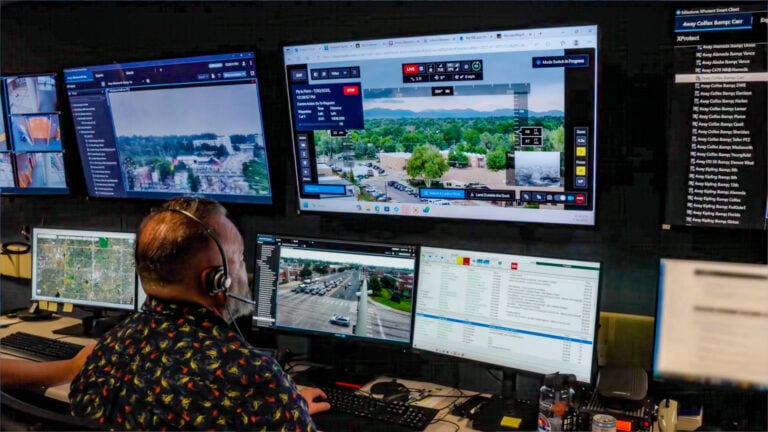
Lockheed Martin has selected Fortem Technologies to field an autonomous counter-drone system for critical infrastructure protection, pairing Fortem’s TrueView radar sensors and DroneHunter interceptors with Lockheed’s own Sanctum C-UAS Mission Management software, as reported by The Defense Post.
The result is a layered, hardware-plus-software kill chain that is designed to detect, track, and neutralize hostile drones without requiring a human operator to make every engagement decision.
One detail the press release doesn’t lead with: Lockheed Martin is also one of Fortem’s investors. This is a prime contractor choosing a company it already has financial skin in. That’s not disqualifying, and it’s not unusual in defense, but it’s worth stating plainly.
What the Integrated System Does
The architecture is built around three components. The TrueView radar family handles detection and tracking. The DroneHunter handles intercept. Sanctum handles mission management and decision support.
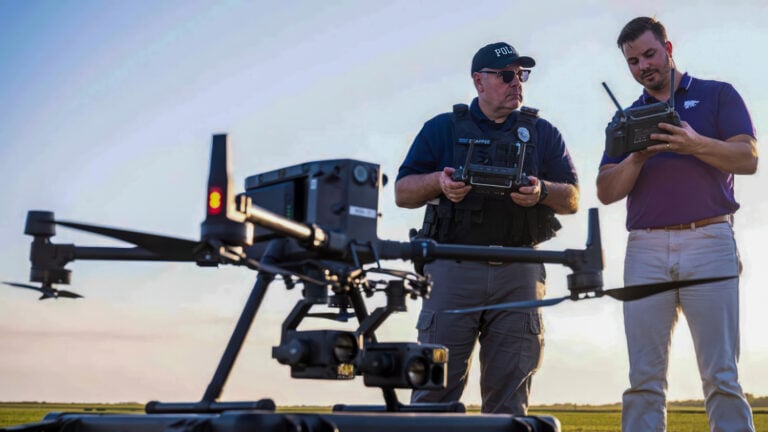
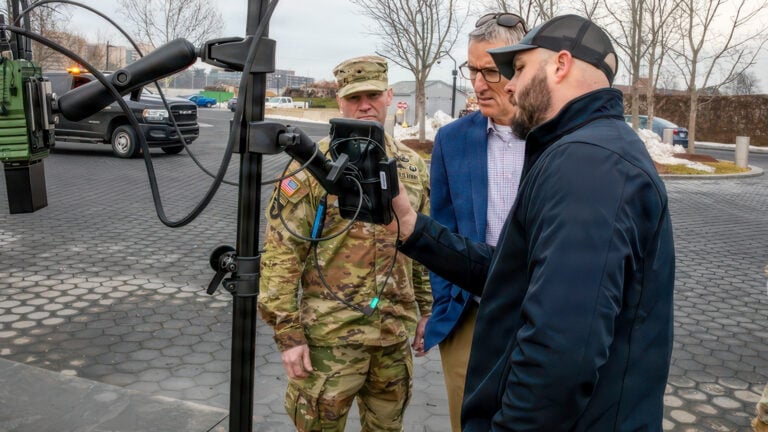
The TrueView R20 is Fortem’s smaller ground-based radar, measuring 8.1 inches and drawing just 38 watts at full load, roughly the same as a household light bulb. That power figure matters for persistent deployment at remote infrastructure sites where running a large radar around the clock has real operating costs.
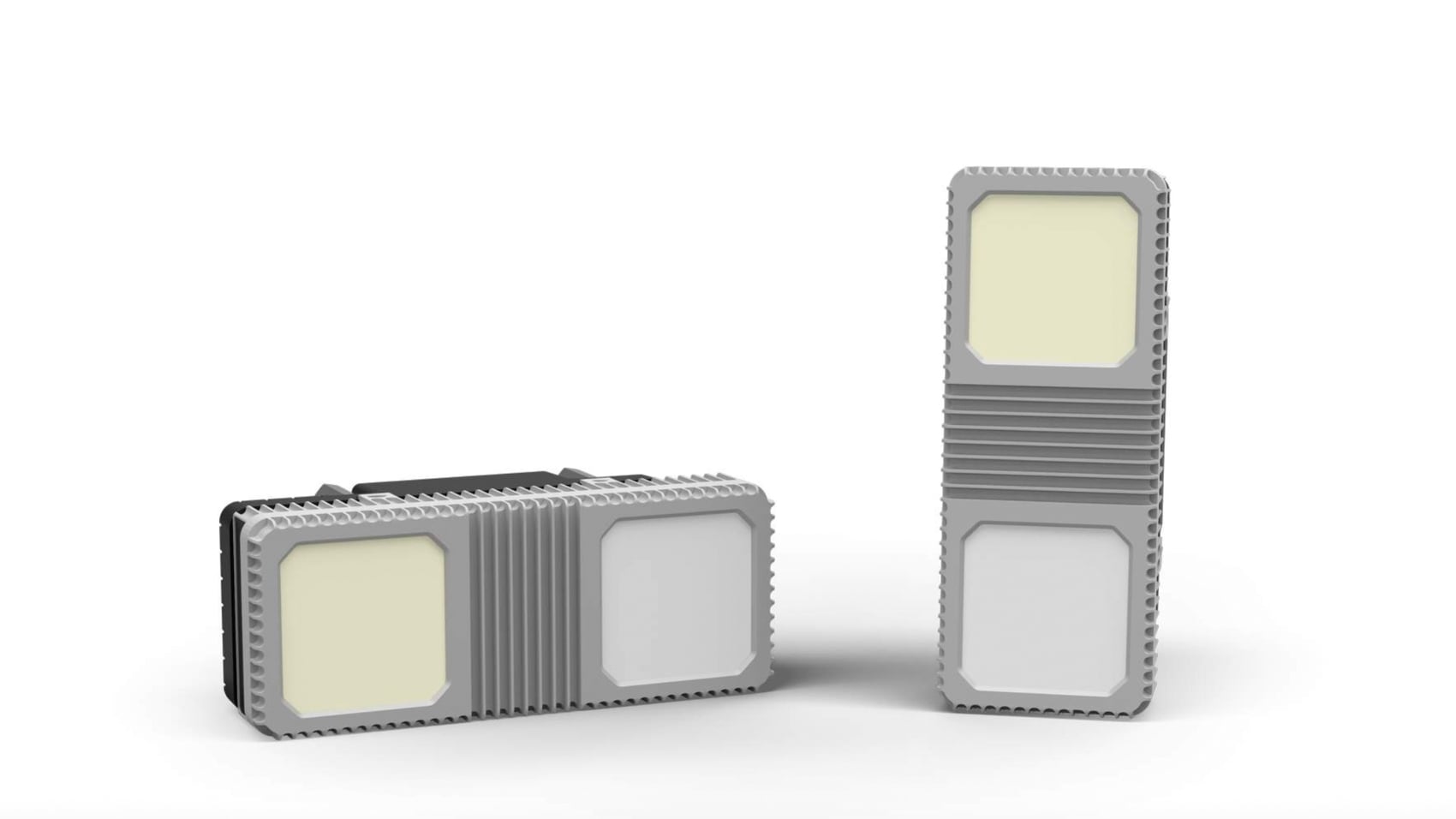
Photo credit: Fortem
It uses true Active Electronically Scanned Array technology, the same fundamental architecture used in high-end fighter jet radars, miniaturized and retooled specifically for the drone detection problem.
Its AI-powered microdoppler classification system is trained to distinguish drones from birds, weather, and other radar clutter, a problem that sounds trivial until you’re managing hundreds of false alarms per day at a busy facility.
The R20 also carries an airborne variant, the R20i, that flies onboard the DroneHunter itself, which is how the interceptor maintains tracking on a target after launch without depending on continuous ground-based guidance.
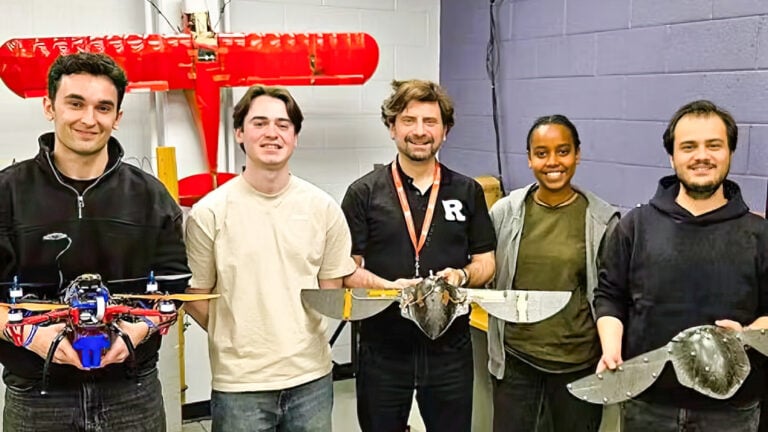
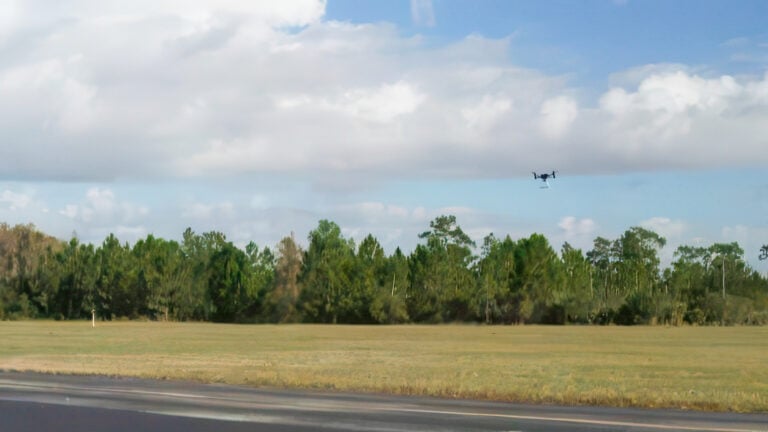
The DroneHunter 5.0 is the current production generation, with first customer deliveries beginning in January 2026. It features dual onboard cameras, enhanced autonomous computing that allows simultaneous engagement of multiple targets, and an optional four-net-gun configuration for counter-swarm missions.

Photo credit: Fortemtech
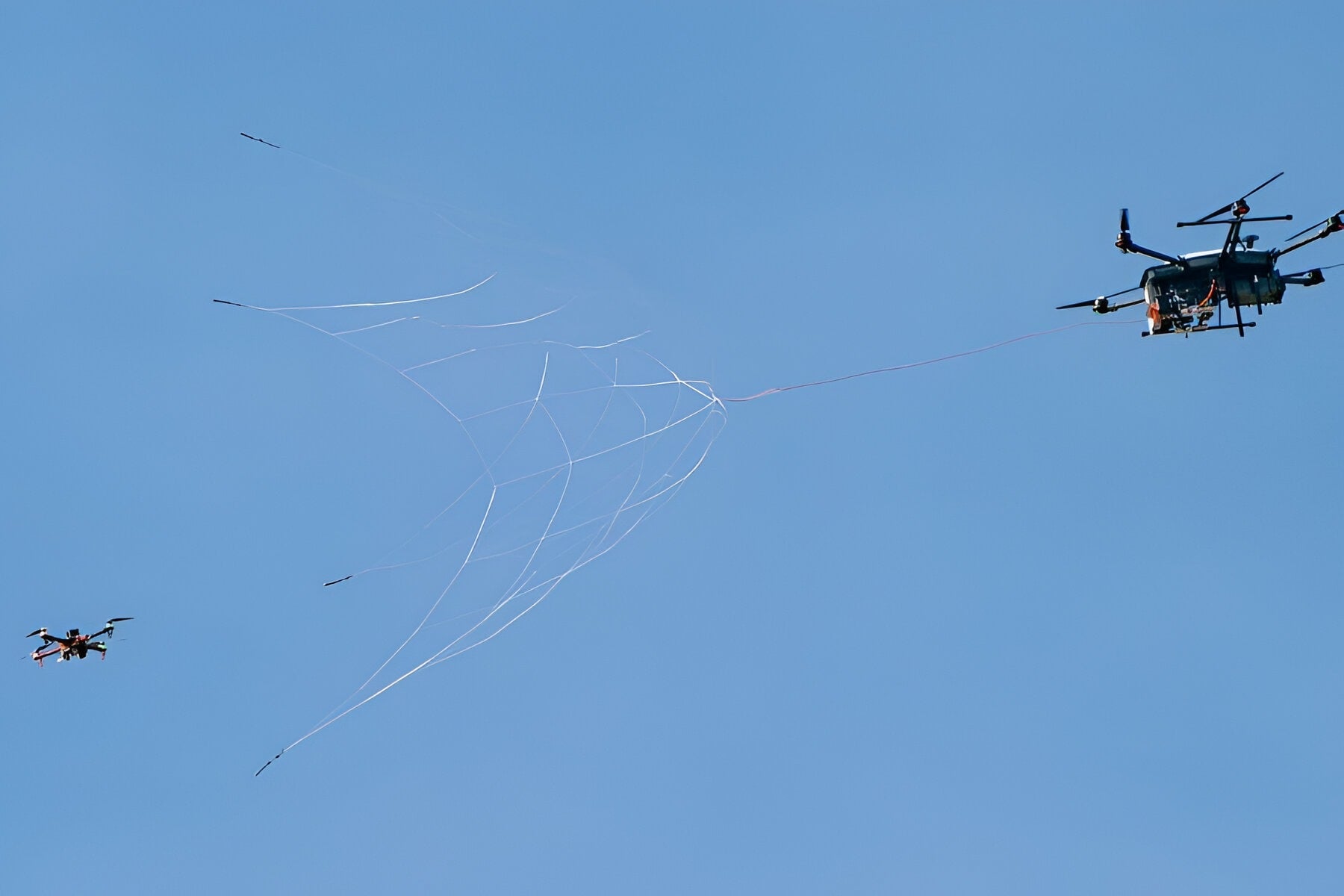
Its patented entanglement capture system physically ensnares hostile drones rather than destroying them, which matters enormously over sensitive infrastructure, because the alternative is shooting down a drone that then falls as shrapnel onto the thing you were protecting. Reload time for back-to-back sorties is under three minutes.
One SkyDome Manager software instance can coordinate up to five DroneHunter 5.0 units against five simultaneous threats.
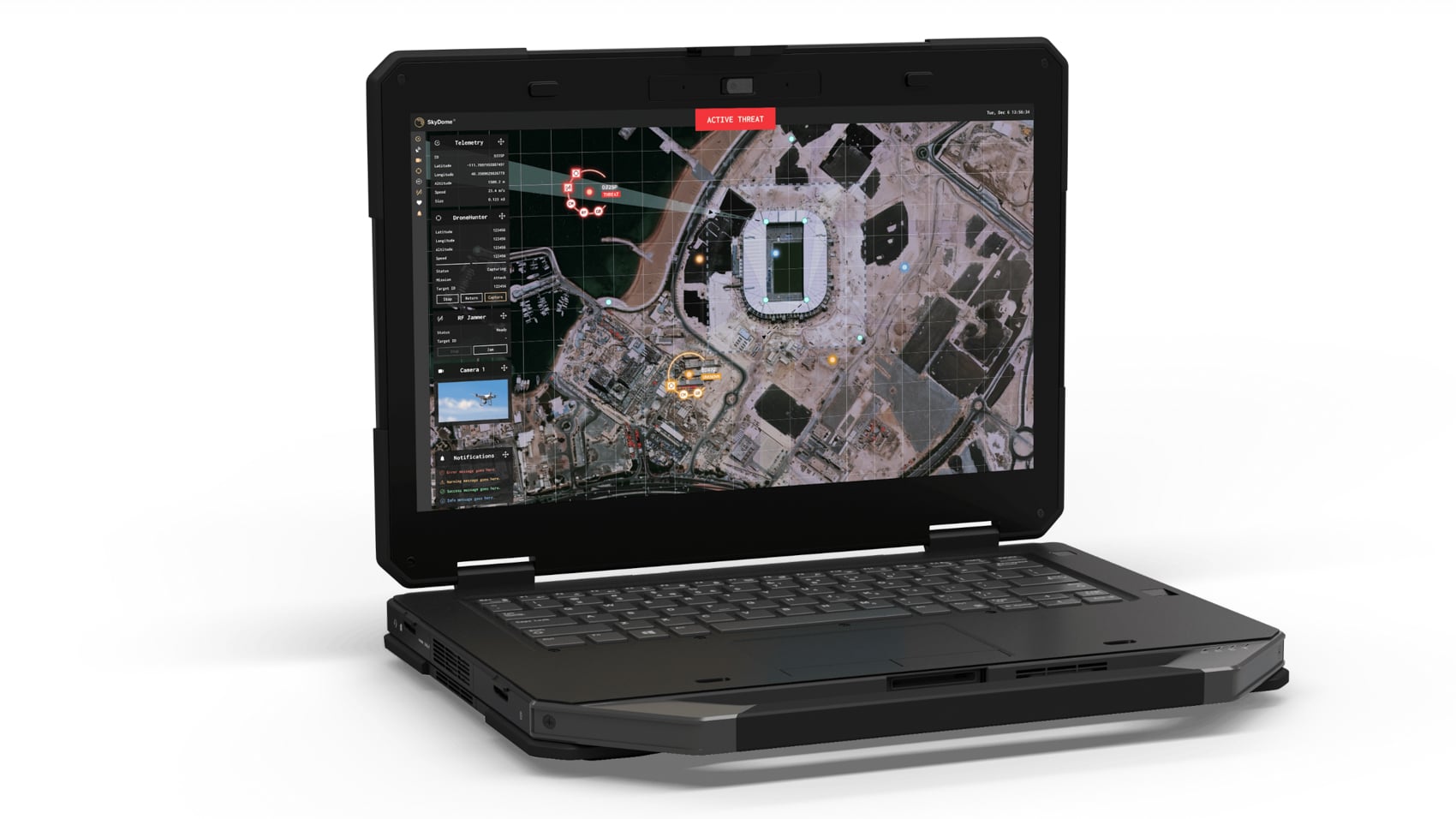
Photo credit: Fortem
Sanctum is Lockheed Martin’s C-UAS Mission Management software, designed to fuse sensor data and support engagement decision-making across a networked air defense architecture. Putting Sanctum on top of Fortem’s sensor and interceptor stack gives operators a single command interface for what would otherwise be multiple vendor displays running in parallel.
A Contract That Reflects a Broader Pattern
Fortem has been accumulating contract wins at a pace that suggests the counter-drone market is moving from pilot programs to operational procurement. In January 2026, the Pentagon’s counter-UAS task force selected DroneHunter 5.0 for its first operational purchase under Replicator-2, the Defense Innovation Unit’s program to accelerate fielding of autonomous airspace security at scale.
The U.S. Army issued a three-year, $18 million contract for Fortem systems at Army locations worldwide. In February 2026, DHS selected Fortem to help secure venues at the 2026 FIFA World Cup, which runs across 16 American cities this summer and represents the single largest planned security operation in U.S. history by venue count.
In November 2025, Fortem gained access to the new Global Tactical Edge Acquisition Directorate Marketplace, the Army’s contracting vehicle designed to speed deployment to operational units without the usual years-long procurement cycle.
The Saudi Arabia interest is also on the table, as Fortem has signaled readiness to offer its systems for protection of key government infrastructure there, consistent with the company’s existing track record in the Middle East and East Asia.
Fortem is also the only company currently authorized to deploy a drone-on-drone kinetic interceptor in U.S. airspace, a legal distinction that is easy to underestimate. Most counter-drone systems operating in American civilian airspace are limited to detection and electronic countermeasures.
Actually flying an interceptor to physically capture or destroy a target drone requires specific FAA authorizations that Fortem has spent years obtaining. That authorization is, in practical terms, a competitive moat.
The Sanctum Integration and What It Signals
The choice of Lockheed’s Sanctum as the command-and-control layer rather than Fortem’s own SkyDome Manager software is the architecturally interesting part of this deal. Fortem has its own C2 platform.
Lockheed has its own. The integration puts Sanctum on top, which means Lockheed is positioning itself as the mission management layer while Fortem provides the detection and intercept hardware below it.
That division of labor matters for how this system will grow. Sanctum is designed to integrate with third-party sensors and effectors across a broader air defense architecture.
Fortem’s hardware slotting into that framework as a managed subsystem is a different commercial relationship than Fortem selling a complete standalone SkyDome system directly to a customer. It gives Lockheed a path to offer Fortem’s kinetic intercept capability inside larger integrated air defense programs without Fortem owning the customer relationship at the program level.
DroneXL’s Take
I’ll be direct: the detail that should get more attention in this announcement is the net-capture system, not the radar.
The intuitive response to a drone threat is to shoot it down. The DroneHunter doesn’t do that. It catches the drone in a net, carries it away from the protected area, and drops it at a safe distance.
Over a power grid substation, a water treatment facility, or a stadium full of people, the difference between a destroyed drone and a captured drone is the difference between a contained threat and a new one.
A drone carrying a payload that detonates on impact doesn’t become safer if you shoot off its propellers at 200 feet over a crowd. The entanglement approach solves that problem in a way that kinetic destroy options don’t.
The Lockheed Martin investor relationship with Fortem is worth watching as this contract develops. Prime contractors selecting their own portfolio companies for subcontracts is a pattern that can accelerate deployment or create procurement questions depending on who’s asking.
In this case, the technology is genuinely proven, the authorizations are genuinely unique, and the contract vehicle makes operational sense. Whether the investor relationship influenced the selection or simply validated it is a question the program’s performance over time will answer better than any press release.
Photo credit: Fortemtech
Discover more from DroneXL.co
Subscribe to get the latest posts sent to your email.
Check out our Classic Line of T-Shirts, Polos, Hoodies and more in our new store today!

MAKE YOUR VOICE HEARD
Proposed legislation threatens your ability to use drones for fun, work, and safety. The Drone Advocacy Alliance is fighting to ensure your voice is heard in these critical policy discussions.Join us and tell your elected officials to protect your right to fly.

Get your Part 107 Certificate
Pass the Part 107 test and take to the skies with the Pilot Institute. We have helped thousands of people become airplane and commercial drone pilots. Our courses are designed by industry experts to help you pass FAA tests and achieve your dreams.

Copyright © DroneXL.co 2026. All rights reserved. The content, images, and intellectual property on this website are protected by copyright law. Reproduction or distribution of any material without prior written permission from DroneXL.co is strictly prohibited. For permissions and inquiries, please contact us first. DroneXL.co is a proud partner of the Drone Advocacy Alliance. Be sure to check out DroneXL's sister site, EVXL.co, for all the latest news on electric vehicles.
FTC: DroneXL.co is an Amazon Associate and uses affiliate links that can generate income from qualifying purchases. We do not sell, share, rent out, or spam your email.