Rutgers Built a Drone That Flies Like a Bird and Has No Moving Parts
Check out the Best Deals on Amazon for DJI Drones today!
Engineers at Rutgers University have designed a solid-state ornithopter, a bird-like flying robot with no motors, no gears, and no mechanical linkages of any kind, and proven in simulation that it can fly. The catch is honest and refreshingly so: the materials needed to build it in the physical world don’t exist yet.
The research by aerospace engineers Xin Shan and Onur Bilgen, published in the journal Aerospace Science and Technology, represents one of the most complete mathematical models ever built for this class of aircraft, as reported by Hackster.io
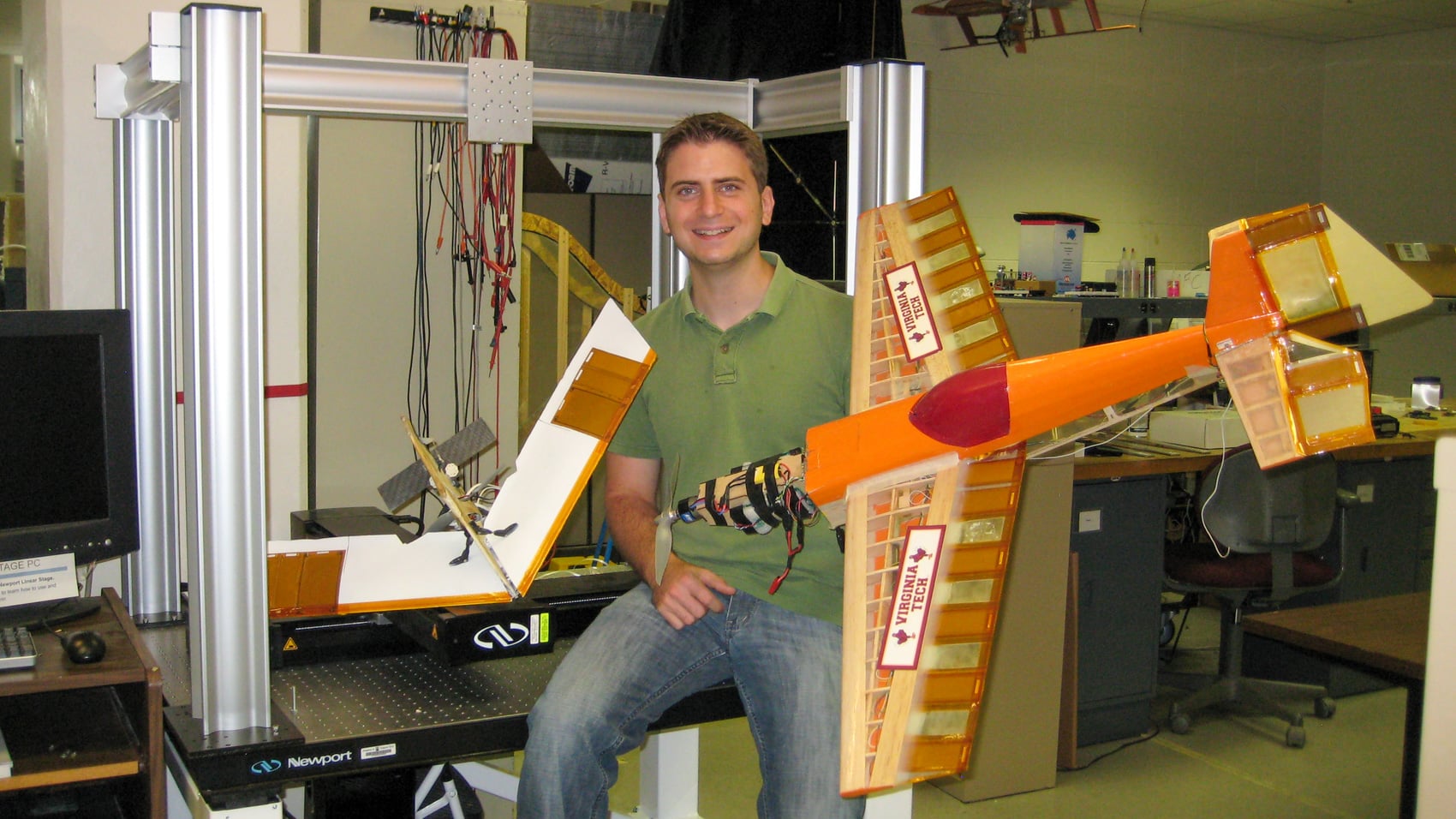
Engineering Student of the Year for 2010
It also represents a formal scientific argument for a technology that currently lives entirely in software and the wind tunnels at Rutgers. That combination, rigorous proof paired with a materials science gap, is where the most interesting engineering often happens.
What a Solid-State Ornithopter Actually Is
Most drones fly with spinning propellers. An ornithopter flies by flapping wings, the way birds and insects do, generating both lift and forward thrust from the same motion. Current ornithopters still use motors to drive that flapping, which means they still have rotating parts, drive shafts, gear trains, and the mechanical complexity and failure modes that come with all of that.
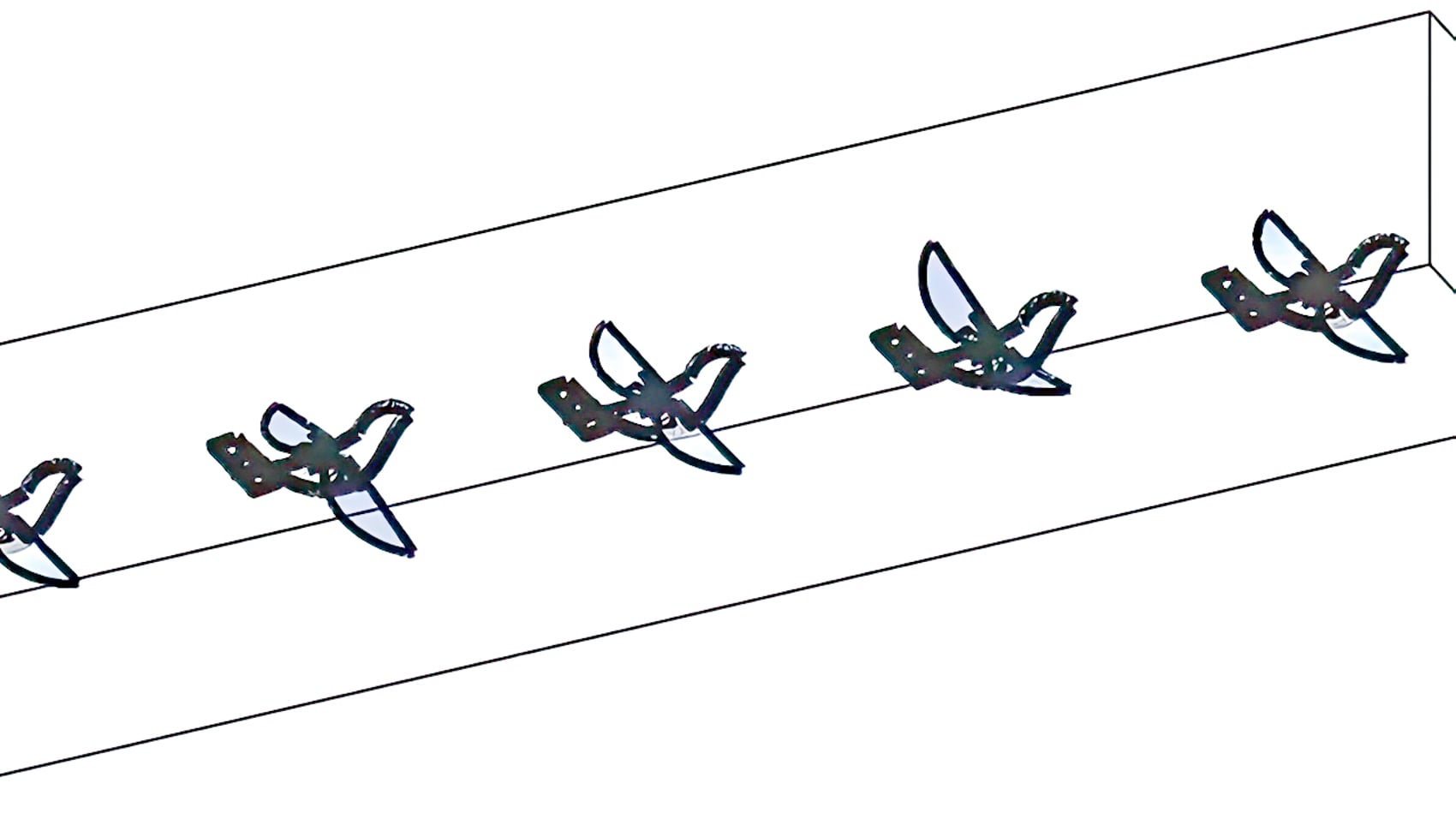
A solid-state ornithopter eliminates all of it. There are no motors at all. The wings themselves are the actuators.
Bilgen’s design uses macro-fiber composites, MFCs, bonded directly onto flexible carbon-fiber wing structures. An MFC is a piezoelectric device, originally invented at NASA Langley Research Center, that physically deforms when voltage is applied across it. In the ornithopter wing, the carbon fiber provides the structural backbone, acting like bone and feather, while the MFCs bonded to its surface act like muscles and nerves.
Apply voltage to the piezoelectric layer, the whole composite flexes and twists. Vary the voltage pattern across multiple MFC actuators placed at different positions on the wing, and you can control the wing’s stroke, pitch, and shape continuously, mimicking the complex kinematics of a natural flier without a single rotating part in the system.
“We apply electricity to the piezoelectric materials, and they move the surface directly, without extra joints, extra linkages or motors,” Bilgen said. “The wing is a composite including a piezoelectric material layer and a carbon-fiber layer. Apply voltage to the piezoelectric layer, and the whole composite flexes.”
Why This Is Harder Than It Sounds
The mathematical challenge behind this design is formidable. Unlike a quadcopter, where the physics of each spinning motor is well understood and the flight controller handles the rest, a solid-state ornithopter requires simultaneous modeling of four coupled domains: the structural behavior of flexible wings under load, the aerodynamics of unsteady flapping flight at low Reynolds numbers, the electrical dynamics of the piezoelectric actuators, and the control architecture that ties all four together.
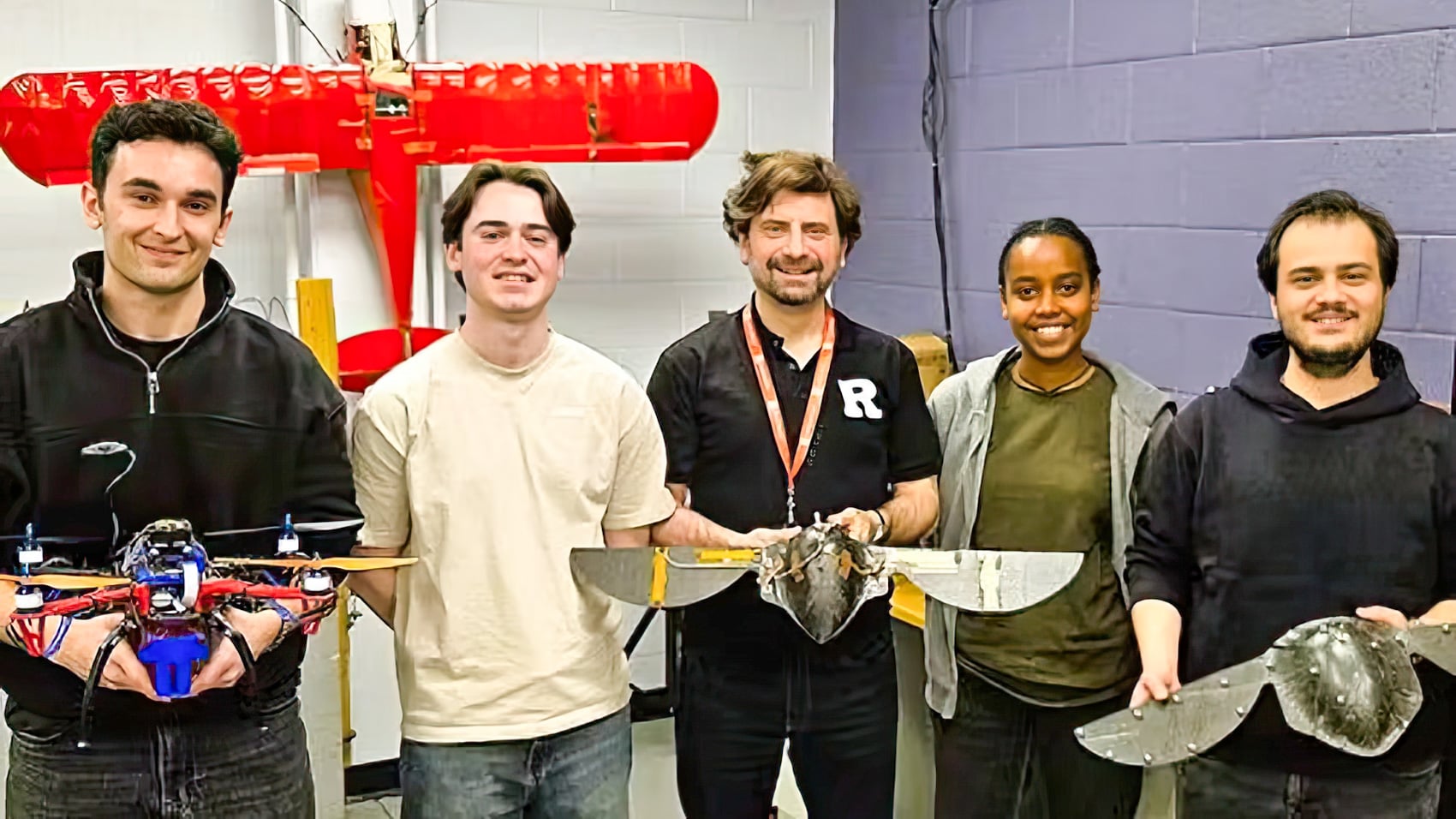
Photo credit: Rutgers University
Bilgen’s team at Rutgers built a computational model that handles all of them at once, which is what makes the paper’s contribution genuinely significant. The model is validated against wind tunnel experiments run on physical prototype wings at Rutgers, so it isn’t purely theoretical. The wing hardware exists and has been tested. The complete flying aircraft does not.
The model allows the team to run design optimizations in simulation, testing variables like actuator placement, excitation voltage, flapping frequency, and body inertia, before committing to any physical build. That’s standard practice in aerospace engineering, but doing it for a fully coupled electromechanical aeroelastic system at this level of complexity is not a small achievement.
The Materials Wall
Here is where the research gets admirably direct. Bilgen doesn’t bury the limitation.
“Today’s piezoelectric materials are not capable enough,” he said. “However, our mathematical model allows us to look into the future with reasonable assumptions. We’ve scientifically demonstrated that this type of ornithopter can be possible when we make certain material assumptions. We can show the feasibility of designs that are not yet physically possible.”
Current MFC materials don’t produce enough force per unit of applied voltage to generate the wing deflection amplitudes needed for sustained flight in a full-scale ornithopter at useful payload capacity.
The wind tunnel tests validate the structural and aerodynamic model predictions. They also confirm exactly how far current materials fall short of the performance threshold the simulation requires for free flight. The model tells you what material properties you need. Materials science hasn’t delivered them yet.
That framing, here is the design that will work when the materials catch up, is a legitimate and important contribution to the field. It gives materials scientists a specific performance target to aim at and gives future engineers a validated design framework to build on when those materials arrive.
What This Technology Would Actually Be Good For
Flapping wings have genuine advantages over spinning propellers at small scales that make the engineering effort worthwhile. A drone the size of a sparrow operating with propellers generates significant acoustic noise and poses a blade-strike hazard to anything it contacts.
A flapping-wing ornithopter at the same scale is nearly silent, aerodynamically efficient at low Reynolds numbers where propeller performance degrades, and significantly less damaging to itself and its environment when it makes contact with something.
Bilgen has said directly that when flapping wings contact the environment, they’re less destructive to themselves and to what they touch, which matters enormously for any mission involving confined spaces, biological environments, or proximity to people.
The applications Rutgers identifies are search and rescue, environmental monitoring, and urban package delivery. The military application that nobody in the press release is talking about is surveillance.
A drone the size and acoustic signature of a bird, flying with the movement pattern of a bird, over terrain where birds are present, is a categorically different intelligence collection asset than anything currently in production.
The Turbine Blade Side Effect
One detail buried in the research that deserves a mention: Bilgen’s team is applying the same piezoelectric morphing principles to wind turbine blades. A turbine blade is essentially a rotating wing, and subtly altering its shape in real time as wind conditions change could improve aerodynamic efficiency in ways that fixed-profile blades can’t achieve.
The same physics that would make a solid-state ornithopter fly could make wind energy meaningfully more efficient. That’s a useful secondary application for a technology that’s still waiting on its primary one.
DroneXL’s Take
Here’s what I find genuinely significant: Bilgen has been working on this since 2007. He encountered ornithopters as a graduate student, spent six years thinking about the problem, began serious research in 2013, and published this paper in 2026. That’s nineteen years of sustained focus on a design that can’t be built yet with currently available materials.
That’s not a failure. That’s how fundamental engineering actually works. The Wright brothers didn’t invent the internal combustion engine. They used an existing technology that had finally reached the performance threshold their design required and they built the aircraft around it.
Bilgen’s contribution is the equivalent of designing the Wright Flyer and then being honest that the engine doesn’t exist yet. When materials science delivers piezoelectric composites with sufficient actuation authority, the design is ready. The computational model is validated. The wind tunnel data is in hand.
The drone industry moves fast and mostly builds on what’s available right now. That’s appropriate and necessary. But the things that will define the next generation of aerial vehicles are being worked out in university labs by people like Bilgen and Shan, on timelines that don’t fit a product launch cycle, solving problems that the current generation of hardware doesn’t even know it has yet.
A silent, motor-free drone that flies like a bird and can’t be distinguished from one acoustically or visually is not a science fiction concept anymore. It’s a validated simulation waiting on a materials breakthrough, and its all coming from a laboratory at Rutgers.
That breakthrough will happen. It always does.
Photo credit: Rutgers University
Discover more from DroneXL.co
Subscribe to get the latest posts sent to your email.
Check out our Classic Line of T-Shirts, Polos, Hoodies and more in our new store today!

MAKE YOUR VOICE HEARD
Proposed legislation threatens your ability to use drones for fun, work, and safety. The Drone Advocacy Alliance is fighting to ensure your voice is heard in these critical policy discussions.Join us and tell your elected officials to protect your right to fly.

Get your Part 107 Certificate
Pass the Part 107 test and take to the skies with the Pilot Institute. We have helped thousands of people become airplane and commercial drone pilots. Our courses are designed by industry experts to help you pass FAA tests and achieve your dreams.

Copyright © DroneXL.co 2026. All rights reserved. The content, images, and intellectual property on this website are protected by copyright law. Reproduction or distribution of any material without prior written permission from DroneXL.co is strictly prohibited. For permissions and inquiries, please contact us first. DroneXL.co is a proud partner of the Drone Advocacy Alliance. Be sure to check out DroneXL's sister site, EVXL.co, for all the latest news on electric vehicles.
FTC: DroneXL.co is an Amazon Associate and uses affiliate links that can generate income from qualifying purchases. We do not sell, share, rent out, or spam your email.