DJI Avata 360 Launches, DJI Sues Insta360, BRINC Unveils Guardian Drone, and Micro-Drones Explore Fukushima Reactor

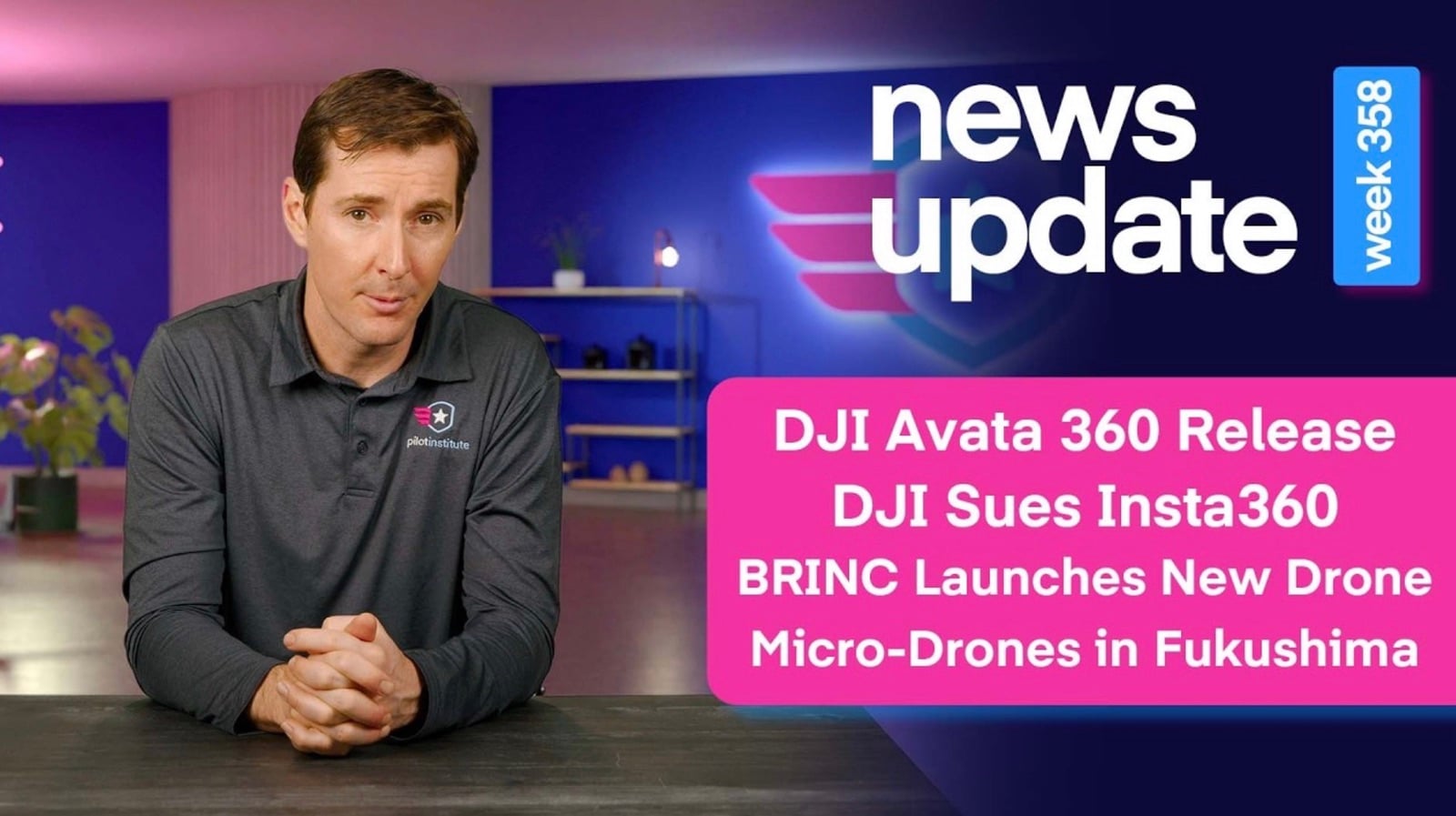
Welcome to your weekly UAS news update. We have four stories for you this week. The Avata 360 is finally out. We also have DJI suing Insta360, and then we have BRINC launching a new Guardian drone with Starlink integration. And then finally, we have some micro drones that are going to the bottom of the Fukushima nuclear reactor — which is kind of exciting. Let’s get to it.
DJI Avata 360 Is Finally Out
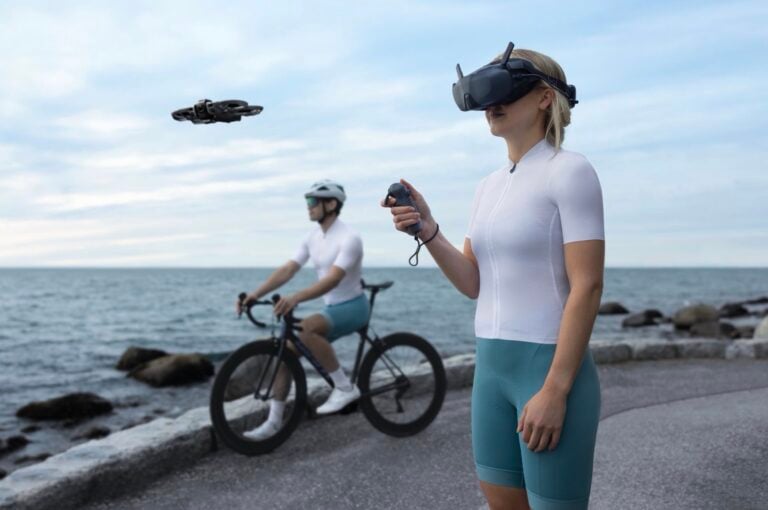
First up this week, the Avata 360 is finally out. It comes with 8K 360 imaging, as we kind of had heard in the rumors, a 1-inch equivalent sensor, and 8K at 60 frames per second in HDR. The Avata 360 also comes with the ability to fly the drone as a normal Avata where you’re able to capture 4K at 60 frames per second using the single lens mode.
Other features include obstacle avoidance in 360 mode. We have 23 minutes of flight time, which is pretty darn good for a drone like that. We have integrated prop guards — which is cool — though it does not qualify as Category 1. We have 42 GB of internal storage and replaceable front lenses, which was also rumored.
The question that everyone will be asking is about goggle compatibility. The Avata 360 is compatible with the Goggle 3 and the Goggle N3 when using the Motion 3 controller, and also the FPV controller. In addition, the 360 is also compatible with other controllers: the RC2, RCN2, and the RCN3. At this time, the RC Pro 2 is not supported, but who knows — that could change in the future.
DJI Files Patent Lawsuit Against Insta360
Speaking of DJI, they have filed a patent ownership lawsuit against Insta360’s parent company in China. They are targeting six different patents that cover core drone technology like flight control systems, structural design, and image processing.
The timing here is what makes this very interesting. DJI filed the lawsuit just three days before they were set to launch the Avata 360, which obviously is a competing drone with the Insta360 and Tetra Gravity A1. DJI is using a very specific Chinese intellectual property law for this case, where they’re claiming these are service inventions that were created by former DJI engineers who went to work for Insta360.
But Insta360’s founder is pushing back hard. He stated that the main flight control patent in question is just a one-button building dive — a feature that’s not even in their products. He also pointed out that Insta360 currently holds 28 patents that DJI products allegedly infringe upon, and that they haven’t sued because they’re focused on innovation over litigation. Imagine that.
This is DJI’s first domestic patent lawsuit in China, and it shows the fierce competition at the moment in the drone space. We’re definitely going to keep you posted on what happens.
BRINC Unveils the Guardian Drone With Starlink Integration
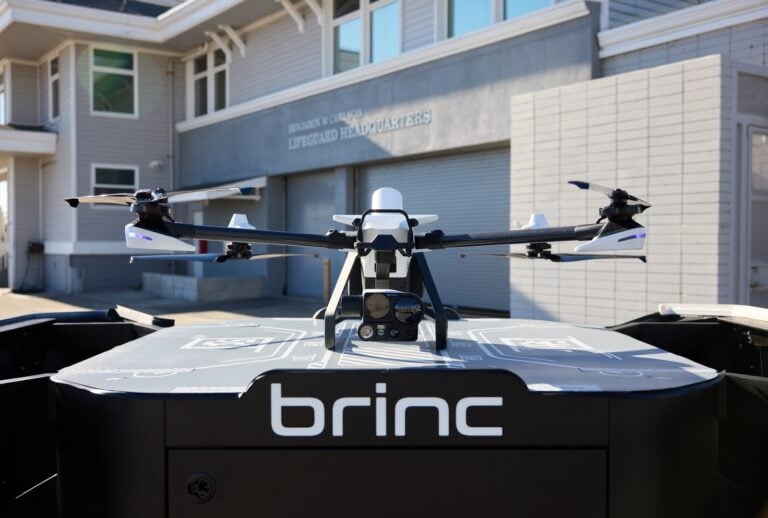
Next up, we have BRINC, which has unveiled the Guardian — their next-generation drone for Drone as First Responder, or DFR. They also announced a new Seattle manufacturing facility designed to scale up production.
The Guardian is billed as the world’s first Starlink-connected drone for 911 responses. Because of Starlink, it can maintain a reliable data link even when cell towers are not doing well or are overwhelmed. Let’s talk about some of the specs: BRINC claims the Guardian has an operational range of 8 miles and a flight time of 62 minutes. The drone features IP55 weather resistance, making it a great drone for flying in the rain — which is pretty much needed if you live in Seattle.
On the camera payload side, it has 4K video capability with 640x total zoom, which is quite a bit, plus dual HD thermal zoom cameras. In addition, BRINC says they released the Guardian Station, which is a robotic charging nest that automatically swaps batteries and reloads payloads like Narcan or flotation devices without any human intervention.
Of all the features, this to me is the most impressive. Current systems have to sit and charge between flights, but the Guardian Station essentially eliminates the downtime entirely.
Micro-Drones Enter the Fukushima Reactor — 15 Years After the Disaster
Last up, we have a real-world drones-for-good story. This is 15 years after the devastating earthquake and tsunami at Fukushima. They’re sending pump-sized micro drones inside the Unit 3 reactor, and they’ve finally reached the bottom of the reactor pressure vessel.
This is something that billions of dollars in conventional robotics could not accomplish over the last 15 years — and these tiny little drones did it. They measure 5.1 x 4.7 x 1.6 inches — so roughly 5x5x2 — and they weigh only 3.3 ounces including the battery. Despite their small size, they carry a 2.7K camera that shoots at 60 frames per second, two LED lights producing 380 lumens, and a built-in radiation sensor. The frame is IP52 rated, but more importantly, it’s built to withstand up to 200 Gray of cumulative radiation exposure — which, from my research, is a lot.
During the 13-minute flight, the drone mapped the pedestal floor and captured images of melted fuel debris and guide tubes. To keep the area completely airtight, the crew is using a custom seal-box system that deploys and recovers the drone without ever breaking containment.
This is an absolutely incredible engineering achievement. I love seeing that drones are being used for this. Imagine — a drone the size of a paperback book mapping one of the most dangerous environments on Earth right now. It serves as a perfect reminder for all of us that this technology is very important.
This article is based on a video by Pilot Institute on YouTube. Greg Reverdiau is a regular contributor to DroneXL.
Discover more from DroneXL.co
Subscribe to get the latest posts sent to your email.