Quantum Systems RAT Drone Gives Europe What It Lacked: A Shahed to Train Against
Check out the Best Deals on Amazon for DJI Drones today!
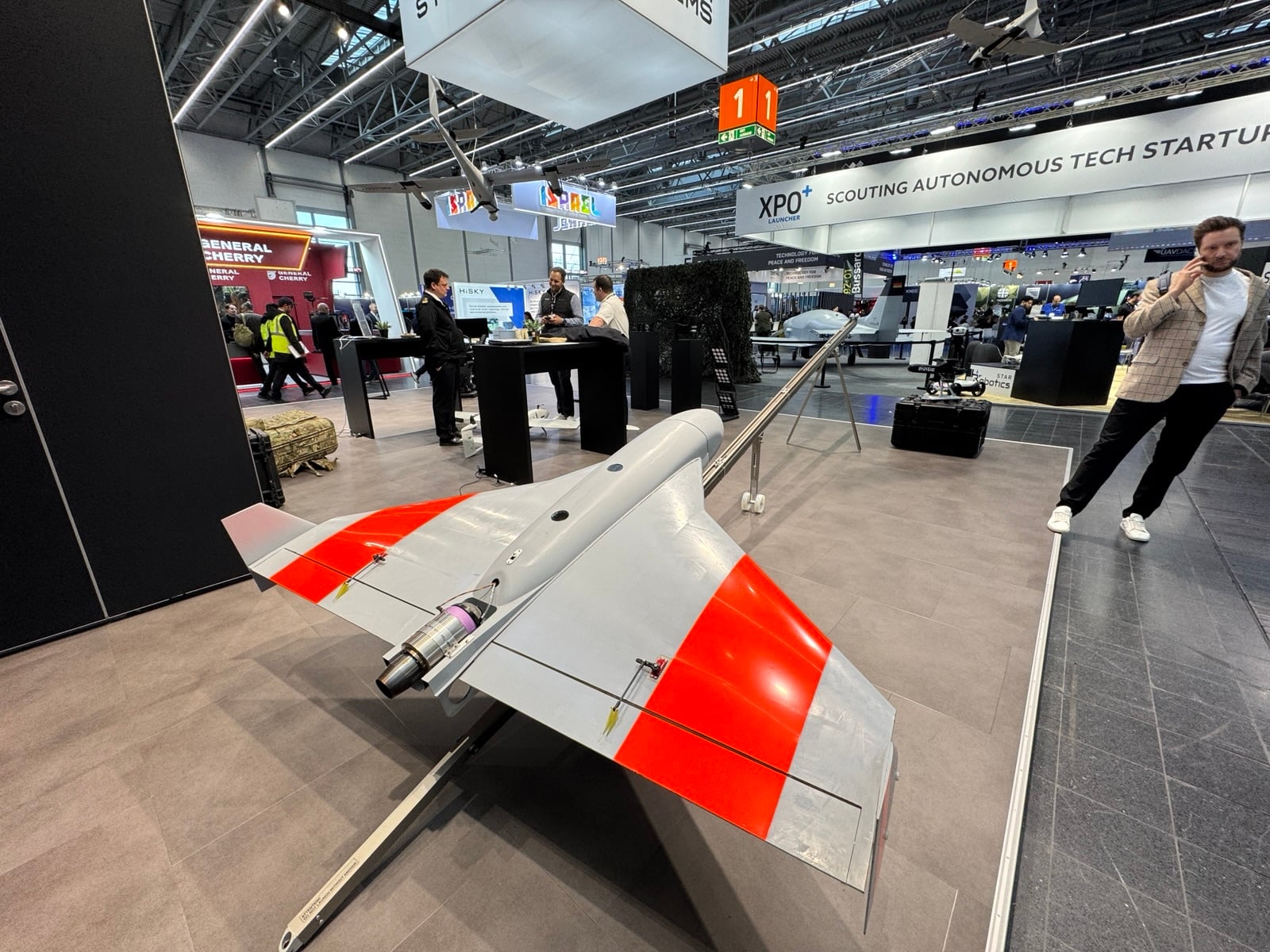
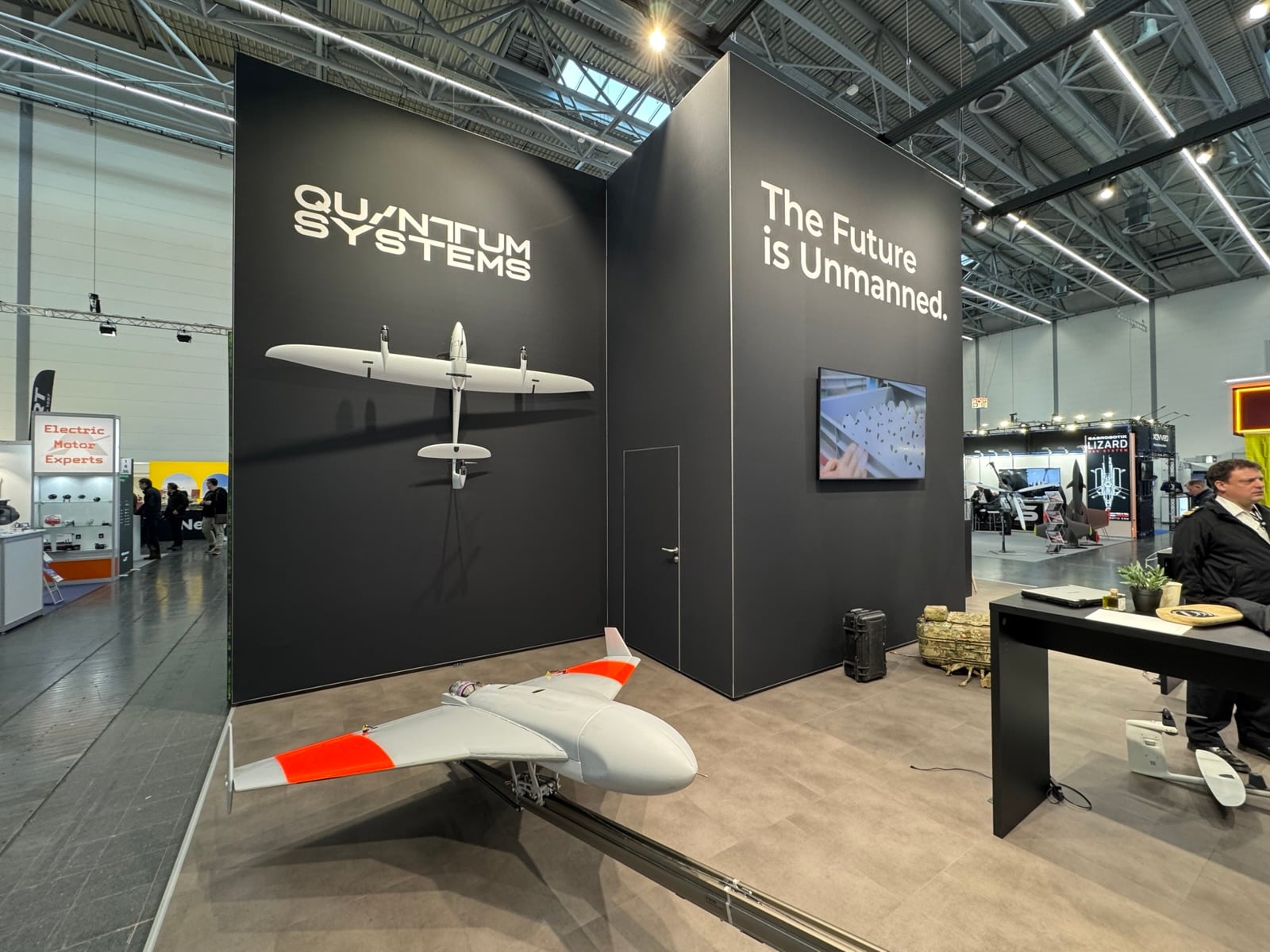
German drone manufacturer Quantum Systems unveiled a jet-powered target drone called the RAT (Red Air Target) at the 62nd Munich Security Conference, held February 13–15, 2026 — and the problem it solves is blunter than the name suggests. European air-defense units cannot effectively train against Shahed-style mass drone attacks because they have no realistic targets to intercept. The RAT is the fix. Developed in partnership with Airbus Defence and Space, it went from initial concept to first flight in six weeks. Ten days later, it was on the exhibition floor at Enforce Tac 2026 in Nuremberg.
The drone is catapult-launched and powered by a turbine from German manufacturer Ingenieurbüro CAT, M. Zipperer GmbH — the P220 model — capable of driving speeds between 150 and 450 km/h. That range matters. At the low end, it replicates propeller-driven one-way attack drones. At the high end, it stresses air-defense systems well beyond what most training drones can manage. Orders open at the end of Q2 2026, with availability expected in early summer.
The Training Gap RAT Was Built to Close
Oleksandr Berezhny, Managing Director of Quantum Systems in Ukraine, stated the issue plainly in a March 2026 interview with Militarnyi: “What is missing in Germany right now? The ability to train on ‘Shaheds,’ so to speak.” European air defenders have studied the Shahed-131 and Shahed-136 extensively from Ukrainian battlefield footage. Studying and training against are two different things. The RAT gives training units a realistic, expendable, jet-propelled target that simulates the speed profile, flight altitude, and saturation attack patterns Russia deploys against Ukrainian cities nightly.
The scale ambition is explicit. Berezhny confirmed Quantum Systems plans to manufacture hundreds of RAT units this year. That is not a boutique demonstrator program. It is a training consumable designed for attrition — exactly the kind of production thinking Ukraine’s battlefield has forced on European defense planners who spent decades buying precision systems in small quantities.
Airbus has a secondary use case for the platform: cost-effective software testing and integration flights for Collaborative Combat Aircraft (CCA) programs — the autonomous “loyal wingman” drones being developed alongside next-generation crewed fighters. The RAT’s proprietary MOSAIC control system and modular software architecture make it attractive for that role. Airbus already operates its own target drones, which makes its interest in RAT’s software stack the more telling detail here.
The Same Drone May Become a Strike Weapon for Ukraine
Here is where the story gets harder to classify. During a Ukrainian delegation visit to Quantum Frontline Industries — the German-Ukrainian joint venture we covered in March 2026 — a visually similar drone appeared in Ukrainian Air Force livery, apparently equipped with a warhead. Defense Express first reported this in February. Berezhny confirmed in the same March interview that a kamikaze variant based on the RAT decoy is actively in development.
This would not be unprecedented. Ukraine has already repurposed Soviet-era Tu-143 Reis target drones into improvised long-range strike weapons. Taiwan reportedly adapted the MQM-178 Firejet into a cruise missile-like platform. The logic is consistent: a cheap, fast, mass-producible airframe that trains defenders in one configuration can threaten attackers in another. For Ukraine, a jet-powered drone at 450 km/h fills a niche between slower FPV and loitering munitions and more complex cruise missiles — harder to intercept, cheaper to produce than the latter.
Whether Ukrainian forces have already received a strike-configured RAT remains unconfirmed.
Quantum Systems’ Expanding Arsenal in 2026
The RAT is one piece of a rapid portfolio expansion. At Enforce Tac 2026 in Nuremberg, Quantum Systems also launched MANDRILL, its first unmanned ground vehicle (UGV), pushing into multi-domain operations beyond aerial systems. On March 24, Militarnyi reported that the company is simultaneously developing three variants of the Sparta carrier drone for Ukraine: Sparta ASR, Sparta Light, and Sparta Heavy, currently at Technology Readiness Level 5. The same company eyeing a 2027 IPO backed by Morgan Stanley is now fielding air, ground, and strike systems concurrently.
The reconnaissance side of the business remains the financial engine. In December 2025, Quantum Systems secured a $246 million contract to deliver 520 Falke surveillance systems to the Bundeswehr in 2026, with options for 500 more units through 2032. The same month, BAAINBw signed a framework agreement covering up to 747 Twister reconnaissance drones to replace the Bundeswehr’s aging ALADIN fleet. Both programs run on MOSAIC UXS — the same control software the RAT uses — and both were shaped directly by lessons from Ukraine deployments.
DroneXL’s Take
The RAT’s launch timeline tells you everything about how seriously Quantum Systems takes the Ukraine feedback loop. Six weeks from concept to flight is not a development schedule — it is a wartime response. The P220 turbine in that fuselage produces the kind of heat signature and acoustic profile that makes intercept training real in a way that propeller drones simply cannot replicate. European air-defense units have been training against the wrong targets for years.
The broader pattern here connects directly to what we reported in our Munich factory piece from March 2: Quantum Systems has built its entire product strategy around the Ukraine feedback loop. The Vector got shot down repeatedly early in the war. Instead of walking away, the company embedded engineers in-country, iterated monthly, and came out the other side with Bundeswehr contracts worth hundreds of millions. The RAT follows the same logic — identify a real operational gap, build something fast, let the battlefield validate it.
The dual-use tension is real and worth watching. A drone designed to help Germany train defenders against Shahed attacks is simultaneously being developed into a weapon Ukraine could use offensively. That is not hypocrisy — it is the same engineering flexibility that has defined drone warfare since 2022. But it will complicate export conversations and investor optics as Quantum Systems moves toward its planned 2027 IPO. By Q3 2026, expect at least two NATO member governments to announce RAT procurement for air-defense training programs. The order pipeline is already forming — the Munich Security Conference debut was not an accident of timing.
DroneXL uses automated tools to support research and source retrieval. All reporting and editorial perspectives are by Haye Kesteloo.
Discover more from DroneXL.co
Subscribe to get the latest posts sent to your email.
Check out our Classic Line of T-Shirts, Polos, Hoodies and more in our new store today!

MAKE YOUR VOICE HEARD
Proposed legislation threatens your ability to use drones for fun, work, and safety. The Drone Advocacy Alliance is fighting to ensure your voice is heard in these critical policy discussions.Join us and tell your elected officials to protect your right to fly.

Get your Part 107 Certificate
Pass the Part 107 test and take to the skies with the Pilot Institute. We have helped thousands of people become airplane and commercial drone pilots. Our courses are designed by industry experts to help you pass FAA tests and achieve your dreams.

Copyright © DroneXL.co 2026. All rights reserved. The content, images, and intellectual property on this website are protected by copyright law. Reproduction or distribution of any material without prior written permission from DroneXL.co is strictly prohibited. For permissions and inquiries, please contact us first. DroneXL.co is a proud partner of the Drone Advocacy Alliance. Be sure to check out DroneXL's sister site, EVXL.co, for all the latest news on electric vehicles.
FTC: DroneXL.co is an Amazon Associate and uses affiliate links that can generate income from qualifying purchases. We do not sell, share, rent out, or spam your email.