DJI Mavic 3 Enterprise Maps Greenland’s Fastest-Moving Glacier
Check out the Best Deals on Amazon for DJI Drones today!
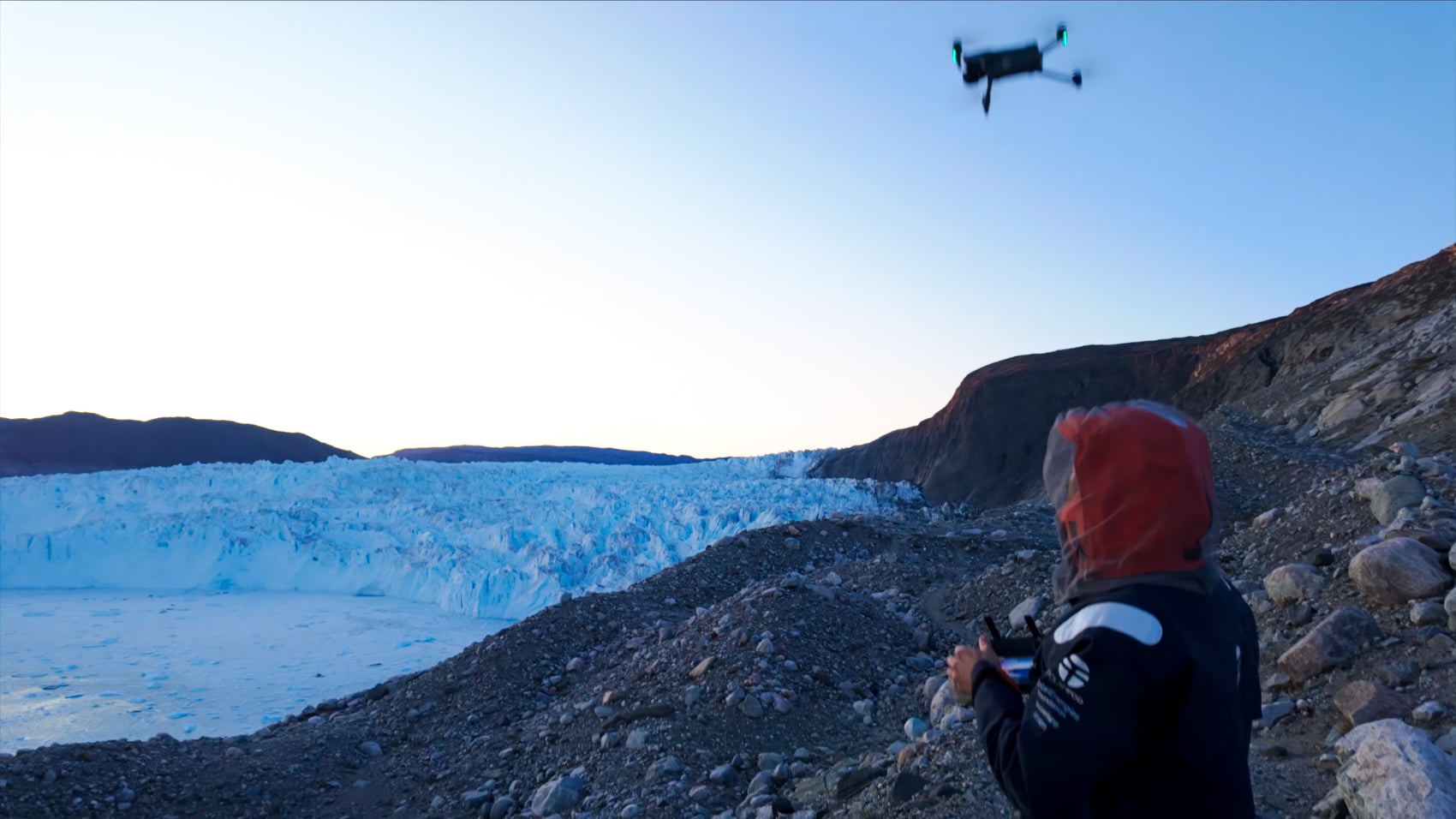
In July 2025, drone operator and filmmaker Nicolas Samsoen flew a DJI Mavic 3 Enterprise over two of Greenland’s most studied glaciers, generating high-resolution 3D photogrammetry models that are now feeding directly into academic research at the University of Aberdeen.
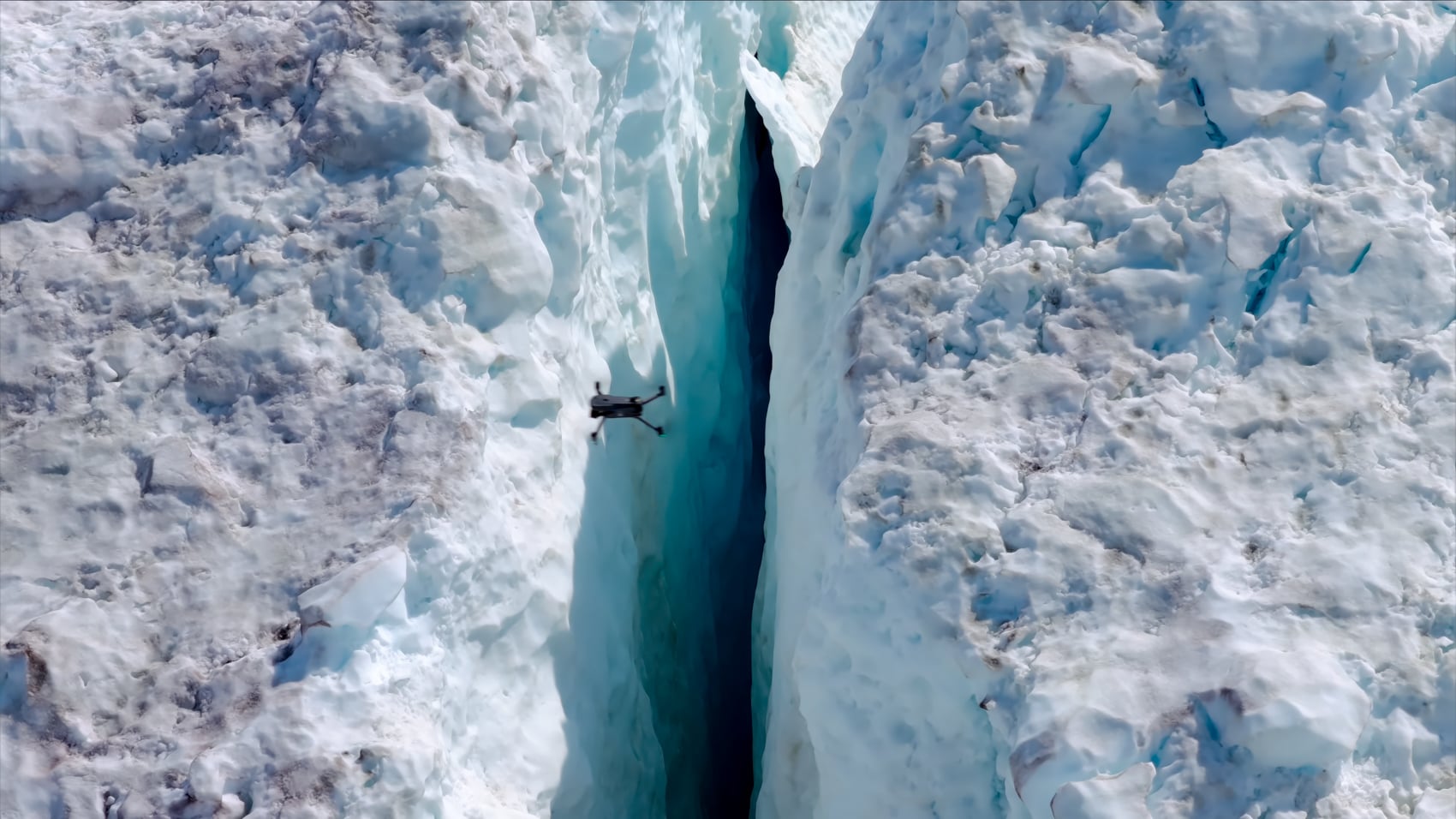
The expedition, detailed in a press release published March 27, 2026, took place aboard the Perseverance, the world’s largest oceanographic research sailboat, led by French explorer Jean-Louis Étienne — the first person to reach the North Pole solo on foot.
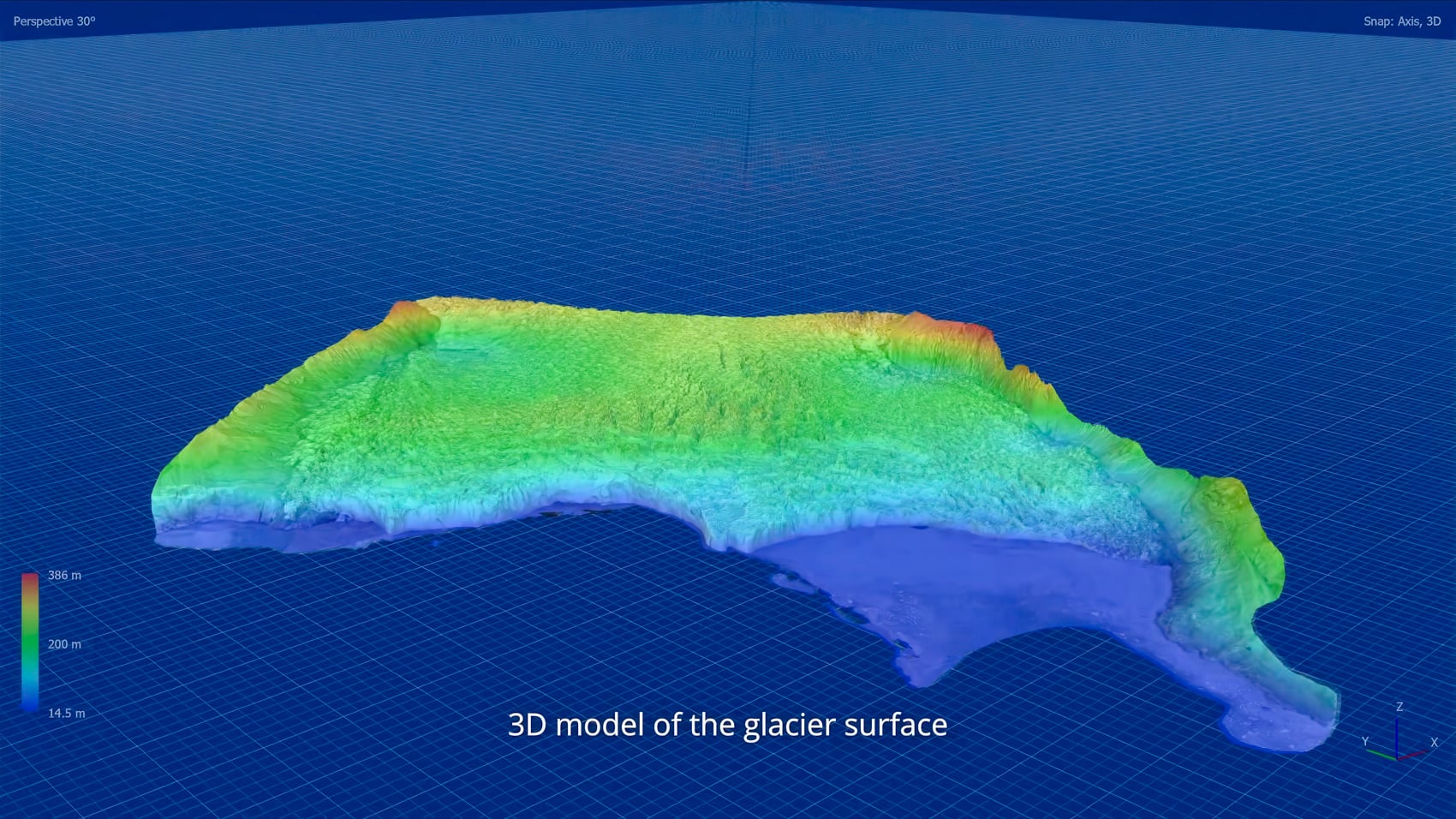
One drone. Twelve batteries. Roughly 10 square kilometers of glacial terrain mapped from above 300 meters. The fact that this happened from a boat, in the Arctic, with equipment you can carry in a backpack, says a lot about where drone science is right now.
Two Glaciers, One Compact Drone, Serious Science
Samsoen, who specializes in aerial cinematography and FPV piloting, targeted two sites. The first was Eqip Sermia, a sprawling glacier where the M3E covered approximately 10 km² using 12 battery cycles to produce a detailed 3D model.
Flights exceeded 300 meters altitude, and the resulting photogrammetric data held up at a level of detail that surprised even the team. That kind of coverage from a sub-1kg drone is not nothing.
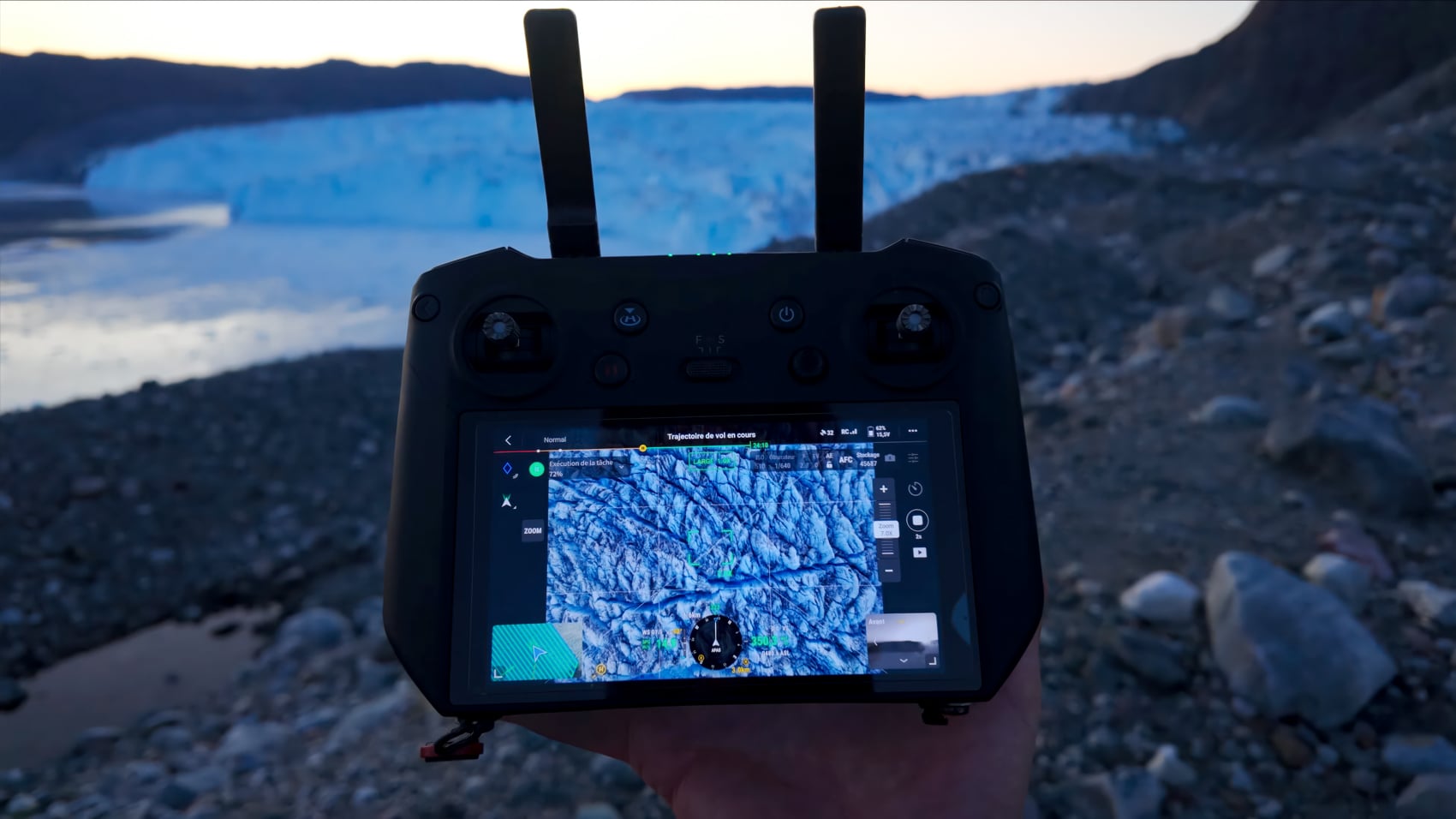
The second site was Sermeq Kujalleq, also known as Jakobshavn Glacier — the fastest-moving glacier on Earth. Here the focus shifted to icebergs near the fjord’s mouth. Multiple 3D models were built to help researchers analyze glacial fragmentation: the process by which ice breaks off and contributes to sea level rise. These aren’t pretty renders. They’re working scientific datasets.
DroneXL has covered similar drone-based glacier research before. Back in June 2025, we looked at how DJI drones were revealing how melting glaciers are rewriting Norway’s weather patterns. The Greenland mission pushes that work further, pairing drone data with satellite imagery from Airbus Defence and Space, where Matthieu Lys, the expedition’s innovation lead, is Head of Innovation.
The Aberdeen Partnership Turns Field Data Into Academic Currency
Glaciologist William Harcourt at the University of Aberdeen leads the scientific side of this collaboration. He’s no stranger to 3D glacier modeling, having worked previously in Svalbard.
The combined dataset — Airbus satellite imagery layered with Samsoen’s drone photogrammetry — is now integrated into both Harcourt’s active research and his university teaching. That last part matters. Students in Aberdeen are learning Arctic glacier dynamics with data collected months earlier from a sailboat off the Greenland coast.
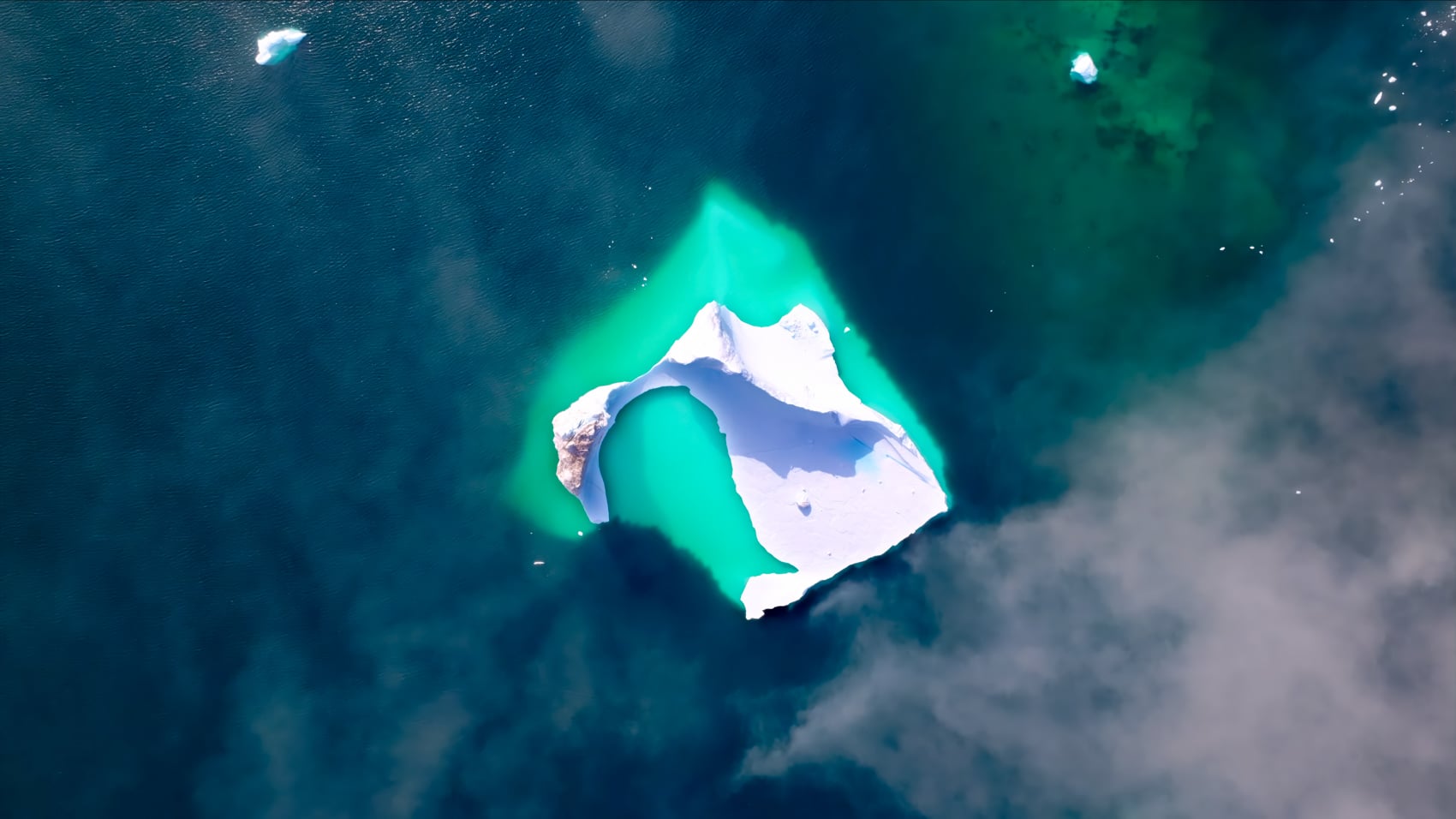
This multi-scale approach is exactly what makes it interesting. Satellites give you the broad picture; drones give you the texture, the cracks, the calving edges. Neither replaces the other. We’ve seen a similar dynamic play out in Iceland, where meteorological drones have been used to study how black volcanic dust affects climate patterns. The toolset is converging.
The DJI Mavic 3 Enterprise Punches Well Above Its Weight Class
The choice of the DJI Mavic 3 Enterprise here is worth pausing on. This isn’t a Matrice-class platform. It’s a foldable, portable enterprise drone built for professional mapping and inspection work. It carries a 4/3 CMOS sensor, and the M3E RTK variant of the platform supports centimeter-level GPS accuracy.
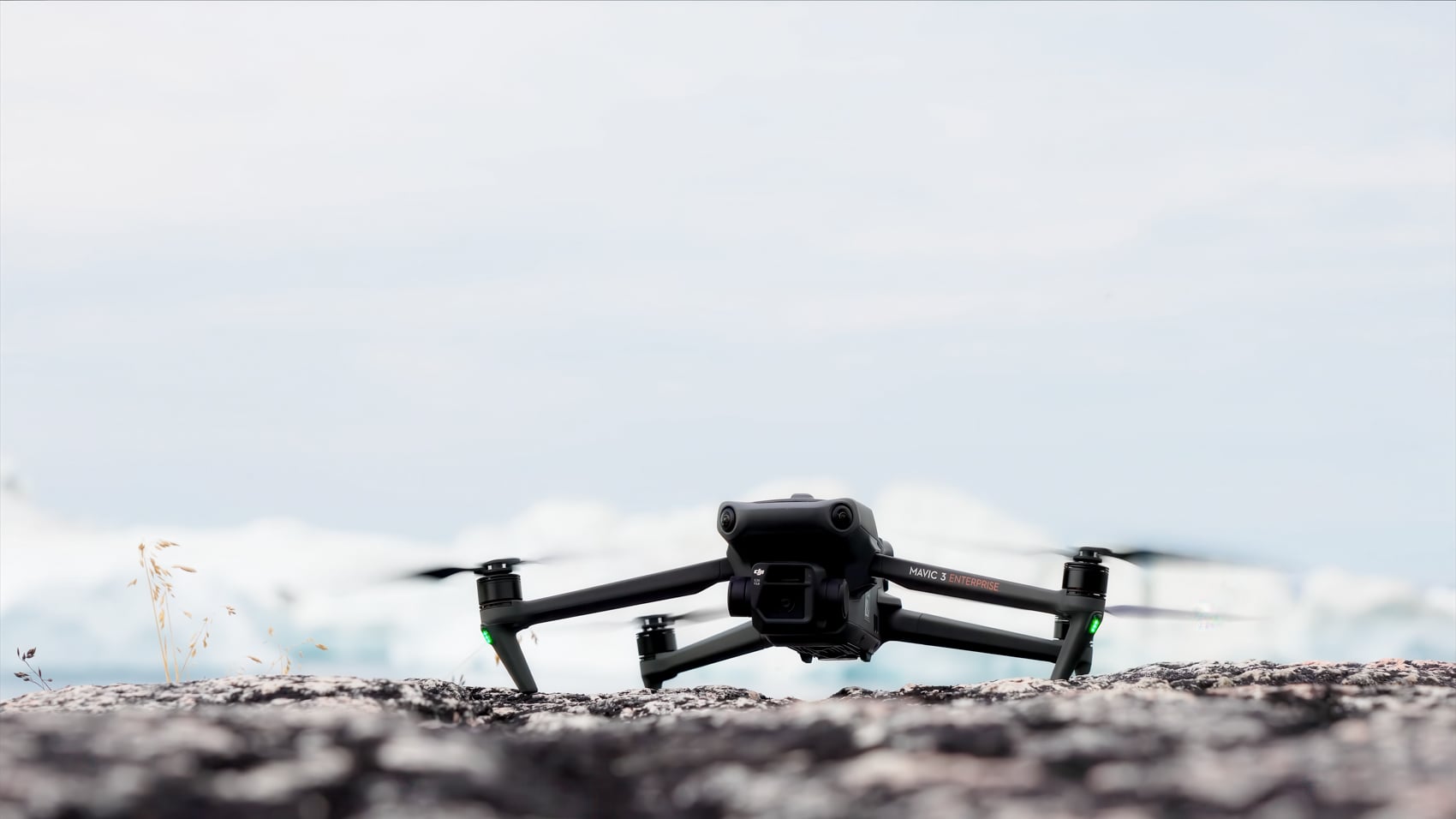
The press release doesn’t specify which M3E configuration Samsoen used, but either way, this is a drone built for professional mapping where accuracy feeds directly into research datasets. Flying it over active glacial terrain from a boat introduces variables no lab simulation prepares you for: wind off the ice, humidity, the physical challenge of launching and recovering over water.
For context on how DJI’s enterprise-grade 3D modeling software has evolved to match field missions like this one, see our coverage of DJI Terra 5.0’s photorealistic 3D Gaussian Splatting update, released in July 2025 — right around the same time this expedition was underway.
Civilian Operators Are Now Doing Institutional-Grade Field Science
One of the more honest conclusions from this expedition is also one of the simpler ones: the gap between “institutional research equipment” and “what a skilled drone operator can carry in a case” has nearly closed. Samsoen is a filmmaker who pivoted to 3D modeling. He’s not a glaciologist. And the data he collected is good enough for a university professor to build courses around.
We’ve seen this pattern accelerate across scientific disciplines. Drones tracked dramatic humpback whale population declines in Hawaii over a five-year study. The Perseverance expedition fits squarely into this pattern — not as an outlier, but as a confirmation that this is now normal science.
DroneXL’s Take
I keep coming back to those twelve batteries. That’s the number Samsoen needed to cover 10 km² of active glacial terrain, launching from a research boat, in the Arctic, in July. At high altitude over ice, your battery performance drops noticeably. I’ve felt that in my own flights here in Quito at 15,700 feet, where the thin air taxes both the motors and the cells faster than any sea-level spec sheet suggests.
Now imagine that same cold-air battery drag over Greenland ice. Twelve batteries to cover 10 km² in those conditions is actually a remarkably efficient mission. But also, there is something more important: the human factor. The cold, the loneliness, the isolation.
What this expedition represents, taken alongside the Norway glacier work we covered in June 2025, is a clear pattern: compact DJI enterprise drones are becoming the default field instrument for polar climate research. Not supplementary equipment. The primary data collection tool.
The irony is obvious. At the same moment U.S. policymakers are debating whether DJI drones pose a national security threat, scientists are using those exact drones to document the fastest-moving glacier on Earth.
That tension doesn’t resolve itself neatly. But it does clarify what’s at stake when we treat “Chinese-made” as a disqualifying label rather than one variable among many in a more complicated risk calculation.
Within the next 18 months, expect to see the Harcourt/Aberdeen dataset cited in peer-reviewed climate literature. When that happens, a DJI Mavic 3 Enterprise will be in the acknowledgments. That’s not a prediction — it’s the logical endpoint of the work already done.
DroneXL uses automated tools to support research and source retrieval. All reporting and editorial perspectives are by Rafael Suarez
Photo credit: DJI
Discover more from DroneXL.co
Subscribe to get the latest posts sent to your email.
Check out our Classic Line of T-Shirts, Polos, Hoodies and more in our new store today!

MAKE YOUR VOICE HEARD
Proposed legislation threatens your ability to use drones for fun, work, and safety. The Drone Advocacy Alliance is fighting to ensure your voice is heard in these critical policy discussions.Join us and tell your elected officials to protect your right to fly.

Get your Part 107 Certificate
Pass the Part 107 test and take to the skies with the Pilot Institute. We have helped thousands of people become airplane and commercial drone pilots. Our courses are designed by industry experts to help you pass FAA tests and achieve your dreams.

Copyright © DroneXL.co 2026. All rights reserved. The content, images, and intellectual property on this website are protected by copyright law. Reproduction or distribution of any material without prior written permission from DroneXL.co is strictly prohibited. For permissions and inquiries, please contact us first. DroneXL.co is a proud partner of the Drone Advocacy Alliance. Be sure to check out DroneXL's sister site, EVXL.co, for all the latest news on electric vehicles.
FTC: DroneXL.co is an Amazon Associate and uses affiliate links that can generate income from qualifying purchases. We do not sell, share, rent out, or spam your email.