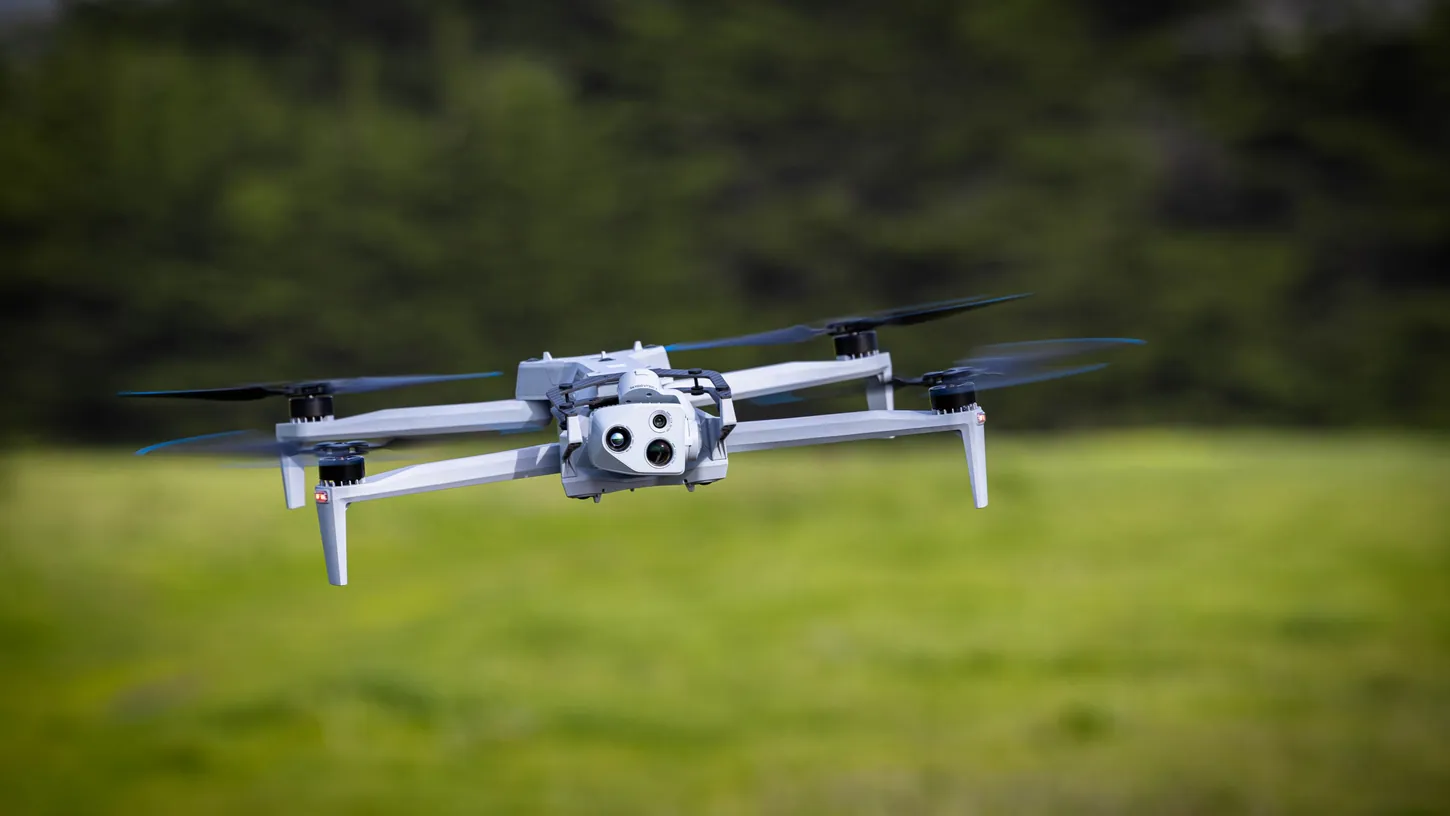
Boynton Beach is getting a police drone first responder program, but not without a fight over the bill. On June 16 the city commission approved an Axon drone package in a 4-1 vote, with Commissioner Aimee Kelley the lone no after she questioned the timing of the purchase during early budget talks.

The drones will support the city’s real-time crime center and answer priority calls. The first payment does not start until October 1, 2027.
Commissioners approved the Axon package 4-1
The deal moved forward after city staff explained why Boynton Beach was back at the table in the first place. The city had terminated a previous drone first responder contract because the vendor could not deliver the equipment within a reasonable time, leaving the program without hardware.
The replacement is an Axon system tied into the department’s real-time crime center. Staff described it as a package of drone docks, 5G connectivity, thermal imaging, mapping, and automated launches, the standard feature set for a modern drone as first responder operation where the aircraft lifts off on its own the moment a call comes in.
The model is the same one spreading across Florida this year. A drone launches from a dock, streams live video to commanders, and reaches the scene before patrol units can, giving responders a read on what they are walking into.
The budget behind the one-drone start
Boynton Beach is starting small. The city has budgeted $125,000 for the program, with the Building Department covering $90,000 for a single drone first responder unit. That leaves roughly $65,000 a year to be funded through the traffic safety fund rather than the general fund, a structure meant to keep the cost off the city’s main budget line.
The timing softens the immediate hit. With the first payment deferred to October 1, 2027, the commitment lands in a future budget year rather than the current one. That deferral is part of why four commissioners were comfortable voting yes.
Commissioner Aimee Kelley would not back the purchase now
As Boca Post reported, Kelley made clear her objection was not to drones. She said she supports the program, but could not support the purchase while the city is still working through staffing concerns, possible wage freezes, and broader budget uncertainty. Committing to new hardware while talking about freezing pay was a line she would not cross.

The other commissioners came down the other way, pointing to the operational case: drones that can help locate missing persons, speed officer response, and support emergency operations. They carried the motion 4-1, with Kelley opposed.
Her dissent is the part worth holding onto, because it frames the real question these programs raise. The technology works. The argument is almost always about what it costs and when the city has to pay.
The Axon-Skydio X10 is the expensive default
The hardware inside the Axon package is the Skydio X10, the aircraft Axon pairs with its software for nearly every department standing up one of these programs. It is a capable machine, with a thermal camera, a high zoom sensor, and full autonomy from its dock. It is also priced like a premium American product, because that is what it is.

The numbers from other Florida cities show the scale. Orlando approved a $6.83 million Axon-Skydio package for 11 drones across nine docks. Palm Beach signed a five-year, $2.1 million Axon contract that included three X10 drones. Against that backdrop, $90,000 for a single Boynton Beach unit is the entry-level version of the same expensive shelf.
The reason departments pay it is that the cheaper, proven option has been pushed out of reach. DJI hardware delivers comparable capability at a fraction of the price, but federal restrictions have turned it into a political risk for any agency spending public money. So cities buy non-DJI and absorb the premium, one unit at a time.
DroneXL’s Take
Strip away the press release language, and Boynton Beach is a small city deciding whether it can afford to fly at all. Four commissioners said yes, mostly because the bill does not arrive until late 2027. One said not now, because the city is talking about freezing wages in the same breath as buying drones. Both positions are defensible, and that is the point.
The uncomfortable truth underneath the vote is that none of this is a fight Boynton Beach chose. The DJI ban was a political decision, not a technical one, and the cost of it lands on local budgets. A single drone unit running $90,000 is what happens when the affordable, capable option is off the table and the only path left is the premium one.
Departments with money can absorb that. Plenty of smaller agencies simply cannot, and they are not choosing Skydio on the merits. They are choosing between a non-DJI program they can barely fund and no program at all.
Kelley lost the vote, but she asked the question that is going to decide which communities get a drone overhead and which stay grounded. Watch how many small Florida departments announce these programs over the next year, and how many quietly conclude the math does not work.
Photo credit: Commissioner Aimee Kelley Facebook Page, Boynton Beach PD, Jorge Murillo