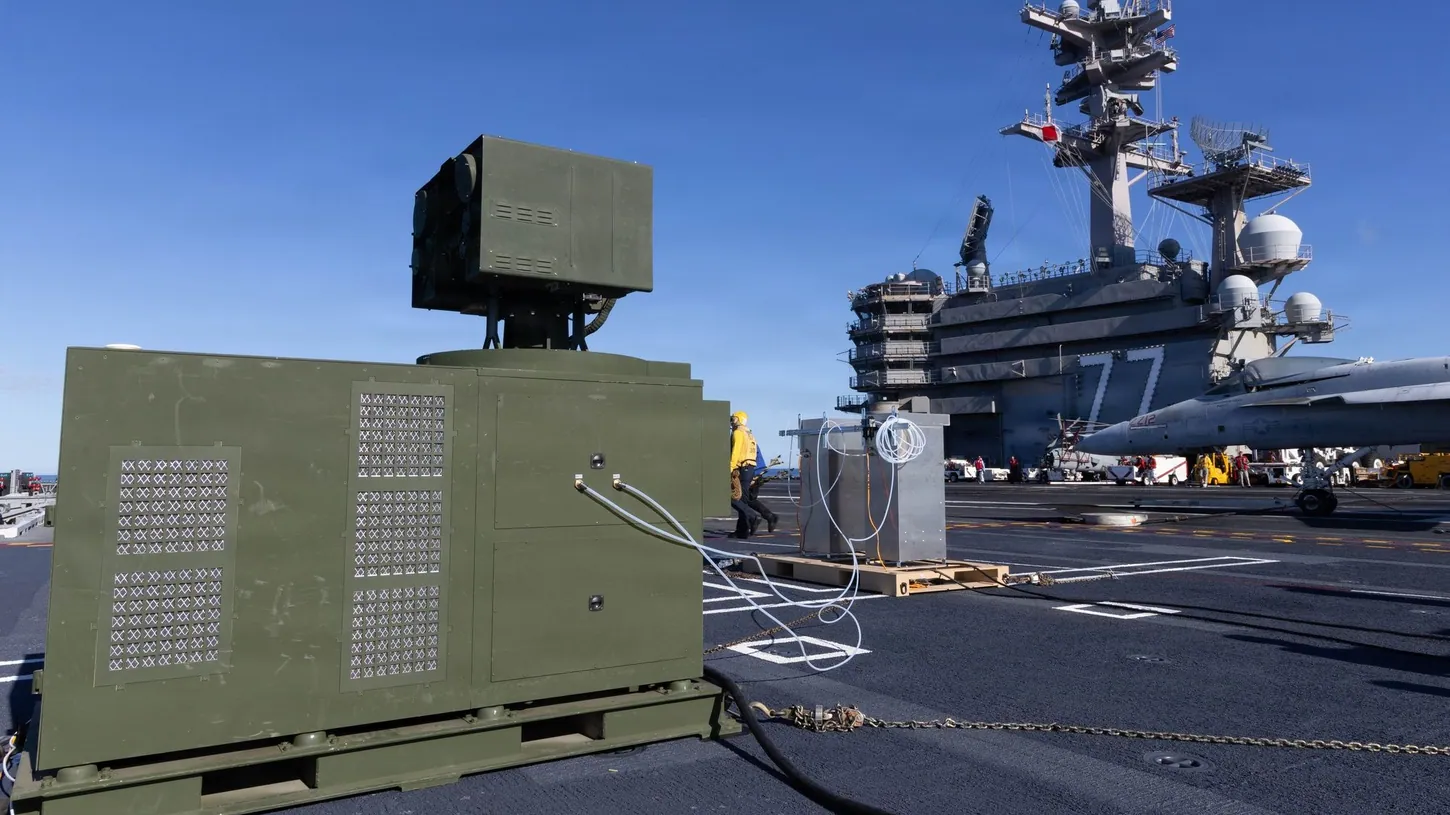
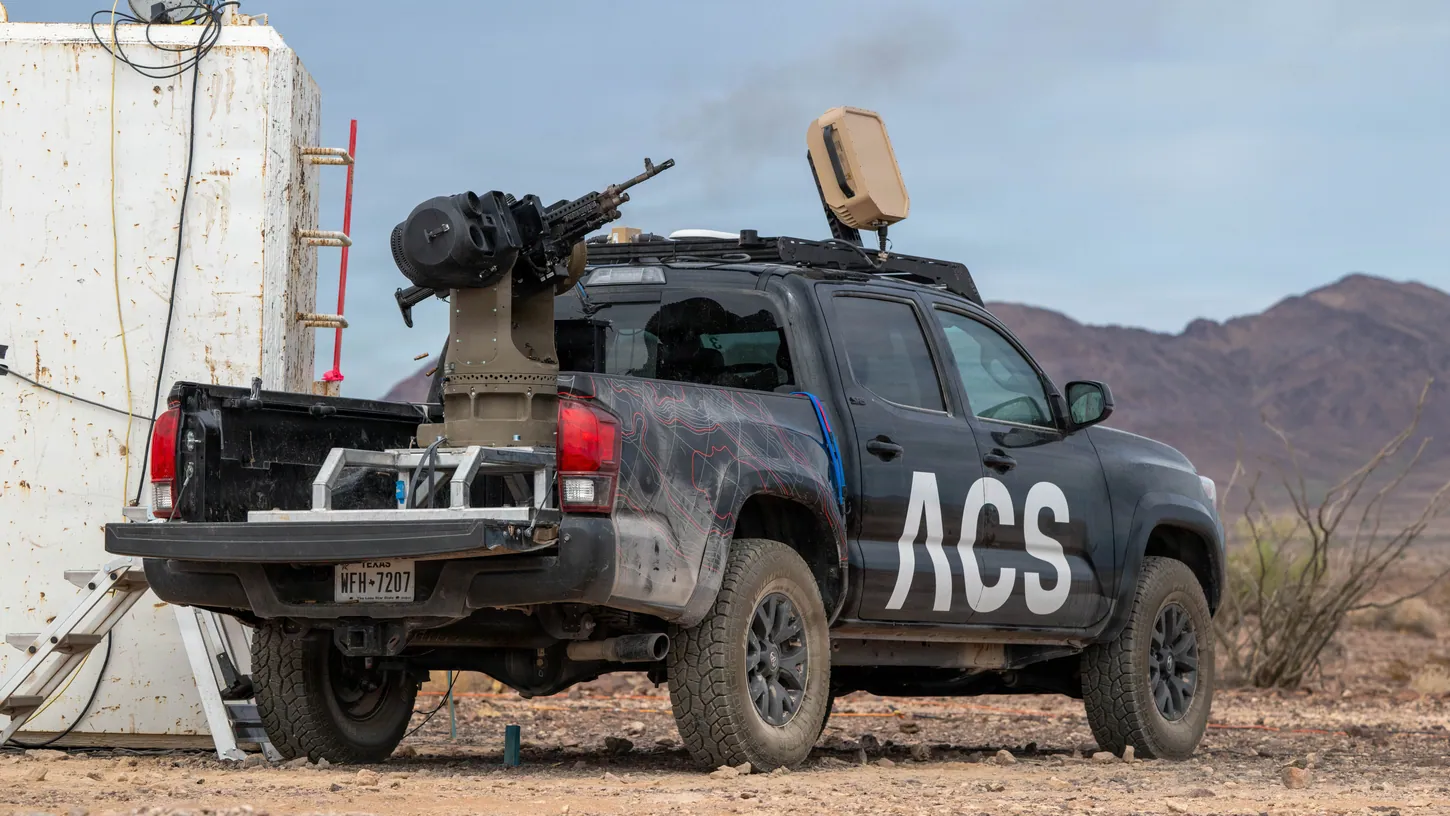
Axon Vision announced ForceField on July 16, a counter drone system the Israeli company says detected, tracked and destroyed FPV drone targets in live fire trials. The Tel Aviv firm, publicly traded and partnered with Leonardo DRS for the US market, built the system for the threat electronic warfare cannot touch: fiber optic FPV drones that fly with no radio link to jam.
The announcement is real, the engineering logic is sound, and the company completed development after trials it describes as operationally representative. But I watched the released demonstration footage the way a drone pilot watches it, and the aircraft going down in that video deserve a closer look before anyone declares the FPV problem solved.
ForceField Pairs Passive Sensors With Standard Guns

The system chains three jobs together: detect, understand, respond. Detection is fully passive, day and night, meaning ForceField emits no signals that would give away the position of the force it protects. An Edge AI layer classifies the threat and hands the decision to a human, man on the loop, before any trigger is pulled.
The response side is the pragmatic part. ForceField directs standard weapons firing standard ammunition, no bespoke interceptor missiles, no dedicated logistics chain. Axon Vision says the package integrates onto existing vehicles without reaching deep into a platform’s core systems, and the modular design lets customers take the full system or just the detection and AI layer for their own weapons.
CEO Neri Zin frames ForceField as the company’s evolution from supplying Edge AI components to delivering complete systems, built on years of AI work through Israeli Ministry of Defense programs. Evaluations with Israeli and international customers are underway.
The Fiber Optic Problem ForceField Exists To Solve
Fiber optic FPV drones changed the counter drone equation, and Ukraine’s battlefields proved it. A drone that unspools a hair thin optical cable behind it needs no radio frequency link, which means jammers, the cheapest and most common defense, simply do not apply. The only answers left are physical: hit the drone or hide from it. Both armies in that war now rely on fiber guidance precisely because it flies straight through every jammer on the field.

That is the gap ForceField aims at, and the demand is obvious. I covered the money side of this in May, when the NYPD stood up a $6.5 million counter drone unit ahead of the World Cup, and that is a police department facing hobby aircraft, not a maneuvering army facing fiber guided munitions. Any system that promises to kill EW immune drones with ammunition a unit already carries will get meetings booked in a hurry.
The claim is credible on paper. The question a working pilot asks next is about the targets it was proven against.
The Demo Footage Shows Slow Targets, Not FPV Speed
I am not a salesman for any brand, and my job as a journalist is to share what my eyes are trained to see. The video cuts do not let me identify the target aircraft completely, but by their shapes, the drones falling in that footage could be anything from a Mavic Pro to a Mavic Air 2 class airframe. I say that as an assessment from the footage, not a confirmed identification.
If that read is right, it matters. Camera drones in that class top out around 45 mph (72 km/h) in sport mode. Combat FPV aircraft, the actual threat ForceField is named after, routinely run far faster, with attack profiles that trade stability for closing speed. The targets in the released video move nowhere near FPV attack velocity.
None of this means the system failed. It means the public evidence shows a kill against the easier end of the problem. Axon Vision says its trials included FPV drone targets in operationally representative scenarios, and the full trial data may well support that. The footage the public gets to see does not yet show it.
DroneXL’s Take
Strip away the press release language, and here is where I land: take this demonstration with a pinch of salt. Or two. Or three. The threat is real, the passive detection approach is the right answer to fiber optic guidance, and using standard ammunition is smart procurement thinking. All of that can be true while the released footage still shows slow, predictable targets instead of the 100 mph nightmare that gives this product category its name.
My skepticism has a simple fix, and it is free: publish the same demonstration against truly fast aircraft. Show me the intercept timeline against a drone flying an attack profile, not a camera platform holding a line. The company that releases that video first owns this market’s credibility.
And I will put my own cards on the table: my bets in the counter drone race lean toward directed energy. Guns need lead time and luck against a 100 mph target the size of a dinner plate. A laser needs line of sight and electricity. Programs like Israel’s Iron Beam exist because militaries ran the same math. Whether gun based systems like ForceField or lasers win the mobile protection mission is an open question, not a prediction, and the fiber optic drone is the examiner setting the test.
Watch what footage Axon Vision releases from its customer evaluations. The day they show a fast intercept, I will write that story too, and gladly.
Sources: PR Newswire, Oboronka