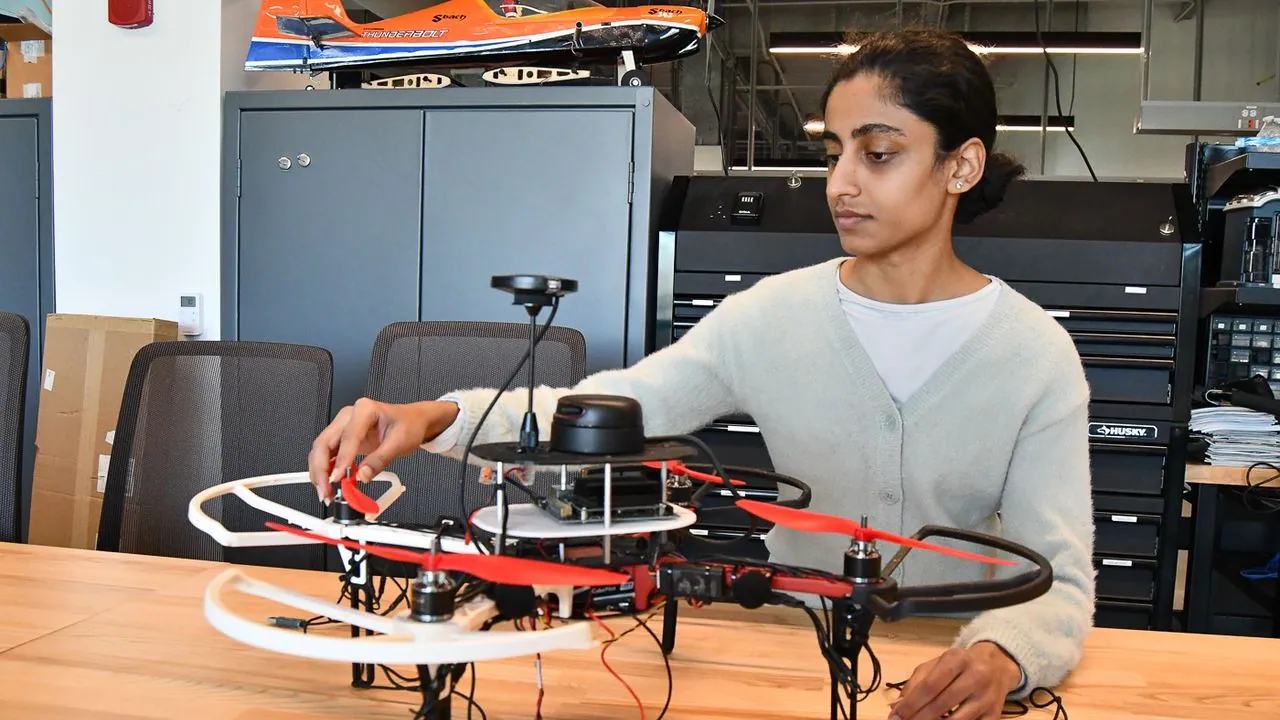
Students and faculty at East Texas A&M University used records from 96 drone flights to test whether AI can detect GPS spoofing, which feeds a drone false signals about its location. Several pretrained models beat purpose-built ones, even on short stretches of flight data. The National Science Foundation funded the work.
The release, as issued by East Texas A&M University
Researchers Test AI to Detect GPS Spoofing in Drones
Students and faculty at East Texas A&M University used records from 96 drone flights to test whether artificial intelligence can detect GPS spoofing, which uses false signals to mislead a drone about its location.
Working with computer science professor Dr. Jinoh Kim and a collaborator at the University of Colorado Colorado Springs, undergraduate first author Iyanuoluwa Alegbeleye and graduate student Shinhwan Kim tested AI models that look for unusual patterns in how a drone moves. Several pretrained models performed better than models built specifically for the task, even when given only a short stretch of flight data. The National Science Foundation supported the research, and the paper was accepted for presentation at the WATCH ‘26 cybersecurity workshop.
About East Texas A&M University
East Texas A&M University serves rural and metropolitan East Texas with a dedicated mission to transform lives. With an enrollment of approximately 13,086 students, East Texas A&M is the third-largest member of The Texas A&M University System. Students choose from among 143+ academic degrees at the undergraduate and graduate levels and learn from world-class faculty who conduct nationally recognized research. A vibrant student experience includes a thriving Greek community and more than 95 student-led organizations. As a member of the Southland Conference, East Texas A&M features 14 NCAA Division I athletic teams. The university offers classes online and on-site in Commerce, Dallas, Corsicana, McKinney, Mesquite, and Bryan (RELLIS).