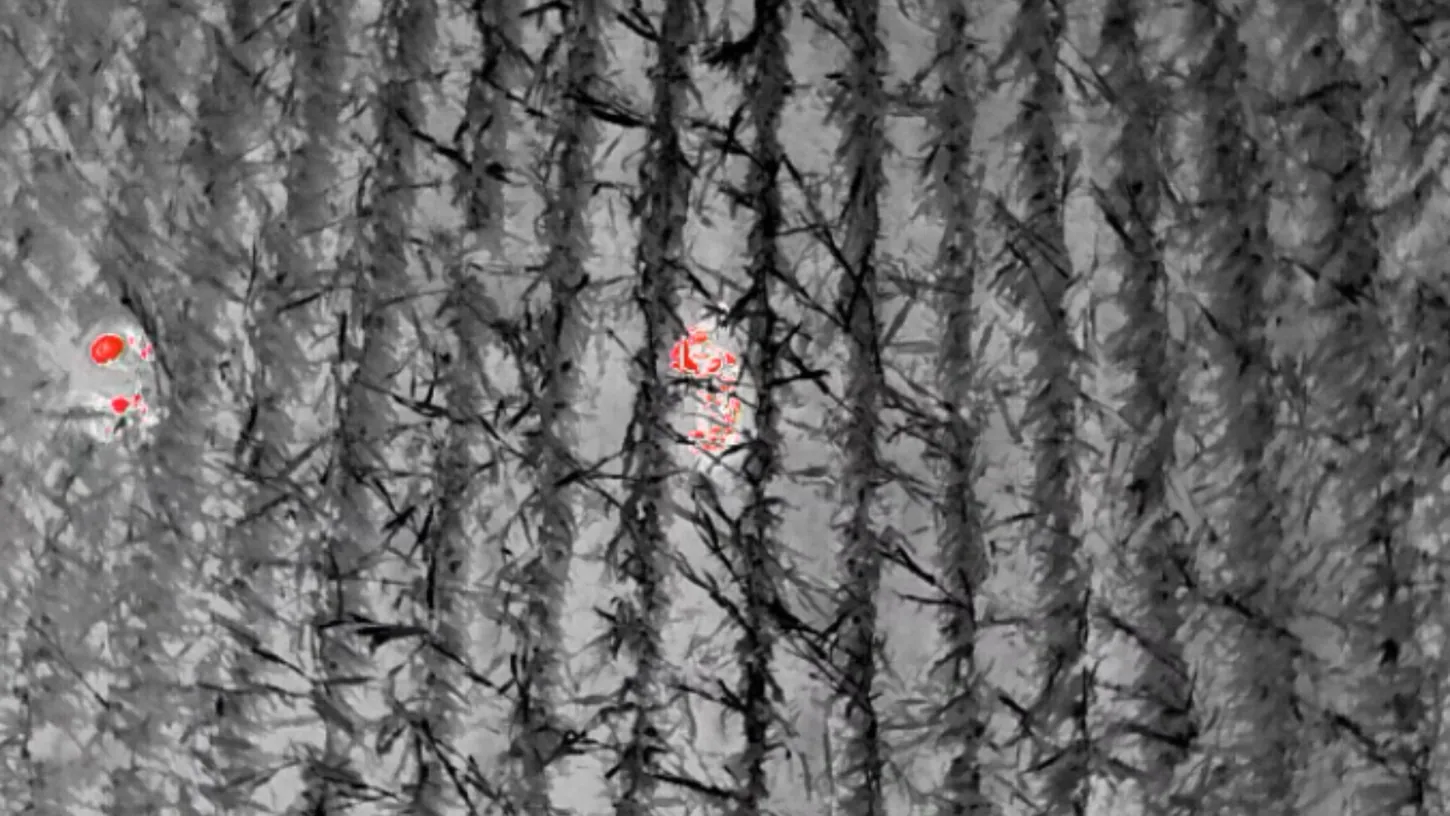
A police drone found a missing 47-year-old hiker in the Vienna Woods late on August 1, ending a search that lasted just 75 minutes from the first phone call to the thermal hit. The man’s sister reported him missing at 10:10 pm after he failed to return from a hike near Breitenfurt, southwest of Vienna. By 11:25 pm, a drone crew had him on screen.
A Sister’s Call Started a Clock the Drone Beat
The response chain moved fast and stayed local. Officers from the Breitenfurt and Perchtoldsdorf police stations took the report and launched the search, joined by drone operators from the Lower Austria State Police Directorate and a search dog unit from Red Cross Lower Austria.
The drone located the man near a sports field in Breitenfurt, on the edge of the wooded terrain. He was found with health problems, received emergency treatment on scene, and an ambulance took him to Moedling State Hospital.
The math of the night is the story. A man alone in the woods, in the dark, with a medical issue, is a problem that gets worse by the hour. Seventy-five minutes from report to rescue is the kind of number that used to require a helicopter, a flight crew, and a budget line to match.
Austrian police released a thermal image from the flight showing the hiker’s heat signature glowing against the dark terrain, the picture that ended the search.
Thermal Cameras Turn Cool Nights Into an Advantage
Everything that made this night dangerous for the hiker made him easier to find from the air. Thermal sensors read temperature differences, and a human body holding roughly 98.6 degrees Fahrenheit (37 degrees C) against a forest floor that has been cooling since sunset produces exactly the kind of high-contrast target these cameras are built to catch.
Daytime works against thermal search. Sun-heated rocks, warm pavement, and reflective surfaces clutter the image with false positives. At night the background goes uniform and cold, and anything alive lights up. The colder the night, the harder it is to survive, and the easier it is to be found. It is one of the crueler symmetries in search and rescue, and drone crews have learned to exploit it.
The directorate did not name the aircraft it flew. I have covered enough European police drone units to know the standard toolkit for this mission profile: a mid-size quadcopter in the class of DJI’s Matrice series, carrying a swappable thermal payload, flown by two officers from a van. Whatever airframe Lower Austria flew that night, the recipe is the same one working across the continent.
Europe Keeps Flying What Works
This story reads differently depending on which side of the Atlantic you sit on, and the difference is the procurement office, not the rescue. European police forces keep buying and flying the drones that do the job at a price a regional directorate can afford, and a large share of that equipment comes from Chinese manufacturers that American agencies are being pushed to abandon.
I keep watching Europe run this quiet counterargument. While Washington debates country-of-origin bans, units like Lower Austria’s are producing outcomes: a living man on a stretcher instead of a body recovered at sunrise. The equipment gets judged by the rescue, and the procurement logic stays boring on purpose.
The American SAR record is filling up with the same wins on different hardware. In July, DroneXL covered a Skydio X10 finding a lost man at 3 am in the Florida woods, a mission almost identical to Breitenfurt down to the thermal contrast that solved it. A week later, an AI-equipped drone team in Australia found two lost hikers in the Snowy Mountains after a five-hour search.
Different flags, different vendors, same lesson. The technology has stopped being the interesting question in these stories. The interesting question is how fast an agency can get a thermal camera over the search grid, and every month the answer gets shorter.
The Rescue Nobody Will Remember Is the Point
This story will not lead any evening news outside Austria, and that is exactly what makes it worth writing about. Drone-assisted rescues have become routine, and routine is the highest compliment aviation can pay a technology.
Five years ago a thermal drone find made headlines as a novelty. Today it is a Tuesday night in Lower Austria: a report at 10:10 pm, a launch, a heat signature at 11:25 pm, an ambulance, done. The file closes and the crew goes back to the station.
Somewhere in that routine is a man who gets to call his sister from a hospital bed instead of becoming a statistic, because a drone was fast and someone pushed the launch button without hesitating.
DroneXL’s Take
Let’s be straight, one more life saved because a drone was quick and somebody acted. That sentence is becoming the most repeated line in my reporting, and I hope I never get tired of writing it.
The lesson Europe keeps teaching is discipline, not technology. Buy the aircraft that works, train the crews, wire the drone into the emergency response chain, and let the results speak. No procurement drama, no politics in the checkout cart, just a thermal camera in the air an hour after a sister makes a phone call.
The Breitenfurt search worked because the tool was ready before the emergency existed. That is the whole playbook, and any agency on any continent can copy it.
Sources: VIENNA.AT, Heute.at, NOEN.at
DroneXL uses automated tools to support research and source retrieval. All reporting and editorial perspectives are by Rafael Suárez.