

Insta360 launched the Insta360 Mic on Thursday, October 22, 2026, a wireless microphone that slots between its flagship Mic Pro and the entry-level Mic Air. The kit with two transmitters, a receiver and a charging case costs $249.99, which is $80 less than the same Mic Pro kit. A one-transmitter kit is $139.99 and a spare transmitter is $79.99. All three are on sale today through Insta360’s store, Amazon and authorized retailers.
The Mic transmitter weighs 19.4 grams (0.7 oz), 0.3 grams less than the Pro’s, and carries the same 1.22-inch, six-color E-Ink screen, which shows whatever logo or picture you upload through the Insta360 app. Insta360 rates the Mic at up to 13 hours per charge. The more expensive Mic Pro is rated for 10.
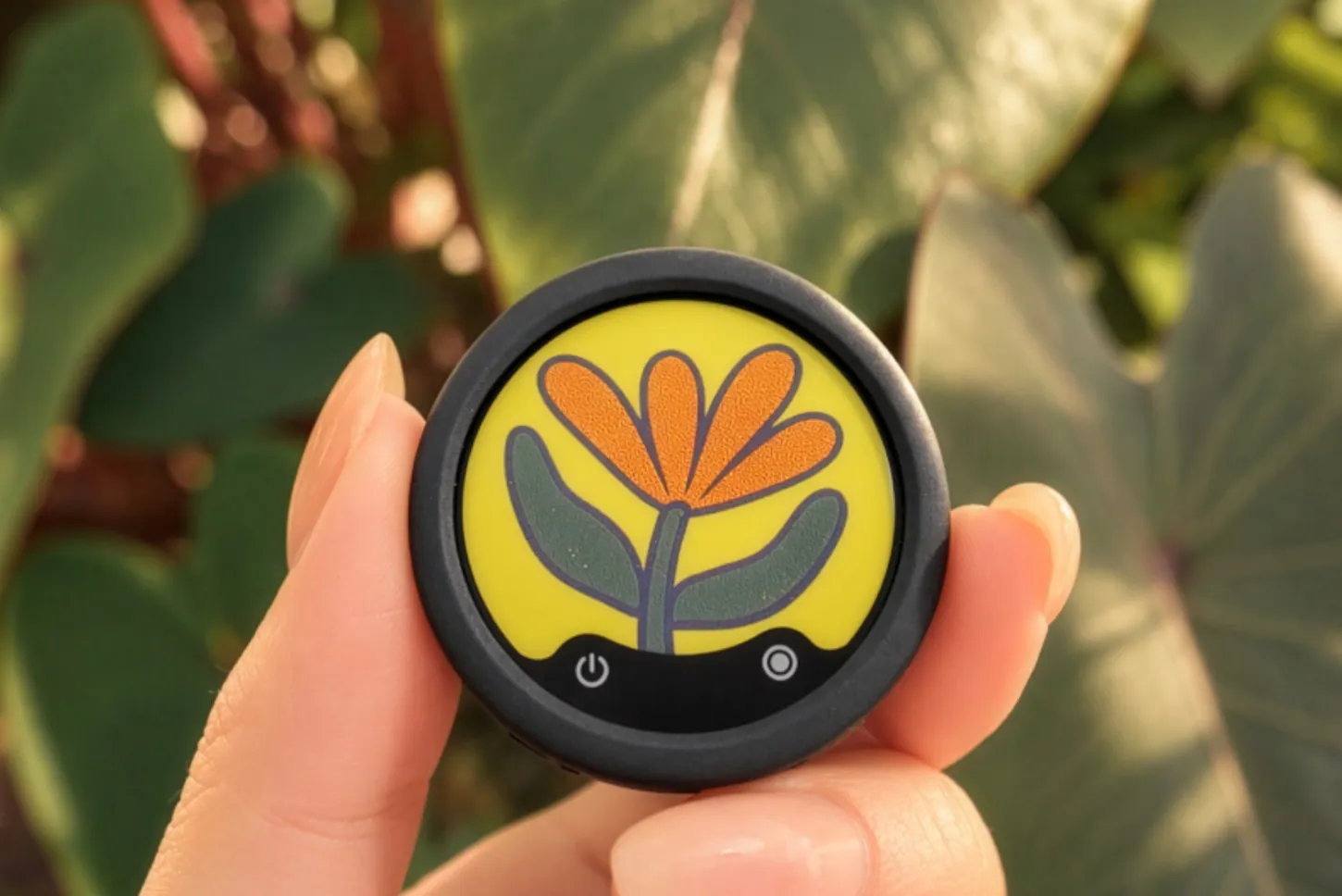
Insta360 Mic Trades the Pro’s Three-Capsule Array for One Omni Mic
For $80 less, the Mic drops the Pro’s three-capsule array, with its four pickup patterns (omnidirectional, super-directional, cardioid and figure-8), and its 32GB of built-in storage. In their place are a single omnidirectional capsule and a microSD slot, with the card sold separately.
Without a card there is no internal recording at all. Audio still reaches the camera or phone through the receiver or over Bluetooth, but the backup file that saves a take when the wireless link drops only exists once a card is in. With one inserted, the transmitter records 24-bit or 32-bit float files and starts a new file every 30 minutes. Insta360 lists storage use at about 700MB per hour in 32-bit float and 500MB in 24-bit, so a 32GB card holds roughly 45 hours of float audio.
The rest of the audio chain carries over from the Pro: two-level noise canceling on a dedicated AI chip, Automatic and Dynamic gain modes, three voice tone presets, and 1,312 feet (400 meters) of range to the receiver. Insta360 measured the 13 hours, and the 34-hour total with the charging case, with noise canceling and internal recording both switched off. A five-minute charge is rated for 2 hours 20 minutes of use, against 1.5 hours on the Pro.
Mixing Mic and Mic Pro Transmitters Cuts a Four-Person Kit to $410
One Mic receiver takes up to four transmitters at once, and Mic and Mic Pro transmitters can share it. A four-voice setup built from the $249.99 Mic kit plus two $79.99 transmitters comes to $409.97. Insta360’s Mic Pro kit with four transmitters sells for $528.99.
Anyone who already owns a Mic Pro kit can also add Mic transmitters at $20 less apiece than the Pro’s $99.99 transmitter, according to Insta360’s store. For multicamera shoots, two transmitters can feed up to four receivers. Insta360’s store page promises four independent tracks, but its footnotes say stereo mode with more than two transmitters merges them in pairs onto the left and right channels. True four-channel output works only on select Sony cameras through Insta360’s Camera Adapter, sold separately.
Direct Connect Drops the Receiver and Three-Quarters of the Range
Insta360 Direct Connect pairs a Mic transmitter over Bluetooth with the X6, X5, Luna Ultra, Luna Pro, Ace Pro 2 and GO Ultra for 48kHz audio with no receiver, and the X6 and Luna take two transmitters at once. Range drops to about 328 feet (100 meters) from 1,312 feet.
Insta360 measured that shorter figure on an X5 and says it varies with camera model, orientation and shooting mode. Paired this way, the transmitter’s power button starts and stops the camera, and a camera menu setting makes internal recording start and stop with the camera, if a card is in the mic. Jake Sloan’s X6 review recorded its Alaskan ice-cave audio on a Mic Pro.
Pairing a transmitter straight to a phone is more limited. Insta360’s footnotes say it works only with third-party apps, not the phone’s own camera app, and captures audio at 16kHz. For phones and cameras, the receiver with its USB-C adapter or 3.5mm cable is the route to 48kHz audio.
Insta360 Mic’s Timecode Does Not Work in the United States
Insta360’s product copy for the Mic says the receiver supports high-precision timecode in and out for syncing cameras. The comparison chart Insta360 published with the launch marks timecode on both the Mic and the Mic Pro “Do not support in United States.” Neither document says why.
Timecode lines up footage from several cameras without syncing clips by hand, so the gap falls on multicamera shooters. DJI’s Mic Mini 2S, its first Mini-tier mic with 32-bit float internal recording, launched worldwide in August with no US page, price or sale. The DJI Mic 3 two-transmitter kit carried a $259 street price in July, about $9 more than the Insta360 Mic, when DroneXL tracked it on sale at $219.
DroneXL’s Take
I’d buy the Mic over the Mic Pro unless I needed directional pickup. I shoot with DJI’s Mic 3, and its internal recording is the safety net I’d least want to give up. The Mic gives you that for the price of a microSD card, with storage that grows with the card instead of stopping at 32GB. Its battery lead is shakier than the spec sheet suggests, because Insta360 measured the 13 hours with internal recording off, and I’d expect the safety net to eat into that margin. The Pro’s three-capsule array earns its $80 in noisy interview rooms, where a directional pattern keeps more of the room out of the track. My bet is that most creators clipping a mic to a shirt would never leave omnidirectional anyway. If you’re building a multicamera rig in the US, ask Insta360 about timecode before you order.
Sources: Insta360 press release (October 22, 2026), Insta360 Mic Pro and Mic store page, Insta360 wireless microphone lineup.
DroneXL uses automated tools to support research and source retrieval. All reporting and editorial perspectives are by Haye Kesteloo. Read our editorial standards.


