Good day, folks. Shawn here from Air Photography. We are fully in the holiday season, and some of you might be on the fence about which Insta360 camera is the right fit, or you’re buying one for somebody on your list and you’re not sure which one to go with.
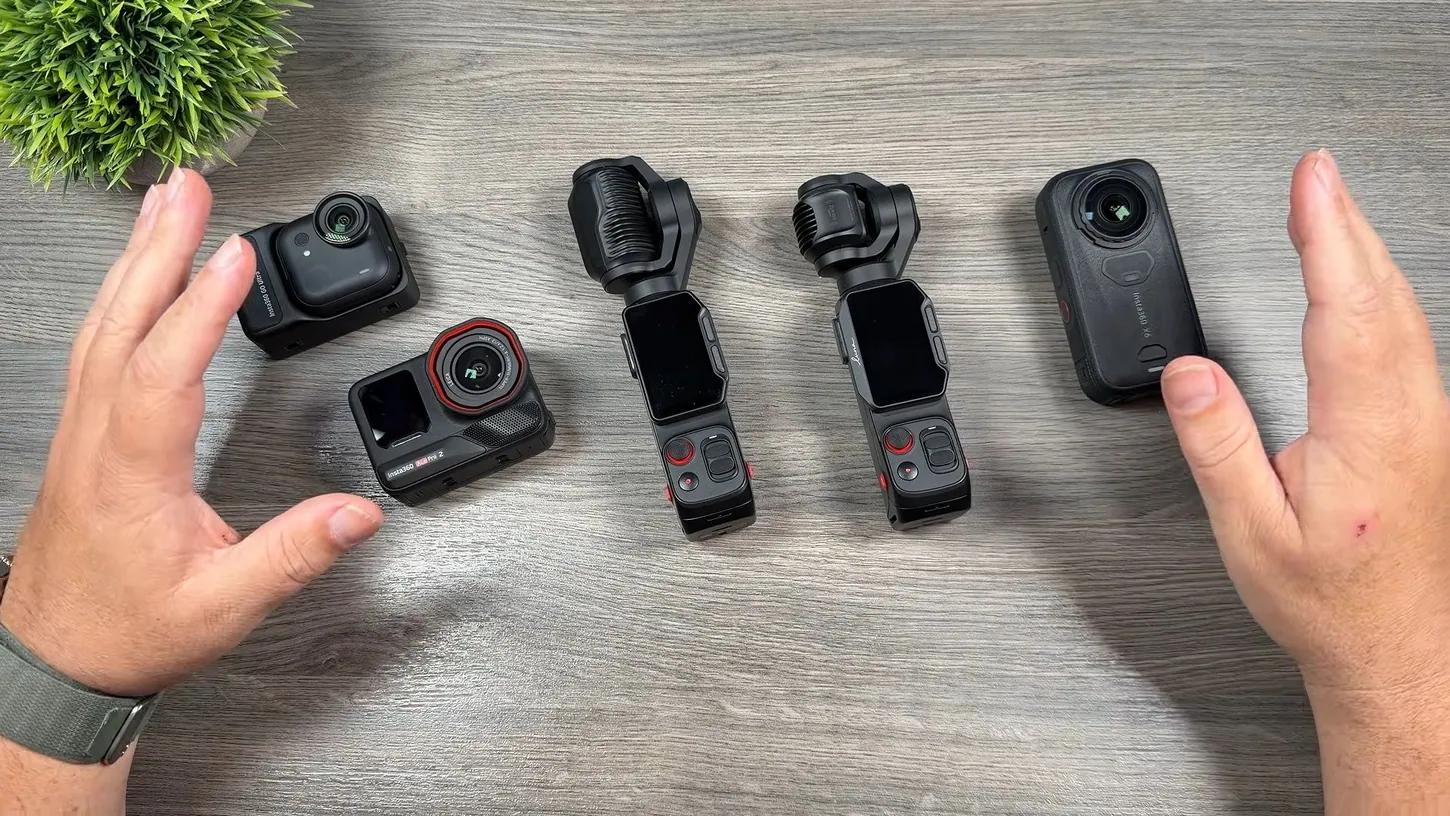
Insta360 actually has a really nice lineup, and there are some differences between these cameras in the type of user and the type of content they’re best suited for. I’m going to keep this short, simple and to the point.
The Ace Pro 2 is the one I recommend for the average person
Let’s get started with the Insta360 Ace Pro 2. This is Insta360’s flagship action camera, and for a lot of people it’s going to be the best choice because it’s very versatile in how you use it.
Whether you’re capturing point-of-view shots from a mountain bike or while you’re skiing, doing some hiking, or you just want a tough, durable, waterproof camera to take on vacation and capture all your adventures, the Ace Pro 2 is a good all-around choice. It can capture in 8K, and the video quality is really good, even in low-light scenarios.
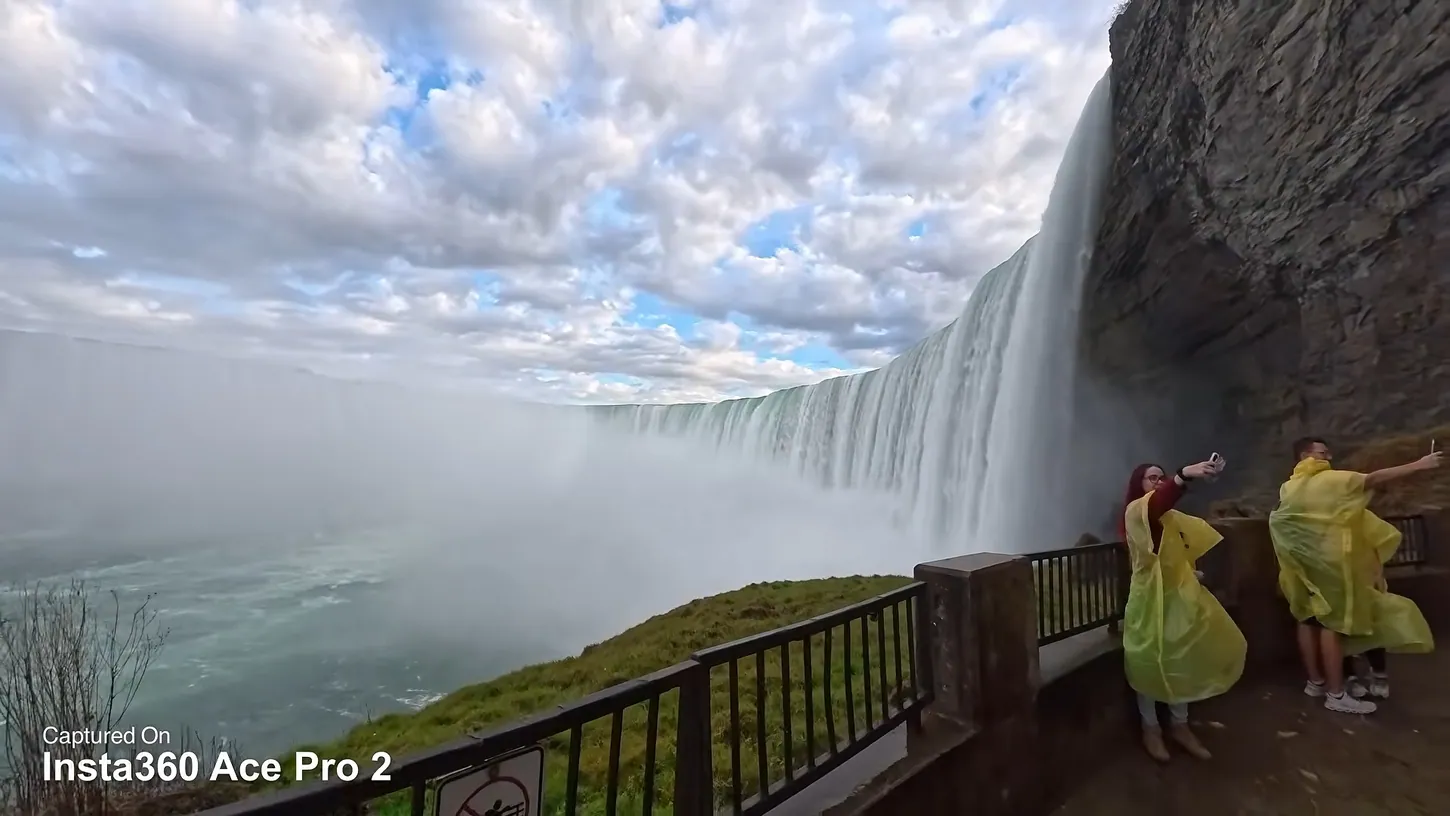
Its fold-out screen makes it a great choice for vlogging, too. You can hold the camera out in front of you and get a nice, large preview to make sure everything is framed correctly.
So if you want a multi-purpose camera that’s good for vlogging, captures high-quality 8K footage, and is tough and durable for all your action POV shots, the Ace Pro 2 is a good choice. Of all the cameras here, this is the one I recommend for the average person who wants to capture a wide variety of styles of shots.
The X6 lets you film now and frame the shot later
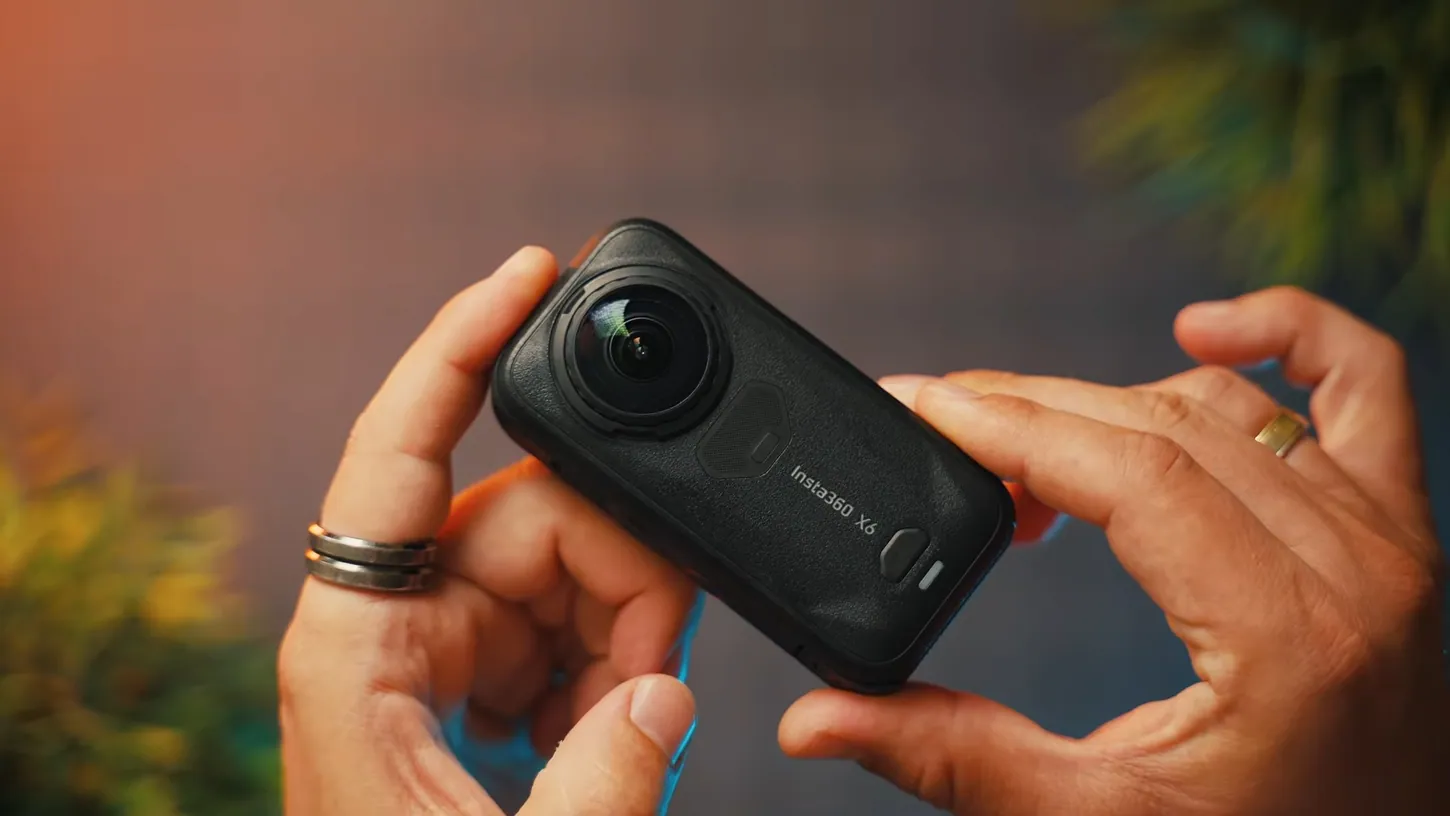
The Insta360 X6 is different from the Ace Pro 2, because it’s a spherical camera. It has two lenses, so it captures in every direction. That lets you enjoy the moment without worrying so much about framing the footage. That can be done later on, while you’re editing.
When you edit, you set the field of view, the aspect ratio and the direction the shot gets exported in. That lets you create a lot of content from one shot. If you upload to several platforms that need different aspect ratios, it’s a great choice for that. And because you’re capturing 360 spherical video, you can get really creative, adding different types of movement and different fields of view.
You also get the best of both worlds. Not only can you capture spherical video, you can use the X6 like a traditional action camera in its single-lens mode and capture 4K footage. In that mode it’s very similar to the Ace Pro 2, except the resolution doesn’t go quite as high.
There are a couple of things to keep in mind. The X6 is a little more fragile, because the lenses are exposed at the front and the back. However, they are user-replaceable, so if they do get damaged, you can easily swap them out. The footage quality also isn’t quite as good as the Ace Pro 2’s. The X6 can capture in 8K, but that’s 8K spherical, all the way around. When you export, it’s at a much lower resolution, and the quality isn’t quite as good. It is extremely versatile, though, and for some people that matters more.
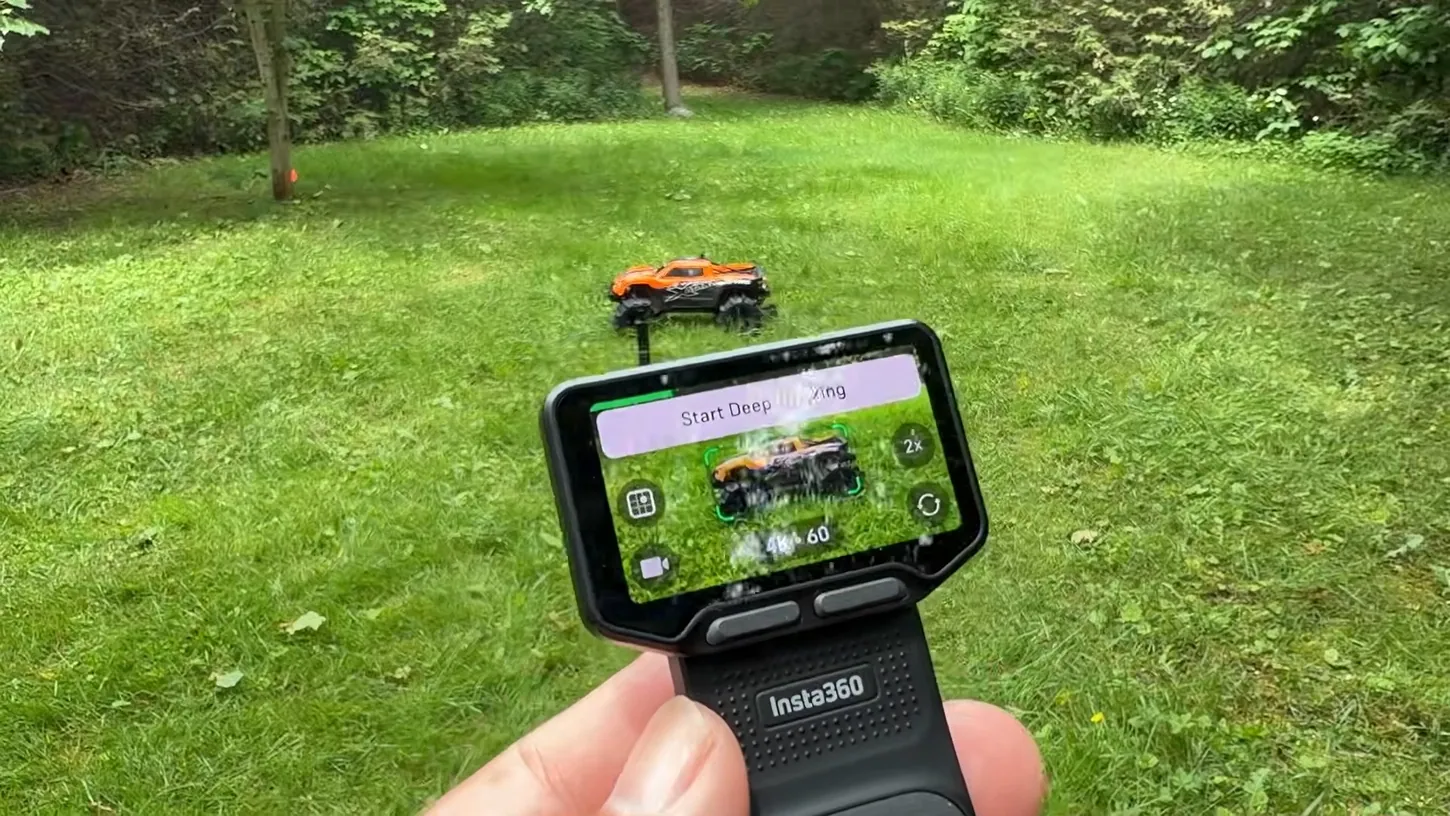
The X6 is also great for solo creators who want to share their activities. We don’t always have the luxury of somebody else filming us. With the X6 sitting on a tripod, the tracking features keep it locked onto me as I move around, or onto any object I select. I have an RC vehicle hobby, and this makes that footage really easy to capture: I set the camera down and lock onto the RC vehicle. That’s another benefit of a 360 camera over a fixed-lens camera.
The GO Ultra pops out into a tiny camera you can wear
If you want a fixed-lens action camera, the Insta360 GO Ultra is a great choice as well. With this one, you get the added bonus of a removable camera module, which gives you a super small camera that’s easy to mount.
You can mount it in ways you can’t mount larger action cameras, it doesn’t get in the way, and again, you can get really creative with it.
The video quality is quite good, very similar to the Ace Pro 2, except the resolution isn’t as high. The GO Ultra only films at a maximum of 4K.
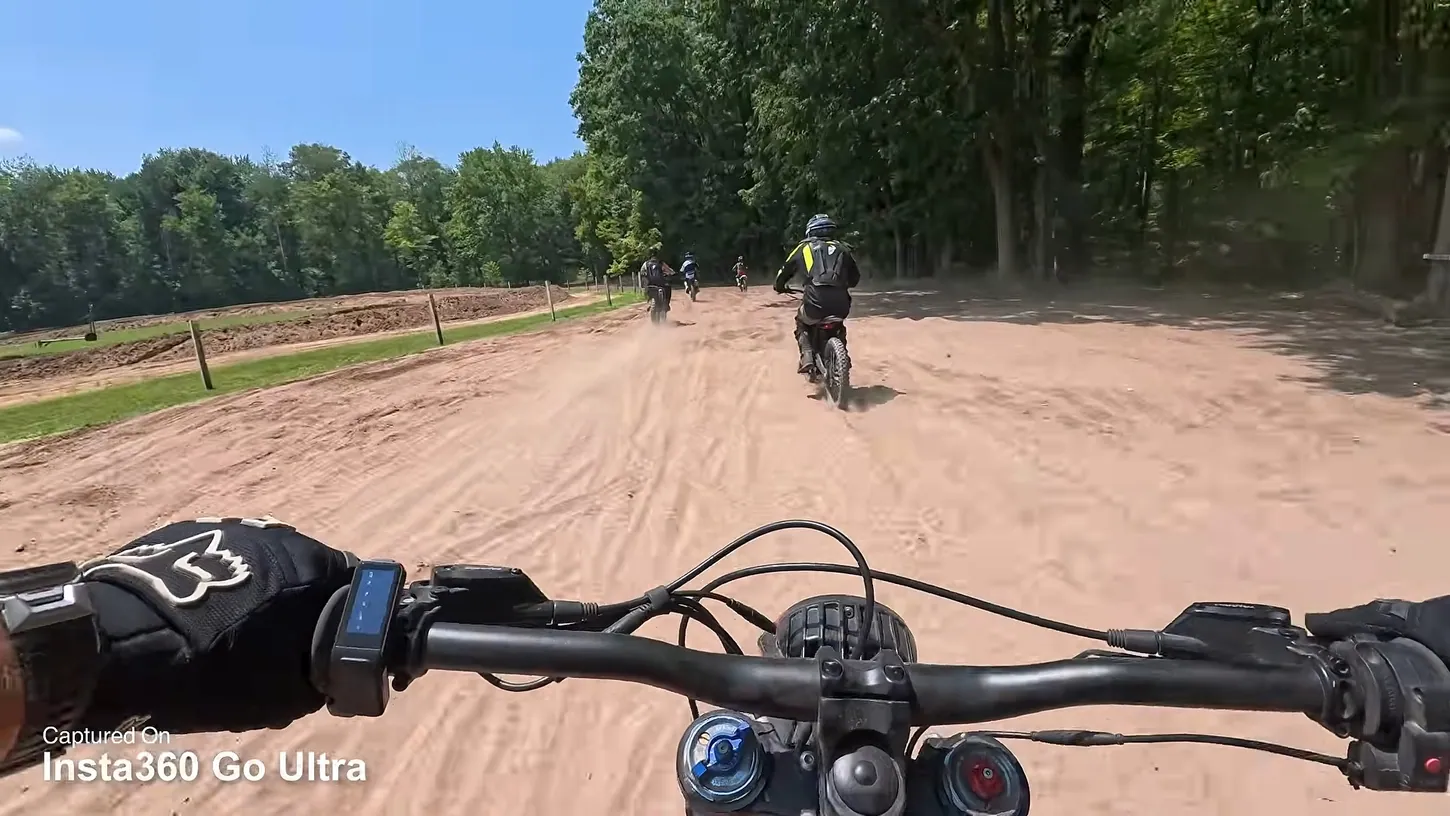
The nice thing is that you can use it mounted in the Action Pod. In that configuration it’s pretty well like any traditional action camera, with a fold-out screen at the back, so it’s great for vlogging. If you want the camera to be more minimal for specific shots, you just pull the module out. It’s lightweight and easily wearable, on a hat or on your chest, and because it’s so small and compact, it doesn’t get in the way. You can then use the Action Pod as a preview remote with a live feed from the camera.
The downside compared to some of the other cameras is that the camera module is waterproof, but the Action Pod is not. If you want underwater footage, you can only use the camera module. The battery might also be limiting for some people, because it isn’t removable. Once it runs out, there’s no way to swap it; you have to put the module back in the Action Pod to recharge. It does support quick charging, so it charges up fairly quickly, but that’s something to keep in mind. For some people, the convenience of a camera this small and light outweighs the negatives.
If you’re looking for a waterproof camera to use underwater, the Ace Pro 2 is your best choice. You’ll get the nicest underwater footage from it. You can use just the camera module on the GO Ultra, as mentioned, and the X6 is completely waterproof as well.
The Luna Ultra and Luna Pro probably deliver the best footage here
For some people, the Luna series might be the best option. Insta360 has two versions, the single-lens Luna Pro and the dual-lens Luna Ultra, and for the most part they’re identical: they function pretty well the same and have the same features.
The only real difference between the Insta360 Luna Pro and the Insta360 Luna Ultra is that the Luna Ultra adds a dedicated 15x zoom lens.
So if that zoom is a high priority, the Luna Ultra is the better choice. If you don’t think you’ll make use of the 15x zoom, the Luna Pro is the better option, because it’s significantly cheaper.
Both cameras have a removable front screen that acts as a preview remote, which is really handy when the camera is mounted away from you.
The footage you can capture with the Luna series is probably the best of all these cameras. The mechanical gimbal makes a really big difference, especially in low light. All of these cameras have low-light capability, but because the Lunas use a mechanical gimbal, they don’t rely on electronic image stabilization to keep the footage stable, and that’s where EIS can really break down in low light. Between the nice, large 1-inch sensor and that mechanical gimbal, your footage looks really good in all lighting conditions: not only at night, but at sunrise and sunset, or under a dark tree canopy.
Just like the X6, a gimbal camera gives you tracking. Set it on a tripod, lock onto a subject or a person, and the camera automatically moves to follow it. Again, I use this when I’m filming my RC hobby, and it works really well, so it’s great for solo creators too.
Water, hard knocks and vibration are where the Luna struggles
The limitation of these cameras is that they’re not waterproof, so you can’t use them in and around water or anywhere there’s going to be moisture. The gimbals can be a little fragile, so if you drop one or it takes a hard impact, you could easily damage it.
They also don’t work well for high-action shots. Sudden movements and jarring really affect the footage. With vibration, say the camera is mounted on the handlebar of a mountain bike going down a trail, the footage will look really bad, because the gimbals aren’t designed for that type of stabilization and impact. In those situations you’re best off with an action camera: the GO Ultra, the Ace Pro 2 or the X6.
On tracking, the X6 and the Luna series both track stationary subjects, moving subjects and people. The tracking footage from the Luna is going to be much better than the X6’s. However, the Luna has rotation limits, so if the subject moves around a lot in front of you, you’ll hit hard stops where the camera can no longer track. The X6, because it’s spherical video, can track 360 degrees around the camera indefinitely. That’s the main difference: better quality on the Luna series, with some limits on motion.
If I had to choose just one, it would be the Ace Pro 2
In a perfect world, it’s nice to have a couple of different cameras for different types of content. If you have to choose just one, go through how you’re going to use your camera and what you think will suit you best.
- Ace Pro 2: the best overall camera for general use. It does action shots and beautiful handheld footage, and there are a lot of accessories that turn it into a more traditional point-and-shoot camera. For a lot of people, this is the best choice.
- X6: flexible. You can capture both 360 footage and single-lens footage, and you can get really creative with the 360 footage.
- GO Ultra: multi-purpose. You can use it as an action camera for action sports, it’s great for vlogging, and you get the bonus of a small, minimal camera that’s easy to mount and easy to wear.
- Luna Ultra: your highest-quality video. The gimbal gives you some extra benefits, but it also has some limitations.
If there’s anything you think I’ve missed that a potential buyer should know about, post it in the comments on the video.
This article is based on a video from our YouTube partner Shawn. Watch the full video on the Air Photography YouTube channel, and find more of Shawn’s work on his DroneXL author page.
Advertise with DroneXLYour company hereReach 200,000+ drone readers a month with a sponsored article, a banner on your beat, or a partnership.See the options →