
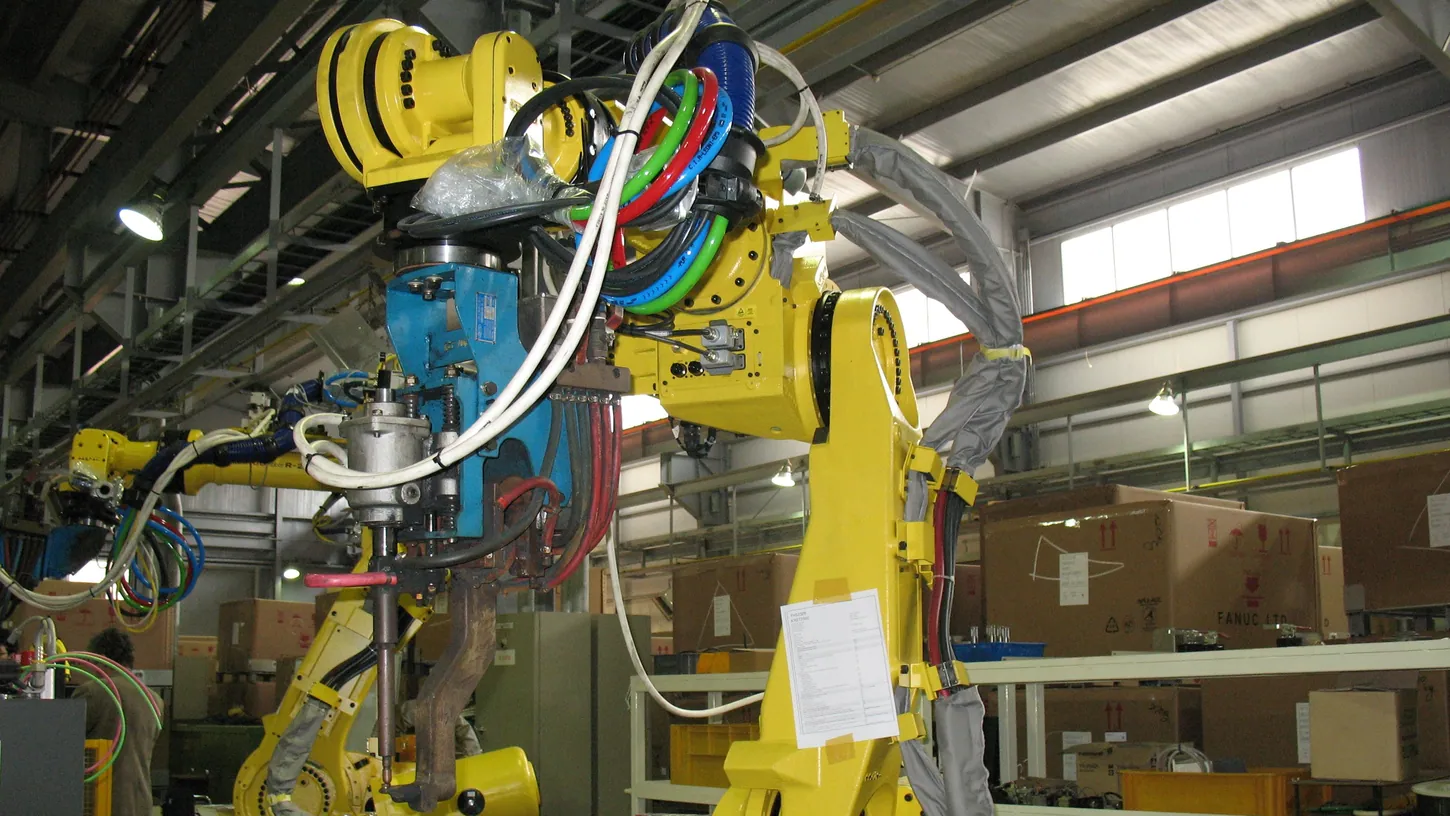
President Donald Trump signed a Section 232 proclamation on October 28 that finds imports of robots, industrial machinery and their parts threaten U.S. national security, and then imposes no tariffs. The Commerce Secretary and the U.S. Trade Representative are told to negotiate agreements with trading partners instead.
Drones already have their own Section 232 order. Trump’s August 13 drone proclamation put tariffs of 25% to 100% on imported drones and listed components from September 3. The robot order reaches the factory floor instead: the CNC mills and welding robots manufacturers buy to make parts.
Commerce’s Robot Probe Covers CNC Mills and Leaves Drones Out
Commerce opened the robotics investigation on September 2, 2025. Its Federal Register notice covers robots and computer-controlled mechanical systems, from CNC machining centers and milling machines to welding, stamping and laser-cutting equipment. It sets unmanned aircraft systems aside, citing the separate drone investigation.
The proclamation adopts Commerce’s finding that the United States relies on foreign imports for most types of robots and industrial machinery, and produces less than it consumes. It ties the sector to about $7.1 trillion in 2024 shipments of manufactured goods and about $86 billion worth of equipment produced that year.
The security case will sound familiar to anyone who followed DJI. Robots and machines from “certain foreign entities” pose risks, the proclamation says, because they “routinely process and store sensitive data.” It names no country. Its military examples include humanoid and quadruped robots used for reconnaissance and jobs such as mine clearing, the category where DroneXL reported Chinese parts inside American humanoid robots in April.
Robot Tariffs Stay Possible After a 180-Day Check-In
The negotiators owe Trump a progress update by April 26, 2027, 180 days after signing. Depending on how the talks go, he may consider tariffs, duties, quotas or fees, or a program to encourage new U.S. production. Section 232 also lets him act if no agreement is reached by then.
The drone order ran the other way, duties first. Most drones pay 25%, while drones over 25 kilograms (55 pounds), thermal drones, docks and listed critical components pay 100%. Qualifying drones from allies such as the European Union and Japan pay 15%, and Commerce can grant relief to companies building drone plants in the United States. A third tier of drone components follows on February 9, 2027, 76 days before the robot update is due.
The White House fact sheet names drones among the goods Trump has hit with Section 232 tariffs since returning to office, alongside steel, semiconductors and pharmaceuticals.
DroneXL’s Take
I think talks first is the right call for machine tools, and drone makers should want it to stay that way. The August tariffs only pay off if American drone factories get built, and by the government’s own finding, the United States imports most types of robots and industrial machinery. Any drone maker that equips a U.S. plant is shopping in that import market. A tariff on mills and robot arms would tax the onshoring the drone order is demanding. If the April 26 update leads to duties, a U.S. drone maker would pay tariffs on the imported parts it flies and again on the imported machines it bought to make those parts at home.
Sources: The White House proclamation, White House fact sheet, Federal Register, 90 FR 46382
DroneXL uses automated tools to support research and source retrieval. All reporting and editorial perspectives are by Haye Kesteloo. Read our editorial standards.


