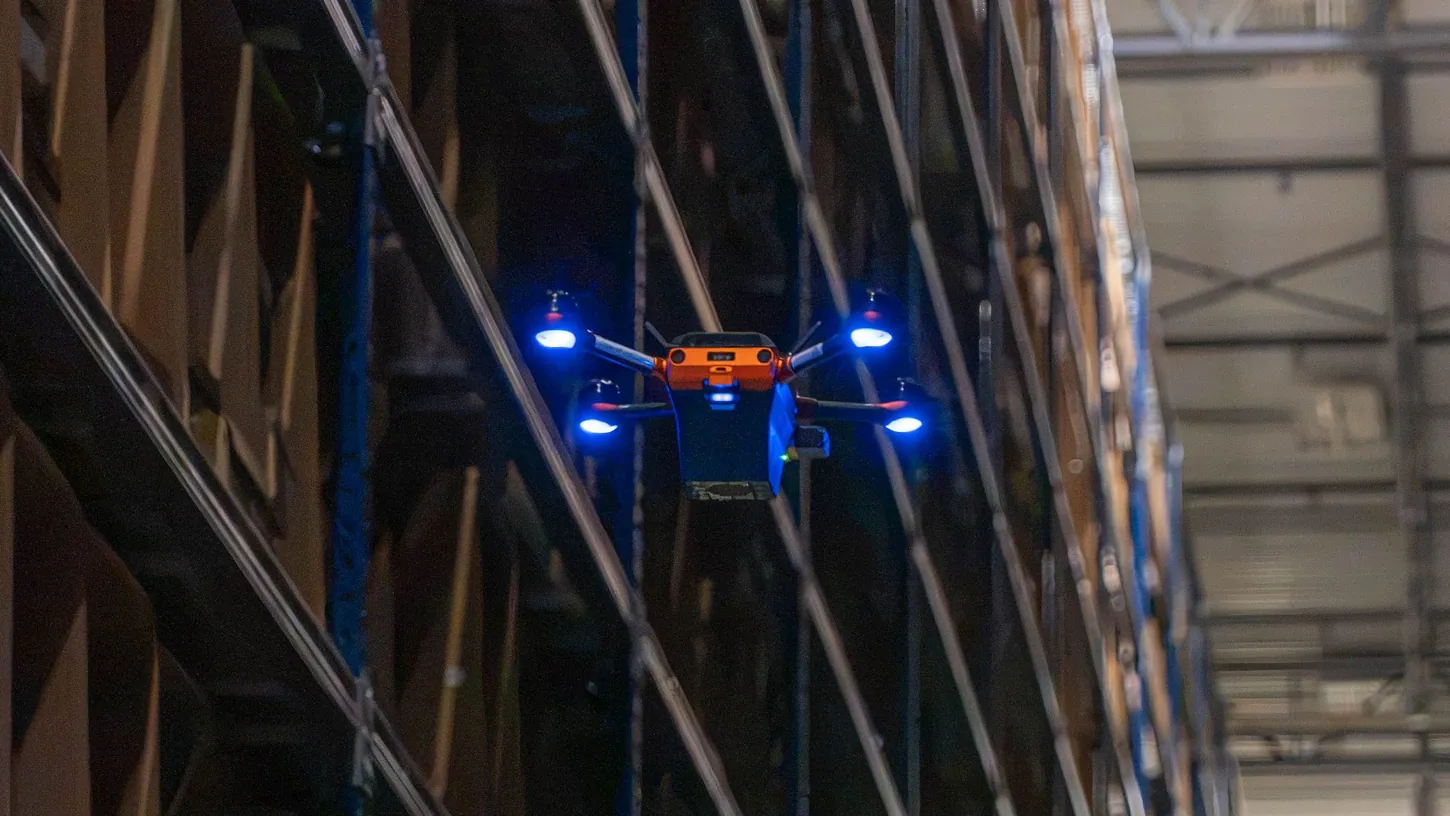
Asics America flies Corvus One inventory drones seven times a night inside its 855,000-square-foot (about 79,400 square meters) distribution center in Byhalia, Mississippi, and says it now recovers misplaced inventory about 60% faster than before. Corvus Robotics, the Mountain View drone maker that raised $18 million in 2024, announced the deployment on November 10.
The drones count two of the building’s highest-risk storage areas every month. Asics policy used to count them twice a year. In one three-month stretch the drones found 26 misplaced cases holding more than 200 pairs of shoes.
Before the drones arrived, Asics kept 12 to 15 of every 100 units out of the availability feeds it sends to online marketplaces.
Asics Held Back Online Stock Because Lost Units Became Cancellations
Asics withheld 12 to 15 of every 100 units from online marketplaces because the last units of a product carried fulfillment risk. A pair the system showed but nobody could find meant a cancelled order, and the alternative for held-back stock was liquidation at a steep discount.
“If a unit went missing, we might not find it for six months,” said Kyle Koestler, senior director of distribution and transportation at Asics America, in the Corvus press release. That missing unit could be the last pair for an order Asics had already taken, he said, and the customer would get a cancellation instead of shoes.
With monthly counts in the riskiest areas, Asics now publishes its full availability feed to marketplaces and sells that product at full price, according to the release.
Corvus One Checks Every Box Count Against Its UPC Reads
Asics schedules seven Corvus One flights a night, starting around 7 p.m. They cover the singles area, which holds single pairs and returns, and the case reserve of full cases. In each location the drone reads every UPC, counts the boxes and checks one number against the other.
The double check exists because of returns. Koestler says in a video on Corvus’ Asics case study page that returns from wholesale accounts, not just e-commerce customers, go back on the shelves, so the same barcode can show up five or six times in one location. If the drone counts 10 boxes, it should come back with 10 UPC reads.
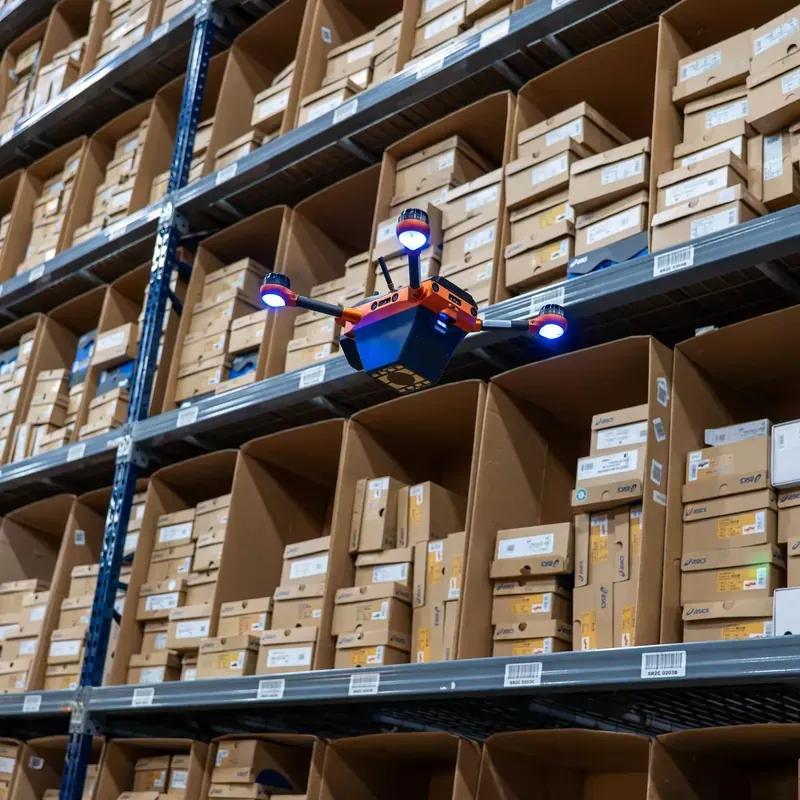
The aisles are less than 6 feet (1.8 meters) wide. Corvus One navigates them with onboard cameras, and the building has no beacons, stickers or markers to guide it, according to Corvus. The facility holds close to 3 million units across about 44,000 SKUs, 2.3 million of them pairs of footwear, all tracked in a Manhattan Associates warehouse management system.
Asics Inventory Staff Fix Most Drone Findings From a Desk
The morning after each night of flights, an Asics inventory associate reviews every flight and fixes most discrepancies from a desk, using the drones’ video and images. Asics says the drones freed about 200 hours of counting labor a month for reconciliation, root cause research and wholesale projects.
“If it’s something that we can correct from the desk, we’ll correct it then,” said Angela Williford, inventory control operations manager at Asics America, in the case study video. She said the team now checks the footage before sending anyone out to a location.
DroneXL’s Take
The 60% figure is Asics’ own estimate, and in the case study video Koestler presents it as his own rough number. I’d point other retailers at the holdback, because it shows an inventory problem costing Asics marketplace sales until monthly counts fixed it. GNC made a similar case in June, when four Corvus drones helped cut its daily nonshipments to about 98 at an Indiana warehouse. Neither company gives a fleet size or a price, so nobody outside Asics can check the payback. Even so, stock that sells at full price instead of a liquidation discount is a better argument for warehouse drones than saved labor hours, and Corvus should put it in the headline.
Sources: Corvus Robotics via GlobeNewswire, Corvus Robotics Asics case study, Supply Chain Dive
DroneXL uses automated tools to support research and source retrieval. All reporting and editorial perspectives are by Haye Kesteloo. Read our editorial standards.