
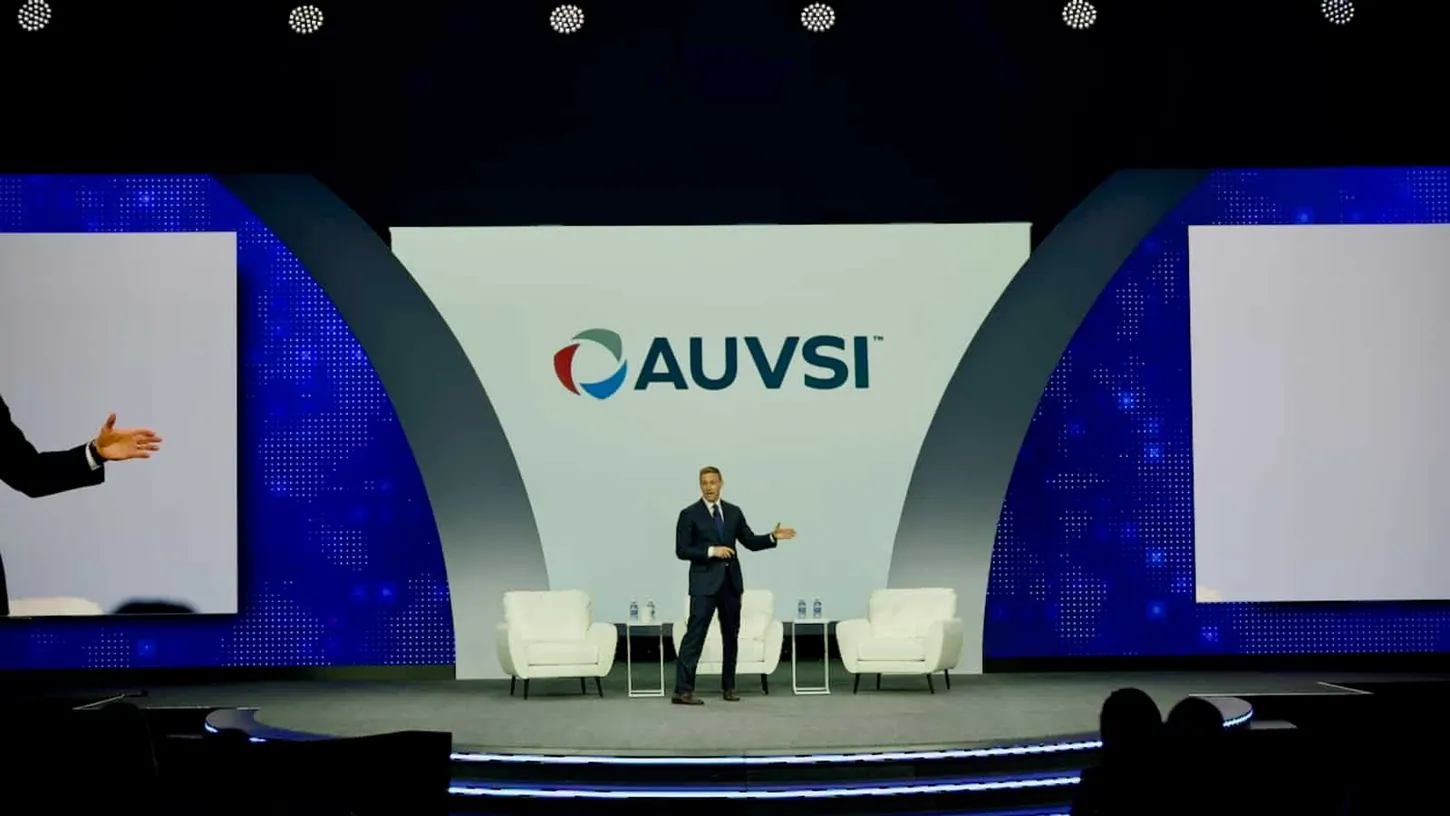
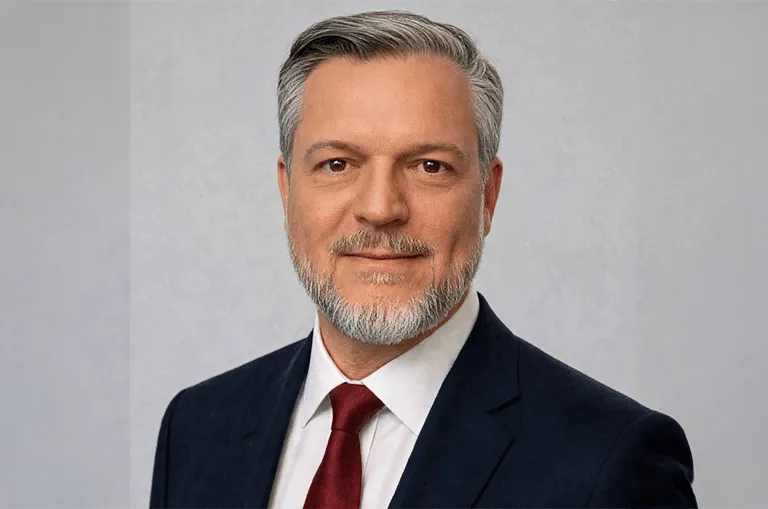
The Association for Uncrewed Vehicle Systems International (AUVSI) has named Brett Feddersen its president and CEO, effective December 1. Feddersen comes from counter-drone company D-Fend Solutions, where he was vice president of strategy and government affairs, and he moves into the job from a seat on AUVSI’s own board.
He replaces Michael Robbins, who left for the Semiconductor Industry Association at the end of September. Chief operating officer Heather Lee has run the association as interim CEO since October 1. AUVSI announced the pick on Monday, the opening day of its Drone & AAM Policy Symposium in Washington.
The announcement says AUVSI under Feddersen will push autonomous systems into routine, scaled deployment, with dual-use programs, domestic and allied manufacturing, and advanced air mobility on the list. It does not mention the FCC Covered List, which has kept new foreign-made drones off the U.S. market since December 2025.
Feddersen Spent Most Of His Career On Drone Security
Feddersen’s resume is almost entirely security work. AUVSI lists Pennsylvania State Trooper and helicopter pilot, Army lieutenant colonel, White House director for transportation and border security, and executive director for national security programs at the FAA. The association says he wrote the national framework for mitigating drone threats.
DroneXL first wrote about him in 2020, when he joined AccelerātUM, a group of former FAA executives set up to speed up drone operations. That article credited his federal work with promoting the drone industry’s economic competitiveness as well as countering drone threats. He then went to D-Fend, whose EnforceAir system takes over a drone’s control link and lands it. Motorola Solutions agreed to buy D-Fend for $1.5 billion in June and closed the deal on August 20, so Feddersen arrives at AUVSI from a Motorola company.
In September 2025 he testified to the House Judiciary crime subcommittee as D-Fend’s vice president and as chair of the Security Industry Association’s drone security subcommittee. He asked Congress to give detect-and-track authority to state and local police and to trained security staff at critical infrastructure, and to expand the 2018 federal mitigation pilot to the same groups. Three months later Congress handed trained state and local police some of that authority in the FY2026 NDAA.
Feddersen Told Congress Drones Should Stay Aircraft Under The Law
At the same September 2025 hearing, Feddersen defended the federal framework drone pilots fly under. Rep. Brad Knott (R-N.C.) said a drone is not an airplane and asked about a facility-specific code for unmanned aircraft. Feddersen disagreed and said the aircraft designation gives operators more protection.
“Aircraft is the right designation for that,” he told the subcommittee, according to the official hearing transcript. He also pushed back on the idea that only federal agents can be trusted with counter-drone gear, citing his years as a trooper.
The same hearing shows where his security instincts point. Asked by Rep. Tom Tiffany (R-Wis.) whether China may have had a hand in drone activity around U.S. military sites, Feddersen said yes and called drones a tool for criminal networks and foreign adversaries. None of his answers that day took a position on DJI or the Covered List.
AUVSI’s Announcement Names Inspectors And Responders, Not Their Fleets
Feddersen’s statement names the people who fly for a living: a commercial drone inspecting energy grids and a first responder deploying a life-saving system. It says AUVSI members need technology that is “safe, certifiable and secure.” It says nothing about the hardware those operators already own.
That gap is what the Drone Service Providers Alliance asked the board to close. In August DSPA called on AUVSI to reset after Robbins, judging drones on measurable risk instead of country of origin. Robbins had welcomed the FCC’s December action within hours and defended the broader version in May at XPONENTIAL Detroit, where DroneXL was in the room. In the October announcement of this week’s symposium, Lee said that restrictions protect the industry and strategy is what builds it.
The next fight lands on those fleets directly. The FCC is still weighing a ban on imports and sales of previously authorized foreign thermal, LiDAR, spray and docking drones, senior national security counsel Adam Chan said on a podcast published October 30. In the comment record, 1,686 of the 1,701 filings that answered the FCC’s economic-impact question described severe harm.
DroneXL’s Take
I’m carefully hopeful about Feddersen. A former trooper who tells Congress that drones belong under the aircraft rules, and that local police can be trusted with the same tools as the FBI, sounds to me like someone who knows most people flying drones in this country are doing a job. That is a better starting point for operators than the manufacturing-first case AUVSI made in Washington under Robbins.
I’m less sure about where he has spent his career. He comes from the detect-and-defeat side, and his last employer sells drone takeover systems to federal agencies and, through Motorola, to police. AUVSI already speaks fluent threat. Drone service providers need it to tell the FCC that a surveyor’s or a fire department’s existing fleet is not a national security problem until someone shows it is. If AUVSI says that while the thermal and spray drone ban is still on the FCC’s desk, DSPA got the reset it asked for in August.
Sources: AUVSI announcement, November 9, 2026; Motorola Solutions announcement, August 20, 2026; House Judiciary subcommittee hearing transcript, September 16, 2025.
DroneXL uses automated tools to support research and source retrieval. All reporting and editorial perspectives are by Haye Kesteloo. Read our editorial standards.


