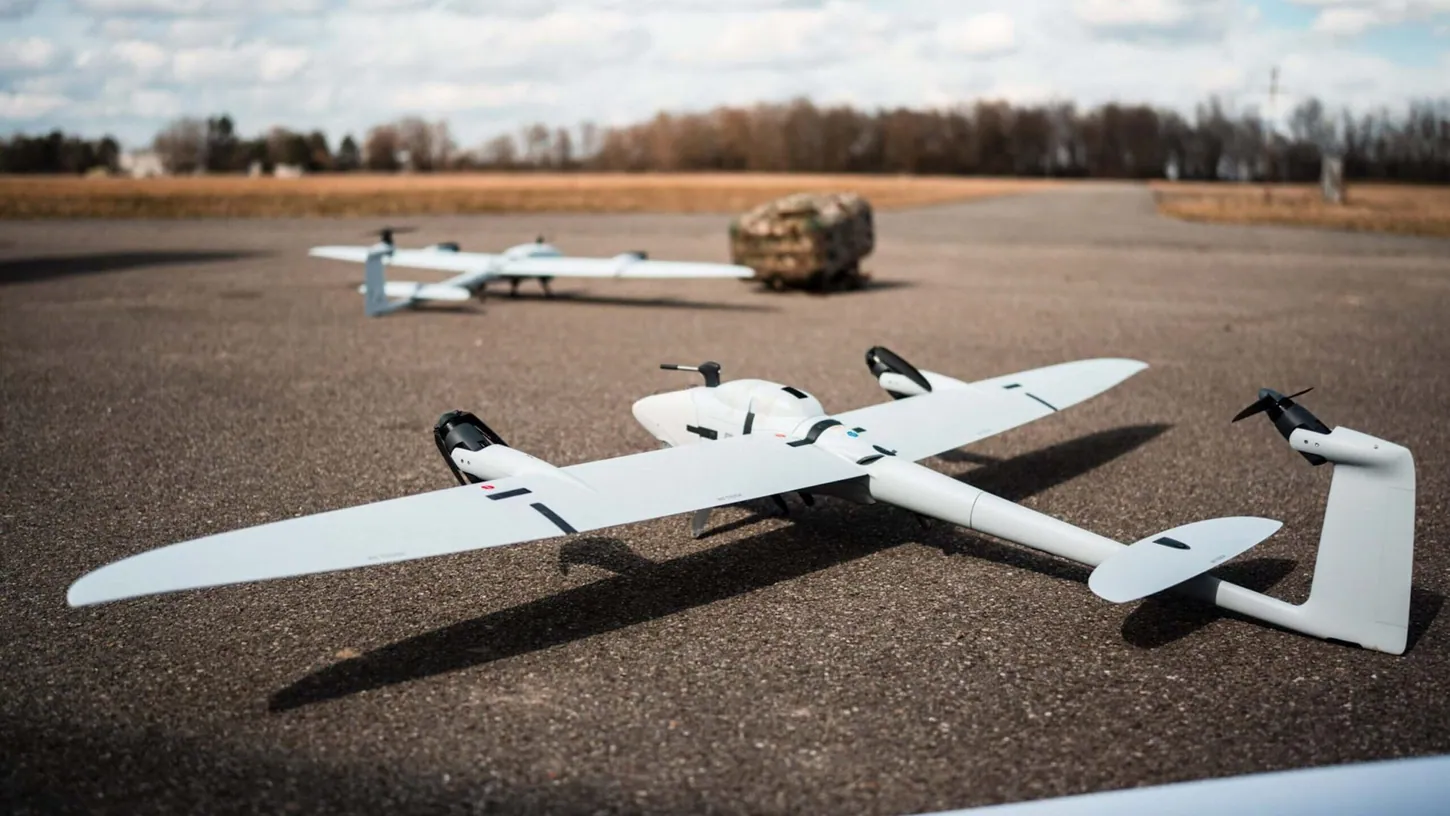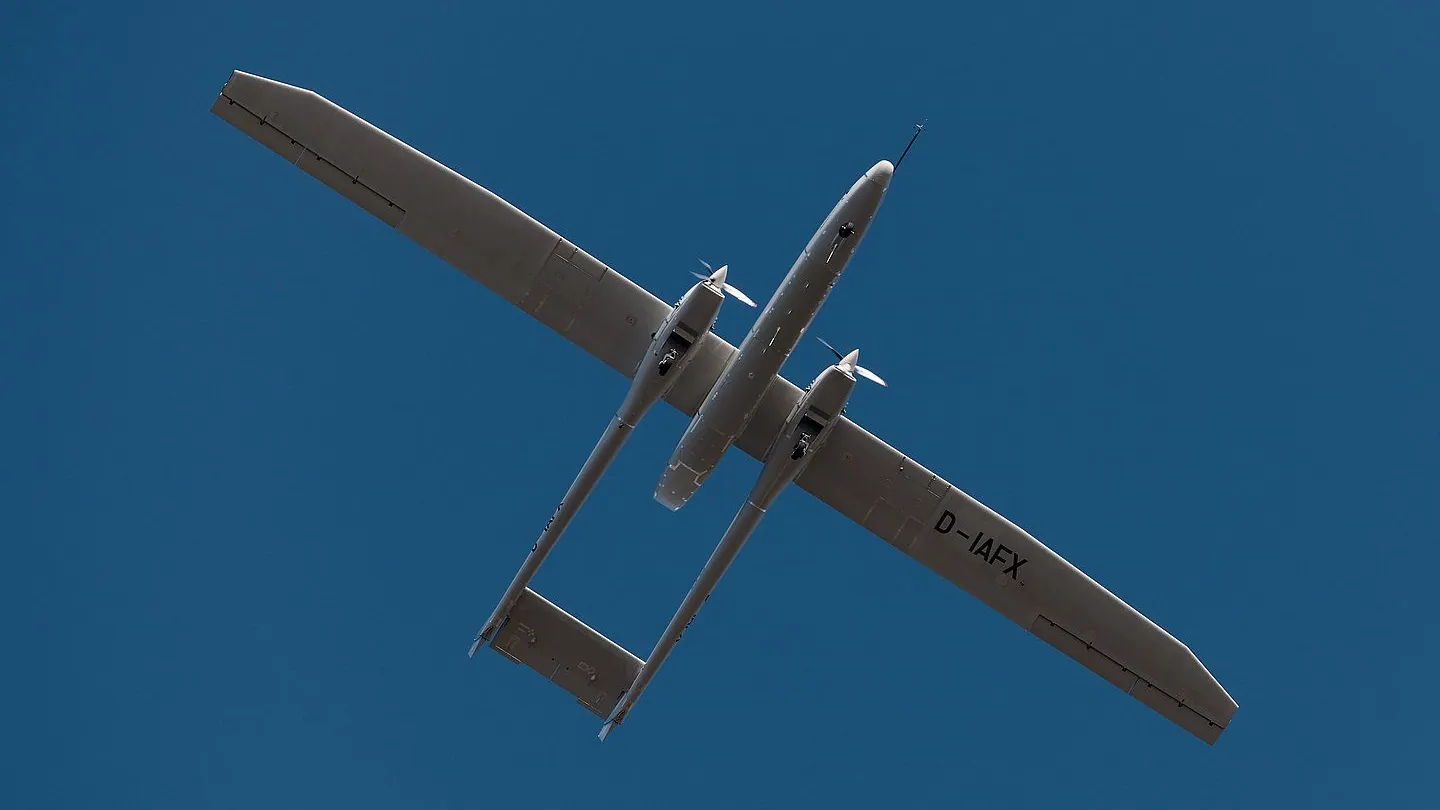
The Aerodata AeroForce X, the aircraft its maker calls Germany’s first medium-altitude long-endurance (MALE) drone, made its first flight on Saturday, November 14, from Strausberg Airfield east of Berlin. It did so with a pilot in the cockpit. Aerodata says the prototype met every requirement set for the flight, and that the first unmanned flight will only follow more manned flights and autopilot testing.
We first covered the AeroForce X a year ago, when it was a rendering and a promise of flight trials in 2026. Aerodata has kept that date. No order from the German military has been announced, though, and in January Berlin ordered eight MQ-9B SeaGuardians from General Atomics for $1.78 billion to watch the same North Sea and Baltic waters Aerodata is building for.
AeroForce X Flew From Strausberg With A Pilot In The Cockpit
The prototype carries the German civil registration D-IAFX under its left wing and a cockpit canopy above its nose. The test points were controllability, stability and system performance, and Aerodata’s press release lists “further manned flights” as the next step before the autopilot takes over.
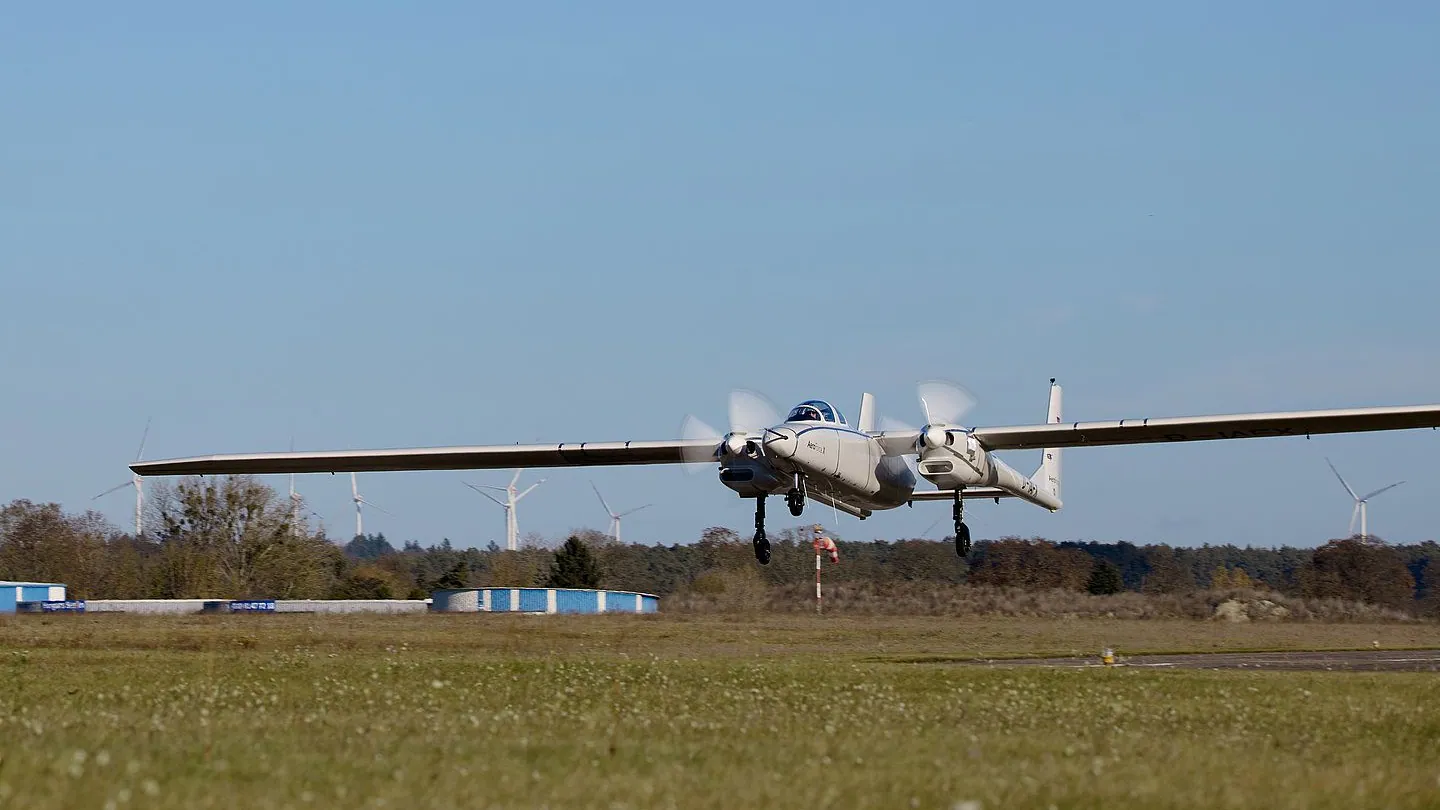
The release gives no flight time. German trade site defence-network.com, in a photo caption, puts it at about an hour. Aerodata had called the aircraft a “manned prototype” since its public rollout on August 19, and German engineering outlet ingenieur.de reported in August that the first flight was planned for mid-October and that flight testing without a crew should begin in 2027. The flight came about a month after that plan.
CEO Neset Tükenmez said Aerodata had put its own aircraft into the air “for the first time in the company’s history.” For more than 40 years the Braunschweig company has built flight-inspection and surveillance systems that fly in other manufacturers’ airplanes. The airframe did not start at Aerodata either. According to ingenieur.de, citing public broadcaster rbb, it began as the i-5 at Apus Aeronautical Engineering in Strausberg, and Aerodata took over the project in 2025 after Apus ran into financial trouble.
Aerodata’s 40-Hour Endurance Is A Target Flight Testing Has To Prove
Aerodata lists a planned endurance of up to 40 hours and a mission payload of up to 2,866 pounds (1,300 kg): 1,543 pounds (700 kg) in the fuselage and 717 pounds (325 kg) on each wing hardpoint. The wingspan is 85 feet (26 meters). All of these are company figures.
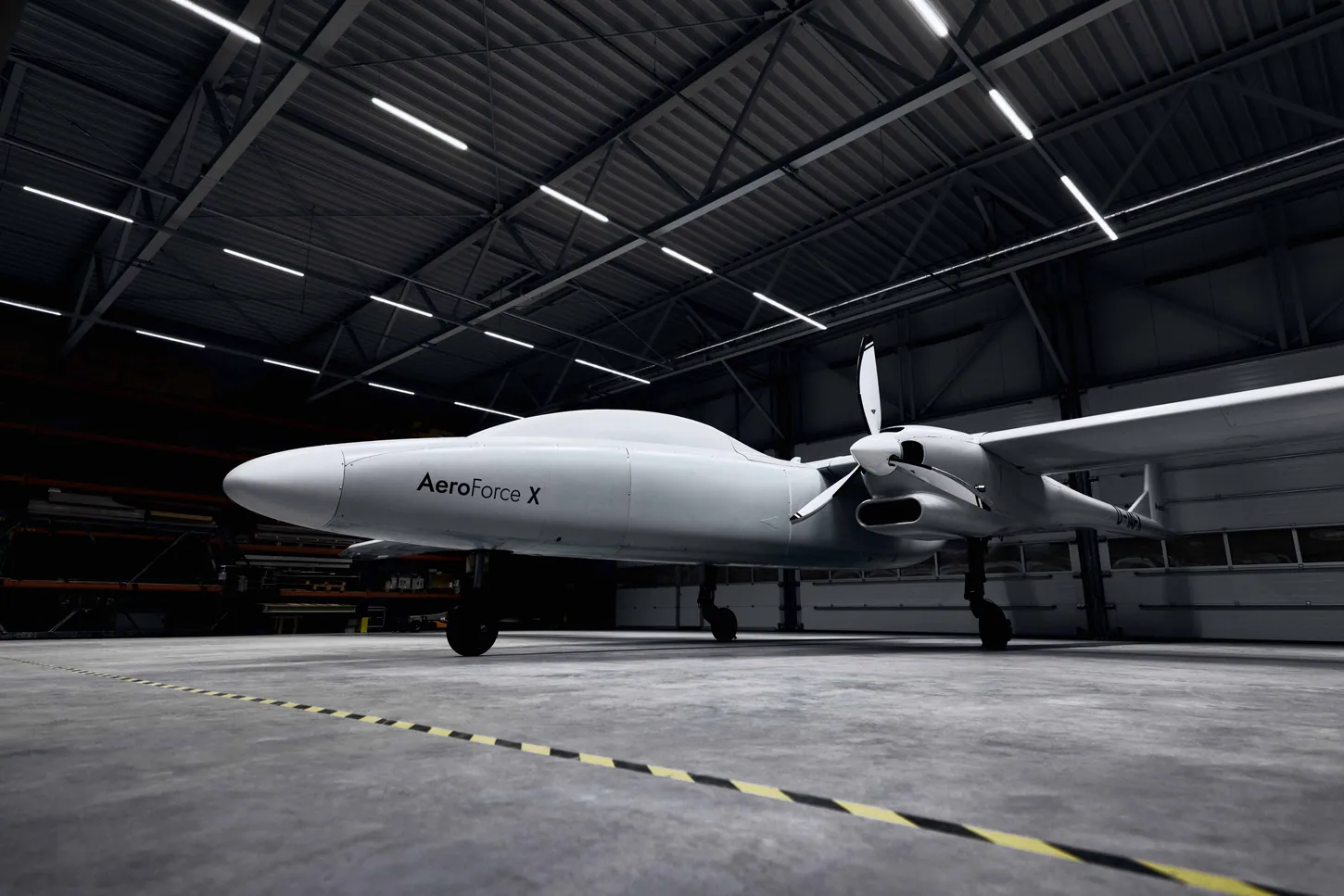
Germany’s air force already flies a drone of this size, the Israeli-built Heron TP. Ingenieur.de’s comparison gives both aircraft an 85-foot wingspan and puts the Heron TP at 27 hours of endurance with a payload of 3,527 pounds (1,600 kg), more than the German design carries but for 13 fewer hours. The same report lists a range of up to 6,214 miles (10,000 km) and a takeoff weight of about 11,000 pounds (just under five metric tons) for the AeroForce X.
The aircraft has two engines as standard. Aerodata’s product page lists electro-optical and infrared cameras, a multimode radar, signals-intelligence sensors, sonobuoys for tracking submarines and loitering munitions among the payloads it is designed to carry.
Berlin Has Not Ordered It, And Aerodata Is Pitching It ITAR-Free Abroad
No public procurement order existed for the AeroForce X in August, when ingenieur.de reported that Aerodata was in talks with the Bundeswehr and targeting series production in 2029, and the first-flight release names no customer. Aerodata markets the aircraft as ITAR-free and signed a partnership in India in April.
ITAR is the US arms export regime, and Aerodata’s product page says the label means the aircraft can be used internationally without US restrictions. The Indian memorandum of understanding, dated April 22, is with Dynauton Systems, the unmanned division of India’s Dynamatic Technologies. The two companies will evaluate an AeroForce X version for surveillance over the Himalayas and the Indian Ocean.
At home the competition is already under contract. The SeaGuardians Berlin bought from General Atomics start arriving in 2028. The Eurodrone, which Germany is developing with France, Italy and Spain, had not flown when Airbus signed a memorandum of understanding with Kawasaki in June. German Defense Minister Boris Pistorius did visit Aerodata’s Braunschweig headquarters in September and called the company a “hidden champion.”
DroneXL’s Take
I’d rather see a drone fly with a pilot in it than look at another year of renderings, and Aerodata went from announcement to first flight in twelve months. That is fast for a company that had never flown an aircraft of its own, even with an airframe it inherited from Apus. But the AeroForce X is not a drone yet. Until the autopilot flies it with the cockpit empty, the 40 hours, the 2,866 pounds and the 2029 production date are sales figures. The flight to watch is the first unmanned one, which the August reporting put in 2027. Berlin has already spent $1.78 billion on American aircraft for the maritime job, so I expect the first AeroForce X customer to be an export buyer who wants an MQ-9-class aircraft without asking Washington first.
Sources: Aerodata AG, ingenieur.de, defence-network.com
DroneXL uses automated tools to support research and source retrieval. All reporting and editorial perspectives are by Haye Kesteloo. Read our editorial standards.