
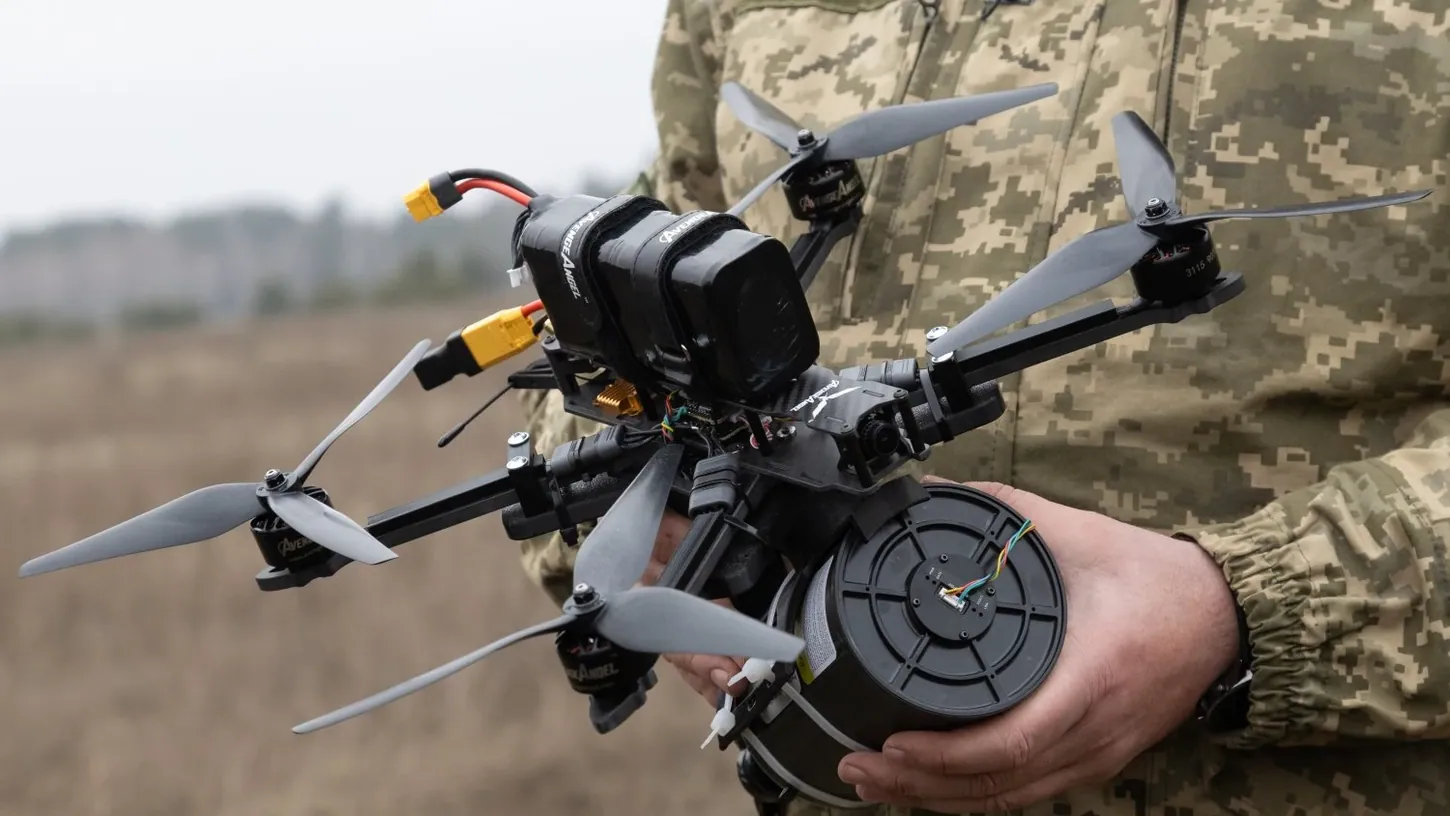
High-quality optical fiber for jam-proof drones now sells for almost $30 a kilometer, up from about $4 this spring, as Russia and Ukraine bid for the same limited supply from Chinese factories. Traders and Ukrainian drone makers gave those figures to the Financial Times in a report published November 21, and one trader told the paper that Russia is getting the better of the race.
Both armies fly fiber optic FPV drones because a hair-thin cable unspooling behind the aircraft cannot be jammed. DroneXL reported in May that a 50-kilometer spool had gone from $300 to $2,500 for one Ukrainian unit. The FT’s traders now put the climb at more than sixfold since spring, measured on the raw fiber Chinese factories sell.
Russia Buys Fiber Centrally While Ukraine Buys Through Hundreds Of Middlemen
Russia wins the race for Chinese fiber because it buys centrally, in very large volumes, through direct agreements with Chinese suppliers, a Ukrainian trader told the Financial Times. Ukraine’s purchasing is split across hundreds of drone companies and intermediaries, each bidding on its own.
The trader, who sources fiber from China, said Russian buyers are also less sensitive to price. Russia has no domestic fallback either. Its only fiber optic plant, in Saransk, was hit by Ukrainian drone strikes in April and May 2025 and has not resumed operations, The Moscow Times reported in February. DroneXL first noted the attack on the plant in April 2025. That leaves Russian drone makers fully dependent on Chinese imports, and their demand lands on the same factories Ukrainian buyers are calling.
Huatai Securities, one of China’s largest investment banks, says China makes more than half of the world’s optical fiber and nearly half of its finished optical cable. Only a handful of companies draw the underlying fiber at scale, among them Hengtong in Suzhou and YOFC and Fiberhome in Wuhan. Output is capped by the supply of glass “preform,” the capital-intensive blank the fiber is drawn from. Hengtong told the FT it does not sell directly to drone makers. Fiberhome said it stopped doing business in Russia years ago.
Drone Fiber Demand Could Grow 155% In 2026
Huatai estimates that drone fiber sales could reach 146 million kilometers in 2026, the FT reports. That is a 155% jump over 2025. It lands on top of AI data centers, which bundle the same fiber into thicker cables and push prices up on their own.
Ahmed Ali, lead analyst for optical fiber and cable at London commodity research firm CRU, said drone use first made a noticeable dent in fiber consumption in 2025. “Demand has increased substantially in 2026,” he told the FT, with Russia and Ukraine still accounting for most of it. One Chinese maker shows the shift: Julia Li of Potel Cable Group told the FT that drone fiber went from zero to about half of the company’s sales since February.
Ukrainian Makers Are Swapping Fiber For Starlink Terminals
The price is now changing what Ukrainian drone companies decide to build. Oleksandr Yakovenko, founder of Ukrainian FPV drone maker TAF Industries, told the FT that the fiber for a single drone with a 30-kilometer (19-mile) range can cost close to $1,000.
Some drone companies are switching to wireless drones paired with Starlink terminals that cost about $300, according to the report. Starlink’s phased-array antennas work across several frequencies and pull strong signals from satellites in low Earth orbit, which makes them hard to jam. Builders had already started hedging in March, when Ukrainian units began fitting fiber drones with a radio link that takes over when the cable snaps.
DroneXL’s Take
If the FT’s trader has it right, Ukraine is losing this race because of how it shops, and Russia’s money is only part of it. Hundreds of small buyers calling the same Chinese factories through middlemen bid against each other before they ever bid against Moscow, and every markup lands on a front-line unit or a volunteer fund. Ukraine’s drone industry moves fast because it is decentralized, and I’d keep that for design, but fiber is a commodity. A pooled fiber purchase, run by the state or by a group of makers such as TAF, is the obvious answer to one central Russian buyer with direct supplier deals. The Starlink shift fixes the cost problem, but it moves Ukraine’s answer to jamming from Chinese glass to a single American company’s satellite network, and I don’t think that is a safer dependency.
Sources: Financial Times, The Moscow Times, Times Now, CRU.
DroneXL uses automated tools to support research and source retrieval. All reporting and editorial perspectives are by Haye Kesteloo. Read our editorial standards.
Advertise with DroneXLYour company hereReach 200,000+ drone readers a month with a sponsored article, a banner on your beat, or a partnership.See the options →


