

Over the weekend, the London Defence Tech Hackathon brought together the UK’s brightest minds in technology, venture capital, and national security. Co-hosted by Skyral, Future Forces, Apollo Defence, and Lambda Automata, the event aimed to foster innovation in defense, national security, and deep technology. Attendees were given the space and guidance to develop and deploy real-world solutions, with a particular focus on drones and their applications in various scenarios.
Seven Groundbreaking Drone Projects
The hackathon yielded an impressive array of drone-related projects, each addressing unique challenges and opportunities in the field. Here are the seven standout projects that were shared on X by Sebastian Völkl:
1. High-Speed Interceptor for Orlan Drones
One team developed a fully integrated hardware prototype called the “Paraceptor,” designed to take down Orlan drones. The Paraceptor boasts optimized speed, aero covers, a reversed motor design, and a flight path calculated from position data.

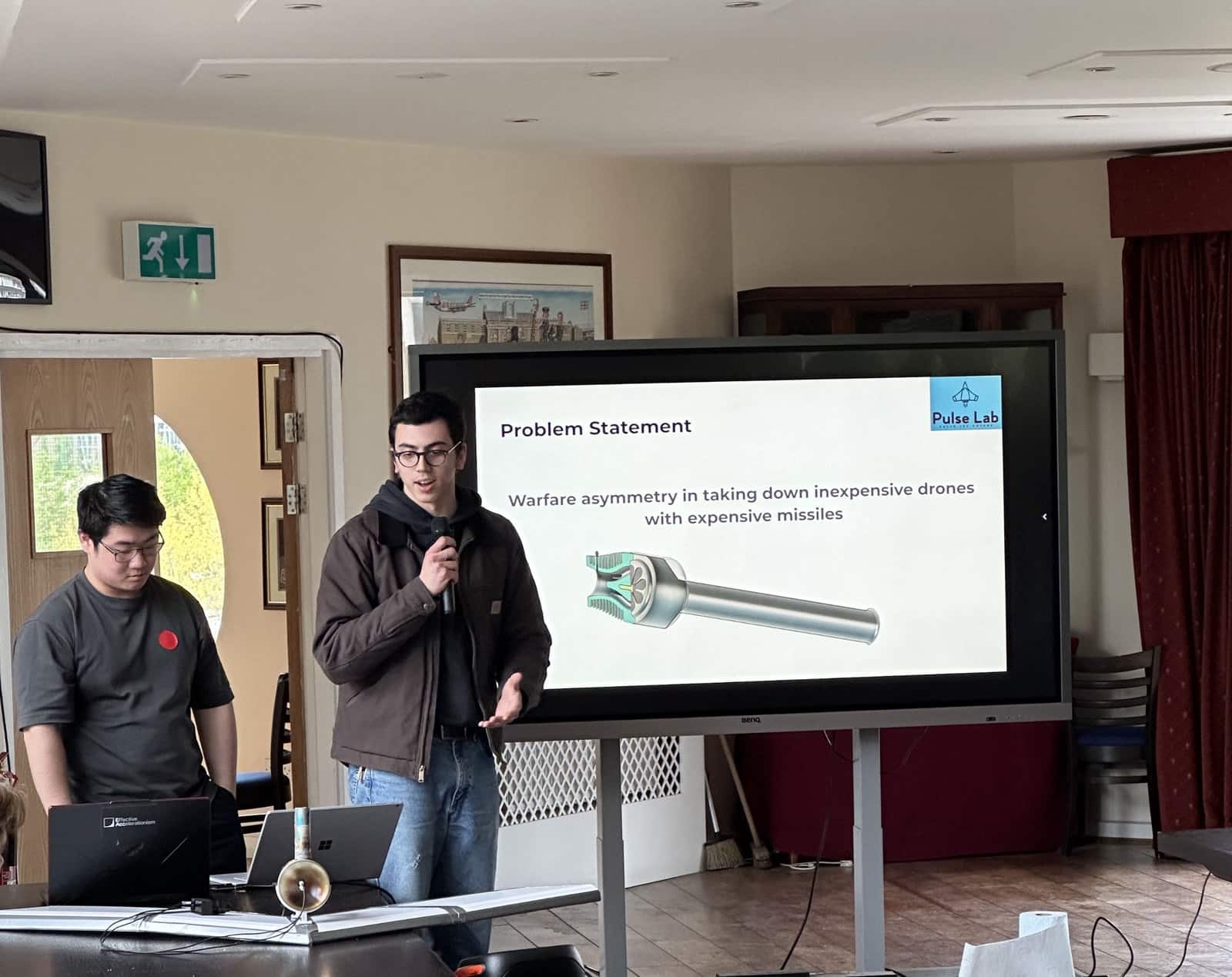
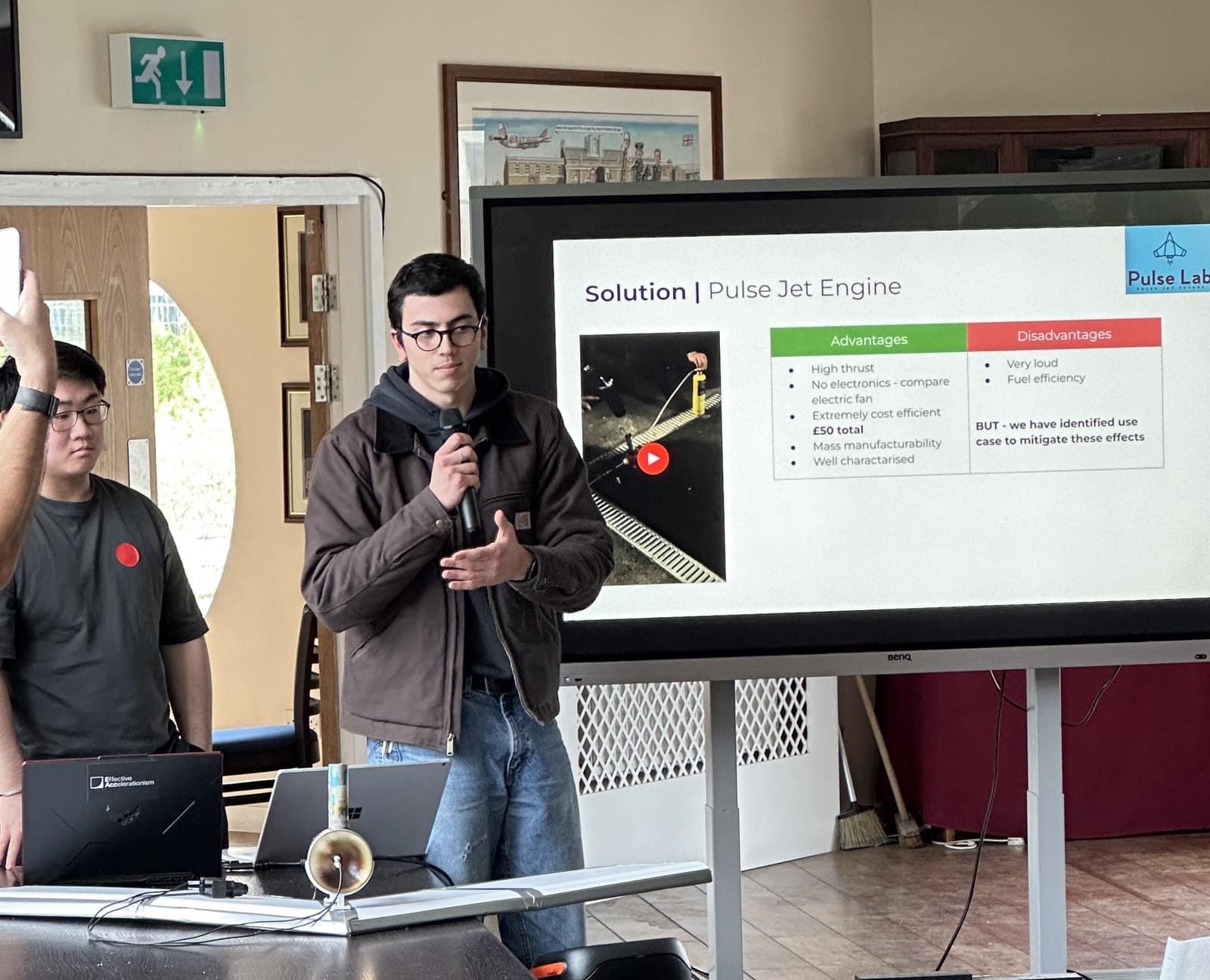
2. High-Thrust Pulse Jet Engine
Another project tackled the issue of warfare asymmetry, where expensive missiles are used to take down inexpensive drones. The team’s solution? A high-thrust pulse jet engine that offers advantages such as cost-efficiency, mass manufacturability, and no electronic components. While loud and fuel-inefficient, the team identified use cases to mitigate these drawbacks.
3. Drone Jamming System
This three-step drone jamming system, dubbed “FIND, FIX, DENY,” aims to identify, locate, and interfere with enemy drones. The “FIND” phase involves identifying and classifying nearby UAVs, while the “FIX” phase uses RF signals to locate enemy UAVs in space. Finally, the “DENY” phase employs jamming, spoofing, or control methods to neutralize the threat.

4. MapBrain: Lightweight Embeddings for Localization in GPS-Denied Environments
The MapBrain project addresses the challenge of drone localization when GPS is disabled, as seen in Ukraine. Using a dataset of a 40 km flight path and a model size of just 90mb, the team demonstrated that vision alone can be used for drone localization, with an inference time of approximately 1 second.

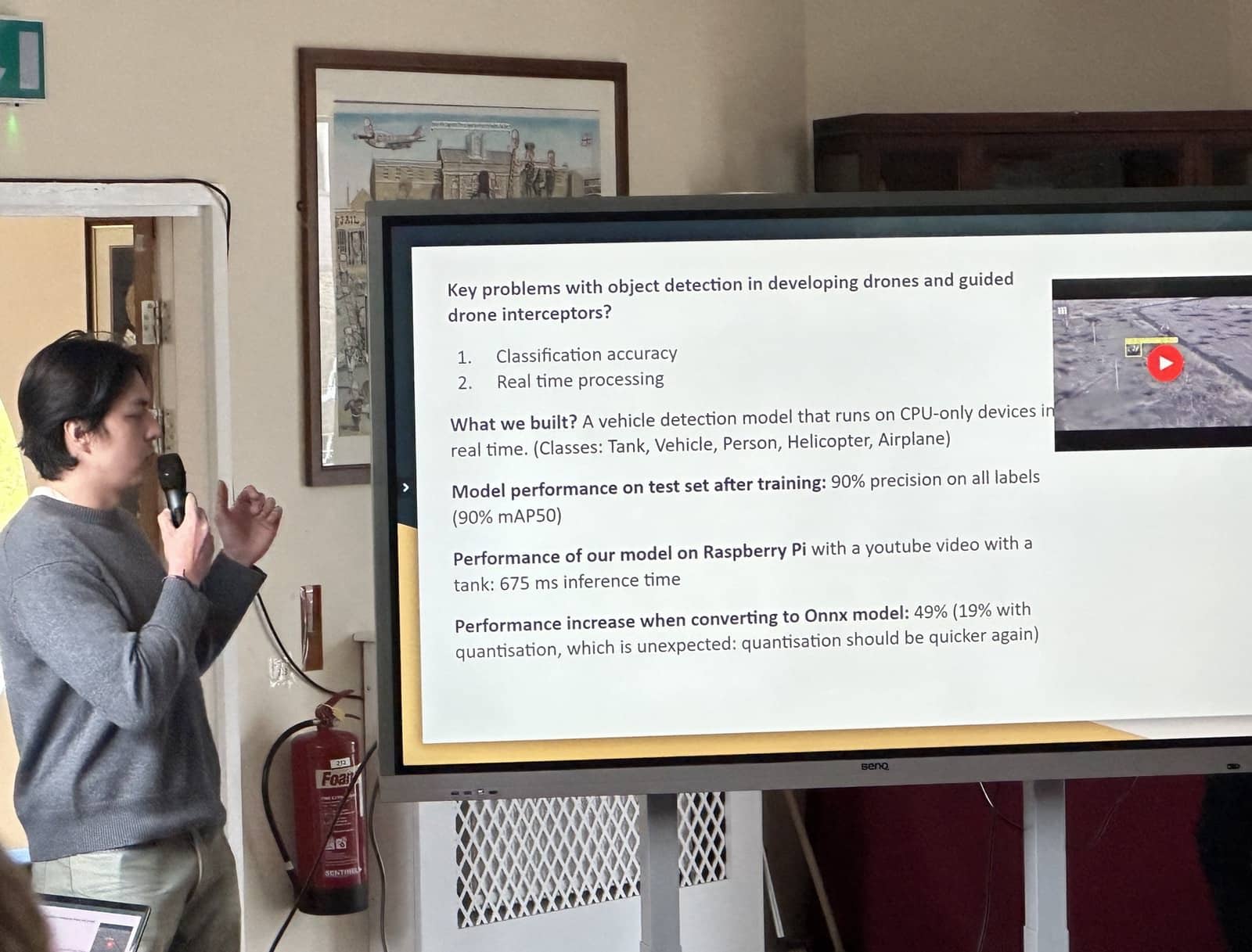
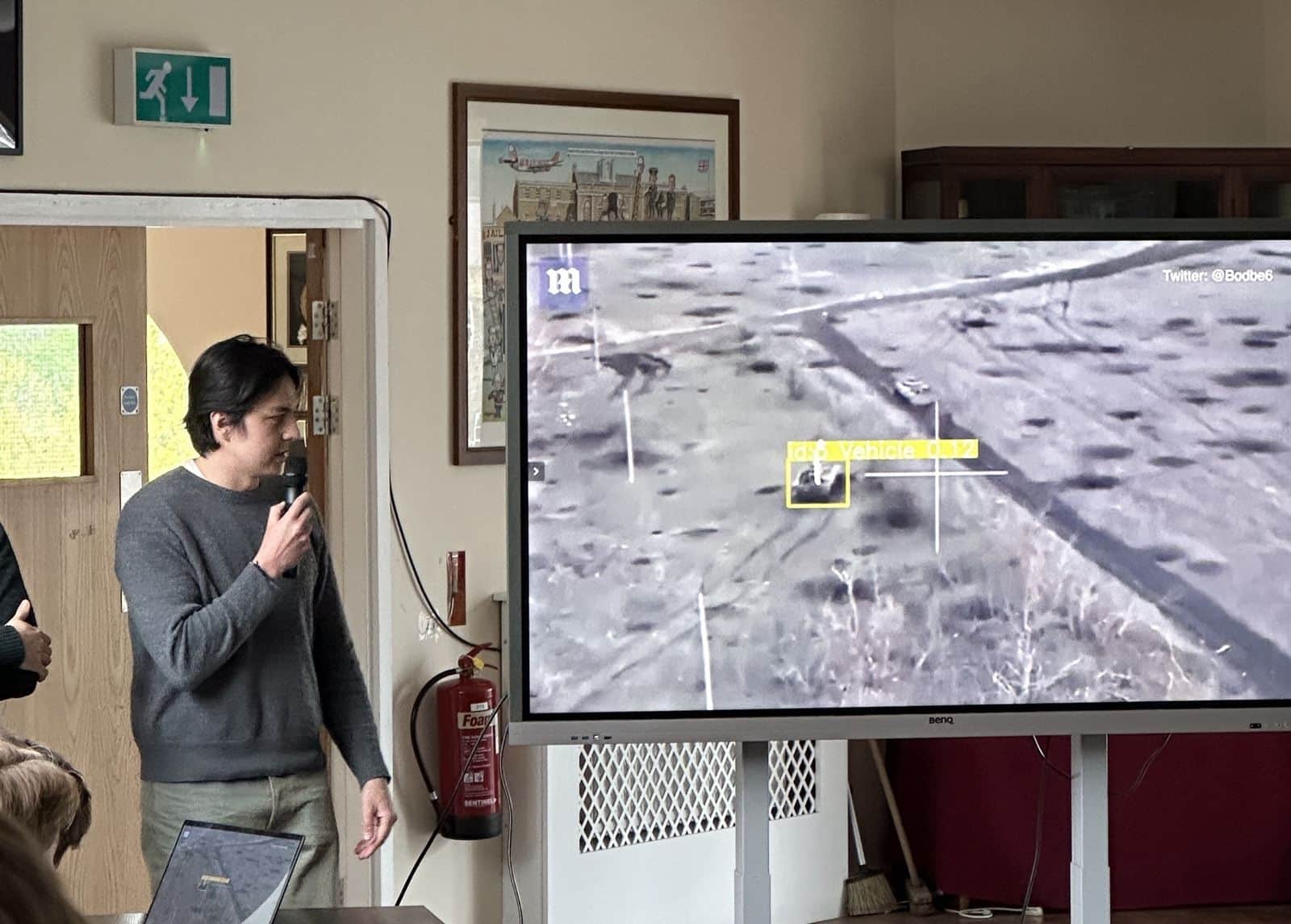
5. Real-Time Vehicle Detection on CPU-Only Devices
This project developed a vehicle detection model that runs on CPU-only devices in real-time, capable of classifying tanks, vehicles, persons, helicopters, and airplanes. The model achieved 90% precision on all labels and an inference time of 675 ms on a Raspberry Pi.
6. Classifying and Locating Drones Using Audio Data in Noisy Environments
The “Team Audio” project focused on detecting and locating drones using audio data, even in noisy environments. By capturing audio with an array of microphones, feeding it into a classifier, and using the signals to calculate the drone’s position, the system can determine the presence and type of drone, while also considering real-world scenarios and outlier detection.

7. Automatic Enemy Localization Tracking System
The final project showcased an automatic enemy localization tracking system using Google Earth Pro. By identifying objects and plotting their coordinates, the system can establish relationships and paths between points of interest, providing valuable insights for defense and security applications.

London Defence Tech Hackathon 2024
The London Defence Tech Hackathon demonstrated the immense potential of drones and related technologies in the defense and security sectors. By bringing together diverse talent and fostering collaboration, the event showcased groundbreaking solutions that address critical challenges faced by military units and governments worldwide. As these projects continue to develop and scale, they hold the promise of revolutionizing the way we approach defense, national security, and beyond.
Photos courtesy of Sebastian Völkl.


