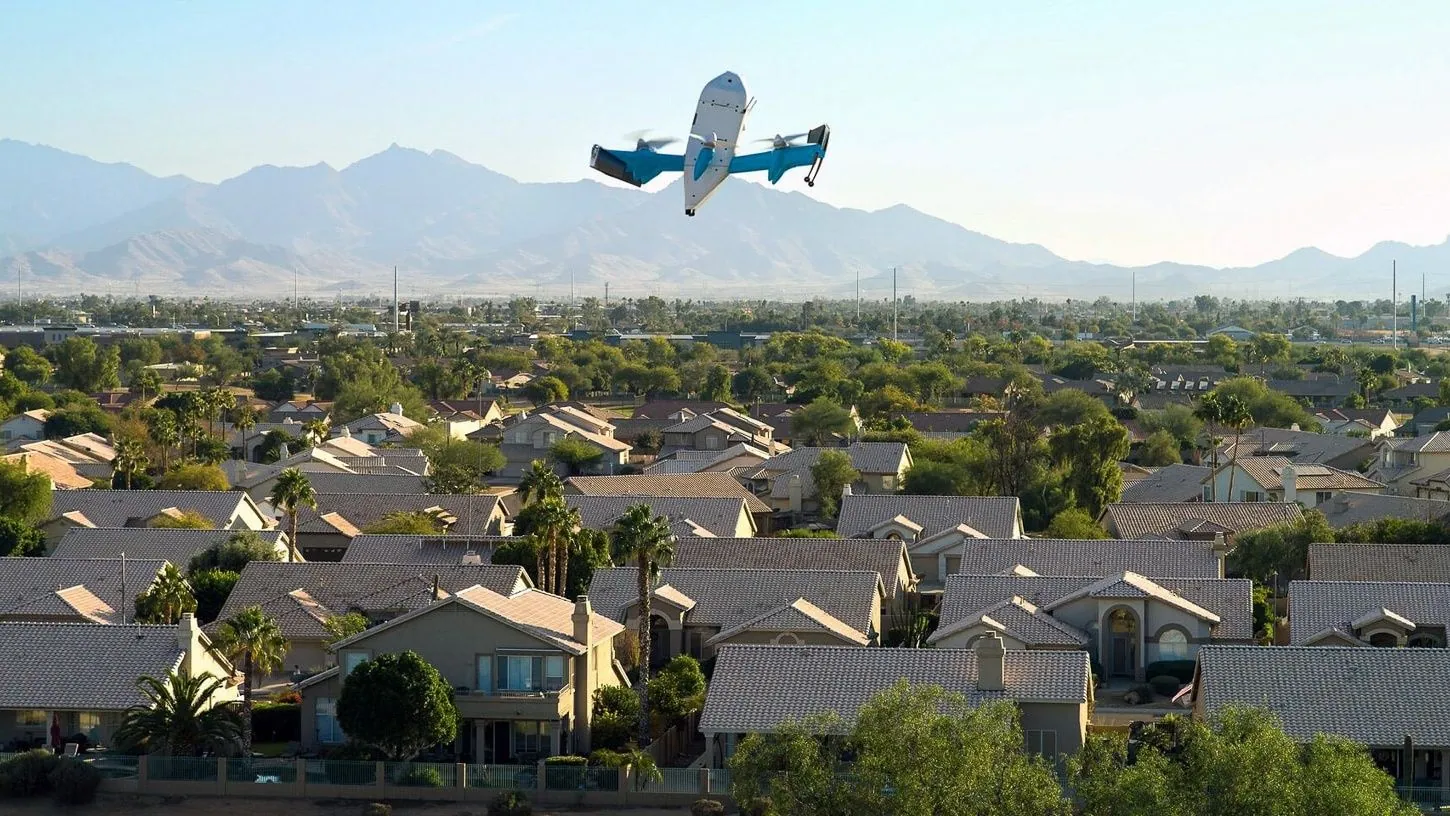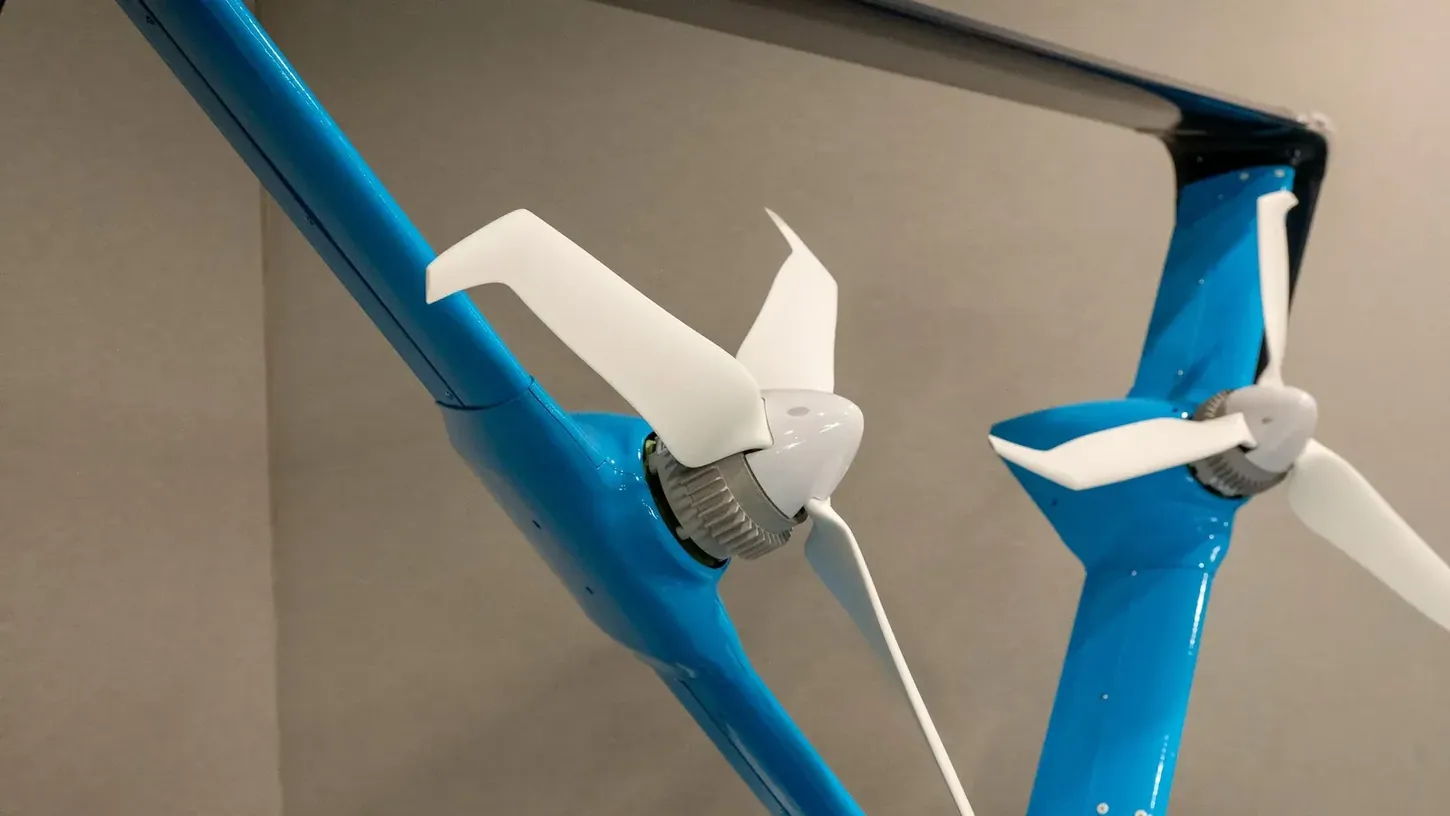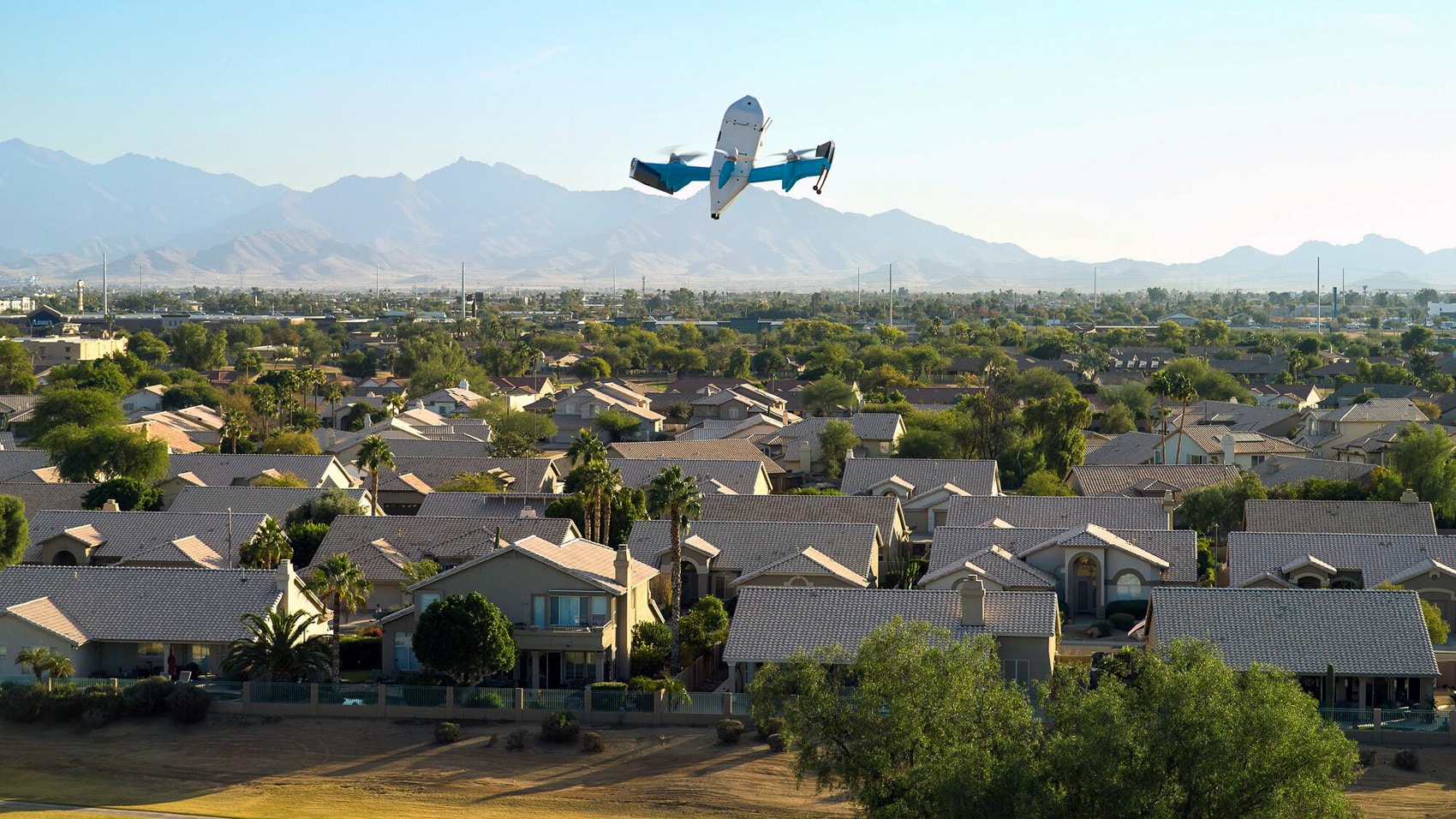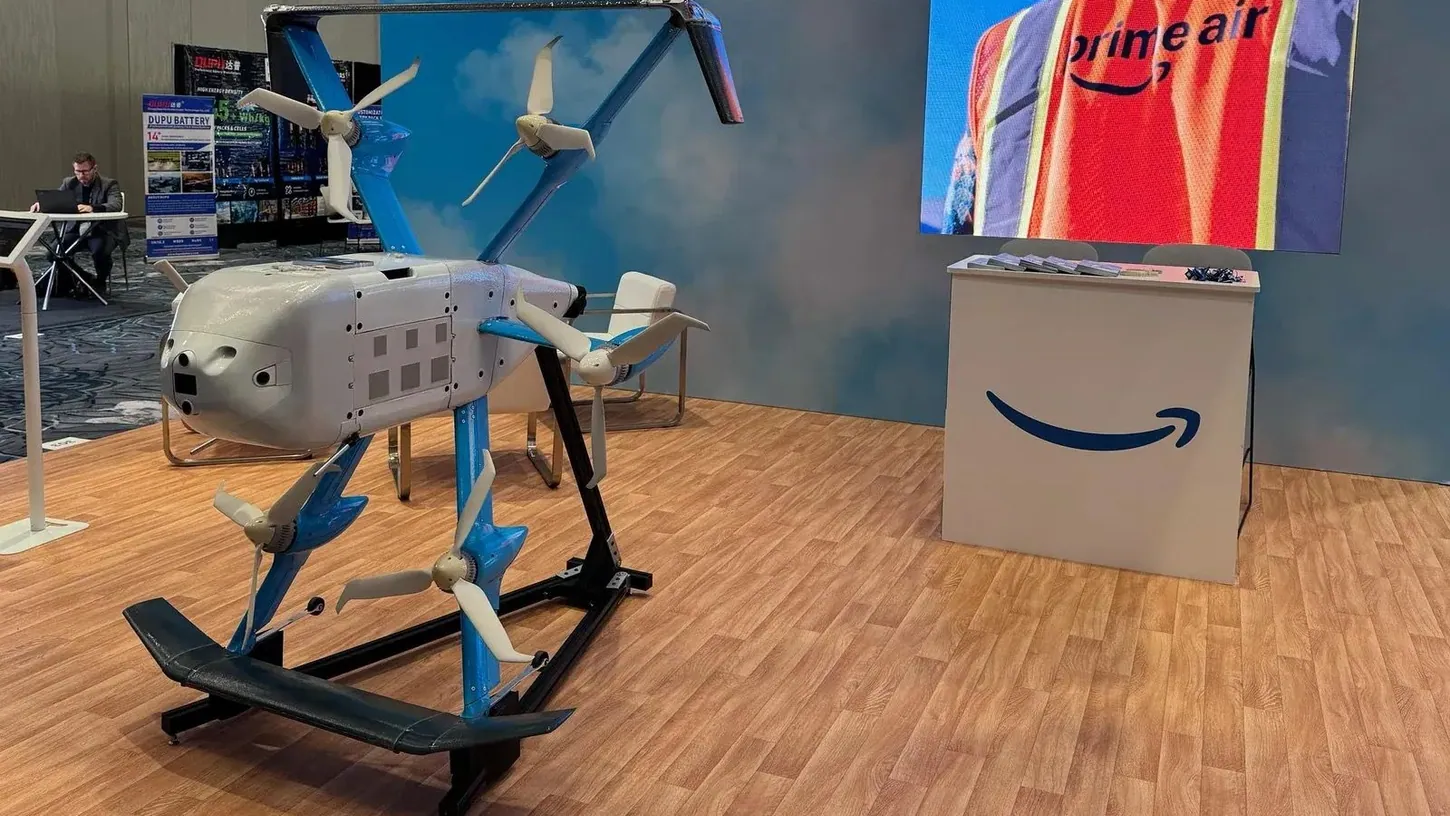
Amazon’s drone delivery site in Markham, Illinois, has generally hit its maximum of 300 orders a day since flights began on October 12, Amazon economic development manager Sam Bailey said at a ribbon-cutting at the warehouse on Tuesday, November 10. He told customers to clear the yard when a drone is coming and to keep their children indoors. Homewood Mayor Rich Hofeld told the Chicago Tribune’s Daily Southtown that his village got no warning or communication from Amazon before the service started. Homewood later told residents it could not ground the drones.
Bailey said 21 MK30 drones fly from the site, and the Tribune puts Homewood, Harvey and South Holland inside its 7.5-mile (12-kilometer) radius, along with Dolton. The Matteson warehouse launches next, Bailey said, without a date. He said the drones peak at 68 decibels at the point of delivery, without giving a distance or a metric. Amazon’s own test readings, in the noise report attached to the FAA’s Chicago draft, put an MK30 delivery at 82.4 dBA Lmax 20 feet (6.1 meters) away.
Markham Generally Hits 300 Orders a Day. The FAA Draft Analyzed 1,000 Flights
Markham’s 21 drones have generally reached the site’s 300-order daily maximum, Bailey said, and 60% of the warehouse’s inventory can go by drone. The FAA’s July draft analyzed up to 1,000 MK30 flights a day from each of three Chicago-area sites, between 6 a.m. and 10:30 p.m.
Scaling up is something Amazon is “always considering,” Bailey told the Daily Southtown, and Matteson, at 7001 Vollmer Road, will add capacity. In March, Amazon told the Richardson, Texas, council that its hub there filled about 150 orders a day, against the 1,000 its FAA approval allows, as DroneXL reported.
Amazon has approval from Markham for the takeoff and landing site and from the FAA to use the airspace, Bailey said. Markham’s is on paper: the city signed a zoning letter in November 2025 saying drone delivery is permitted by right on the lot, according to the FAA draft, which describes the federal step as an amendment to Prime Air’s operations specifications. The FAA’s drone environmental review index, updated November 9 and checked by DroneXL on November 11, still lists only the July draft assessment for Markham, Matteson and West Chicago, with comment closed August 14 and no decision posted. The FAA’s July 28 national finding lets it approve new Part 135 delivery markets on one nationwide study. No public FAA document DroneXL could find names the authorization Markham flies under, and Bailey, in the Tribune’s account, did not say.
Homewood Says Amazon Gave No Warning. Its Mayor Got the FAA’s July Notice of the Proposal
Hofeld and Homewood’s village staff and trustees are on the distribution list for the FAA’s July 15 notice of the Chicago draft, according to the draft’s Appendix A. That notice covered Amazon’s proposal and a comment window, not the October 12 launch Hofeld says Amazon never warned the village about.
Amazon also announced the Chicago-area sites in February, when Homewood was among the eligible communities reported, and held a community meet-and-greet in Tinley Park on March 2. “You just don’t know until you look up and there it is,” Hofeld told the paper. Residents commenting on Homewood’s social media post asked why the drones were flying and how they would be told about them, he said, and reactions ran from enthusiasm to outright hostility. The Village of Thornton’s recreation department said preschool children watched a drone deliver to Cora Court.
Markham Mayor Roger Agpawa, who cut the ribbon with his city council, ordered a delivery himself shortly after launch. He said some residents raised noise and safety concerns, that Amazon answered them to his satisfaction, and that he doesn’t see Amazon’s drones as more dangerous than smaller recreational ones. “Nothing is ever foolproof,” he added.
Homewood and Dolton both sent residents with concerns to [email protected], the Tribune reported. An automated reply Amazon sent DroneXL in September says nobody monitors that inbox anymore. Residents can call Amazon at 1-888-280-4331 and say it is about drone delivery, or open the customer-service chat and pick “Something Else,” then “Amazon Drone Delivery.” The FAA hotline the officials also listed takes safety reports and reports of rule violations. It is not a noise line, and a drone flying within its FAA authorization breaks no rule.
Illinois law leaves the villages little else to offer. 620 ILCS 5/42.1 makes drone regulation a state power, and DroneXL’s Matteson guide lists what remains for a south-suburban village. DroneXL’s guide for residents covers the rest, and the Amazon Prime Air tracker lists the hubs and incidents DroneXL has documented.
Amazon’s Drop Rules Start With Clearing the Yard
The MK30 releases a package from about 12 feet (3.7 meters) and cancels the delivery if it detects movement in the area, Bailey said. Customers should clear the area when a drone is incoming. “You want your kids inside the house,” he said.
Nobody should stand underneath to catch a box, Bailey said, and Amazon will not drop a package in an unsafe location. Its drops have missed before: in Richmond, Texas, an MK30 put a customer’s cat food in her pool on August 17.
Bailey also said the forward-facing cameras serve only for navigation, that nobody views the footage, and that it would be used only after an incident or emergency. The drone, he said, cannot take pictures. He told Pflugerville, Texas, the same in September, and Amazon’s own Prime Air operations page said at the time that people near a delivery may be recorded, as DroneXL found. Footage kept for an incident has to be recorded first.
Amazon’s Drone Stays Above 68 Decibels Out to 79 Feet From the Drop
Amazon’s own delivery readings, from tests at the Pendleton UAS Range in Oregon in October 2024, stay above 68 dBA Lmax out to 79 feet from the drop point, at 69.0 to 71.3 between 75 and 79 feet. They fall below 68 by 175 feet, to 61.9 to 63.7.
In May Bailey told the Nampa, Idaho, commission that the figure came from a test in the backyard of an Arizona Airbnb, as DroneXL reported on Wednesday. The Pendleton readings are in Appendix E of the Chicago draft and cover a fully loaded drone’s descent, delivery hover and climb-out. The 20-foot microphone also recorded 91.7 dBA SEL, the FAA’s sound exposure metric.
DroneXL’s Take
Bailey’s best argument for the Markham drones was the sick kid whose medicine turned out to be expired, and that is exactly the delivery DroneXL wants drones to make. Amazon’s own instruction for that delivery is that the kid should be inside when it arrives. The drone is an 83-pound MK30 with no parachute that lets go of the box 12 feet over the yard. Every MK30 collision DroneXL has reported ended with the aircraft on the ground. That covers the Tolleson crane, the Waco cable, the Richardson apartment building and, in Darlington, England, what Amazon called an object extending above the roof of a moving vehicle. In Tolleson, one of the two drones caught fire on the ground. Amazon says the Darlington drone came down as designed. I’d rather see that medicine lowered on a tether from about 300 feet, the way Zipline’s P2 delivers, with a parachute on board. Until Amazon flies something like that over Homewood, I’d follow Bailey’s advice and keep the kids inside.
Sources: Chicago Tribune / Daily Southtown, FAA Draft Environmental Assessment, Amazon Prime Air, Chicago, July 2026 (PDF), FAA Appendix A, Agency and Public Outreach (PDF), FAA Appendix E, Technical Noise Report (PDF), FAA drone environmental review index, 620 ILCS 5/42.1.
DroneXL uses automated tools to support research and source retrieval. All reporting and editorial perspectives are by Haye Kesteloo. Read our editorial standards.