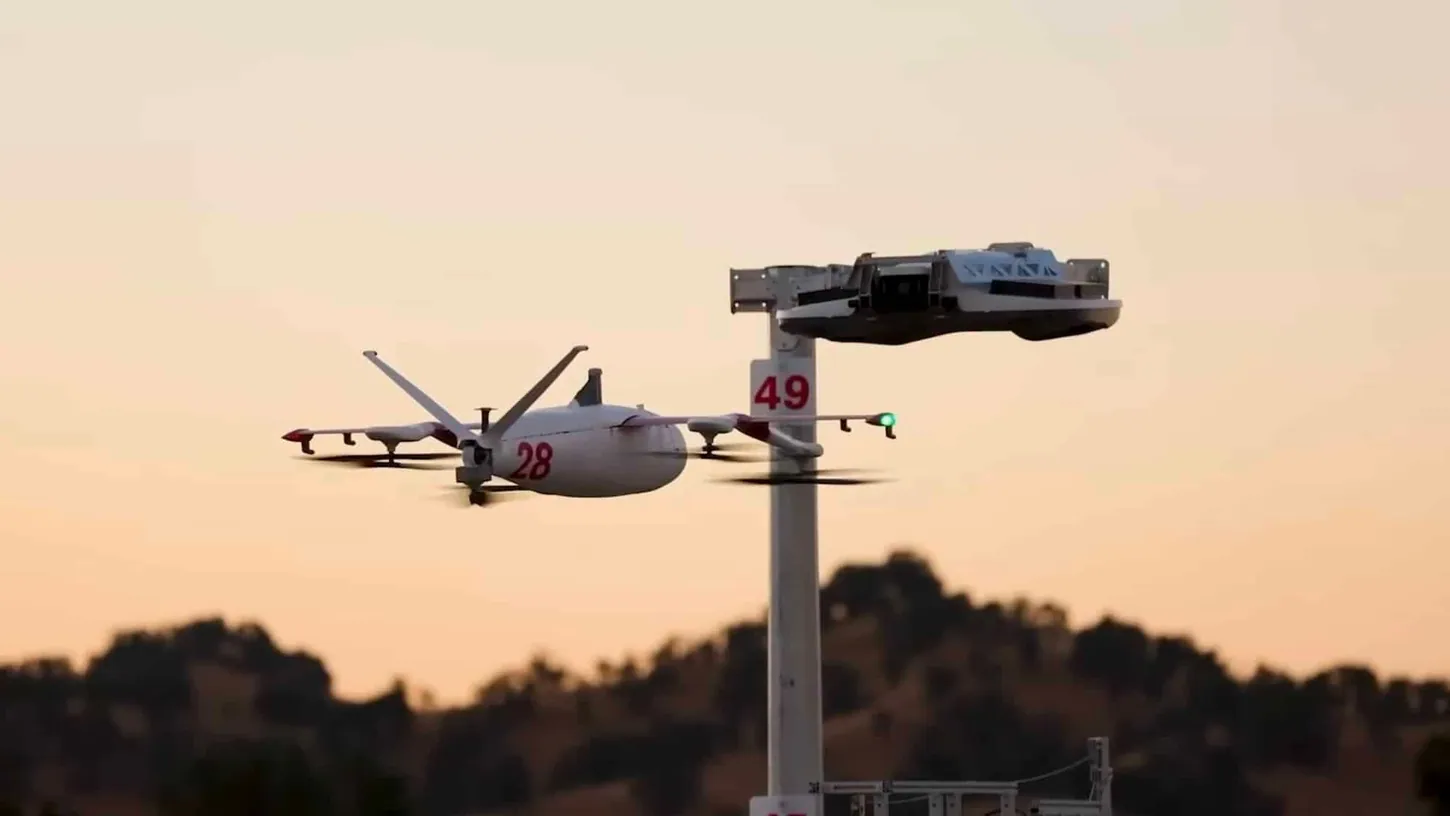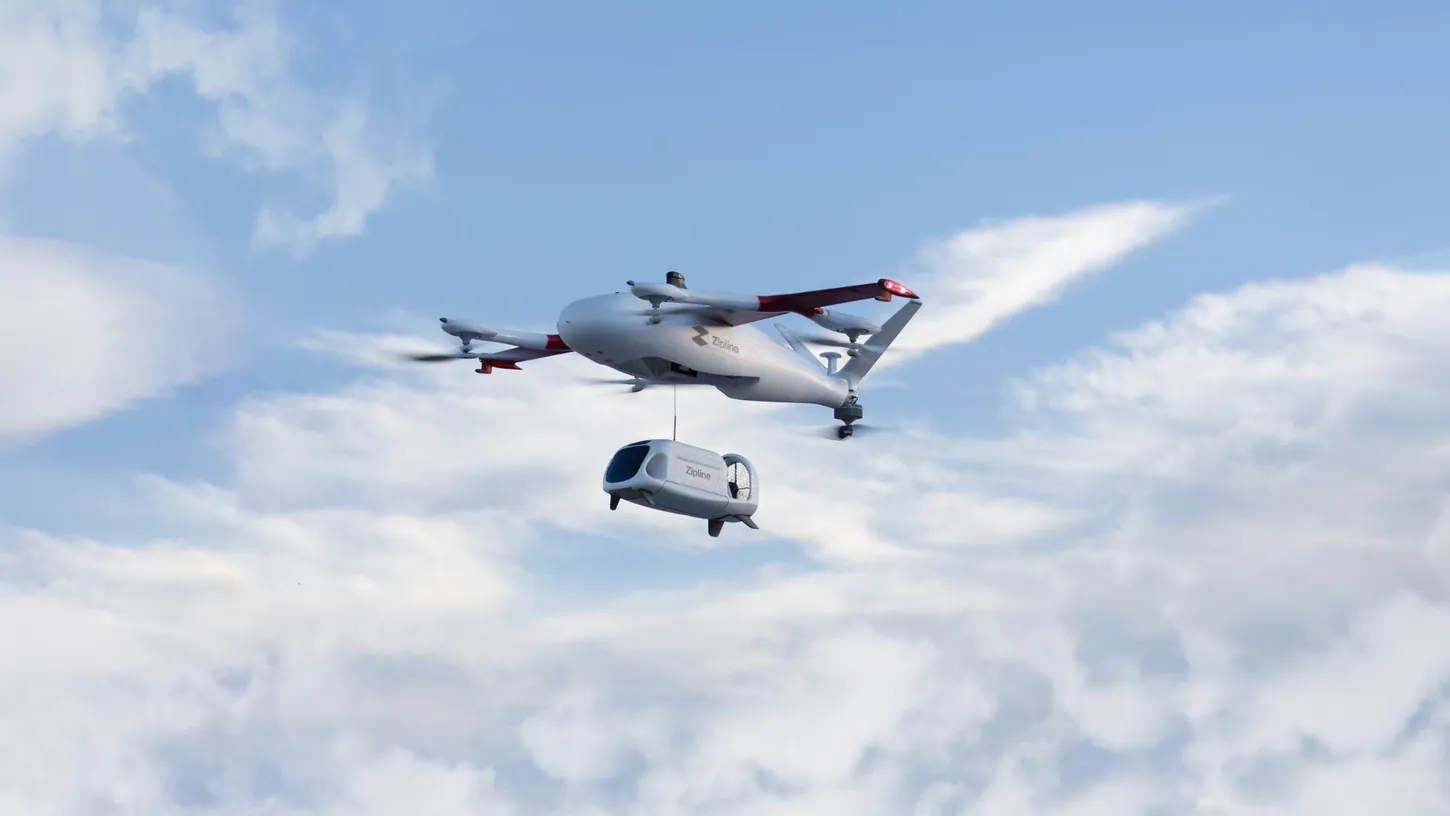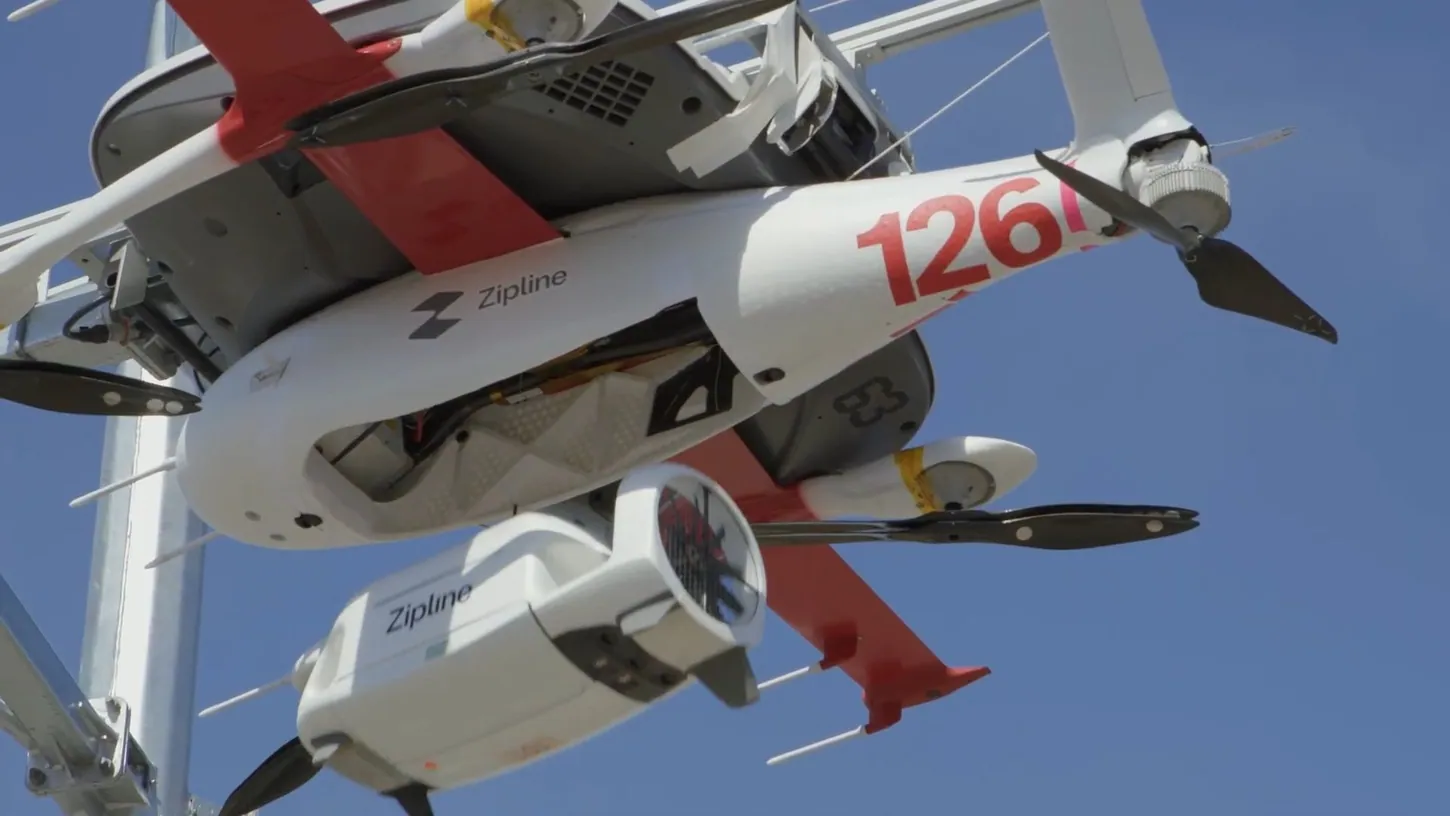
The Katy City Council voted unanimously on Monday, November 9, to let Zipline build a drone charging station in the West Ten Business Park, behind the shopping center at 27240 Katy Freeway, just north of Interstate 10. The site is a little under 3 acres and will hold six towers, each docking up to six aircraft, serving a delivery radius of about 3 miles.
Zipline told the council deliveries could start in as little as three months. The city said on Tuesday that the approval covers that one parcel and nothing else in Katy, and that any future drone facility needs its own council vote.
Council members pressed Zipline on flights near schools and on the cameras its aircraft carry. Texas Government Code 423.009 voids almost any city ordinance regarding the operation of a drone.
Zipline Still Needs a Katy Building Permit and at Least 12 More Weeks
Zipline’s next step in Katy is a city building permit, expected to take at least four to eight weeks, then eight to 10 weeks of construction. Development manager Jason Drews said the station will cost more than the usual $400,000 to $600,000 because it is larger, Community Impact reported.
Zipline first proposed a different location and worked with city staff to find the business park site, according to the Chronicle, and it told the council it keeps chargers in commercial areas because takeoff is the noisiest part of a flight. The FAA’s Texas draft likewise limits charging and pickup sites to existing commercially zoned land. The ordinance carries penalties of up to $2,000 a day for violations, and the Chronicle reports Zipline has not announced which Katy businesses will take part.
The figures Zipline gave the council match its federal paperwork: an 8-pound (3.6-kilogram) payload, up to 70 mph (113 km/h), and a cruise altitude the FAA’s draft environmental assessment puts at 330 feet (101 meters). Drews also said Zipline does not deliver tobacco, alcohol or pharmaceuticals. Its prescription deliveries run through health-system programs, such as Cleveland Clinic’s in Ohio.
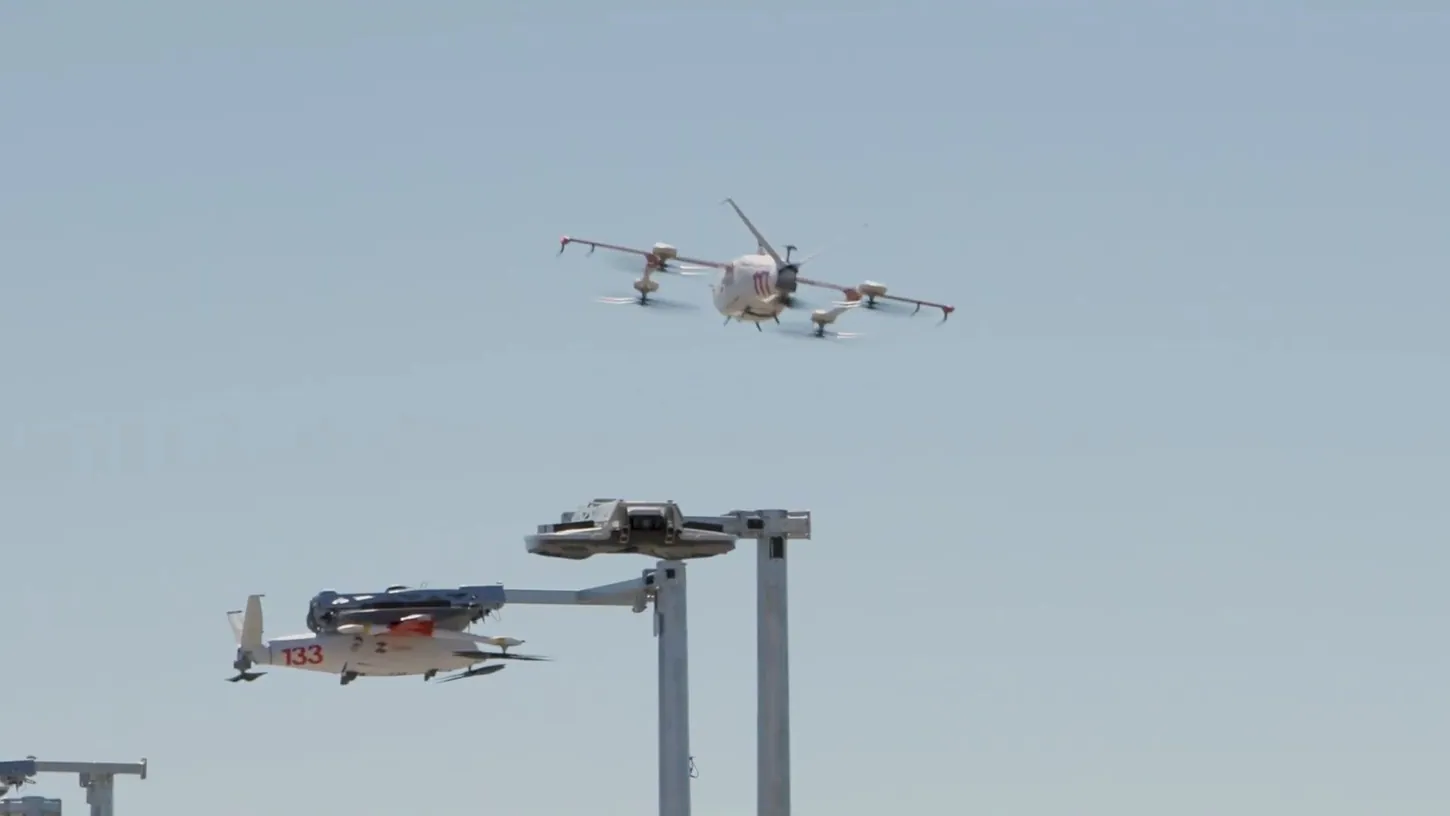
Katy residents already have drones overhead. Wing has flown Walmart orders from two Supercenters on North Fry Road with Katy addresses since January 15, so Zipline would be the second operator serving the area.
Zipline Pitched 150 Million Miles as Its Houston Expansion Awaits the FAA
Zipline told the council its aircraft carry emergency parachutes and run about 500 preflight safety checks. The company says the fleet has flown more than 150 million autonomous miles without a serious incident causing injury or property damage. Neither number comes from an independent source.
Katy Police Chief Bryon Woytek called the service “as safe, if not safer, than delivered by a car.” Zipline’s parachute has already been used in the Houston area. On September 4, a Zip came down under its canopy onto Highway 6 in Cypress, northwest of Houston, with nobody hurt. Zipline called it a midflight issue and, as of November 11, has not published a cause. The noise figure Zipline gave Katy, about 60 decibels, is also the company’s own. Its recent 68% noise reduction claim came from internal modeling, not microphones.
The federal side is unfinished. Zipline’s Houston-area expansion sits inside the FAA’s five-metro Texas draft, which would amend its Part 135 operating authority to cover up to 65 Houston chargers and lists Fort Bend, Harris and Waller counties in its study area. Comments closed October 11. As of November 11, the FAA’s drone environmental review page lists only the draft, with no final decision.
Zipline’s School Keep-Out Zone Is a Company Rule Katy Cannot Enforce
Council member Paula Taylor, who teaches at Katy High School, worried about students ordering coffee and food to campus, and Zipline answered that it neither delivers to schools nor flies over public school property. Texas law leaves that promise in Zipline’s hands.
Taylor described the problem schools already have with Uber Eats and Grubhub: “kids wanting to leave class to go get coffee deliveries.” A member of Zipline’s government affairs team answered that Katy students “will not be able to get their Starbucks coffee from us,” the Chronicle reported. Zipline also keeps away from private schools and preschools, and from sports fields. “We won’t even fly over one of those either,” Drews said of public school property.
None of that can be written into a Katy ordinance. Section 423.009(b) of the Texas Government Code bars a city from adopting or enforcing any measure regarding the operation of an unmanned aircraft, and subsection (d) voids one that does. The exceptions cover special events, the city’s own drones, and the area around city-owned facilities, the last only with FAA authorization after a public hearing. School campuses belong to Katy ISD, not the city.
Council members Johnston Dietz and Paul Follis asked about hurricanes and the aircraft’s cameras. Zipline said its meteorologists and two monitoring centers can ground flights. It said the cameras are for navigation and obstacle detection, not surveillance, with some footage kept for incident review. The privacy backstop is state law: Government Code 423.003 makes capturing images of people or private property for surveillance a Class C misdemeanor.
DroneXL’s Take
Katy did the part of this that Texas lets a city do, and did it well. The hub sits on commercial land off I-10, where Zipline says it wants its chargers anyway, the approval stops at one parcel, and the council asked its questions in public before the towers go up.
That is more than Cypress got. Zipline’s first Houston base serves unincorporated Harris County, and Texas counties cannot zone, so residents there had no hearing to attend. It is also the order Round Rock got backwards a month ago.
But the answer Paula Taylor got is a Zipline policy, and the city cannot enforce it. I believe Zipline means it, and I would rather have its keep-out list than none. The place that list could become binding is the FAA’s Texas review, and the draft only credits Zipline for avoiding “fly less areas” during operating hours without saying which places those are. Before the FAA signs the final version, Katy’s council should write to the agency and ask it to name schools and sports fields in that document, because Texas has left Katy no way to hold Zipline to a promise made at its own council meeting.
Sources: Houston Chronicle via GovTech, Community Impact, FAA draft environmental assessment, Zipline Texas metros, Texas Government Code Chapter 423
DroneXL uses automated tools to support research and source retrieval. All reporting and editorial perspectives are by Haye Kesteloo. Read our editorial standards.