

The drone community has been buzzing with leaked information and photos of the upcoming DJI Flip drone, with many questioning its peculiar design and place in DJI’s lineup. Looking deeper into DJI’s strategy and market requirements reveals compelling reasons behind this unconventional approach.
Understanding the logic behind the Flip starts with DJI’s core business philosophy. CEO and founder Frank Wang is known for focusing on products that can achieve sales of at least one million units. This mindset has shaped DJI’s current diverse drone lineup, which ranges from the entry-level DJI Neo costing a few hundred dollars to the semi-professional DJI Mavic 3 Pro priced at several thousand dollars, with numerous models filling the space between.
DJI Flip is Safe, Accessible, Portable and Easy-to-Fly
To achieve mass-market success, a drone must meet several critical requirements. Safety comes first – the drone must be secure to operate in various conditions, even near people. Accessibility follows closely, encompassing both ease of flight and minimal regulatory hurdles. Finally, the drone needs to be portable and semi-autonomous, allowing users to transport it easily and operate it without complex controls.
Ducted Propellers
The DJI Flip’s most distinctive feature – its propeller design – directly addresses safety concerns. Traditional exposed propellers have led to numerous incidents involving injuries to people’s faces and hands. By fully encasing the propellers, similar to the DJI Neo’s approach but with a novel implementation, the Flip creates a fundamentally safer platform for operation around people.
Less Then 250 Grams
Weight considerations also played a crucial role in the design. The sub-250g category remains significant worldwide, as it typically faces fewer regulatory requirements and registration rules. This weight limit makes sense from a safety perspective, as lighter drones generally pose less risk than heavier models like the Mavic 3 Pro.
Portable and Easy-to-Fly
Portability represents another key factor in the Flip’s design evolution. Following the principle that the best drone is the one you have with you, DJI appears to have prioritized creating a highly portable format. While they could have followed the HOVERAir X1 drone’s approach or simply added propeller cases to a Mini 4 design, both solutions would have resulted in bulky, less dynamic products.
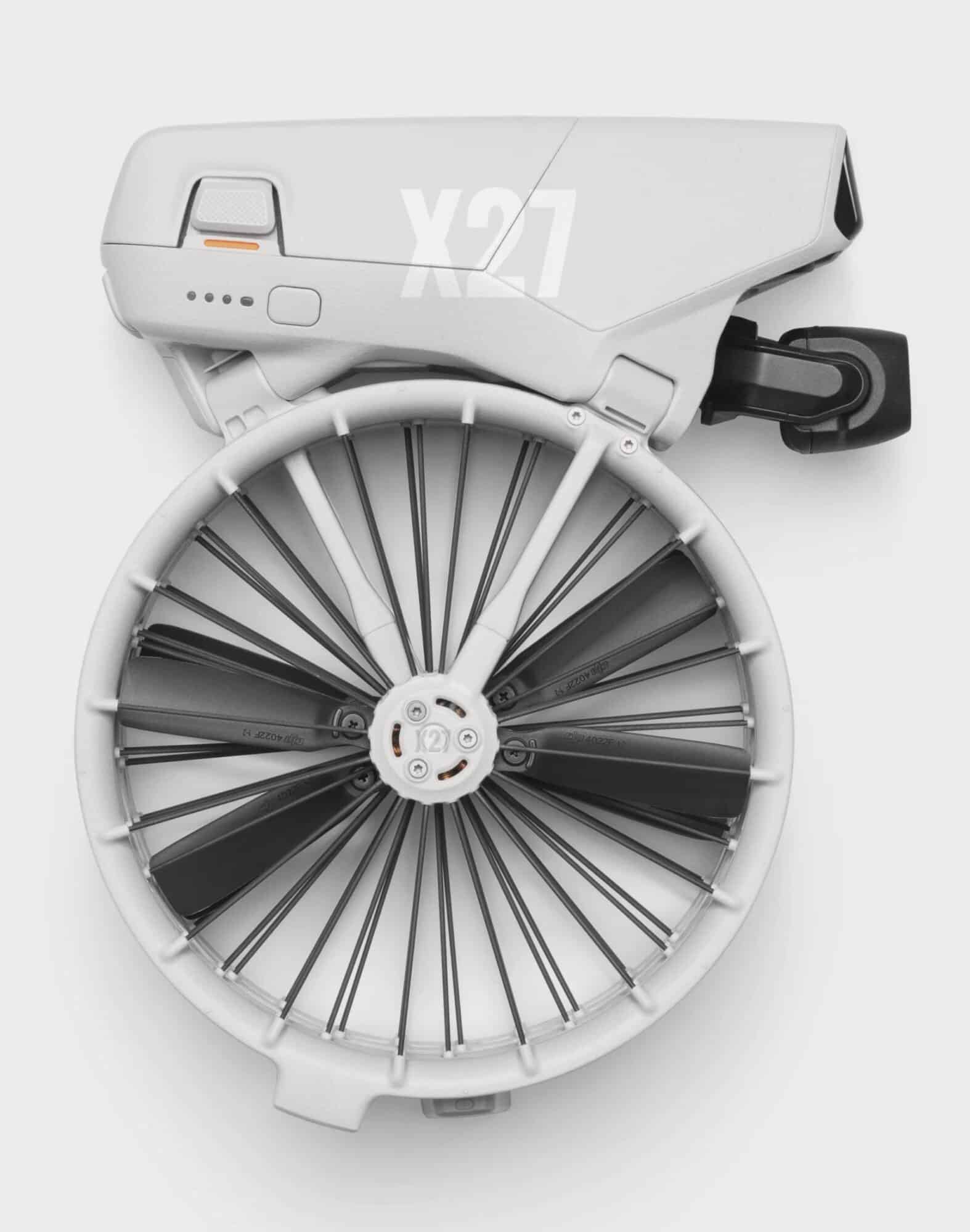
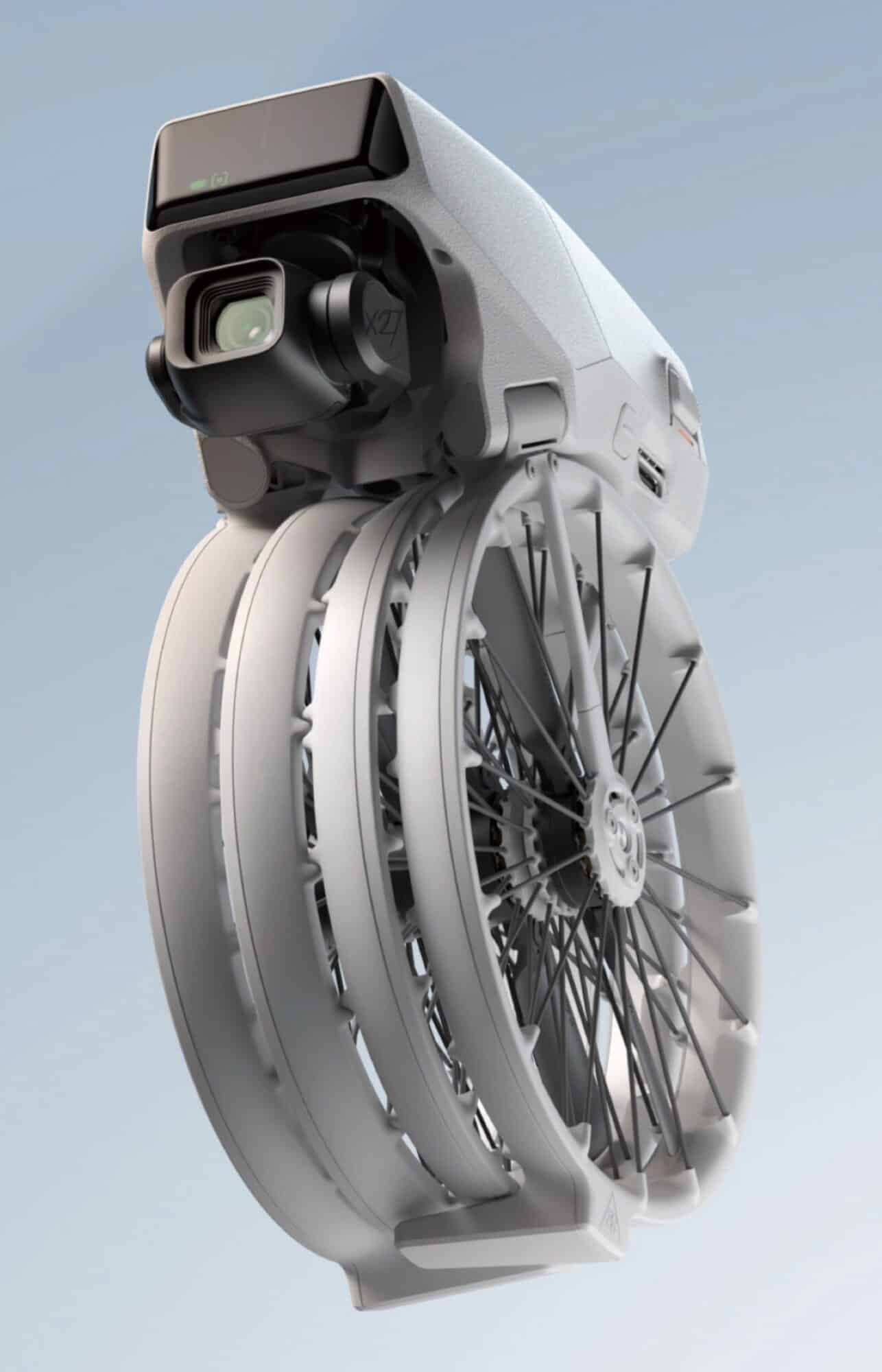
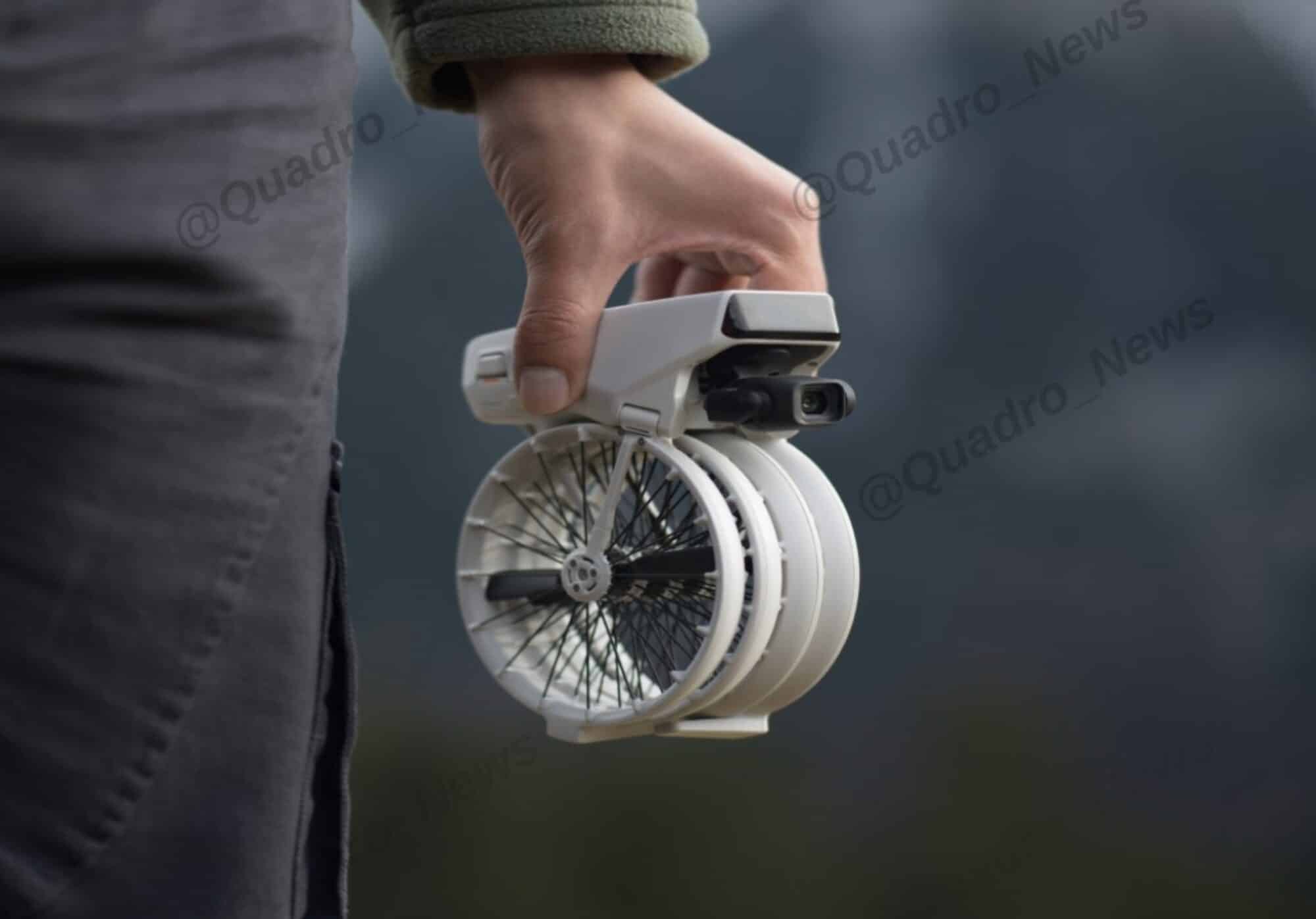
Instead, DJI opted for an innovative folding mechanism with ducted propellers, prioritizing weight savings and compactness. While the resulting design might not win beauty contests, it potentially creates the smallest, lightest, and most dynamic portable drone possible while leaving sufficient weight capacity for advanced features like high-quality cameras, AI-powered tracking, and LiDAR obstacle avoidance systems.
Rather than replacing FPV-focused models like the DJI Neo or DJI Avata 2, the Flip appears positioned as a potential successor to the Mini series. This suggests we might not see a DJI Mini 5 Pro, as the Flip could serve as its spiritual successor. The traditional Mini series’ folding mechanism requires substantial material for both the folding arms and propeller protection. The Flip’s design, while visually unusual, likely achieves significant weight savings that can be redirected toward enhanced capabilities.
Aerodynamics and flight efficiency also factor into the design equation. To maximize flight time while carrying advanced features, form must follow function. The final design represents what DJI believes will create the most accessible, safest, easy-to-fly, and most capable drone for average enthusiasts – even if that means challenging conventional drone aesthetics.
This detailed analysis suggests the Flip’s unusual appearance stems from careful consideration of practical requirements rather than arbitrary design choices. By prioritizing safety, portability, and capability within strict weight limits, DJI may have created exactly what the mass market needs, even if it doesn’t match traditional drone design expectations.
What do you think about the DJI Flip and it’s peculiar drone design? Are you a fan or do you think DJI has lost the plot with this one? Let us know the comments below. We are curious to hear your thoughts.


